
Phonopolis Review
PC
A handcrafted dystopian point-and-click experience from Amanita Design.
Reviewed by Adeela Tas on May 22, 2026
As soon as you enter Phonopolis, you will realize that your expectations are formed based on years of playing Amanita Design games that have created a certain image of what a point-and-click adventure is supposed to be. You may have seen some previews or played the demo, and you already know that Phonopolis has been in development for years.
Thus, entering Phonopolis, you can experience a sense of entering not the unknown world but a place created with attention to detail, and gradually, over the period of many years. Another thing you may immediately realize when starting the game is that it does not suffer from an identity crisis since it is confident about its direction, despite the way it may appeal to other people.
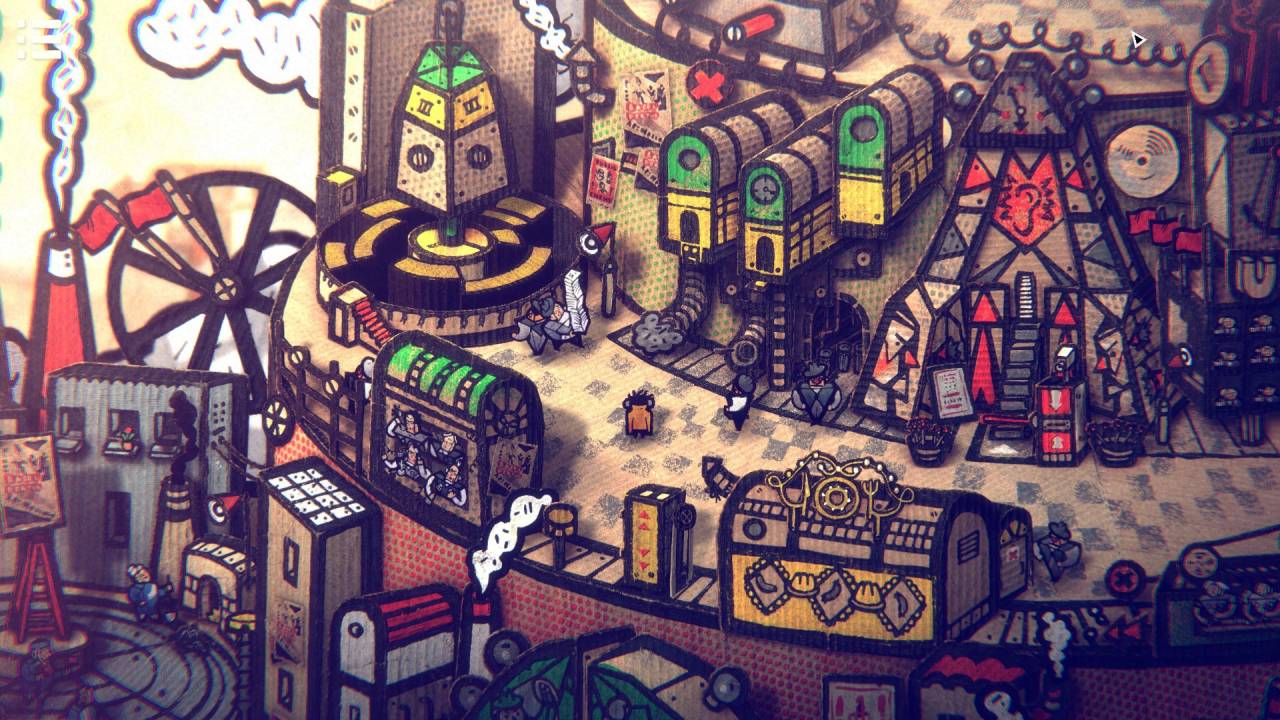
There is no denying that the reputation of the Amanita Design Studio will not let you down when playing Phonopolis.
For those who have tried the studio’s previous productions, such as Machinarium and the Samorost series, there should be no need for any further explanations. Phonopolis keeps the spirit and essence of those games while introducing some changes that will be noticed right away. The game is still an adventure with a point-and-click system, but it is more structured and planned compared to other projects of the studio.
In Phonopolis, the author makes the reader feel the dystopia in which the entire social order operates on the principle of submission. It is an atmosphere filled with loudspeakers, controlling the actions of people who blindly follow the orders they give. The hierarchical division of society is easily observable, as those belonging to different social strata form clear layers from top to bottom.
In other words, while moving around the city of Phonopolis, the reader is witnessing its hierarchical order physically. Felix, the protagonist, is portrayed as an ordinary garbage man whose life changes dramatically after he manages to find a pair of headphones that help him tune out all the propaganda being spread by the speakers in Phonopolis.
Not only will you be navigating through Phonopolis, but you will also be encountering constant narration throughout your experience. Instead of being a silent protagonist, Felix appears to be under the influence of a narrator who explains the story like a fairytale. As a result, your experience may sometimes feel like being led directly through Phonopolis.
It does not give the player an opportunity to figure out the story for themselves, but rather narrates the game in a certain way to make sense of its world. This may be a relief for some gamers who have not yet grown accustomed to more subtle storytelling in previous Amanita Design games.
As far as the appearance of the game is concerned, there could be no doubt about it.
Firstly, you would definitely be attracted by the appearance of the cardboard-style graphics. However, there is much more to this aspect. Indeed, everything that you see in Phonopolis seems to be handmade: it is built from paper layers, painted, and cut out. The ability to turn objects, even a little, is an important feature that makes the game more interesting and allows you to perceive every setting as a handmade set for some kind of live demonstration.
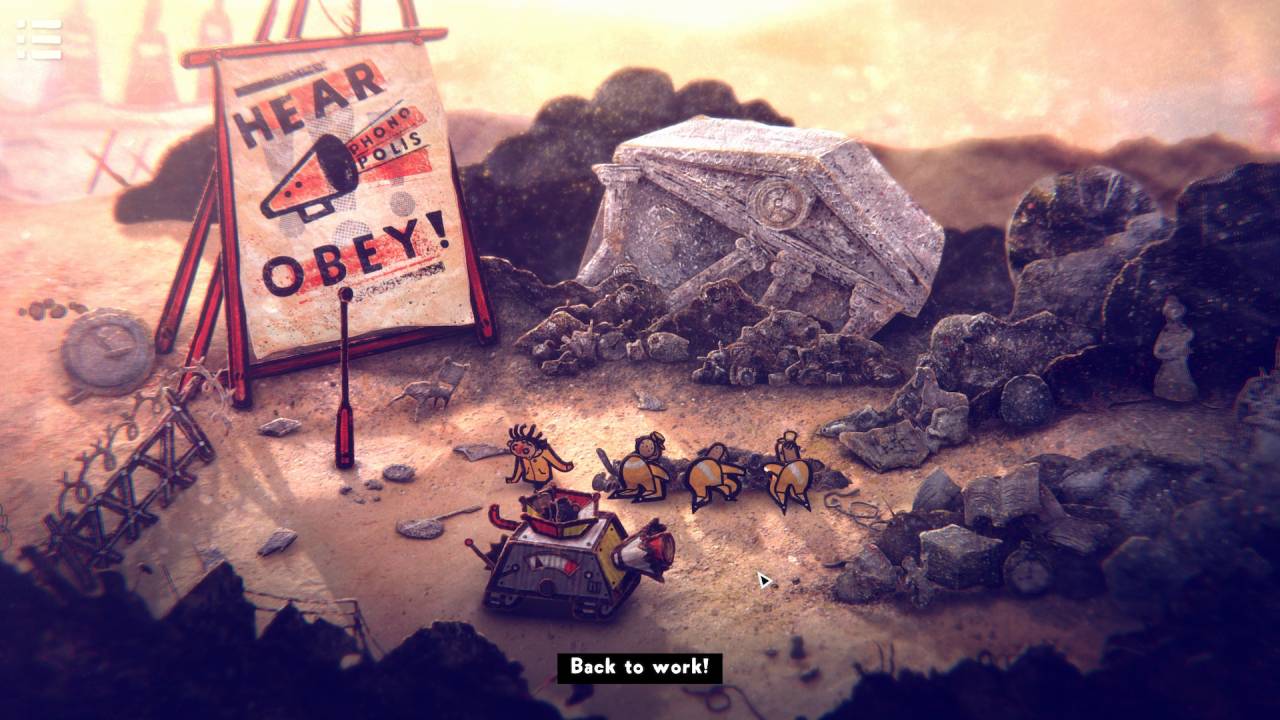
In Phonopolis, you will notice the use of dreamy sequences, which are very different in their visual style. They become more abstract as if drawn on the blackboard with a pencil. It creates a striking contrast to the world, which is otherwise very ordered. The atmosphere becomes somewhat unpredictable and even disturbing; it matches the city’s strictness quite well.
In addition, Phonopolis features sound design that creates the same impression as the graphics – everything sounds quite tangible. It seems like a lot of attention was paid not only to visuals but also to sound effects. Once you begin dealing with the puzzles in Phonopolis, the mechanics of the game become quite apparent. Unlike in an inventory adventure game that works as one cohesive system, Phonopolis divides all puzzles into separate interacting spaces.
This means that each location and puzzle becomes its own separate system, with its own set of rules. You come into a situation, learn how the objects in that particular space function, and then solve the puzzle and move to another one. The inventory system is nonexistent, and there is no need to combine any items from different locations.
This design decision makes for a completely different experience with Phonopolis. First off, this ensures coherence and avoids confusion associated with running multiple systems simultaneously. However, this takes away the element of exploration which is present in other games of the same type.
In many cases, the player is guided from one puzzle area to another, being told what should be done.
Additionally, Phonopolis sometimes employs in-game hints, such as paper planes, to nudge the player toward moving on when all interactions in a certain location have been utilized. In every area where there is a puzzle, experiments are always done in Phonopolis. There will be pushing of buttons, moving objects, pulling of levers, and the use of machines until something happens.
This is not about using deduction here; instead, you have to learn how each object behaves when controlled. This process can be quite smooth and easy if the mechanics are straightforward and logical. However, there are times when you might need to repeat actions several times until you figure out what sets off an effect.
Phonopolis is also characterized by an abundance of linearity in terms of level design. There is no such option that would allow you to explore different locations in various sequences. In contrast, there is always a specific path to follow through different chapters or levels. Hence, Phonopolis comes across as a very linear game with levels resembling a chain of pre-designed dioramas.
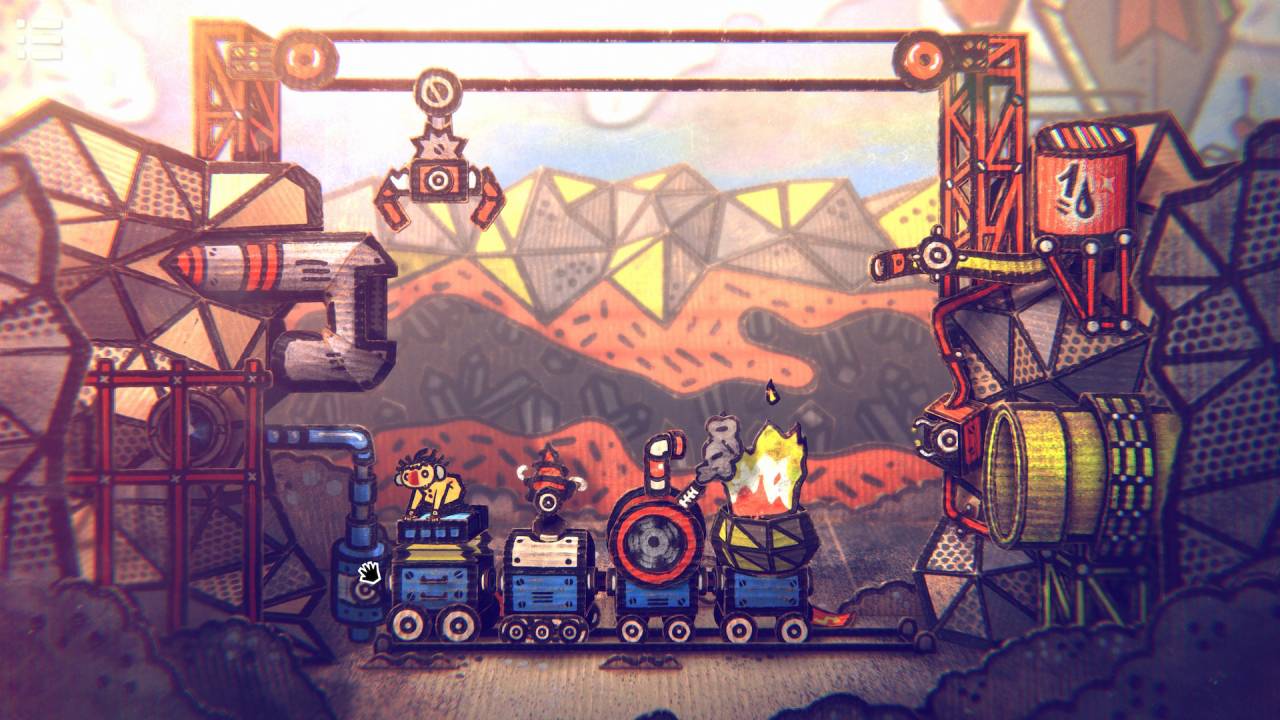
In this regard, the title differs from other Amanita Design games like Machinarium, in which one had more options for moving between locations and carrying objects. Nevertheless, it is still incredibly gratifying to see how interactions work in this game. A vast number of challenges are strongly connected with the physical manipulation of the surroundings.
This way, you will often pull, rotate, or press certain elements of machines that feel like actual physical bodies rather than abstract icons or buttons. Interactivity of this kind is probably one of the best features of the game in question. Moreover, even though sometimes the logic of certain challenges is obscure, solving the task still proves to be quite engaging.
The other controversial aspect that deserves discussion is related to puzzle difficulty.
Indeed, there may be numerous examples in which a player will not need to think a whole lot; instead, they will simply try to apply different configurations until some sort of change occurs and the answer is obvious. In other words, puzzles in Phonopolis are mostly based on trial and error. Of course, sometimes such an approach is not very pleasing; however, there are also times when logic itself is obscure and somewhat old-fashioned.
Sounds and music represent another significant aspect of the game Phonopolis. The soundtrack by Floex holds great significance, especially if you were a fan of previous games created by Amanita Design. Music changes dynamically based on the player’s current actions, evolving into a more complex composition while completing the tasks.
When combined with the audio aspect of physical interactions, the game becomes extremely immersive. Most certainly, you will realize the importance of sounds and how much influence they have on your actions. Humor is another element present in the gameplay of Phonopolis. Despite being set in a dystopian society, there are many humorous elements in the game that are used to lighten the mood.
In most cases, this humor can be seen in the form of funny visuals and awkward situations. One common form of such moments is seeing ordinary places become ridiculous due to the way the player interacts with them. As you go further into Phonopolis, you begin to get the feeling that the structure consists of a sequence of chapters rather than an open world.
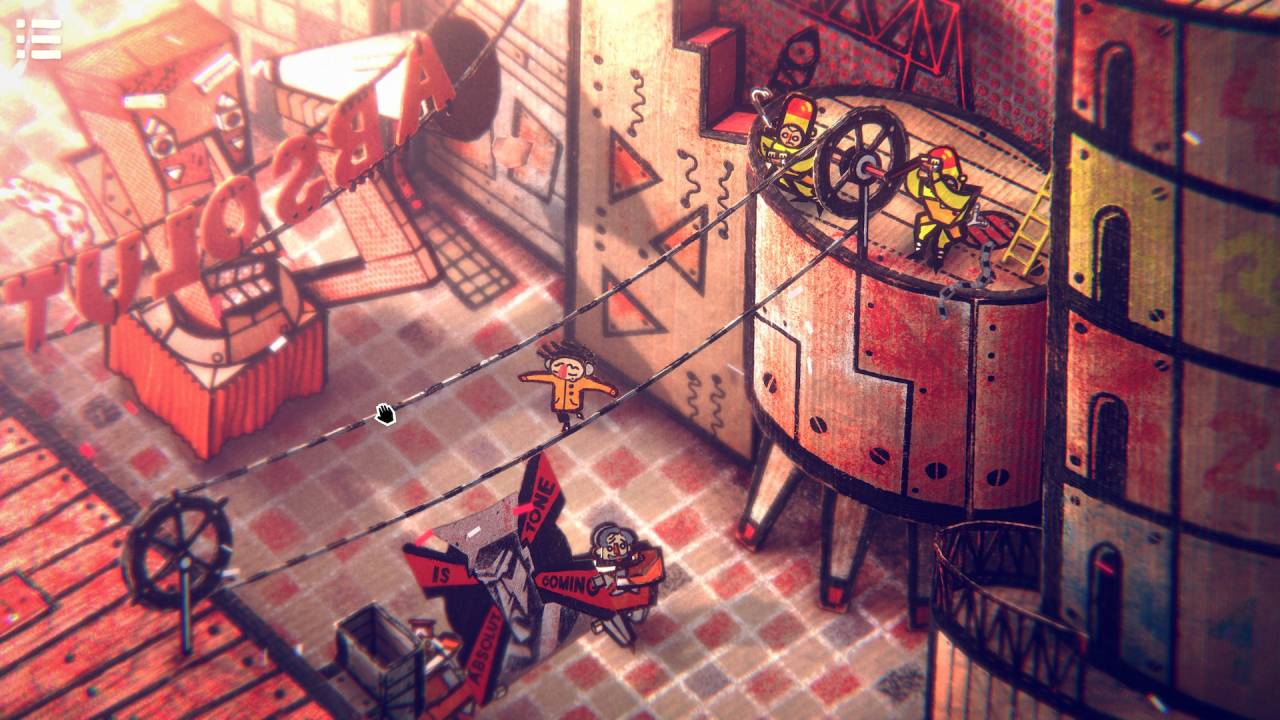
Every chapter comes with a new world to explore, a new way of solving puzzles, and something new to do mechanically. Therefore, Phonopolis has quite a segmented pace. It helps you stay fresh, but it also emphasizes how much control the developers have over the game experience. You almost never find yourself getting lost because Phonopolis guides you in the right direction.
If you have experienced Machinarium or Samorost, there's no doubt you will keep on relating your experience of playing them with Phonopolis.
Earlier titles from Amanita Design were more silent and depended heavily on environmental narration and exploration. Phonopolis is more talkative, more systematic, and, to a certain extent, narrated. This is reflected in how you perceive everything. Moreover, even though the game uses some old Amanita Design themes, it is clearer about them than its predecessors.
On the other hand, Phonopolis has benefited immensely from years of experience in terms of animation. The amount of effort that has gone into making each frame, each texture, and each transition is evident in this game. Phonopolis has tried to combine interactivity and animation into a stop-motion movie. Such aspirations make Phonopolis unique despite having some design elements that do not appeal to all gamers.
Some of the criticisms that emerge while spending time in Phonopolis are constant. The narrative voice seems to remove some of the nuance present in earlier games by Amanita Design. The linear approach seems to strip away the freedom one would hope for in an exploration game. It is also possible that certain puzzles may involve more trial and error than logical thinking.
Occasionally, the combination of sound and visuals could be too much to take in due to their density and intensity within the scene. Finally, the lack of feedback while solving some puzzles can leave one clueless until it all falls into place. Despite these problems, Phonopolis still leaves an impression on the player. There is no doubt about the carefulness with which the game was designed, and the interplay between its visual art, music, and mechanics proves to be unique.
The developer may choose not to follow some expectations of the traditional puzzle design in his or her creation, but he or she does not succeed in imitating the complete freedom of the first two games developed by Amanita. Rather than that, every scene is made to look like an element of an overall narrative structure.
After experiencing Phonopolis, one is left torn between respect and criticism in their attitude towards this project. There is much to appreciate in terms of the creator's goals, ambitions, and efforts put into the development of Phonopolis; however, there are also many things about which one cannot be entirely positive. Overall, Phonopolis represents an important step in the evolution of the studio.
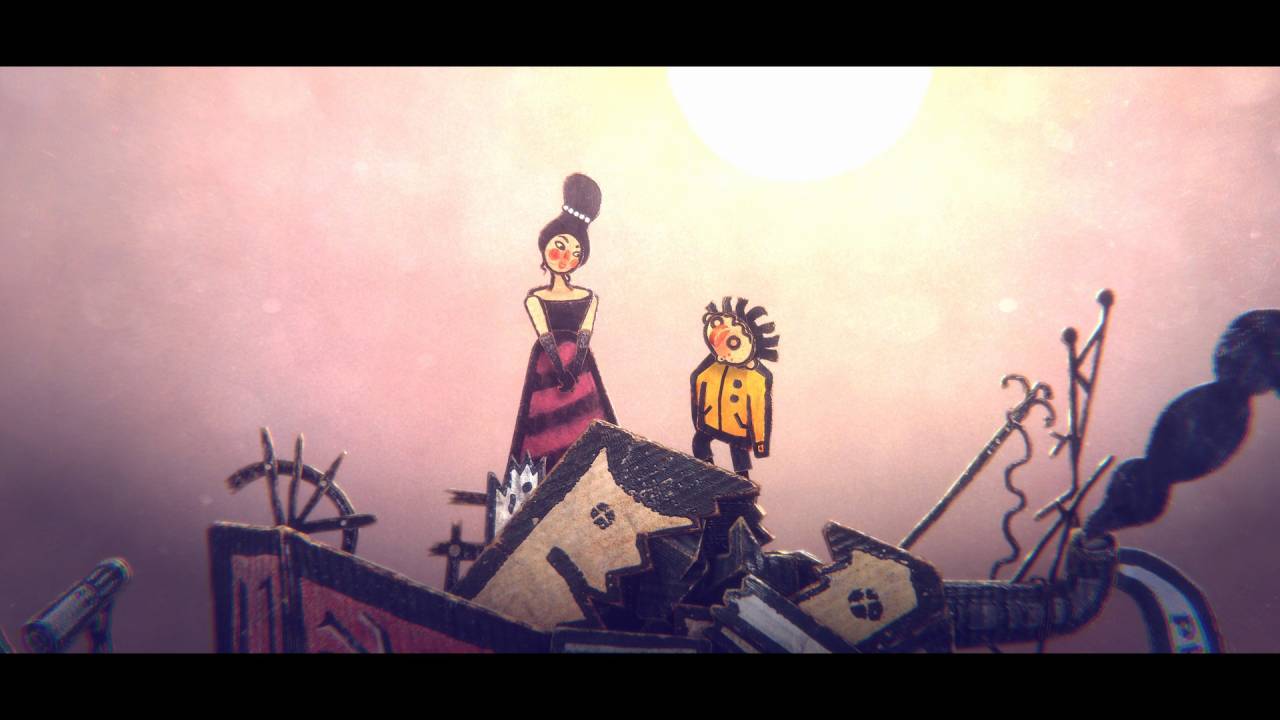
Another aspect of Phonopolis that comes to light when you start analyzing the game further is that many of its effects stem from small interactions rather than major mechanics.
All simple interactions, such as rotating pieces of the scene or turning levers, have great importance in Phonopolis due to their tangible nature. Unlike games where players simply click their way through environments, in Phonopolis, you will interact with tangible objects all the time, and this feeling lasts even after you leave Phonopolis.
And there is the constant impression that Phonopolis seeks to reconcile its accessibility with innovation. It is easy to see why it was made like this: it moves the player along, avoids disorientation, and always leaves them certain about what kind of space they are interacting with. However, while doing all this, Phonopolis often gives up the sense of exploration that earlier games from Amanita Design had.
Rather than exploring and learning things by moving through various spaces, the player stays in one constructed puzzle space until it is completed. However, even though that is the case, Phonopolis manages to give a rather distinct impression when it comes to emotions. What stands out here is that it does not focus on solving riddles and advancing through chapters. In Phonopolis, everything that happens has a sense of being physically connected to the game environment.
Looking back at Phonopolis, one thinks more about how all of it is animated and the sounds it makes than about specific mechanics. It is the design, the audio composition, and how one interacts with the game that make it memorable after one plays the game. The reason for this is the fact that none of the elements attempt to dominate the rest and rather work well in unison with each other.
Finally, Phonopolis is an excellent example of a game constructed carefully in terms of its narrative, structural design, and gameplay. It bears the signature of Amanita Design but takes things in a very stylized manner. While the game can be loved or disliked, there is certainly enough material in it visually, audibly, and structurally to make it memorable.
Editor, NoobFeed
Verdict
Phonopolis is a carefully crafted evolution of Amanita’s style, blending tactile puzzles, strong audio-visual design, and narration into a controlled but memorable experience.
87
Related News
No Data.