
RIDE 6 Review
PlayStation 5
Milestone’s latest motorcycle racer blends realism, variety, and accessibility into its most complete two-wheeled experience yet.
Reviewed by Mahi Araf on Feb 11, 2026
If you have followed motorcycle racing games for any length of time, you already know Milestone. Over the years, the Italian studio has built a reputation as one of the few developers willing to seriously invest in two-wheeled racing.
Milestone has steadily improved its skills over the years, from the long-running MotoGP series to Monster Energy Supercross and even Hot Wheels Unleashed. People have always said that the RIDE series is like "Gran Turismo for motorcycles," where you can find perfectly modeled bikes, a lot of customization options, and a structured career mode all in one place.
RIDE 6 is the sixth main entry in that lineage, arriving after a two-year gap since RIDE 5. In that time, expectations have grown. Some fans have praised Milestone’s consistency, while others have criticized the franchise for relying too heavily on incremental upgrades.
With RIDE 6, the studio clearly aims higher. For the first time, off-road racing joins the lineup. A new festival-style career mode called Ridefest reshapes progression. Arcade handling arrives alongside the traditional Pro simulation mode. And the entire game now runs on Unreal Engine 5.
You are not just getting another yearly update. You are stepping into Milestone’s most ambitious attempt yet to balance realism, accessibility, and variety in a motorcycle racing game.
RIDE 6 does not tell a traditional story. There is no scripted narrative, no dramatic cutscenes, and no fictional rival arc. Instead, the game frames your journey through Ridefest, a global motorcycle festival that acts as the backbone of the career mode.
Ridefest presents itself as a celebration of bike culture. You move from event to event, collecting fame points, unlocking new championships, and expanding your garage. The idea is similar to what you might have seen in Forza Horizon or The Crew Motorfest, except RIDE 6 does not offer an open world. Everything is accessed through menus.
This framework gives context to the endless races. You are not just grinding championships in isolation. You are participating in a worldwide festival that connects different disciplines, locations, and categories of bikes.
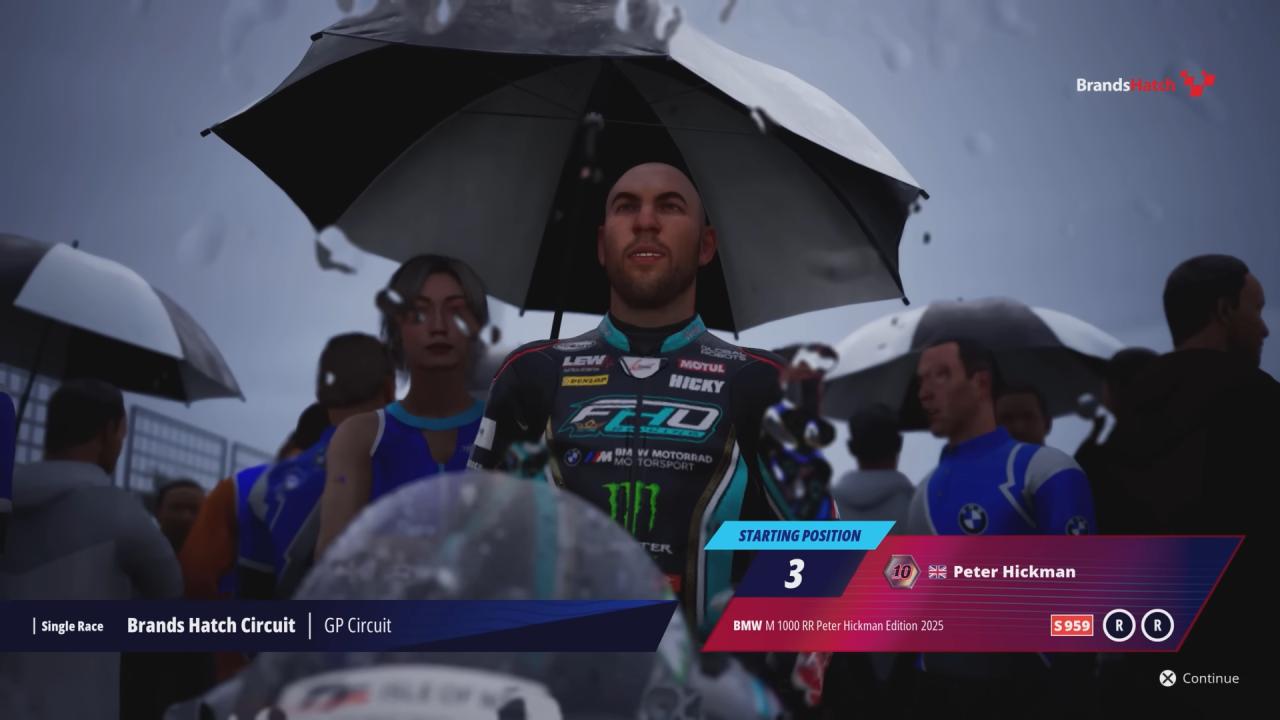
It also introduces 10 legendary riders, including Casey Stoner, Guy Martin, Pete Hickman, Tom Sykes, and Ian Hutchinson. These legends act as "boss" encounters, each with its own curated challenges. Beating them earns you their gear and motorcycles, reinforcing the sense that you are climbing through the ranks of motorcycle history.
That said, Ridefest often feels more cosmetic than meaningful. The menus look stylish. There are balloons, stages, and visual flair. But once you start racing, the festival fades into the background. There is little narrative cohesion between events and no real sense of atmosphere beyond presentation. If Ridefest were removed, most of the on-track experience would remain unchanged.
So while the framework provides structure, it does not deliver the emotional engagement that some festival racers manage. It works as a progression system, not as a storytelling device.
At its core, RIDE 6 is about collecting, customizing, and racing motorcycles across multiple disciplines. You start with modest machines and gradually work your way toward high-performance bikes by earning credits and fame through races.
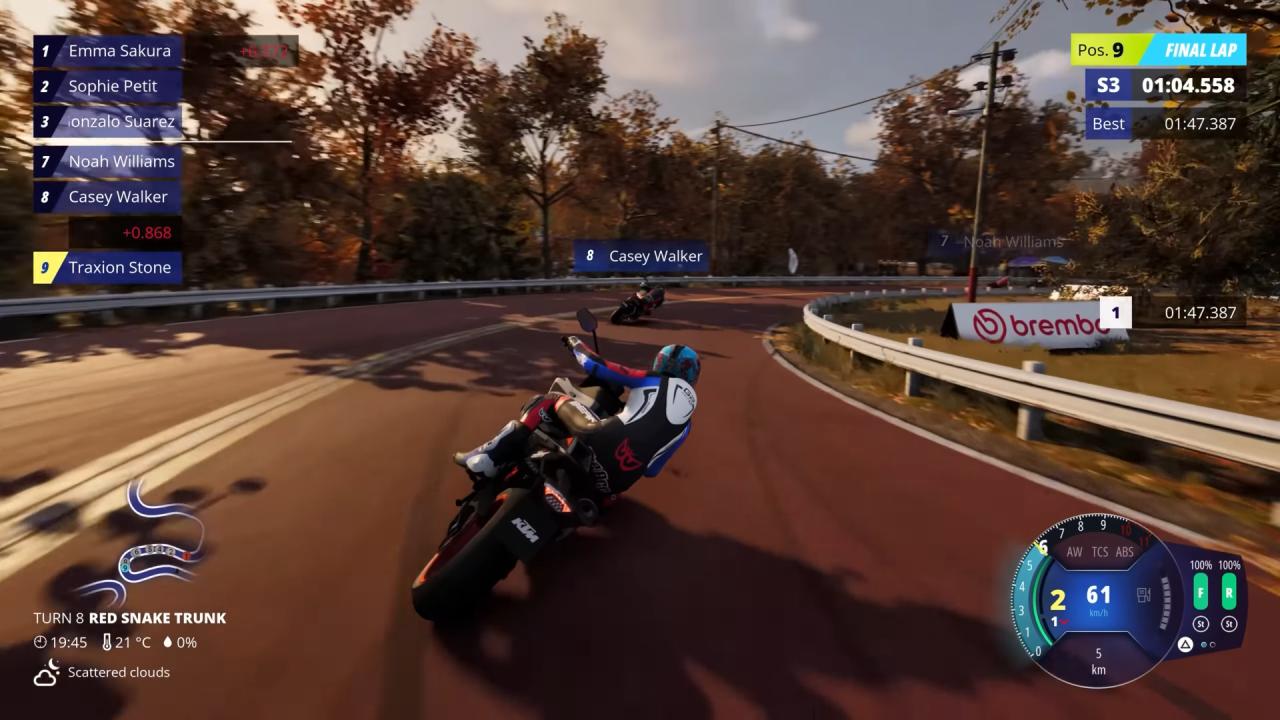
The game features over 340 motorcycles across 21 manufacturers, including DLC. These range from superbikes and endurance racers to naked bikes, scooters, motards, baggers, enduro machines, and maxi enduro rally-style bikes. Each category plays differently, encouraging you to experiment instead of sticking to a single playstyle.
You acquire bikes through dealerships, buying new, used, or rented machines. You can then upgrade them with performance parts that affect both visuals and stats. Suspension, brakes, gear ratios, engine components, and stability systems all play a role in shaping how your bike behaves.
Customization goes far beyond performance. You can edit liveries, helmets, suits, and logos using an in-depth editor similar to what you see in MotoGP games. Rider gear and riding styles are also adjustable, letting you personalize both your appearance and your racing approach.
Outside of career mode, you have access to quick races, custom championships, split-screen multiplayer, and online modes with cross-play between PC, PlayStation, and Xbox. Monthly challenges and post-launch events are designed to keep the community active.
The Bridgestone Riding School acts as your training ground. It starts with the basics and then moves on to more advanced mechanics, such as riding in the rain, using electronic aids, and handling chicanes. Most of the time, these tutorials are helpful, but once you know the basics, the fact that you can't skip them and the strict scoring can feel limiting.
Overall, the gameplay loop is familiar. You race, earn credits, upgrade bikes, unlock new events, and repeat. What makes RIDE 6 stand out is the variety now within that loop. This is where the game truly lives or dies, and it is also where it excels most consistently.
You can now choose between two different handling models for the first time in the series: Arcade and Pro.
Arcade mode is meant to be easy to learn and easy to play. You can't fall off the bike. Braking and turning are easier on the bike. Mistakes don't often end your race. Compared to pure arcade racers, the bike still feels heavy and real, but it smooths out the sharp edges.
The full racing-sim package is in pro mode. Every input is important here. If you brake too late, you'll go wide. Slides happen when the throttle is used incorrectly. Weight shifting, counter-steering, and managing momentum become very important. Bikes don't turn as cars do, and RIDE 6 does a great job of showing that.
When you play Pro, you learn to brake sooner than you think you should, measure counter-momentum, and use the throttle carefully. If you go too fast, you'll understeer and crash. If you slow down too much, you make your lean sharper, which is dangerous territory. The most important skill is to ride confidently on this fine line.
You also gain access to onboard electronics. Traction control, anti-wheelie, ABS, engine braking, fuel mapping, and more can be adjusted mid-race. These systems subtly influence behavior, rewarding players who understand their bikes.
Off-road racing is the biggest new addition in RIDE 6.
Dirt bikes, enduro races, and rally-style environments introduce sliding, throttle control, and handling on loose surfaces. On a good track, getting into a controlled slide feels deeply satisfying. However, some off-road environments are too flat and forgiving, limiting their potential. The discipline adds variety, but it does not yet reach the depth of tarmac racing.
In terms of physics, RIDE 6 feels more predictable and agile than RIDE 5. Bikes' low-side less often, respond more consistently, and provide clearer feedback. The result is an evolution rather than a revolution.
The way AI acts is also a mixed bag. The adaptive system usually matches your skill level well, so the races are very close. Enemies defend, dive-bomb, and capitalize on mistakes. They also crash into each other hard. But they can also be clueless and run into you or miss you totally, too. Depending on how much you can tolerate, this mess can be fun, as well as annoying.
This driving experience is very much about progression. You get credits and fame by racing, which lets you unlock harder championships and better bikes. Skill is always more important than upgrades and setups. Even with perfect tuning, you still have to ride clean to win.
Endurance races, with day-night transitions and weather changes, stand out as highlights. Managing pace, visibility, and fatigue creates some of the most immersive moments in the game. RIDE 6 is powered by Unreal Engine 5, and the upgrade is quite noticeable.
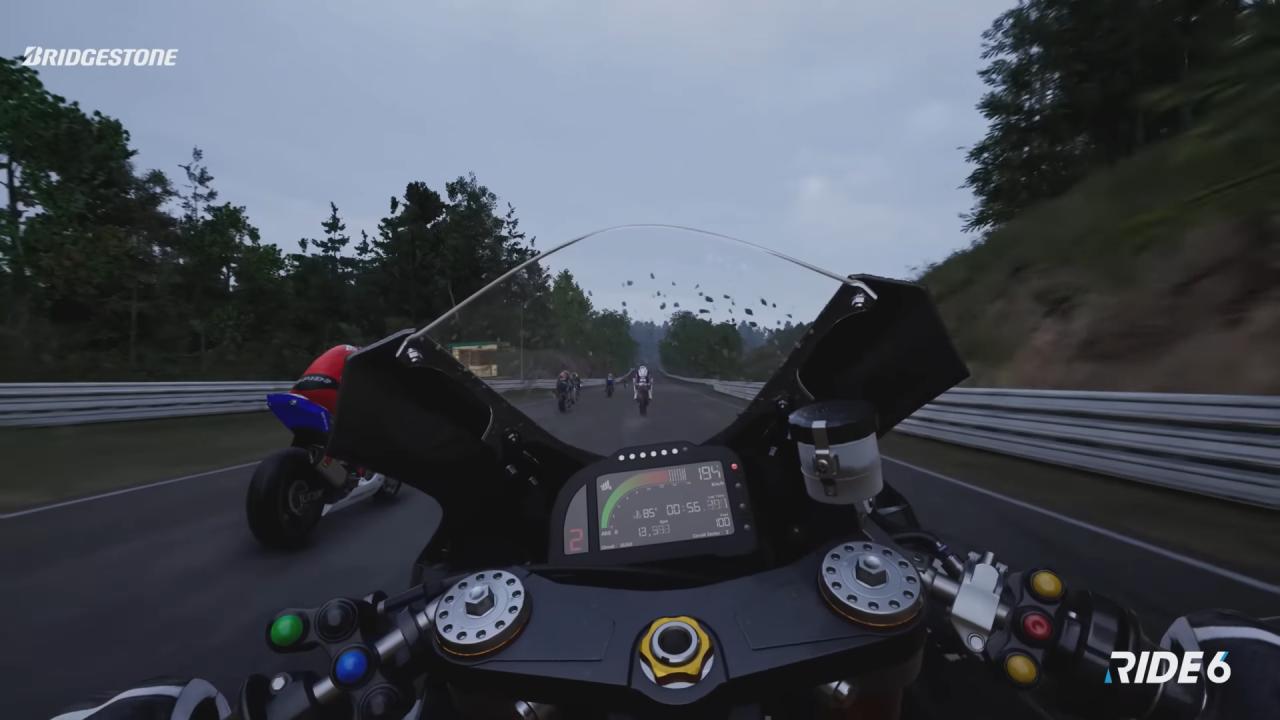
Lighting is more natural. Reflections are sharper. Weather effects feel richer. Day and night cycles transform tracks in dramatic ways. Racing in the rain with the rider camera and minimal HUD is one of the most immersive experiences in modern racing games.
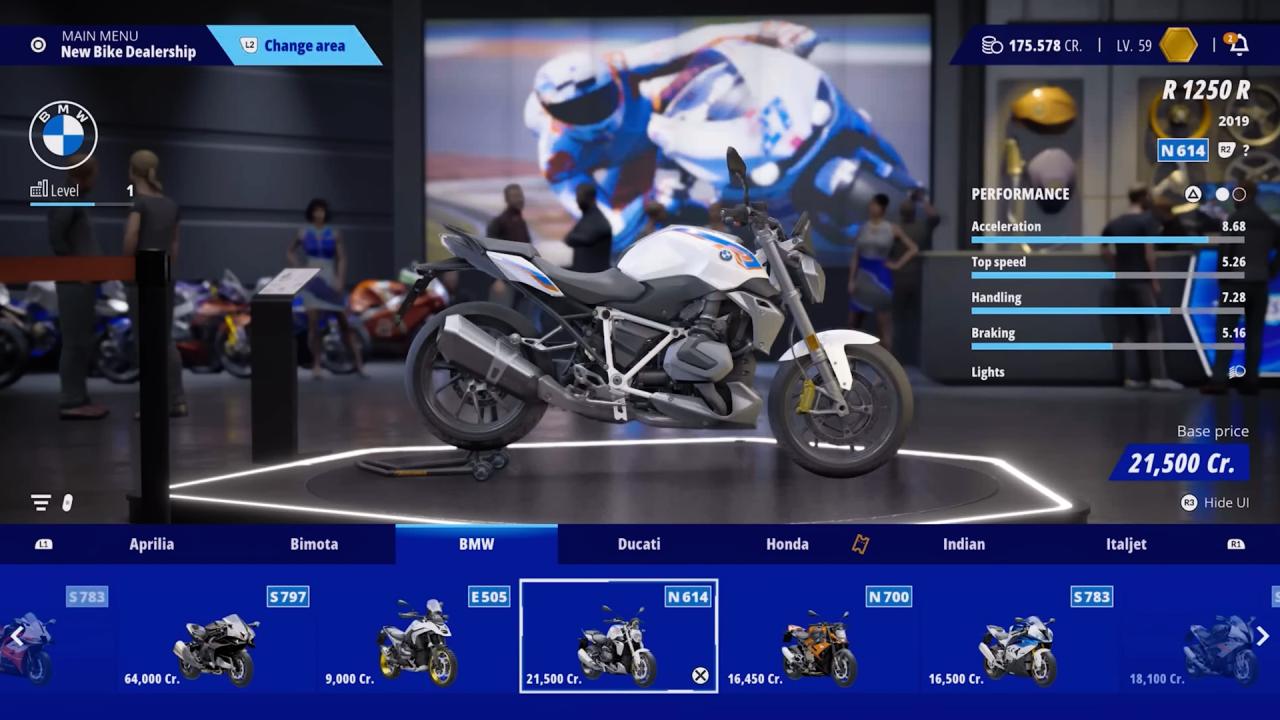
Bike models are the true stars. Every machine is rendered with obsessive detail, from engine components to paint finishes. You can admire them in showrooms and garages like real collector pieces.
Tracks are equally impressive in RIDE 6.
There are 45 circuits in total, including DLC, with 11 new additions. Real-world venues like Mugello, Suzuka, Nordschleife, Valencia, Cadwell Park, Vallelunga, Autopolis, Sugo, Road America, and Algarve provide a strong variety. Fictional tracks like Blue Wave Circuit are well-designed.
The performance is smooth. The game runs at a steady 60 frames per second in 4K on the PlayStation 5, with options for higher refresh rates. There are some minor issues, like shader caching, disappearing shadows, and cinematic black bars in replays, but they don't occur often and don't affect gameplay. RIDE 6 is one of the best-looking racing games on the market right now.
Another strong point for RIDE 6 is its sound design. Each type of bike sounds different. Inline-fours with high revs scream. V-twins growl. Baggers rumble. Scooters make noise. The range is impressive, given the size of the roster. Engine notes are carefully recorded, and you can hear the differences between very similar machines. Endurance bikes sound especially realistic when you're racing for a long time.
The controller's feedback, especially on the PlayStation DualSense, is crisp. Trigger resistance and vibration let you feel changes in grip, braking pressure, and the surface, making riding feel real. But not everything is great.
Ambient sound can be inconsistent. In empty areas, sometimes you hear a little crowd noise. When you drive off-road, you don't get much physical feedback. It seems headphone optimization isn't fully developed yet. Most of the time, background music is easy to forget. The engines sound great, but the rest of the soundscape could use some work.
Milestone is at its most confident and complete in RIDE 6. It doesn't change motorcycle racing, but it makes almost every part of the series better.
Adding arcade handling makes the game more accessible without making the simulation less deep. Pro mode is still hard and rewarding. Even though it feels a little unfinished in some places, off-road racing is a fun change of pace.
Ridefest does a good job of structuring progression, even though it lacks much atmosphere. There are many bikes on the list. Customization is very deep. The graphics are amazing. Physics is more consistent than it has ever been.
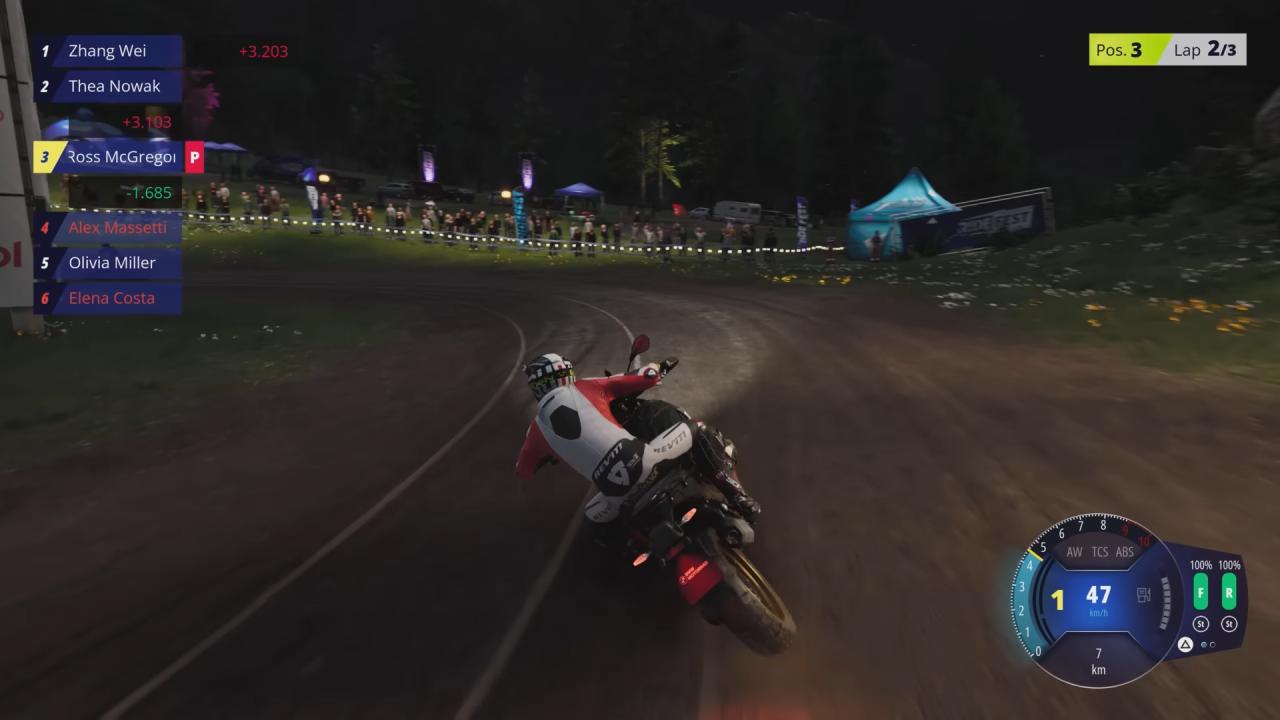
The most important thing is that riding feels right. The game gives you a sense of flow that few other racers can match when you smoothly link corners, control the throttle through long bends, and carve through technical sections at high speed. Riding through Suzuka's S-curves, surviving Nordschleife's crests, or navigating Oulton Park's narrow lanes are all examples of why motorcycle racing is so exciting in RIDE 6.
RIDE 6 is not perfect, though. The festival's theme seems shallow. Off-road tracks aren't very hard. Moving up in your career can feel like a grind. Some of the most exciting content arrives late. It's not like AI awareness is something to brag about, either.
But none of these problems takes away from the main experience. RIDE 6 gives you the tools to enjoy motorcycling on your own terms, whether you're a casual fan looking for easy fun or a serious rider looking for mechanical authenticity.
Senior Editor, NoobFeed
Verdict
RIDE 6 is the best game in the series because it has better physics, a lot of different activities, and is easy to get into. It's not a game-changer, but if you love motorcycles, this is the best way to play them right now.
82
Related News
No Data.