
Sudden Strike 5 Review
PC
A sharper, larger, and more demanding sequel built for commanders who enjoy pressure with purpose and return to real-time tactics, where World War II scale meets modern control design.
Reviewed by Sarwar Ron on Apr 22, 2026
Sudden Strike 5 arrives almost a decade after its predecessor, developed by KITE Games and published by Kalypso Media for PC, PlayStation 5, and Xbox Series X|S. The series has always lived apart from traditional base-building strategy, choosing battlefield command, unit preservation, and positional discipline instead. This new entry steps out with bigger maps, more tactical agency, and a broader sense of operational theatre across Europe and North Africa.
The attached material frames it as a long-awaited sequel with 25 historically inspired missions, three factions, and over 300 World War II units. KITE Games inherits a franchise with a clear identity, and that identity matters because the real-time tactics genre is often unforgiving by design. There is no comfort blanket of endless production queues or safe resource farming in the background, only the units on the field and the consequences of using them poorly.
Kalypso Media’s publishing history with strategy games gives this release an audience that expects depth, not decorative spectacle.
The result is a game that respects its lineage while attempting to make large-scale command more manageable for modern players. Sudden Strike 5 does not tell a personal war story in the character-driven sense, and that is both a limitation and a deliberate creative choice. Its campaign is structured around historical operations rather than a single dramatic arc, placing players in command of the Axis, Western Allies, and Soviet Union.
The narrative comes through mission briefings, battlefield objectives, shifting fronts, and the particular demands of each faction’s wartime position. Instead of asking you to follow heroes, it asks you to read terrain, understand pressure, and make history move through orders. That structure gives the campaign a documentary texture, though it can feel emotionally restrained.
The missions appear inspired by real conflicts, from airborne assaults and desert engagements to brutal urban advances and defensive stands. Briefings, voiced context, and faction framing help establish stakes before the fighting begins, but the experience still prioritizes tactics over drama. For some players, that will feel refreshingly focused; for others, it may feel like history without enough human intimacy.
The most compelling narrative moments emerge from failure and adaptation. A roadblock that looked weak can shred careless infantry, an exposed vehicle column can become a burning mistake, and a captured supply hub can change the entire rhythm of a mission. This is storytelling through systems, where the campaign’s emotional force comes from watching a plan survive contact with resistance. The game understands that in tactical strategy, suspense is not always written in dialogue; sometimes it is written in fuel, ammunition, sightlines, and smoke.
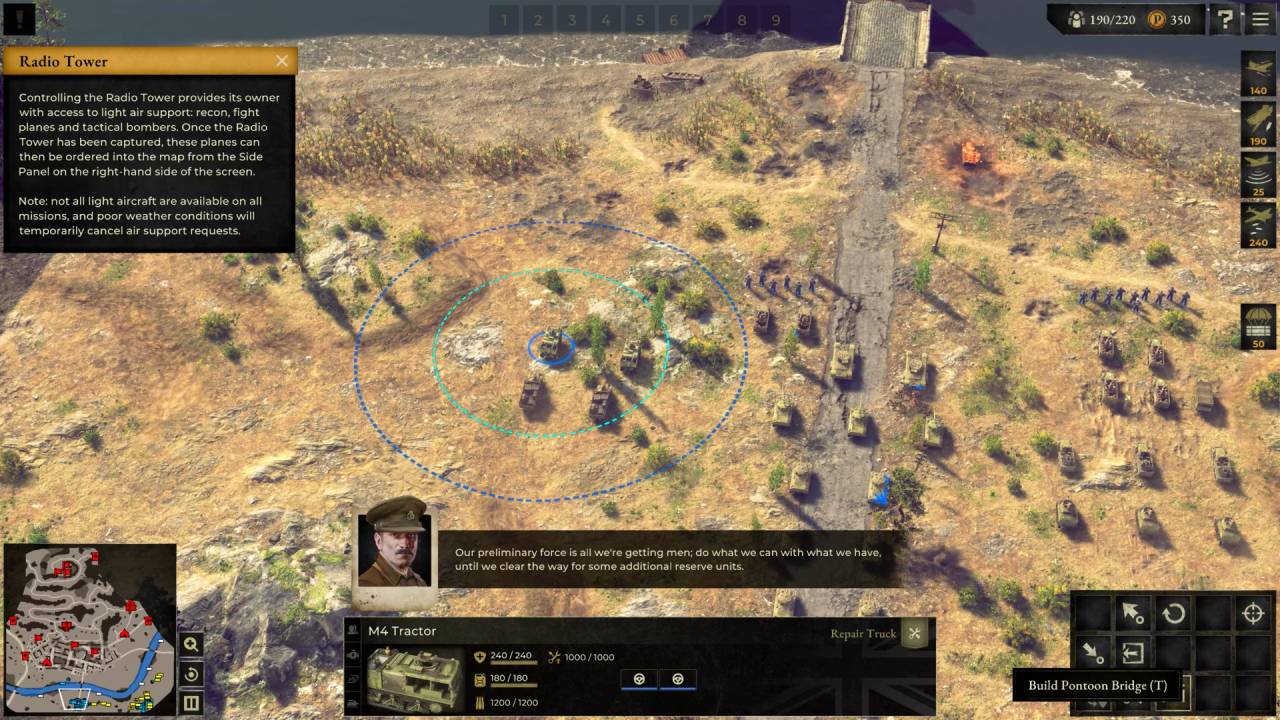
Sudden Strike 5 is a real-time tactics game built around command rather than construction. You guide infantry, tanks, artillery, reconnaissance tools, medics, repair vehicles, supply assets, and air support across large mission maps with multiple points of interest. The loop is direct but demanding: scout, capture, hold, reinforce, repair, resupply, reposition, and press forward before the enemy turns hesitation into punishment.
Every unit has a purpose, and every careless order carries a cost that can follow you for the rest of the operation.
The campaign spans 25 missions and offers three major faction perspectives, which gives the package a generous strategic spread. Before missions, you can select commanders or playstyles that influence battlefield strengths, such as offensive force, defensive resilience, or tactical flexibility. Doctrine Points create a layer of persistent progression, unlocking perks like better sight, improved first aid, support tools, smoke options, and other combat advantages.
This gives the campaign a welcome sense of identity building, even though it stops short of becoming a full role-playing structure. Prestige is the key in-mission currency, and it shapes the battlefield economy with impressive clarity. Capturing positions and expanding control provide the means to call in reinforcements, vehicles, and support, making map control feel meaningful rather than cosmetic.
Radio towers can enable lighter air support, radar stations can open stronger strike options, and repair or supply points can keep an offensive from collapsing. This design turns territory into momentum, which is exactly what a large-scale tactical game needs. The supply system adds further tension because ammunition and fuel are not decorative numbers. Vehicles need upkeep, damaged armor must be repaired, and infantry often require medics or first aid after suppression or injury.
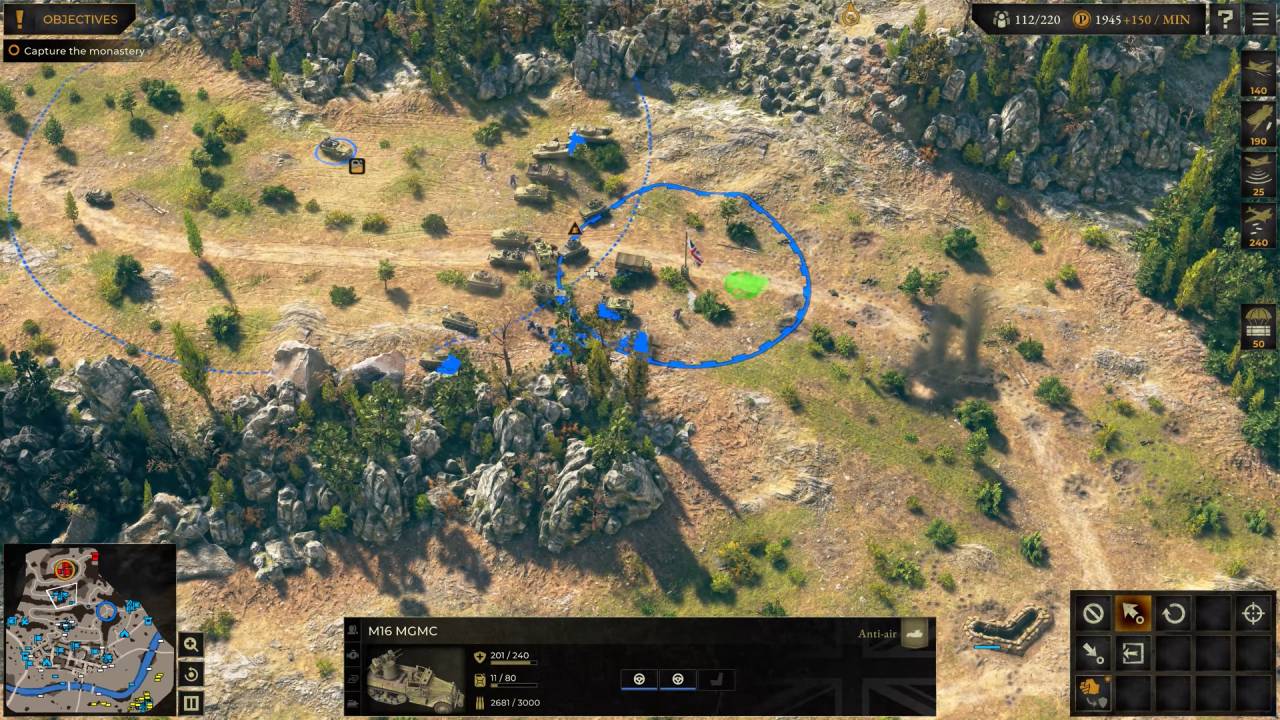
Support units become as important as glamorous combat assets, because an army without fuel is scenery and an artillery line without shells is only expensive furniture. The game is at its smartest when it makes logistics feel like battlefield drama rather than background administration. Sudden Strike 5 builds combat around terrain, timing, visibility, unit composition, and controlled aggression.
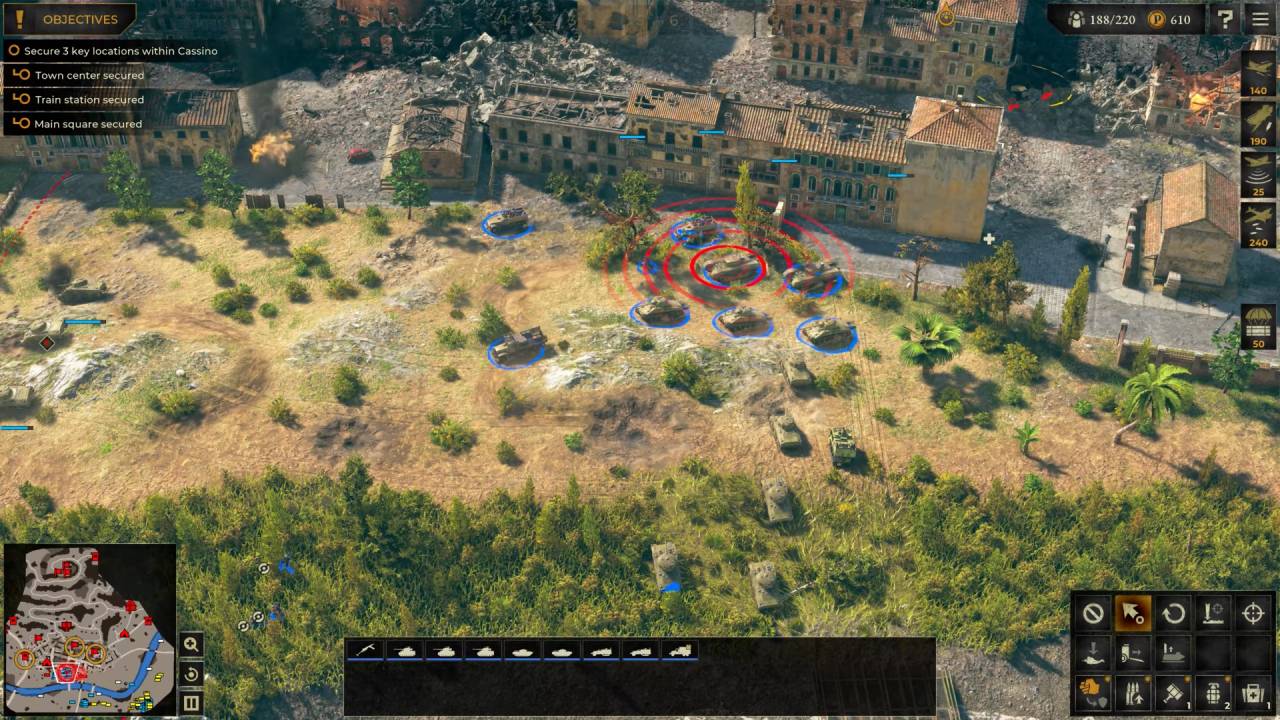
You must decide whether to push through open fields, secure forests, occupy buildings, cross rivers, build or protect routes, and exploit high ground before the enemy responds. Infantry can enter cover, vehicles can anchor assaults, artillery can soften hardened positions, and aircraft can reshape a fight when anti-air threats are contained.
The combat puzzle lies in combining those tools without wasting fragile units in a game that punishes impatience.
Tactical Pause is one of the most important quality-of-life features because it lets you queue complex orders without drowning in real-time chaos. Large battles can involve multiple fronts, supply issues, wounded troops, enemy counterattacks, and reinforcement choices happening at once. Being able to halt the action and assign coordinated moves makes the experience more readable without removing the pressure of decision-making. It is not a cheat; it is a command-table feature, and it helps the game respect both strategy and accessibility.
Smart Squad and formation tools also modernize the control experience. You can group mixed forces, arrange movement formations, and send armor, infantry, and support units forward with more structure than older micromanagement-heavy systems allowed. This matters because the maps are large, and unit counts can become intimidating, especially when objectives span multiple lanes of attack.
The best moments come when a carefully composed force moves with intent, armor leading, infantry screening, artillery watching, and support trucks keeping the line alive. The stress system adds a strong psychological layer. Units under heavy fire can become suppressed, forced into limited movement, and dependent on medical or support intervention to recover operational usefulness. That mechanic discourages lazy frontal assaults and makes fire superiority feel tangible, especially when infantry are caught in exposed ground. It also gives battles a human fragility that pure hit-point systems often fail to communicate.
The strongest part of the puzzle design is its respect for preparation. A successful attack rarely feels accidental, because victory usually comes from reconnaissance, supply awareness, support coordination, and intelligent route selection. Capturing secondary points can open air support, create reinforcement options, or secure logistics, so the map becomes a set of opportunities rather than a corridor. That gives the game a premium tactical feel, where you are rewarded for thinking like a commander rather than clicking like a gambler.
The combat also benefits from meaningful unit distinction. Snipers, mortars, tanks, anti-tank guns, medics, repair vehicles, aircraft, and infantry squads all have jobs that can matter deeply in the right context. When the system works, the battlefield becomes a layered conversation between sight, range, armor, suppression, damage, repair, and momentum. Few things are more satisfying than breaking a fortified line because the correct tools were assembled in the correct order.
Yet the game also exposes friction in its battlefield logic.
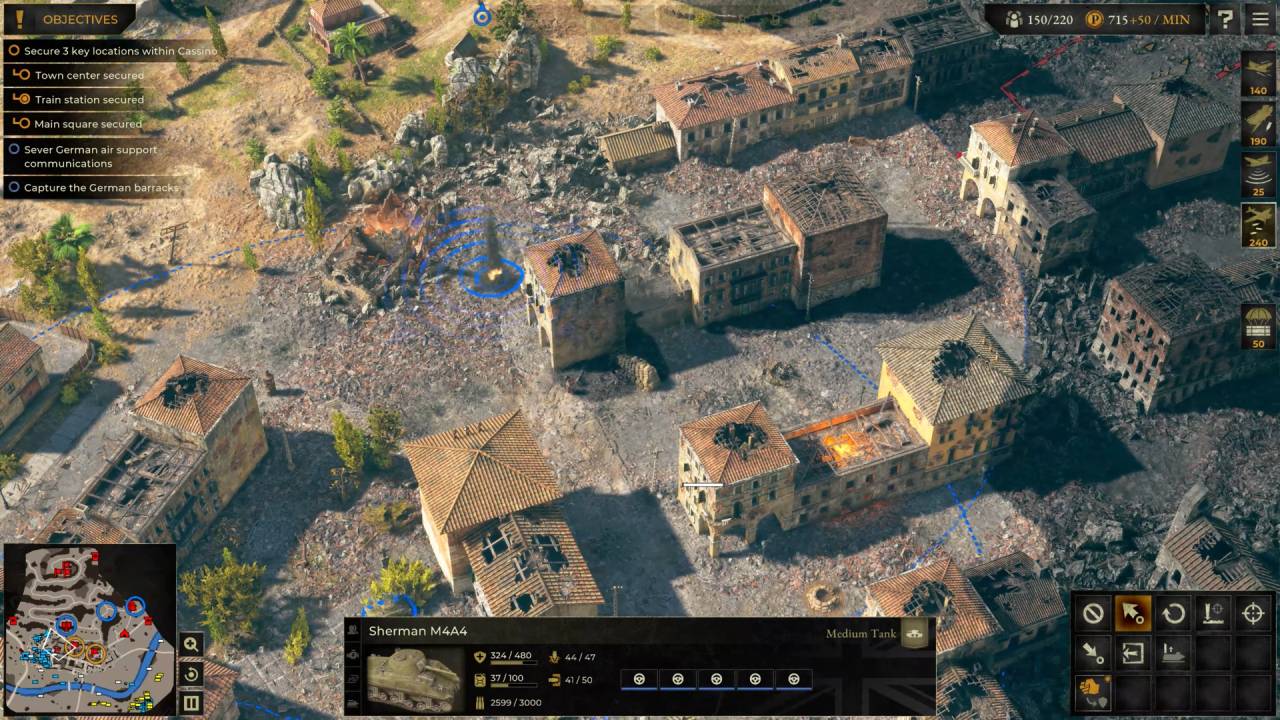
Infantry can feel too fragile in open spaces, especially when maps do not always provide enough durable cover near critical objectives. Buildings may offer shelter, but they can collapse quickly and destroy occupants, turning what looked like smart positioning into sudden punishment. That harshness can be realistic in spirit, but it sometimes produces frustration rather than tactical insight.
Unit durability can also feel inconsistent. The attached impressions describe cases where certain gun crews or emplacements appear unusually resilient, even while infantry elsewhere collapses almost instantly. That imbalance damages readability, because you need to trust that the game’s tactical language will behave consistently under pressure. When an exposed weapon team withstands too much direct punishment, the illusion of plausible combat briefly starts to crack.
Artificial intelligence is another mixed front. Enemy aggression can create urgency and make missions feel alive, but constant rushing can seem odd when supposedly defensive forces abandon sensible positions. Pathfinding and unit behavior may also create irritation when troops blob together, hesitate, or fail to execute orders with the precision the genre demands. A tactics game lives on trust, and every unclear order response chips away at that trust.
Sudden Strike 5 uses Doctrine Points and mission performance rewards rather than traditional character-level grinding. You earn progression through standard mission completion and optional objectives, then spend those points on upgrades that influence future tactical choices. That structure encourages fuller engagement with the map, because secondary objectives are not just busywork; they can feed long-term battlefield flexibility.
It is a smart form of progression because it rewards control, curiosity, and risk without turning the campaign into repetitive farming. Prestige works differently, functioning as the in-mission engine for reinforcement and operational tempo. Holding key locations and expanding influence allows you to bring in more units, recover from losses, and sustain pressure when the enemy begins to counterattack.
This creates a satisfying rhythm where territorial success feeds practical power, and practical power allows bolder tactical decisions.
The loop is clear, useful, and thematically appropriate for a game about securing ground and maintaining initiative. The danger is that progression can soften tension if access to reinforcement becomes too generous. One of the series’ traditional strengths is the feeling that every unit matters because replacements are limited and mistakes linger. Continuous reinforcement through Prestige makes battles more dynamic, but it may also reduce the sting of poor decisions in certain missions. The balance works best when extra forces feel earned and necessary, not like a convenient reset button.
Doctrine progression adds replay value, though it isn't deep enough to radically transform the whole experience. Different commanders and perks can support flanking damage, defense, first aid, visibility, smoke, or specialized tactical advantages. These choices give you room to shape a preferred command style, especially across repeated attempts or alternative mission approaches. The system is effective because it adds identity without overwhelming the clean battlefield focus.
Sudden Strike 5 presents a good-looking tactical battlefield, especially when viewed as a command map full of moving parts rather than as a cinematic showcase. The scale is immediately noticeable, with broad environments, numerous vehicles, infantry groups, destructible elements, smoke, aircraft, and artillery effects competing for attention. Modern upscaling support, such as DLSS, FSR, and XeSS, helps the game maintain performance while supporting large engagements and detailed units. Technically, the release version appears far stronger than earlier demo impressions, though minor stutter can still appear during initial play.
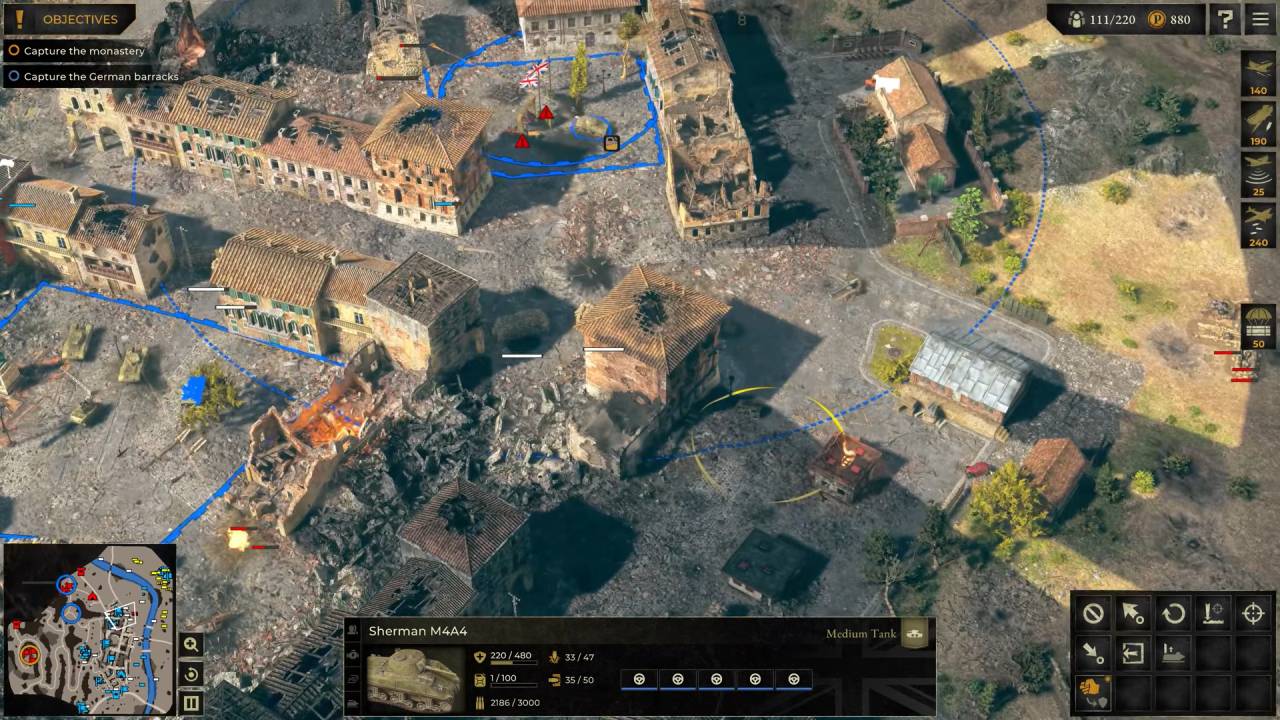
The visual design succeeds most when it supports tactical readability. Terrain elevation, roads, crossings, forests, trenches, buildings, and strategic structures all need to be understood quickly because hesitation can be costly. When the interface communicates these layers clearly, the battlefield feels spacious, functional, and full of meaningful choices. The game is not chasing visual poetry; it is building a legible war table with enough spectacle to sell the scale.
There are still presentation shortcomings. Some observers may find the visual leap from the previous entry less dramatic than expected, given the long gap. The game looks solid, but it doesn't always look striking, and certain animations or effects can feel more practical than lavish. That choice aligns with the franchise’s priorities, yet a sequel launching years later naturally invites higher expectations for audiovisual evolution.
Interface clarity is the bigger visual concern.
Newcomers may struggle with unit symbols, purchase points, tactical overview tools, and the meaning of certain battlefield structures. A strategy game can be complex, but complexity should be introduced with confidence, hierarchy, and elegant onboarding. Here, the interface sometimes assumes too much, leaving players to learn through avoidable confusion.
Sound design gives the battlefield much of its weight. Artillery lands with force, gunfire cuts through the mix, aircraft create overhead dread, and the soundtrack supports the theatre without overwhelming the player’s focus. The best audio moments communicate scale, making the battlefield feel dangerous even before the next order is given. This matters because real-time tactics depend on tension, and tension is often built through sound before it is understood through sight.
Voice work and briefings help frame missions, though some odd language or faction audio inconsistencies can interrupt immersion. When units respond correctly and the battlefield mix stays coherent, the soundscape supports the fantasy of disciplined command under pressure. When voice lines feel mismatched or repeated, the illusion becomes thinner, especially in a game already asking you to process dense information. The audio is generally strong, but it needs polish in the details that make long campaigns feel seamless.
The soundtrack deserves credit for knowing its role. It does not attempt to overpower the strategy layer with constant melodrama, instead giving the action a firm military pulse. That restraint is important because you may spend long stretches analyzing terrain, moving supply vehicles, repairing armor, or preparing assaults. The sound design shines brightest when explosions, engines, orders, and music blend into a controlled sense of battlefield urgency.
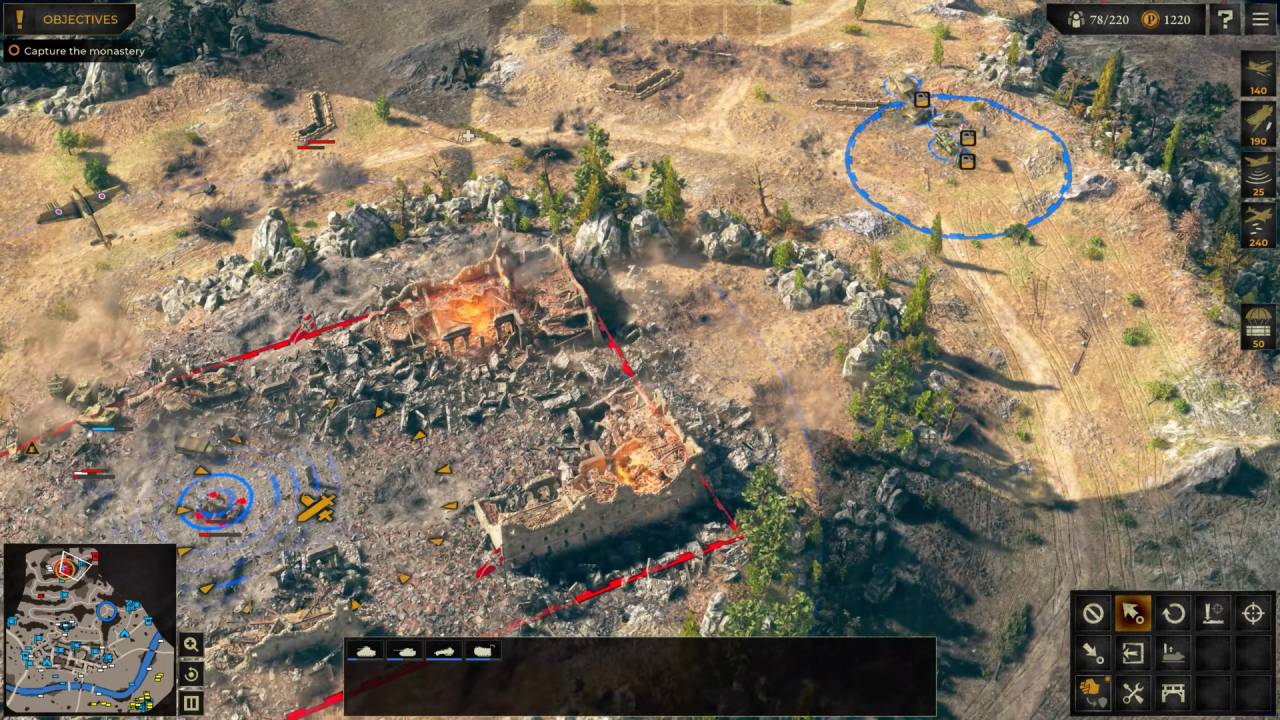
Sudden Strike 5 is a confident sequel with a clear understanding of its audience. It offers large maps, multiple factions, substantial mission content, extensive unit variety, doctrine progression, tactical pause, smart formations, and a stronger sense of freedom. For players who want real-time strategy with no base-building distractions, this is a muscular and often rewarding battlefield sandbox. It knows that command should feel demanding, and it mostly makes that demand feel worthwhile.
Its problems are not small, though. The learning curve is steep, the tutorial support can feel thin, the interface may confuse newcomers, and some combat interactions lack believable consistency. AI aggression, pathfinding quirks, fragile infantry, over-resilient emplacements, and limited skirmish customization can all dull the edge of an otherwise sharp tactical package. These flaws do not ruin the game, but they prevent it from feeling as refined as its best systems suggest it could be.
The question of value depends heavily on you. Veterans of the series and real-time tactics loyalists will likely find enough substance to justify serious attention, especially across campaign, skirmish, and multiplayer potential. Newcomers should approach with patience, because the game does not always explain itself with the grace that modern audiences expect. It rewards commitment, but it does not always make the first handshake easy.
Sudden Strike 5 ultimately works because its core promise remains compelling. It turns World War II engagements into tense tactical problems where supply, positioning, timing, and controlled aggression matter more than spectacle. The sequel is not revolutionary, and it is not immune to genre fatigue, but it carries the franchise forward with scale, confidence, and sharper command tools. For players willing to think before every advance, this is a battlefield worth entering.
Admin, NoobFeed
Verdict
Sudden Strike 5 is a strong tactical sequel with scale, depth, and pressure, held back by rough onboarding, AI quirks, and uneven combat feedback and battlefield quirks.
55
Related News
No Data.