
AMD, Intel, NVIDIA Shifting Focus Beyond Gaming GPUs
AMD, Intel, and Nvidia are shifting GPU development toward AI, professional workloads, and infrastructure beyond traditional gaming hardware.
Hardware by Naheyan Tahmin on Aug 01, 2026
The GPU market is undergoing another change as AMD, Intel, and NVIDIA release new hardware aimed at different parts of the computer business. AMD is adding more AI hardware with lots of memory, Intel is putting its biggest Battlemage chip in professional workstations, and NVIDIA is still working on AI systems that can do more than just games.
These new GPUs show that GPU development is becoming more split between AI infrastructure, professional tasks, and games. Three new GPUs are changing the market, but the important point is what these products are designed to do.
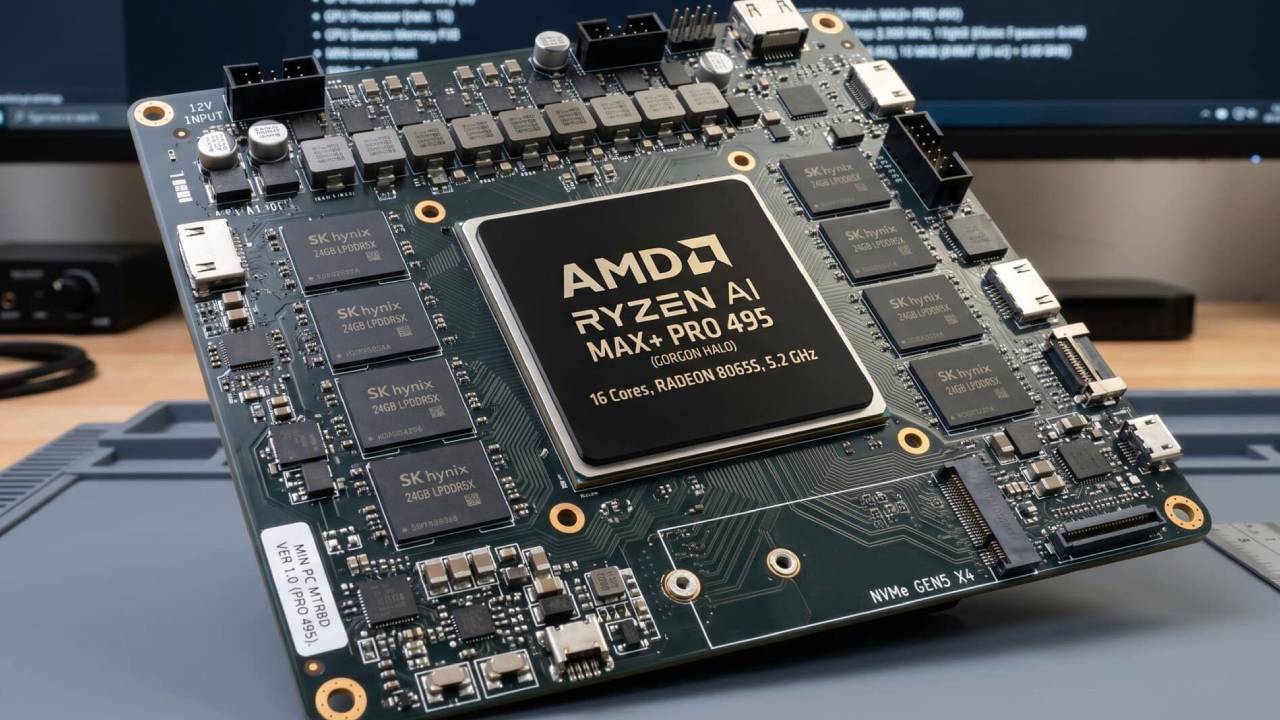
AMD has launched a GPU with 432GB of memory, Intel has released its largest Battlemage chip, and NVIDIA is pushing AI-focused hardware that has little to do with traditional gaming cards. AMD introduced the Instinct MI455X and the Helios RX scale platform at its Advancing AI event on July 23.
AMD's 432GB AI GPU
One MI455X carries up to 432GB of HBM4 memory and 23.3TB per second of bandwidth. For perspective, that is more memory than 13 32GB RX 590 cards combined. MI455X is not a graphics card for a gaming PC. It uses AMD's RDNA 5 architecture for AI training and inference rather than Radeon gaming drivers.
The relevance for gamers comes from where AMD is directing its GPU engineering. AMD is building entire racks as one AI computer. The hardware is designed around AI workloads rather than gaming. That means AI performance headlines should not be confused with gaming performance. For a gaming enthusiast, we should look at what hardware actually changes frame rates and gaming performance.
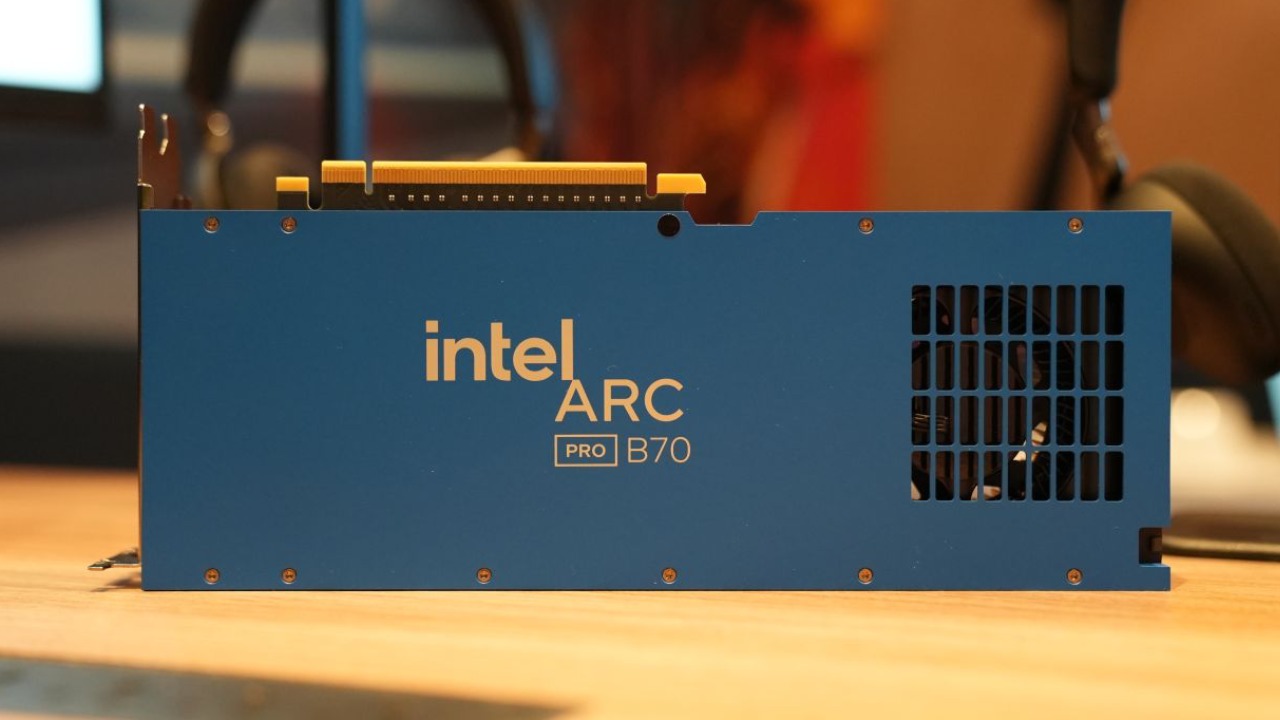
Intel's Arc Pro B70 uses the 32-core BMGG31 Battlemage GPU. It includes 32GB of ECC GDDR6, a 256-bit memory interface, 608GB per second of bandwidth, and a 230W board power rating. Independent workstation testing found the B70 more than twice as fast as the Arc Pro B50 in Blender and slightly ahead of AMD's Radeon AI Pro R9 700. NVIDIA still leads several professional workloads.
Intel's Largest Battlemage Chip
The important part for you is that the large Battlemage chip is real, but Intel used it for Arc Pro. Intel's official consumer desktop lineup still lists only the Arc B570 and B580. The long-rumored Arc B770 gaming card remains unconfirmed. For creators and local AI users, the B70 brings the memory capacity and hardware needed for workloads that can benefit from more VRAM.
For gamers waiting for a high-end Arc gaming card, however, the B70 is not that product. NVIDIA's direction is different again. Instead of focusing only on traditional gaming GPUs, NVIDIA is scaling AI hardware that behaves more like data center infrastructure than consumer graphics cards.
These systems are designed for massive parallel workloads rather than frame rates in games. NVIDIA is no longer competing only in gaming performance. It is competing in AI compute at a scale that most desktop GPUs will never reach.
For you as a gaming buyer, the catch is that none of this directly helps when choosing a $400 to $800 gaming GPU today. It does not change FPS in current games, it does not reduce VRAM pressure in modern titles, and it does not make mid-range graphics cards cheaper.
AMD's new hardware is designed for AI racks.
Intel's largest Battlemage chip is being used for workstations. NVIDIA is pushing AI systems that sit far beyond normal consumer hardware. For desktop gamers, none of these products is a reason to delay a good graphics card purchase. When you are choosing a gaming GPU, compare current gaming benchmarks, VRAM, power usage, and real street prices.
The situation is different for creators and local AI users. Memory capacity is becoming a feature that companies are willing to sell, even when raw gaming speed barely changes. AMD's MI455X shows that trend at the AI system level, while Intel's Arc Pro B70 brings 32GB of memory to a workstation-focused product.
The GPU market is therefore moving in several directions at once. AI hardware is becoming larger and more focused on memory and compute, while consumer gaming cards remain tied to gaming performance and pricing. The largest chips from AMD, Intel, and NVIDIA may represent where GPU technology is heading, but they do not automatically determine what gaming hardware should be purchased today.
Editor, NoobFeed
Gaming Hardware Updates
No Data.