
Super Scram Kitty Review
Nintendo Switch
A fast-paced sci-fi arcade shooter where momentum, gravity, and mechanical precision turn every rescue mission into controlled chaos.
Reviewed by Asura Kagawa on Jun 20, 2026
Dakko Dakko has always had a thing for weirdly specific game titles and simple gameplay hooks. The studio first got attention with The 2D Adventures of the Rotating Octopus Character, which honestly explained itself better than most trailers do. Then came Floating Cloud God Saves the Pilgrims, another title that sounded more like a full sentence than a game name.
For their next major release, the developers brought back their Wii U cult classic Scram Kitty and His Buddy on Rails, rebuilt it for modern hardware, and launched it on Nintendo Switch as Super Scram Kitty. The Switch version feels like a genuine throwback to old arcade games where one clever mechanic could carry the entire experience. Instead of relying on giant maps or endless side activities, this game focuses almost entirely on movement and momentum.
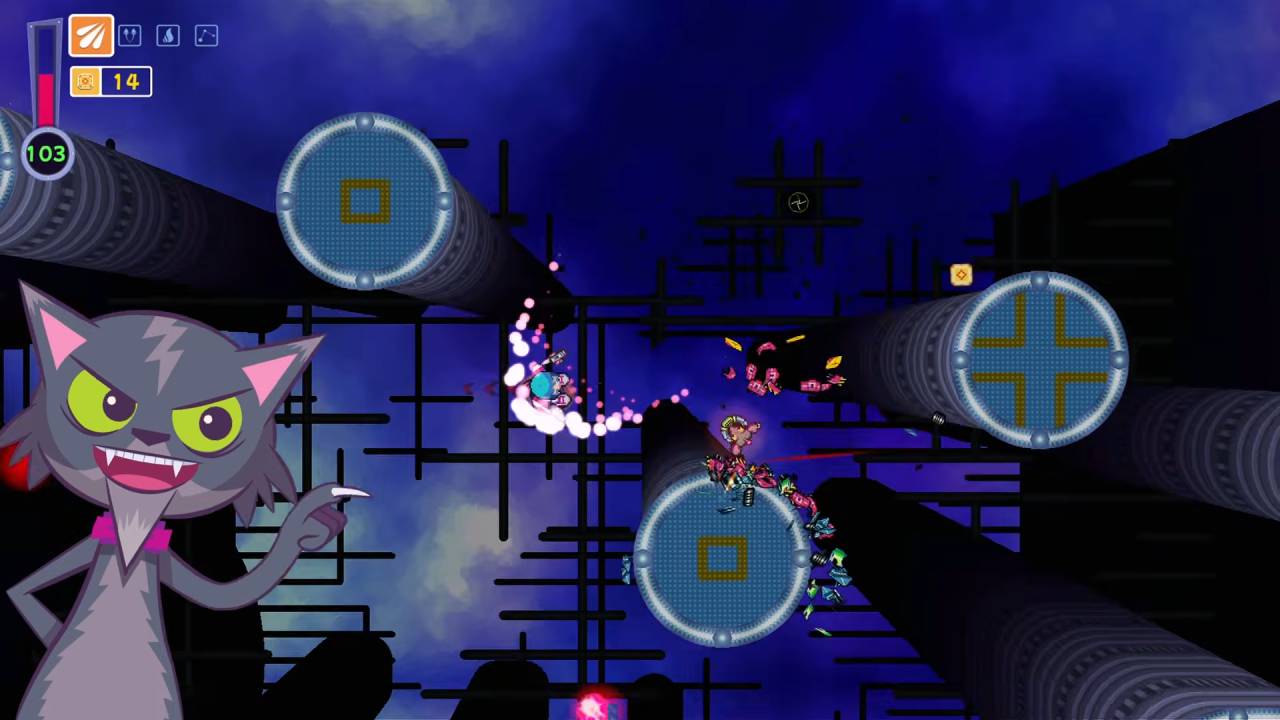
Your ship travels along rail systems attached to the walls of each stage. You can jump away from the rails to cross gaps, but the game’s unusual physics immediately pull you back toward nearby surfaces. At first, it feels strange, almost restrictive, but after a while, the movement starts to click in a really satisfying way.
What makes the game stand out is its commitment to this one idea. Rather than stuffing the experience with unnecessary systems, Dakko Dakko clearly spent its time refining the controls and level design instead. That approach feels refreshing now, especially when so many modern games are packed with oversized skill trees, live-service mechanics, or open worlds that exist mostly to waste time. Super Scram Kitty knows exactly what it wants to be and sticks to it.
When the game was announced for Switch, there was understandable curiosity about how its momentum-heavy movement would translate to handheld controls. The original version already had a reputation for being mechanically demanding, so players naturally wondered whether the controls would still feel smooth on thumbsticks.
Thankfully, the transition works surprisingly well. The game still feels fast and technical, but it rarely becomes frustrating once you adjust to the physics. That learning curve is part of the appeal. Super Scram Kitty succeeds mainly because it refuses to follow standard platformer design. It isn’t just a simple port of old arcade games; it has the spirit of those games while feeling fresh and new. The result feels both nostalgic and original at once, which is much harder to pull off than most indie games make it look.
Players pilot a nimble spinboard to rescue adorable felines from a rodent armada.
The setup for Super Scram Kitty is as ridiculous as expected. Players control a small spinboard pilot trying to rescue kidnapped cats from an army of heavily armed space mice. The story is intentionally simple, but it works perfectly for the kind of game this is. Your goal is to push through different sectors of a massive rodent-controlled space station, rescue trapped cats, and take down increasingly dangerous bosses along the way.
The presentation leans fully into colorful arcade chaos. The game is full of colorful environments, over-the-top enemy designs, and fun animations that bring a lighthearted energy to everything, fitting the absurd premise quite nicely. Even with the story being kept to a minimum, saving cats still gives every stage a clear purpose. It is a simple motivation, but effective.
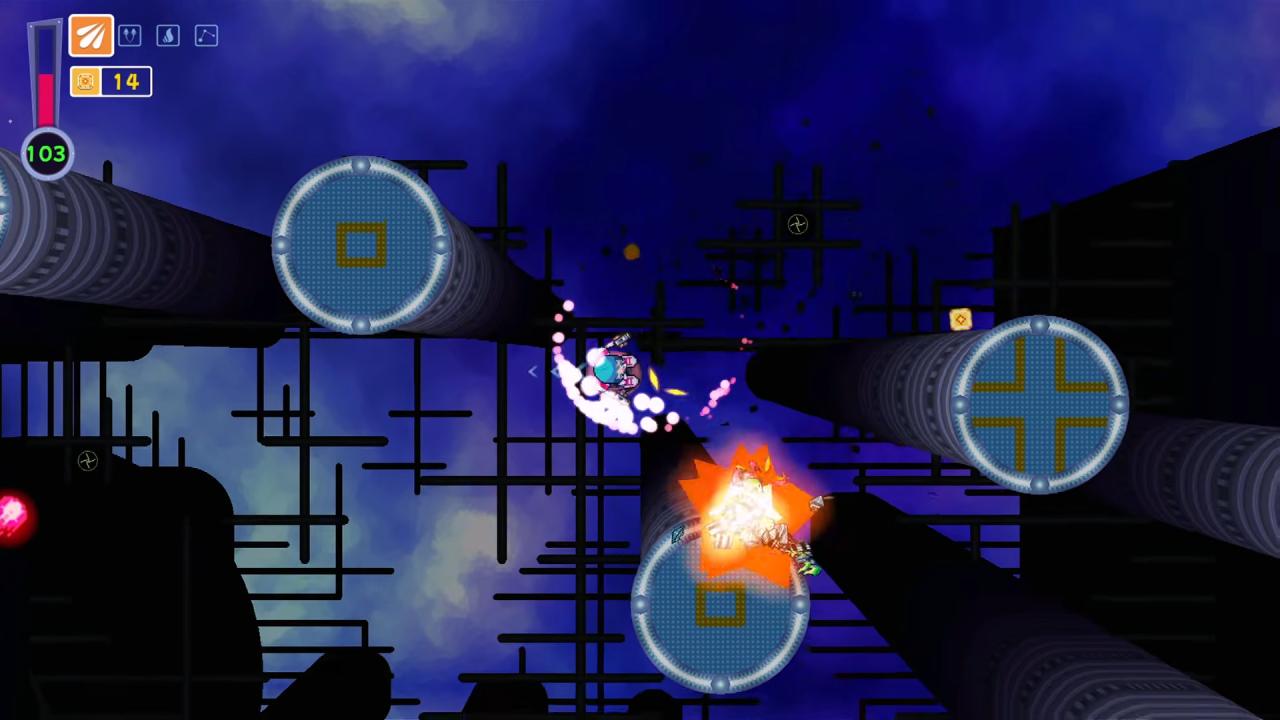
One of the game’s strongest qualities is its environmental storytelling. Instead of stopping gameplay for dialogue or cutscenes at every turn, the world slowly leaks information through its design. As the players explore further into the station, they start to realize how industrialized and automated the rodent empire really is.
Each new section brings new machinery, dangers, and defensive systems that help make the station believable despite the ludicrous premise. The game relies on the players to piece the story together themselves. There are a few moments when the experience stops to explain itself, which helps keep the pace fast.
Little details help sell the setting, too. Cats trapped inside generators or locked behind mechanical barriers quietly reinforce the notion that the mice have turned the station into a giant prison. It’s a subtle approach that works better than long exposition dumps ever could. It keeps the focus on gameplay while still making the world feel surprisingly cohesive.
Rich cosmic themes elevate an incredibly lonely and atmospheric sci-fi environment.
Even with the cartoon visuals, Super Scram Kitty can create a surprisingly lonely atmosphere at times. The deeper into the station you travel, the lonelier everything feels. Large industrial corridors, flashing warning lights, and distant machinery noises give parts of the game an almost eerie tone. There are no human characters around, only endless mechanical structures run by hostile rodents. That isolation gives the rescue missions more emotional weight than expected.
Rescuing trapped cats is actually satisfying, because their surroundings are so cold and hostile. The sci-fi aesthetic also deserves credit. The neon colors, metallic environments, and glowing machinery combine to create a setting that feels both retro and modern.
Some middle sections of the campaign can drag slightly, especially when certain stages introduce fewer new ideas. A few areas feel more like connective tissue than major progression points. Still, the game’s arcade structure keeps things moving quickly enough that the pacing never becomes a major issue. Dakko Dakko clearly prioritized gameplay flow over complex storytelling, and honestly, that was probably the right decision.
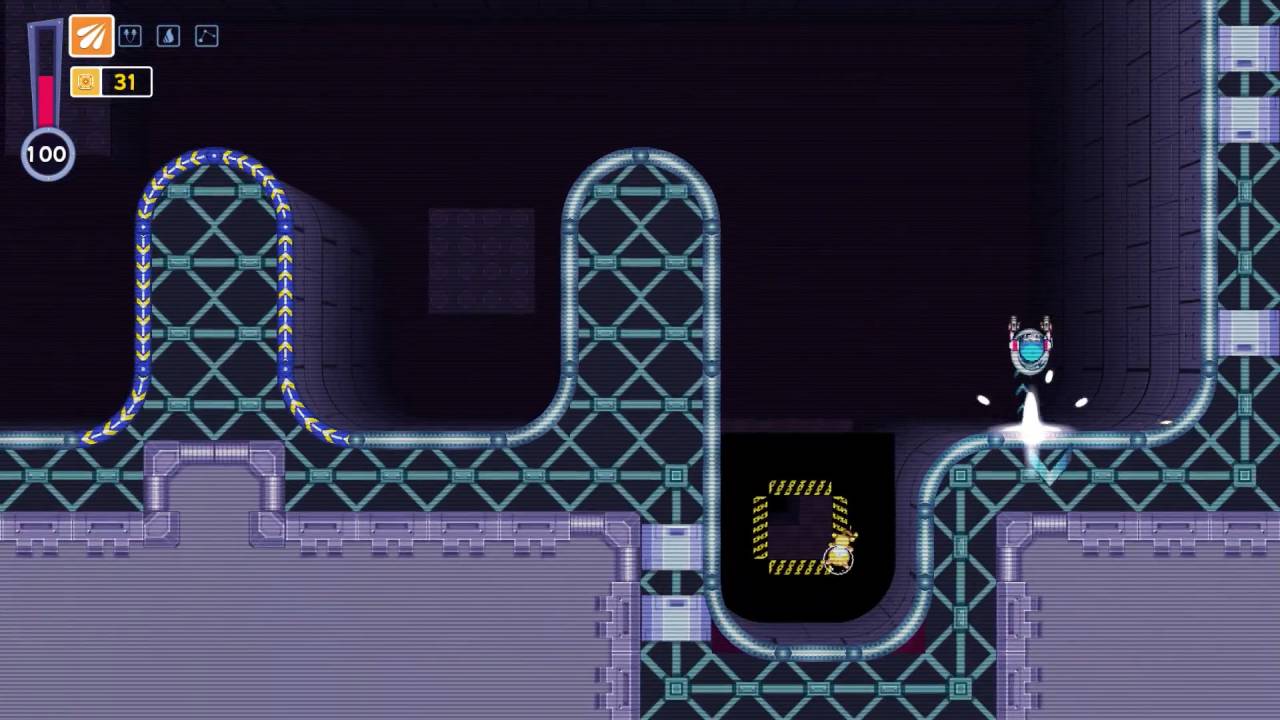
The atmosphere works because the game never overexplains itself. Instead, it lets players absorb the environment naturally as they move through each stage. Every area feels distinct, both visually and mechanically, which keeps exploration engaging throughout most of the campaign.
A rigid directional firing system challenges players to master unique gravity physics.
The actual gameplay is where Super Scram Kitty becomes genuinely unique. Since your craft sticks to rails lining the walls of each room, movement works completely differently from traditional platformers or shooters. Your ship only fires straight ahead based on the direction of the rail you are currently attached to. Because of this, positioning becomes just as important as aiming.
The gravity system adds another layer of complexity. Whenever you jump away from a wall, your character gets pulled back toward the direction you originally launched from instead of falling downward normally. At first, the movement can feel awkward, but once the physics start making sense, the entire game opens up. Traversal becomes surprisingly fluid, and difficult rooms start feeling more like puzzles than standard combat arenas.
Players can also use a double jump and lock their firing direction while moving, which adds a lot more flexibility during intense encounters. At the heart of the stages is constant movement. Rails twist unpredictably around rooms, forcing players to think about positioning, momentum, and attack angles.
The game rarely gives players time to switch their brains off. Every room asks you to read the geometry carefully while reacting to enemies at the same time. Exploration also feels rewarding because collectibles are placed in risky positions that encourage experimentation. Players constantly decide whether to stay safe or launch themselves toward harder-to-reach rewards. That extra layer of decision-making makes movement feel engaging even outside combat.
Saving highly judgmental cats requires absolute mastery over distinct level challenges.
Each stage contains multiple cats that can only be rescued by completing different objectives. Reaching the exit is usually enough to save the first cat, but the others require much more effort. Some cats will want to collect everything in a level, but others are all about completing the level without taking damage. There are also cats tied to timed challenges or hidden enemy encounters.
This system adds a ton of replay value to stages by encouraging players to return to levels as they get better at the game. The variety of enemies also helps keep things fresh. Smaller scout enemies pressure players aggressively, while larger armored foes force more strategic movement.
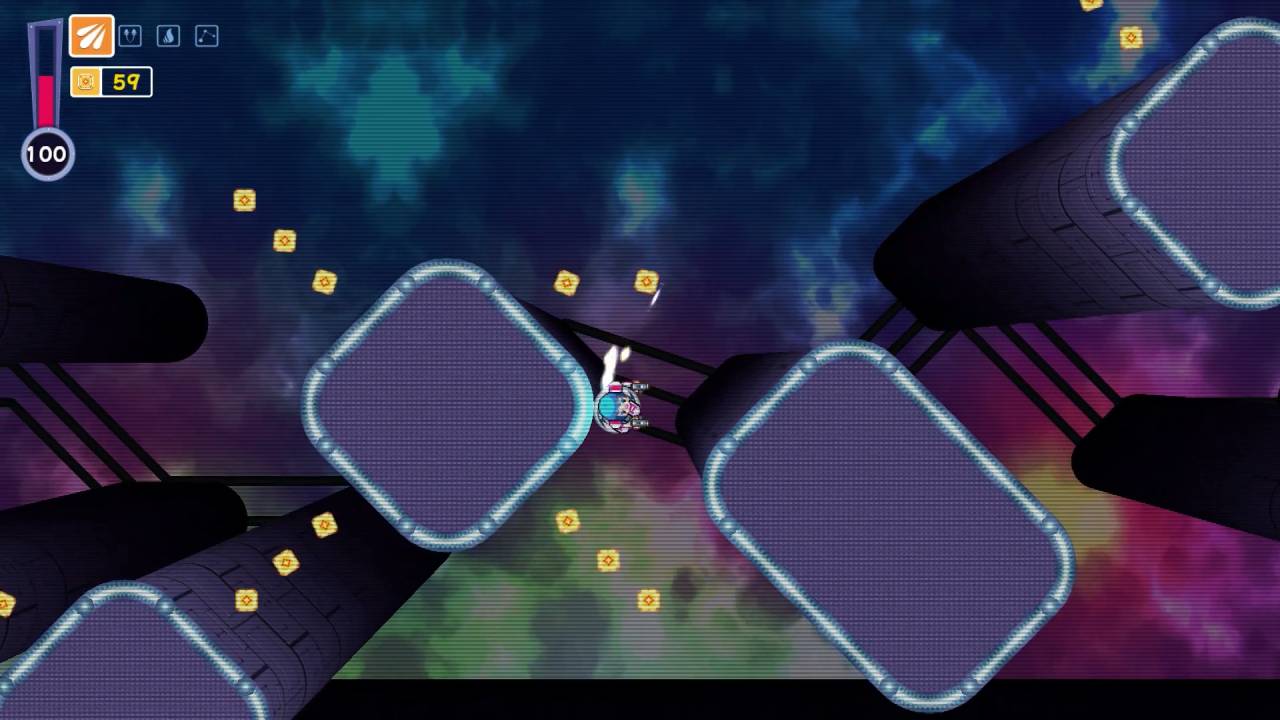
Because combat depends heavily on positioning, every encounter feels slightly different depending on where you are standing and which rails you are using. Environmental puzzles are mixed naturally into the stages as well.
They usually involve flipping switches or navigating hazards while keeping your momentum going, rather than stopping gameplay completely. Most of these sections feel satisfying, although a few later puzzles rely a little too heavily on trial and error.
Occasionally, you will fail simply because the required movement path was difficult to predict in advance. The difficulty curve can also spike unexpectedly during certain sections. Some encounters suddenly require near-perfect knowledge of the movement system, which could be frustrating for newer players.
Thankfully, those rough moments are fairly uncommon. Most of the campaign introduces new ideas at a reasonable pace. And when everything finally comes together, the game feels incredible.
Clearing a chaotic room filled with lasers, enemies, and moving rails creates a real sense of accomplishment because success depends entirely on skill. That old-school arcade feeling is easily one of the game’s biggest strengths.
High-speed kinetic combat rewards players for slamming space mice into walls.
Combat in Super Scram Kitty feels fast, chaotic, and surprisingly physical. One of the biggest additions in this version is a melee kick attack that lets players slam directly into enemies. Players can also slam enemies into walls at high speed for instant kills, rather than just blasting everything from afar, which adds a satisfying level of aggression to the combat system.
The further you progress, the more dangerous the environment becomes. Stages quickly fill with spikes, moving hazards, projectiles, and enemies attacking from multiple directions at once.
Every defeated enemy drops brain energy, which contributes toward progression and reinforces the game’s strange sci-fi setting. The strongest part of the combat system is, without a doubt, its feedback. Impacts feel heavy thanks to strong sound design, sharp animations, and explosive visual effects.
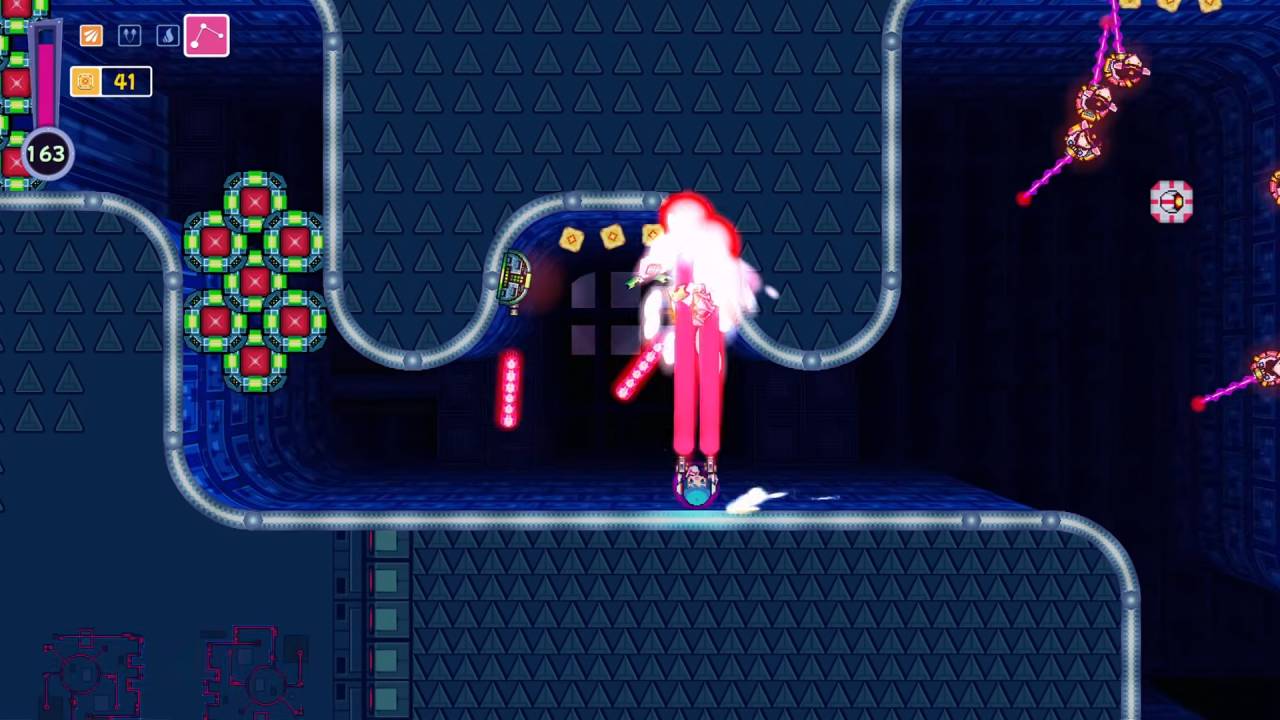
Landing a perfectly timed kick while watching enemies bounce across the room never really gets old. This also means the game is good at naturally teaching players about enemy placement, rather than having heavy tutorials or waypoint markers. This allows players to learn to intuitively read attack patterns as they become accustomed to the surrounding environment.
This keeps the flow going, and makes combat feel intuitive, even with the odd movement mechanics. There are still a few weak spots. Enemy behavior does not always evolve as much as the player’s movement options do, which can make some later fights feel predictable once you fully understand the mechanics.
Certain puzzle sections can also become mildly frustrating because they depend on extremely precise movement timing. Fortunately, the controls are responsive enough that retrying difficult sections rarely feels unfair. Overall, though, the combat system remains one of the game’s biggest achievements. Combining projectile combat with momentum-based melee attacks gives Super Scram Kitty a style that feels genuinely distinct from most indie shooters.
A highly responsive progression system values personal skill over repetitive attribute grinding.
One of the smartest things about Super Scram Kitty is the lack of traditional RPG leveling systems. No massive upgrade trees, no unending stat boosts, no constantly popping inventory screens. Progression is almost entirely about improving your own understanding of the mechanics. Success is about mastering movement, positioning, and timing, not grinding experience points. That design choice gives the entire game a much cleaner pace.
It also fits the arcade-inspired structure perfectly. Every victory feels earned because improvement comes from practice instead of inflated damage numbers. The game respects the player’s time by keeping gameplay front and center.
There are upgrades, but they typically grant new movement or combat options instead of just a straight-up stats boost. This method may be a little too simple for some players, especially if you’re looking for more robust customization systems or RPG elements. Still, the simplicity feels intentional. Dakko Dakko clearly wanted players focused on the action rather than menu management. That philosophy gives the game a kind of old-school purity that feels increasingly rare in modern releases.
Cutting-edge lighting and a brilliant synthetic soundtrack create a memorable sensory experience.
Visually, Super Scram Kitty looks fantastic on the Nintendo Switch. The game blends old-school pixel art with dynamic lighting effects that bring the environment to life. Each level is a different environment, filled with glowy machinery, bright neon colors, and intense sci-fi environments.
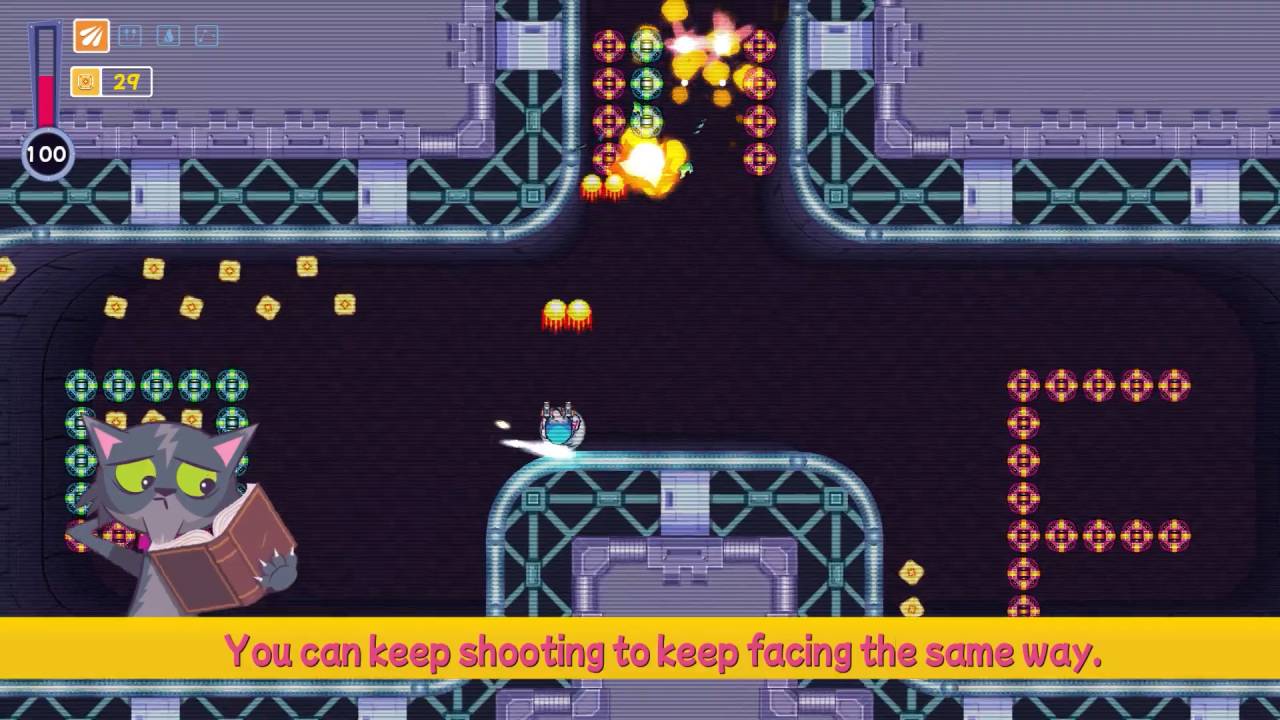
Character animation is especially impressive, with the spinboard flowing smoothly on the rails, realistic momentum-based reactions, and a well-designed level layout. This constant motion gives the game a lot of personality even in more relaxed parts.
On the downside, some of the visual effects can be a little overwhelming. Several firefights are filled with explosions and flying projectiles, making it difficult to see what's happening around you. Thankfully, those moments are rare enough that they never become a serious problem.
The soundtrack is excellent throughout the entire campaign. Heavy electronic beats and atmospheric synth tracks match the fast pacing perfectly and help strengthen the game’s sci-fi identity. The sound effects deserve a shout-out too. Explosions, metallic impacts, and electrical hums all have a satisfying weight to them that makes combat feel more intense.
In the end, Super Scram Kitty stands out for its extreme focus. Dakko Dakko took one unusual gameplay concept and polished it until nearly every part of the experience supported that core mechanic. The result is a fast, creative arcade shooter that feels both nostalgic and genuinely original.
It may not be for those who want cinematic storytelling or massive RPG systems, but for those who appreciate tight mechanics and inventive movement, Super Scram Kitty is an easy recommendation. The game works because it knows exactly what it wants to do and never loses sight of that vision.
Staff Writer, NoobFeed
Verdict
Super Scram Kitty turns one bizarre movement mechanic into a wildly addictive arcade experience, delivering sharp combat, clever level design, and pure old-school gameplay satisfaction.
78
Related News
No Data.