

Steam Machine vs. PlayStation 5: How Console Performance Compares in Modern Games
Steam Machine delivers console-class gaming performance while offering greater flexibility through adjustable resolutions and PC features.
Hardware by Nakiro on Jun 24, 2026
The launch of the Steam Machines has sparked debate over whether a small PC-centric gaming device can go toe-to-toe with the latest consoles. After extensive testing across several demanding titles, we can now see how the Steam Machine stacks up against the PlayStation 5 under CPU- and GPU-limited conditions.
The results show a system capable of delivering console-class gaming performance while still providing the flexibility often found in PC gaming.
CPU Performance vs. PlayStation 5
Compared to a console, the Steam Machine surprisingly performs well given its form factor and intended use case. A lot of testing with PC games at PlayStation 5-equivalent settings, VSync enabled where applicable, reveals some interesting variances.
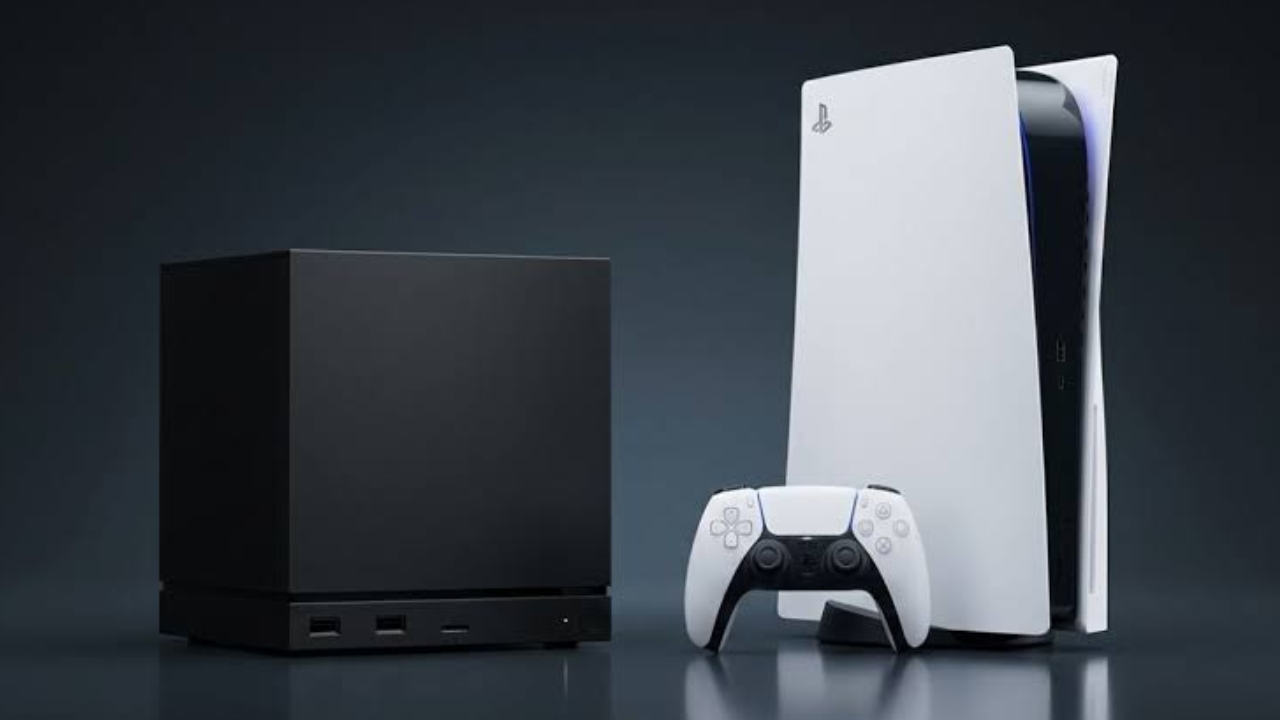
With matching settings, the Steam Machine is performing well below 60 fps on the Crimson Desert CPU test, indicating that VSync does not impose any additional performance limitations. Back at Bug Hill, the Steam Machine performs much better in CPU-limited situations. On PlayStation 5, we get an average of 34.8 fps, which increases to 41.2 fps on the Steam Machine, showing that Valve's hardware has more CPU headroom.
The city of Baldur's Gate in Baldur's Gate 3 presents an unusual situation. Using the default native Linux build, the Steam Machine delivers only an 11% improvement over the PlayStation 5. However, forcing the game to run through Proton and utilizing the original Windows version via the translation layer increases the advantage to 24%.
Larian previously updated Baldur's Gate 3 for Steam Deck, significantly improving CPU-bound performance and stability. It appears possible that some of those optimizations may have been tailored specifically for Steam Deck, potentially reducing performance benefits on other PC hardware.
If you are playing Baldur's Gate 3 on Linux via SteamOS or a Steam Machine, switching to Proton provides an immediate 11% performance improvement over the native Linux version in this test.
GPU Comparisons & Graphics Performance
The city of Baldur's Gate in Baldur's Gate 3 presents an unusual situation. The RX 7600's graphics performance in Steam Machine is somewhat similar to that of the PlayStation 5's GPU. Which means the Steam Machine should lag slightly in graphics-intensive situations.
So Black Myth: Wukong is an exciting beginning. Not one of the strongest console ports, therefore, it leans more towards the Steam Machine. In the most extreme cases, PlayStation 5 is about 17% to 18% faster, while the Steam Machine has a slight edge in other areas. In some areas, the two systems perform nearly identically. On average, the PlayStation 5 holds a slim 3% lead, while real-world gameplay will vary greatly depending on the environment.
Alan Wake II produces equally compelling outcomes. In the Chapter 2 stress test in Performance Mode, PlayStation 5 averages 55.3 fps, compared to the Steam Machine's 50.7 fps, giving the platform a 9% lead. Alan Wake 2 is not accessible on Steam; it runs fine with the Heroic Launcher, which is installed through the Steam Machine's desktop mode.
That's one of the defining properties of the Steam Machine. It offers a console-like gaming experience, but it's a full PC underneath with desktop capabilities and compatibility for various launchers.
The disparity in graphics performance is even worse while testing Crimson Desert in Performance Mode. PlayStation 5 still leads by about 17% here, quite similar to the earlier comparisons with the RX 7600.

Resolution Scaling and Forza Horizon 5
There are further issues with Forza Horizon 5 on consoles. The PS5 version employs dynamic resolution scaling, achieving native 4K with 4x MSAA, while other visual settings, such as reflections, are dynamically adjusted. These options are not directly available on PC.
To create a meaningful comparison, the Steam Machine was tested at native 4K and again at 1620p, representing 75% of 4K resolution on both axes. Performance falls significantly behind PlayStation 5 at locked native 4K, but the gap narrows considerably at 1620p.
Memory bandwidth appears to be a major factor. PlayStation 5 offers substantially higher bandwidth than the Steam Machine, and even at 1620p, bandwidth-intensive visual effects can still produce occasional frame rate drops. Still, 1620p looks really nice, especially if you're watching it on a 4K screen from normal living room distances.
The city of Baldur's Gate in Baldur's Gate 3 presents an unusual situation. The benefit of Steam Machines and AMD GPUs is that they can support a wide range of resolutions, including 1800p and 1620p. These alternatives offer significant performance gains while maintaining good image quality. In many cases, only static HUD elements reveal noticeable scaling differences.
007 First Light and Dynamic Resolution Challenges
Another direct comparison comes from 007 First Light, using console-equivalent settings supplied by the developer. However, a significant challenge arises due to differences in resolution scaling.
The PlayStation 5 version uses dynamic resolution scaling between 720p and 1080p, with FSR 3.1.5 upscaling to 4K. The PC version lacks dynamic resolution scaling entirely and cannot use FSR upscaling from 720p to 4K because an Ultra Performance mode is unavailable. As a result, identical visual settings still place different workloads on the GPU.
During the explosive airfield sequence, one of the most GPU-intensive portions of the game, PlayStation 5 experiences occasional frame rate drops, suggesting it is operating at the lower end of its dynamic resolution range. Steam Machine with FSR 3 Performance Mode is similar to internal 720p resolution but with lower upscaling requirements, targeting 1440p instead of 4K.
The city of Baldur's Gate in Baldur's Gate 3 presents an unusual situation. Both platforms have small decreases in the frame rate under certain conditions. On the other hand, FSR 3 Balanced Mode runs at 48fps to 50fps and internally renders at a greater resolution.
The Steam Machine doesn't have dynamic resolution scaling, so it can't quite meet the specs, but it does support full VRR. The PlayStation 5 might sometimes miss frames during periods of heavy streaming, which could indicate the CPU is under strain. Steam Machine maintains a consistent 60 fps with FSR 3's Performance Mode and only experiences mild GPU-related dips in Balanced Mode.

In each of these cases, the Steam Machine setups feel smoother than the console versions, perhaps due to the device's better CPU performance.
Not every result favors the Steam Machine, however. Earlier PC performance analysis identified crowd-related performance issues that do not appear on PlayStation 5. Certain scenes remain perfectly locked on the console while producing frame drops on the Steam Machine. These decreases are not very sensitive to resolution or upscaling options, indicating a CPU-bound constraint.
The city of Baldur's Gate in Baldur's Gate 3 presents an unusual situation. The end results may look the same, but the reasons for the performance discrepancies are not always immediately clear.
Console-Class Gaming in a Compact Form Factor
The bottom line is that the Steam Machine delivers console-quality gameplay in a machine that takes up only a fraction of the physical footprint of a standard console. Modern gaming is really playable at high settings if you do it right, especially on demanding titles like Unreal Engine 5.
Users should also be aware that the device only has 8GB of GPU memory from Valve. Software enhancements can still improve memory efficiency, but there are practical limits compared to graphics cards with higher VRAM capacities.
A more powerful RDNA 4 solution, such as a 9060 XT-equivalent GPU with 12GB of VRAM, would, of course, provide greater headroom. But the Steam Machine was built to a price, and that price was very much determined by the state of the memory and storage markets.
As long as developers continue to prioritize the PlayStation 5 as their primary platform, the Steam Machine should be able to deliver comparable visual quality and performance. The platform also offers greater flexibility with configurable resolutions, powerful upscaling, VRR compatibility, and frame generation capabilities that console gamers don't have.
Steam Machine shows the gulf between the two types of devices is narrower than ever for those who want a small gaming device that's as simple as a console but as flexible as a PC.
Editor, NoobFeed
Latest Articles
No Data.