
Talespinner Review
Nintendo Switch
A stylish turn through yokai folklore that asks you to think before you swing.
Reviewed by Asura Kagawa on Aug 06, 2026
Every so often, a new roguelike deckbuilder shows up promising to shake up a genre that's already fairly crowded, and it's easy to approach Talespinner with a bit of skepticism at first. Flash Cat Games built this one from the ground up as a new IP rather than a sequel, and Kwalee picked it up to publish it on Switch and PC on August 6, 2026, priced at $14.99 with an E10+ rating and set up for a single player to work through alone.
There's no legacy baggage here, no older entries to live up to, just a small team trying to carve out its own identity in a genre that's currently overflowing with Slay the Spire imitators. What makes Talespinner worth sitting down with is the Japanese mythology angle, since so many card battlers in this space lean on generic fantasy trappings instead of committing to a specific aesthetic.
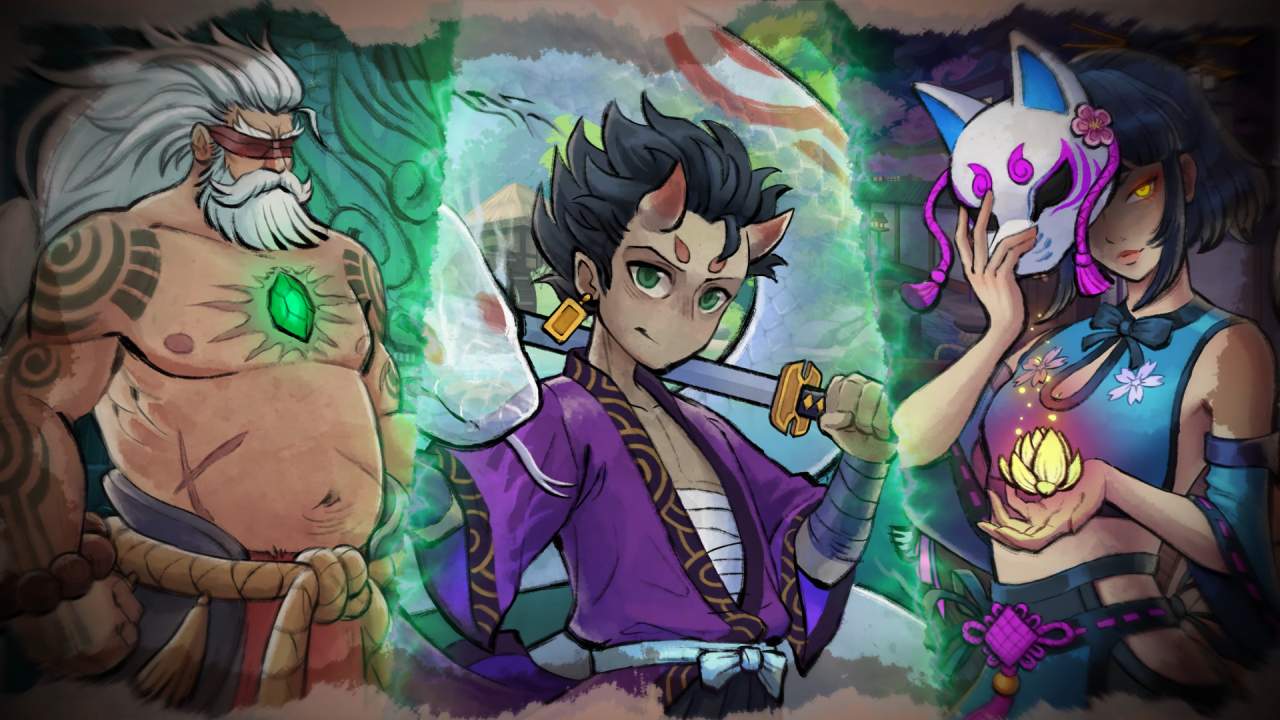
Three heroes, three rulebooks: how Talespinner's mythology-first approach carries into every menu and mechanic.
Talespinner commits, and that decision shapes almost everything about how the game looks, sounds, and plays, right down to how it frames its menus and its currency. Before diving into a run, it's worth poking around the character select screen for a minute, since that alone makes clear Talespinner isn't handing you three reskins of the same deck.
Each hero comes with a separate rulebook essentially, and mastering one doesn't translate directly into mastering the other two. That kind of commitment to genuinely different playstyles is rare enough in this genre that it's worth calling out before getting into anything else.
You're dropped into a world built entirely around yokai folklore, and it shows in the smallest details, right down to the little umbrella-shaped spirits wandering around in the background of fights. The framing device is your "story," a term the game uses loosely, since there isn't much of an actual narrative tying your runs together.
Your currency for shaping each run is literally called story points, and the difficulty modifiers you unlock later are called Plot Twists, which sets up an expectation of some kind of evolving plot thread stitched between stages. That expectation never really pays off.
The story framing promises more than it delivers, but the chapter structure underneath is where Talespinner actually shines.
What you get instead is flavor text sprinkled around events and a mythology-soaked setting rather than a story with an actual arc. That's easy enough to forgive after a few runs, since dialogue tends to fade into the background by your fifth or sixth attempt anyway, but it still feels like a chance to make the world feel a little more alive that got left on the table.
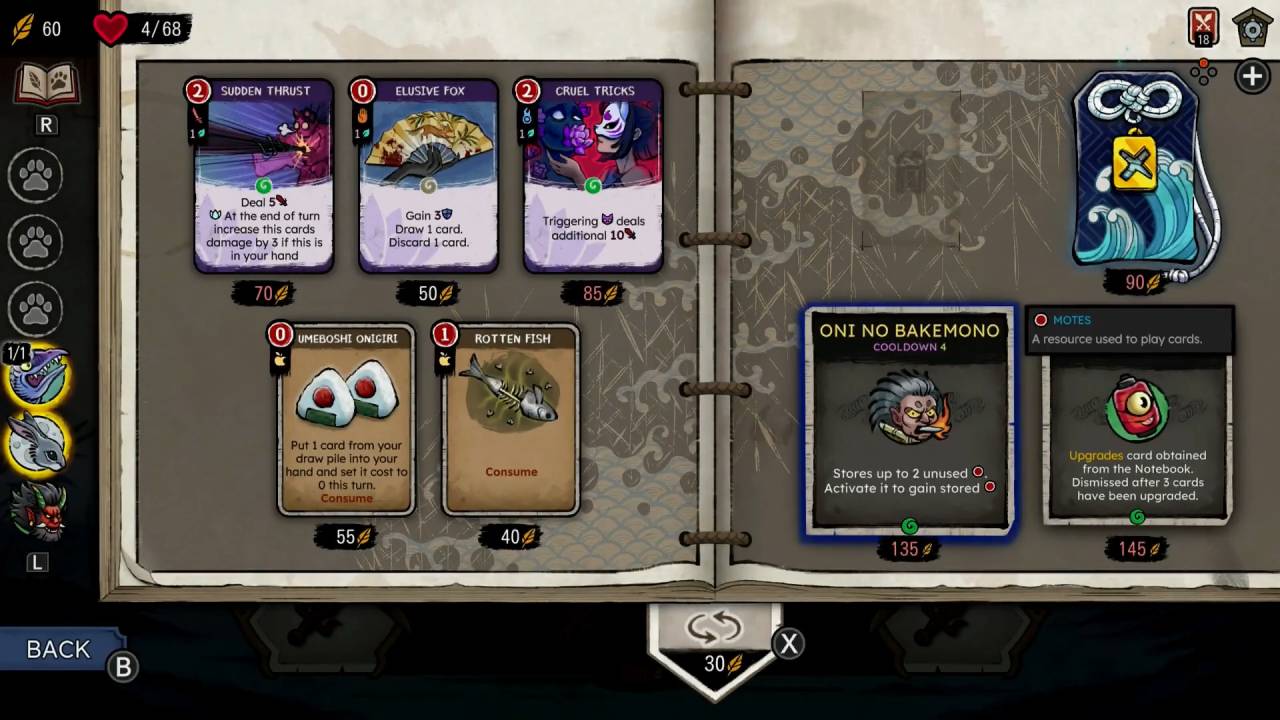
Talespinner doesn't spend much time building out lore beyond that setup, and that's a detail you make peace with pretty quickly. Where the game actually spends its energy is on structure and choice. At the start of each chapter, you choose between two narrative paths, and that choice locks in a specific boss, a pool of rewards, and the type of encounters you'll be running into for that stretch.
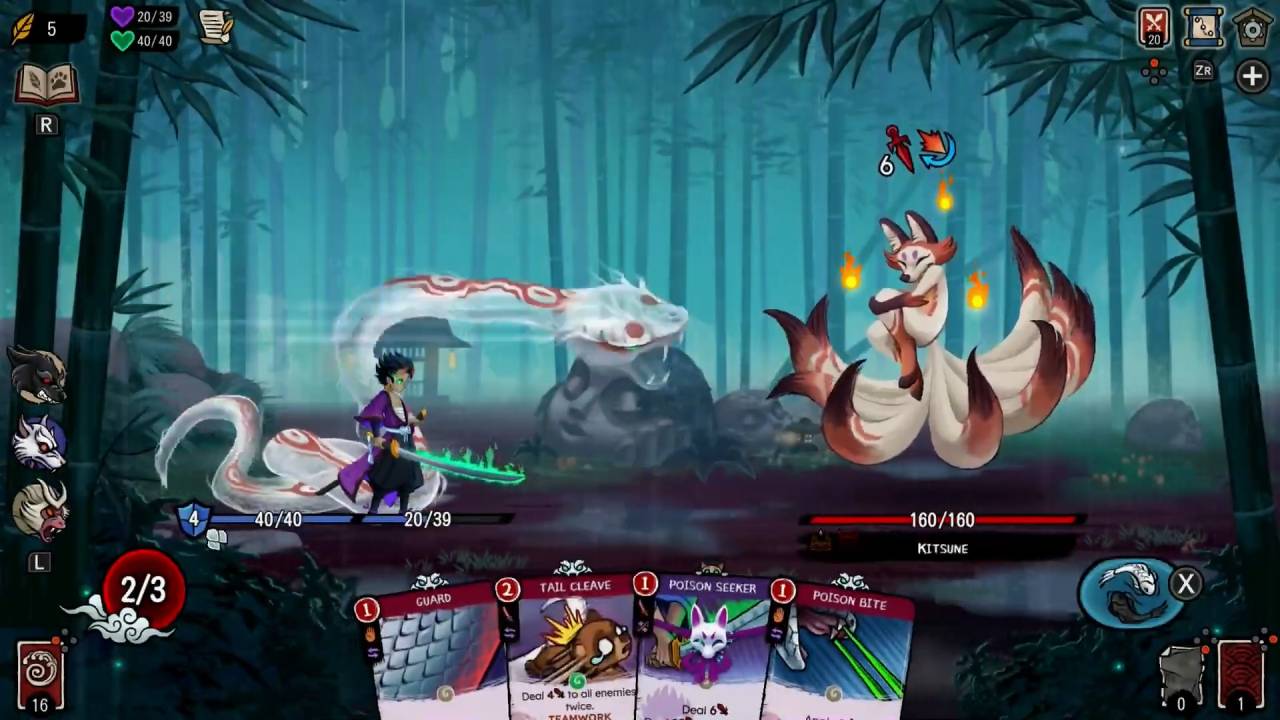
From there, each chapter breaks down into a short sequence of nodes leading toward that boss, and the encounters pulled from your chosen pool get shuffled into a queue you have to work through. You can grab whatever sits on either end of that queue for free, but reaching into the middle costs story points, so you're constantly deciding whether to spend points dodging a rough fight or save them for the shop instead.
After clearing a stage, you get a choice between two paths forward, one loaded with extra debuffs during every fight along it and one without. You'd expect the debuff path to hand out noticeably better loot to make the risk worth it, but the reward pool ends up basically identical either way, sometimes even better on the safer route if you're chasing companions or upgrades.
With risk barely rewarded, the real draw becomes each hero's distinct playstyle, especially Rinka's tricky lotus mechanic.
That leaves you with almost no reason to ever pick the harder path outside of curiosity. Playing through a run means picking one of three heroes first, and this is genuinely where Talespinner separates itself from most of its competition.
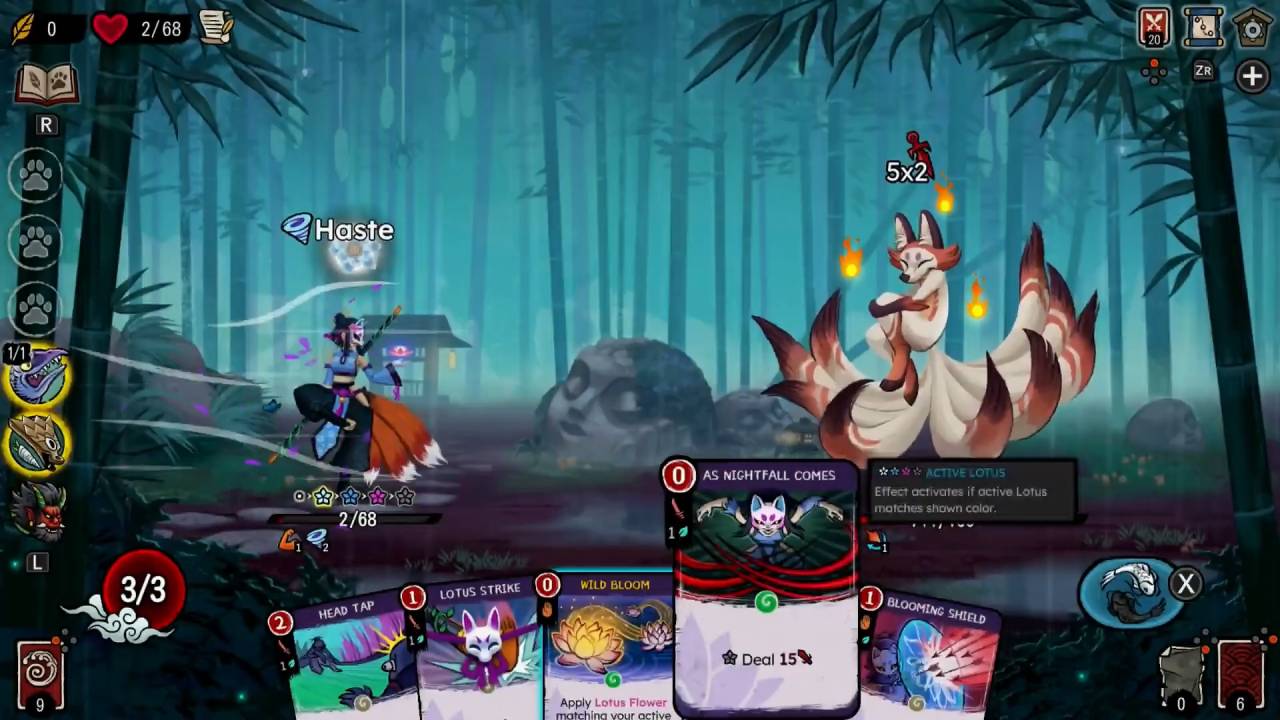
Gyokushin plays like a grounded, strength-driven warrior built around stacking buffs and swinging hard. Himura works around a rhythm-based duo playstyle built on chaining attacks together in sequence. Rinka takes the longest to figure out, since her entire identity revolves around a lotus flower mechanic that sits at five stages, starting each turn as a bud.
Playing cards marked with a leaf icon pushes the lotus further along toward bloom, and you can right-click to attach whatever stage it's currently sitting at onto a card in your hand. Depending on the stage, that card gets a different bonus, sometimes surviving being discarded, sometimes costing less, sometimes dealing double damage or letting you squeeze in an extra play.
It takes a solid handful of runs before that mechanic clicks, since the bonus is tied to when the card is actually played rather than which lotus got slapped onto it beforehand, and it's easy to lose more than one run early on from misjudging that timing.
Beyond the heroes, a shield-based combat system forces careful, defensive play before letting you build toward real payoff.
Combat itself runs on a shield system that rewards patience over aggression, at least early on. Enemies show you exactly how much damage they're about to deal before their turn goes off, and if you don't stack enough shields to match or beat that number, you eat the difference.
Health is scarce throughout Talespinner, and there just aren't many reliable ways to recover it outside of campfires, which heal roughly 30 percent of your total HP, or the occasional lucky event. That pushes you into a pretty defensive playstyle for the opening stretch of nearly every run, prioritizing block cards over attacks until your deck actually comes together into something functional.
One of the more satisfying ways to eventually go on the offensive involves stacking a debuff called Trick onto an enemy, since landing ten stacks of it triggers a solid chunk of bonus damage on top of whatever you were already dealing. Combine that with skills that boost how much those stacks trigger for, plus a companion or two that recasts cards automatically, and you can strip huge chunks of health off bosses in ways that feel earned rather than lucky.
Foxfire cards add another layer on top of that, since they're free-floating, zero-cost cards that get added to your deck through specific effects rather than being something you pick directly, and certain passive abilities upgrade every Foxfire the moment it gets created, turning a minor bonus into a real engine once you build around it.
Trick stacks and Foxfire cards build toward genuine combat puzzles.
What stands out about the combat is how rarely it lets you get away with just clicking your strongest card every turn. Nearly every fight becomes its own small puzzle where you have to weigh taking a little damage now against setting up a much stronger combo a turn or two later, and Talespinner rewards that kind of patience more than most deckbuilders out there.
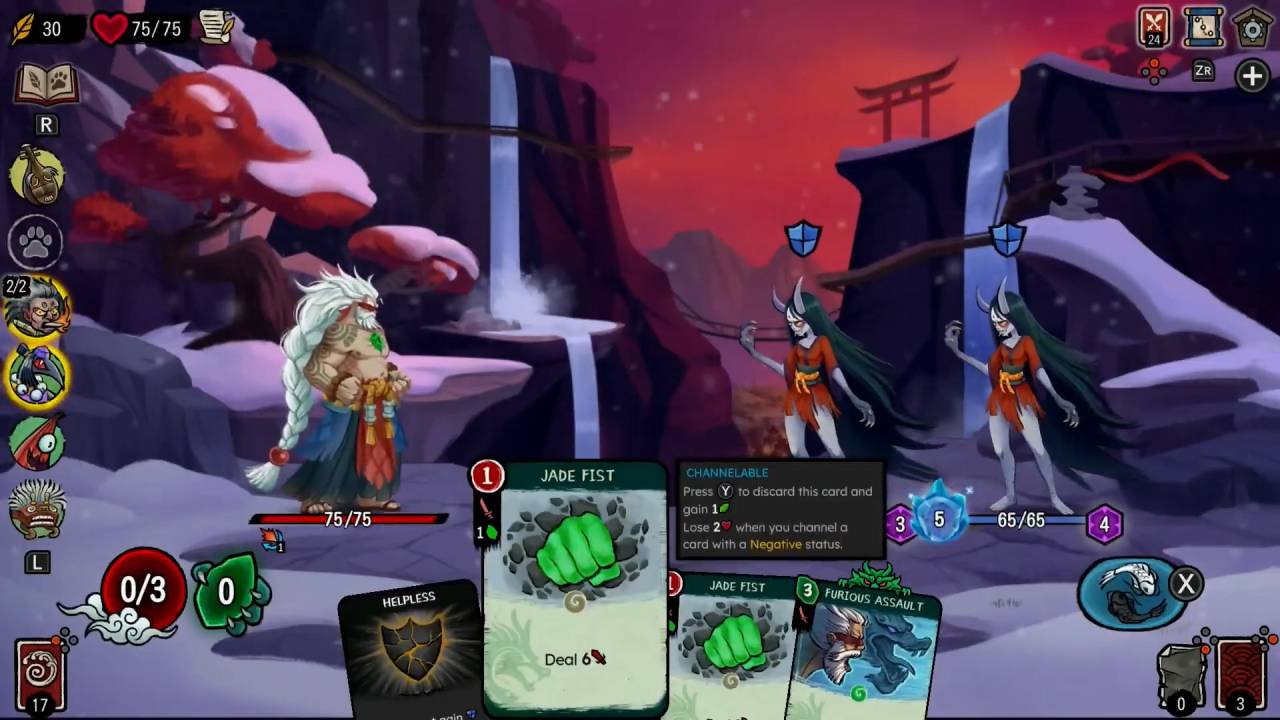
Certain bosses add extra wrinkles on top of the base combat loop too, like one fight where landing too big a single hit summons an additional enemy to deal with, which forces you to actually rethink the usual habit of dumping your strongest attack whenever it's available.
What holds the puzzle back, on the other hand, is how much of it gets decided by randomness rather than skill. The cards you draw each turn are randomized, the node options are randomized, whether a stage forces debuffs on you is randomized, and the rewards after a battle are randomized too. When the deck cooperates, runs feel incredible, genuinely some of the best highs this genre has to offer.
When it doesn't, losing a run feels less like a mistake you made, and more like the dice just weren't with you that attempt, which stings in a game that otherwise wants you thinking carefully about every single move. It's easy to lose a handful of runs to hands that simply don't give you the tools you need, with no amount of good planning earlier in that run able to fix it.
Even with randomness in the mix, progression keeps every run feeling purposeful by unlocking new tools rather than raw power.
Progression in Talespinner comes less from traditional experience points and more from unlocking new cards by leveling your heroes and beating bosses, which then opens up fresh build possibilities on later runs rather than simply making your characters stronger outright.
That approach keeps every unlock feeling meaningful, since you're never just watching a number go up; you're actually gaining new tools to experiment with on your next attempt. Once you clear the standard difficulty, you unlock challenge modifiers that ramp the difficulty up further and push you toward approaches you haven't tried yet, which gives the grind a real sense of purpose rather than just padding out playtime.

That system works well for encouraging repeat runs, though the earlier stages stay identical across all three difficulty tiers, which means grinding toward the harder settings has you replaying the same opening stretch more times than you'd like.
By the time you claw your way to the end a few times over, you've basically seen everything Talespinner has to offer, outside of a handful of rarer skills and companions that don't show up as often as the rest, and that repetition is really the only thing keeping the grind from feeling entirely rewarding.
That grind eventually loses steam, but the game's presentation, from its artwork to its sound design, never does.
Visually, Talespinner is one of the better-looking entries out there in this genre right now. The three heroes, the roster of yokai-inspired enemies, and the card artwork all pull convincingly from Japanese folklore, and the whole package comes together with a clean, distinct look that helps it stand apart from the dozens of other roguelikes crowding the space.
Animations are smooth, and fights move quickly, which keeps even repeat encounters from feeling like a slog. The only real nitpick is that each hero only has a single attack animation no matter which card triggered it, though that's easy to overlook given how fast combat actually moves once you're in the rhythm of it.
Sound design pulls its weight just as well. The soundtrack fits the mythology-inspired setting without ever feeling generic, and combat sound effects give clear, satisfying feedback every time a hit lands or a shield pops. The interface stays clean and easy to read throughout, which matters a lot given how many status effects you have to track at once, and performance holds up well across every session.
By the time you wrap up a run of Talespinner, you're left impressed by how differently its three heroes play from one another and how satisfying its combat puzzle can feel once a build actually clicks into place. The randomness woven through nearly every layer of the experience keeps pulling you out of that feeling, though, and the repetition across difficulty tiers makes later attempts feel more like a grind than a fresh challenge.
All things considered, Talespinner earns its place as a genuinely solid entry in the genre.
It's a game with a lot going for it, held back just enough by its own structure to keep it from fully standing out. Still, on the runs where everything comes together, Talespinner delivers some of the more memorable turns this genre has to offer, and that's not something you can say about every deckbuilder on the shelf.
Whether this game is worth your money comes down to how you feel about randomness deciding a good chunk of your fate. It rewards patience more often than not, and there's plenty of pull to jump back in for another run, if only to finally get Rinka's lotus timing down without wasting a single turn.
Staff Writer, NoobFeed
Verdict
Talespinner is a stylish, confident debut - three distinct heroes and a combat puzzle that rewards patience, all wrapped in gorgeous yokai artwork. Heavy randomness and some repetition keep it shy of greatness, but this is well worth a look.
74
Related News
No Data.