
The Spell Brigade Review
PC
A deep dive into The Spell Brigade and why this $10 horde-like is quietly carving its own space in an overcrowded genre.
Reviewed by Maisie Scott on May 08, 2026
The Spell Brigade comes from a space that has been saturated with activity in recent years. You’re looking at the survivor-like, bullet-heaven, horde-like genre—whatever label you prefer—where a game like Vampire Survivors set the foundation and dozens of others followed in its footsteps. The Spell Brigade sits right in that ecosystem, and it doesn’t try to hide it. It openly takes inspiration from those earlier hits, but it also tries to refine a few things that most games in the genre tend to ignore.
What stands out immediately is that The Spell Brigade has a low entry price of around $10. That already sets expectations in a certain direction. You’re not walking into a massive AAA experience. Instead, The Spell Brigade presents itself as a focused, experimental take on a familiar formula, built by a smaller team that clearly wanted to test how far co-op chaos could be pushed inside a horde-like structure.

The development context matters because The Spell Brigade isn’t trying to reinvent the genre entirely. It’s more of a refinement project, one that builds on known systems while adding small but meaningful twists. That includes its emphasis on co-op gameplay, elemental spell interactions, and visual clarity despite overwhelming screen chaos. The Spell Brigade doesn’t pretend to be a giant evolution, but it does feel like a game made by people who understand what already works and want to layer something new on top of it.
The Spell Brigade feels like the kind of game that was discovered, tested, and then shaped further after seeing how players responded to it. One of the earliest impressions people mention is how visually striking it is for its price. That alone is often what pulls attention toward the game, even before one understands its systems.
There’s also a strong sense that The Spell Brigade found its identity through experimentation.
It doesn’t rely on story-heavy framing or complex narrative hooks. Instead, it focuses on gameplay loops, co-op interactions, and building diversity. That direction makes sense once you understand how the game plays moment to moment, where systems matter far more than traditional storytelling. The Spell Brigade feels like it was designed around the idea of chaotic cooperation first, everything else second.
There isn’t a traditional narrative here in the way you might expect from an RPG or story-driven game. Instead, the “narrative” exists as a loose framing device built around wizards, spells, and surviving waves of enemies. You’re essentially part of a magical group thrown into increasingly chaotic encounters, and the context is less about lore and more about structure. The Spell Brigade keeps things simple so the gameplay systems can take center stage.
What this means in practice is that you don’t spend time following character arcs or major plot developments. Instead, The Spell Brigade tells its story through gameplay progression. Every run is its own little story, with the outcome determined by your choices of spells, elemental pairings, and co-op coordination.
The absence of a heavy narrative structure actually aids the game’s focus, keeping it fast and mechanically driven.
In a way, the “story” of The Spell Brigade is your build’s evolution. You are weak to begin with, but you build powerful spell combos while you go along, and eventually you reach a point where the screen is a combination of elemental chaos and controlled destruction. That arc is the same every run, but it never feels like the same arc because the combinations and upgrades are always different.
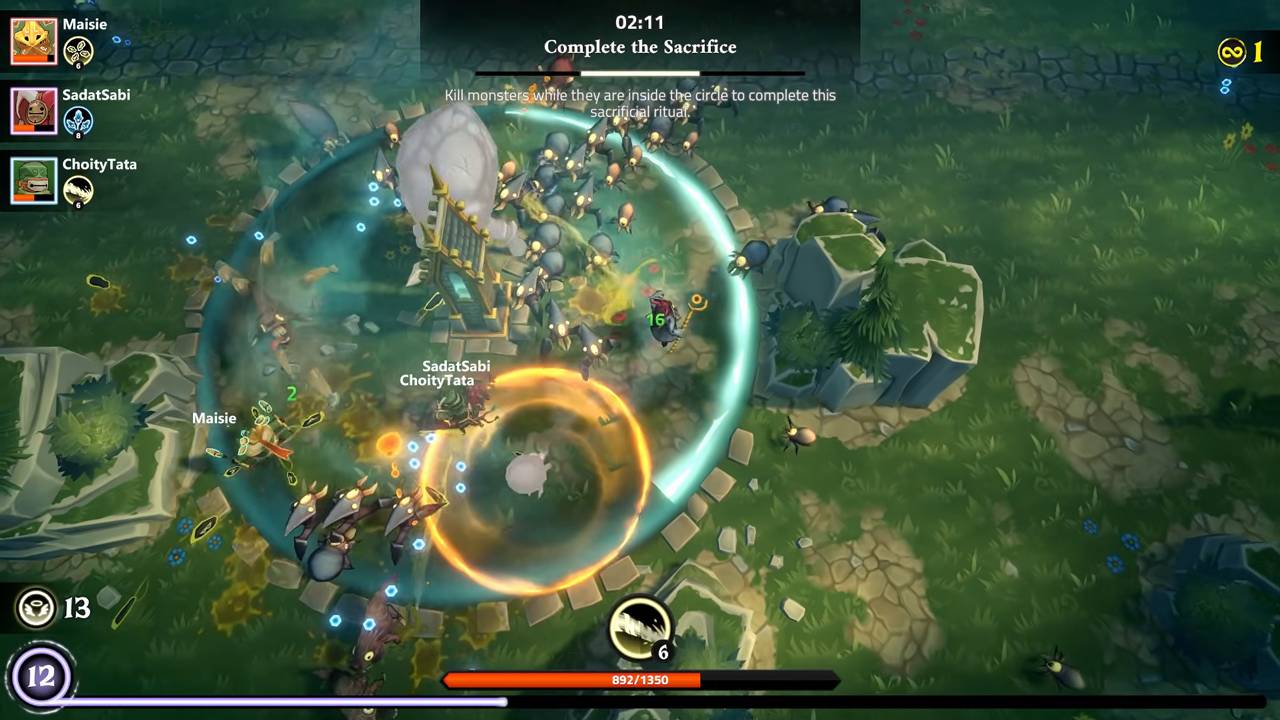
At its core, The Spell Brigade is built around a very recognizable gameplay loop. You move your character, avoid enemy swarms, and let your spells fire automatically. That simplicity is intentional, but what gives the game its depth is everything layered on top of that foundation. Movement becomes your main skill expression, especially since positioning is everything when the screen fills with enemies and spell effects.
Co-op is one of the defining features of The Spell Brigade. You can play with up to 4 players, which changes the entire feel of the game. Friendly fire is an optional but impactful setting, and when it’s enabled, the game turns into controlled chaos. Instead of only avoiding enemies, you also have to avoid your team’s attacks, which adds another level of tension and coordination.
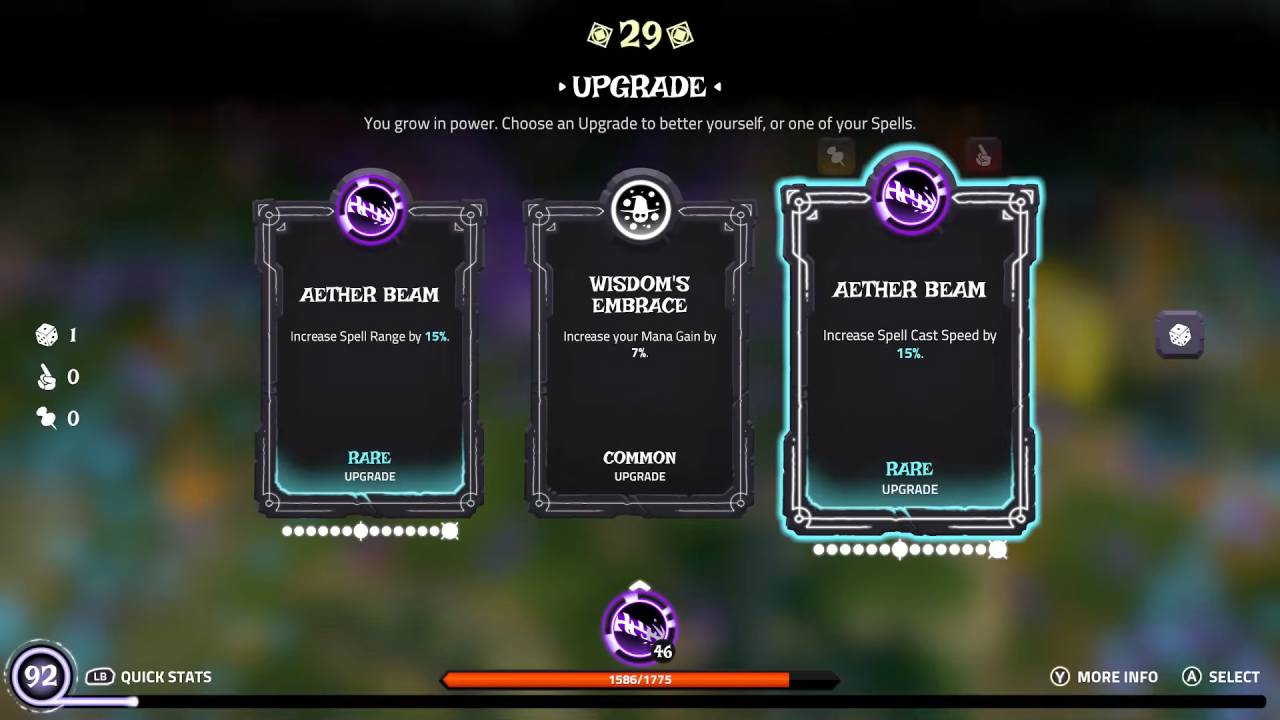
You level up to progress during runs in The Spell Brigade.
As you get experience from killing enemies, you get upgrade options that improve your spells. At first, these upgrades are mostly statistical, i.e., damage, cooldown reduction, and area of effect. But they evolve into more complex systems over time, especially with the advent of elemental infusions.
Spell infusion is one of the most important systems in The Spell Brigade. When spells reach certain thresholds, you can add elemental properties like fire, lightning, frost, acid, or darkness. These aren’t just cosmetic changes; they fundamentally alter how your spells behave. In this game, fire might create damage-over-time effects, lightning might chain through groups, and frost might slow or freeze enemies entirely.
The real depth comes when these elements start interacting. Combining different elements in The Spell Brigade creates entirely new effects, which turns building crafting into a layered system of experimentation. You’re not just upgrading numbers—you’re shaping how your entire run behaves.
This is where The Spell Brigade starts to feel more dynamic compared to simpler entries in the genre.
Outside of combat upgrades, The Spell Brigade also includes meta progression systems. Between runs, you can upgrade your overall account with permanent improvements to your health, damage, luck, and experience gain. This results in a long-term feeling of growth, even if individual runs are quickly ended. The Spell Brigade balances short-term chaos with long-term progression in a fairly standard roguelite structure.
Exploration is limited by design. Maps are relatively small compared to other games in the genre, which keeps the action concentrated. This design choice makes movement more intense because there’s less breathing room. Enemy density increases quickly, and The Spell Brigade pushes you into constant decision-making rather than safe exploration.
There are also random objectives that appear during runs in The Spell Brigade. These mini events test your skills by asking you to move objects, stay in zones, or kill enemies in certain areas. When you complete them, you get upgrades or spell boosts. They don’t change the structure of a run, but they do break up the pacing and add variation.
Combat in The Spell Brigade is where everything converges.
Enemy waves scale quickly, and by mid-run, the screen becomes packed with threats. Despite this, visual clarity remains surprisingly strong, which is one of the game’s more impressive achievements. Boss encounters also appear at the end of runs, adding structured difficulty spikes to the otherwise chaotic flow.
Right now, there’s not a lot of variety in the boss fights in The Spell Brigade, but they’re still climactic checkpoints. Different phases and attack patterns for each boss, change your movement and spell usage. However, balance issues with bosses can make some fights feel much easier or harder than others, affecting consistency between runs.
The game does a good job of tying progression directly to gameplay variety. The XP grinding is constant, but it doesn't feel like filler. Killing an enemy is a way to level up, and every level provides an opportunity to change your build. That loop is what makes The Spell Brigade interesting, even as times make systems start to feel familiar.
That said, the progress has its limitations.
Some spells in The Spell Brigade are clearly more powerful than others, and that can diminish your desire to experiment. It can limit building diversity when you see the optimal choices. Yet the randomness of upgrades and element combinations still provides enough variation in each run to keep it engaging.
The Spell Brigade looks better than you would think for what you pay for it. The game uses a top-down 3D perspective with strong visual effects that are readable even during heavy combat. This is especially true in a game like The Spell Brigade, where the screen can be full of spells, enemies, and particle effects all at once.
The Spell Brigade also does a good job on spell visuals. You level up and infuse your spells; they change their look to reflect elemental properties. This allows you to immediately comprehend what’s happening on screen, even in the midst of chaos. The visual design is conducive to gameplay clarity, which is a plus in a genre that can often be visually cluttered.
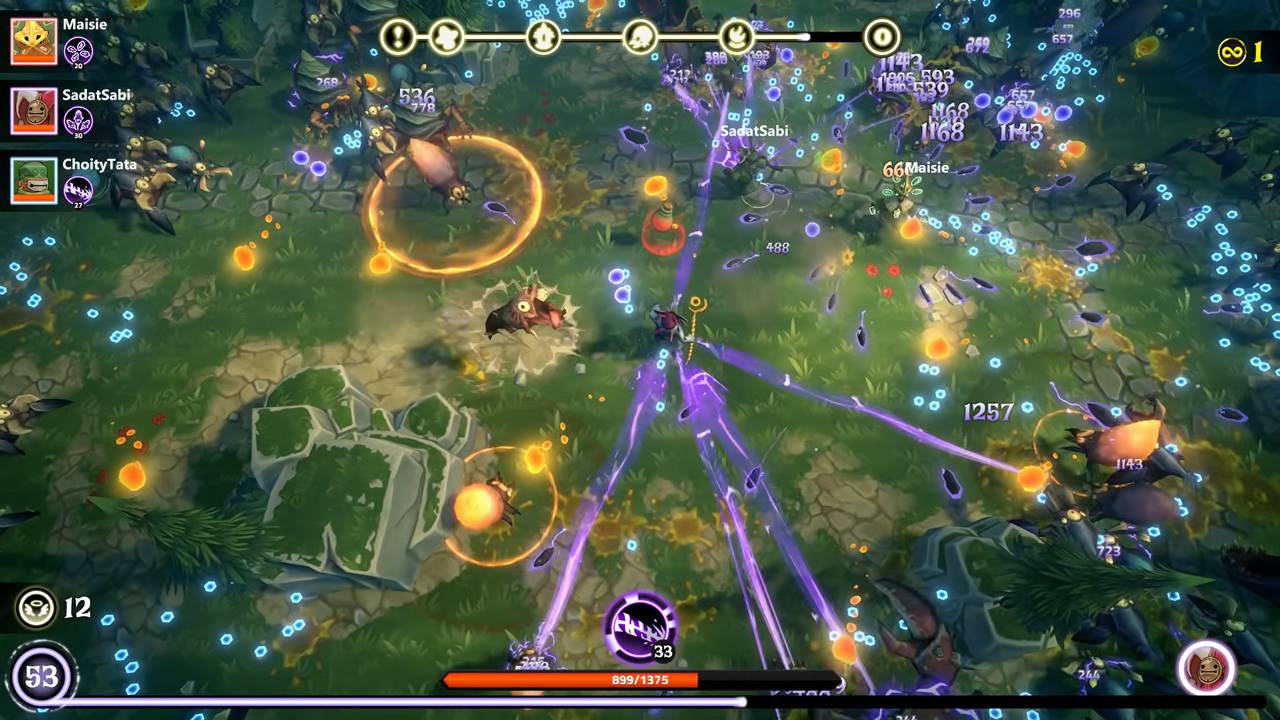
The Spell Brigade is holding its own, even as the action ratchets up. Performance is solid even with large waves of enemies, multiple spell effects, and co-op interactions. That stability makes the game playable when it really counts.
The sound design of the Spell Brigade is serviceable and satisfying, but not especially intricate.
The attacks are impactful, and the XP collection has that familiar rising audio that makes the progression feel rewarding. But over long sessions, the music can become repetitive because of short looping sections. The Spell Brigade improves this slightly during boss fights by layering additional instruments, but the soundtrack still feels like an area meant for future expansion.
Final impressions of The Spell Brigade come down to expectations. At $10, it offers a solid amount of content, especially if played with friends. The co-op focus, elemental spell system, and build variety give it a strong identity, even if balance issues and repetition start to show over time. The Spell Brigade doesn’t try to outshine genre giants like Vampire Survivors; instead, it focuses on adding cooperative chaos into the formula.
As it stands, The Spell Brigade is a fun, slightly rough, but highly replayable experience that works best when you lean into its co-op systems. Some of the systems need refinement and expansion, but it is deep enough to make you want to play it again. The Spell Brigade could be much more than that in the genre with continued updates.
Editor, NoobFeed
Verdict
The Spell Brigade is a fun co-op horde-like game with great visuals and enough build depth, but held back by uneven balance and repetition. Great with friends, decent solo. Worth it at $10 if you enjoy roguelike chaos.
72
Related News
No Data.