
NVIDIA RTX Spark Could Reshape the Laptop Market
NVIDIA RTX Spark combines unified memory, ARM efficiency, and dedicated graphics to challenge Apple’s position in premium laptops.
Hardware by Shinji Okazaki on Aug 11, 2026
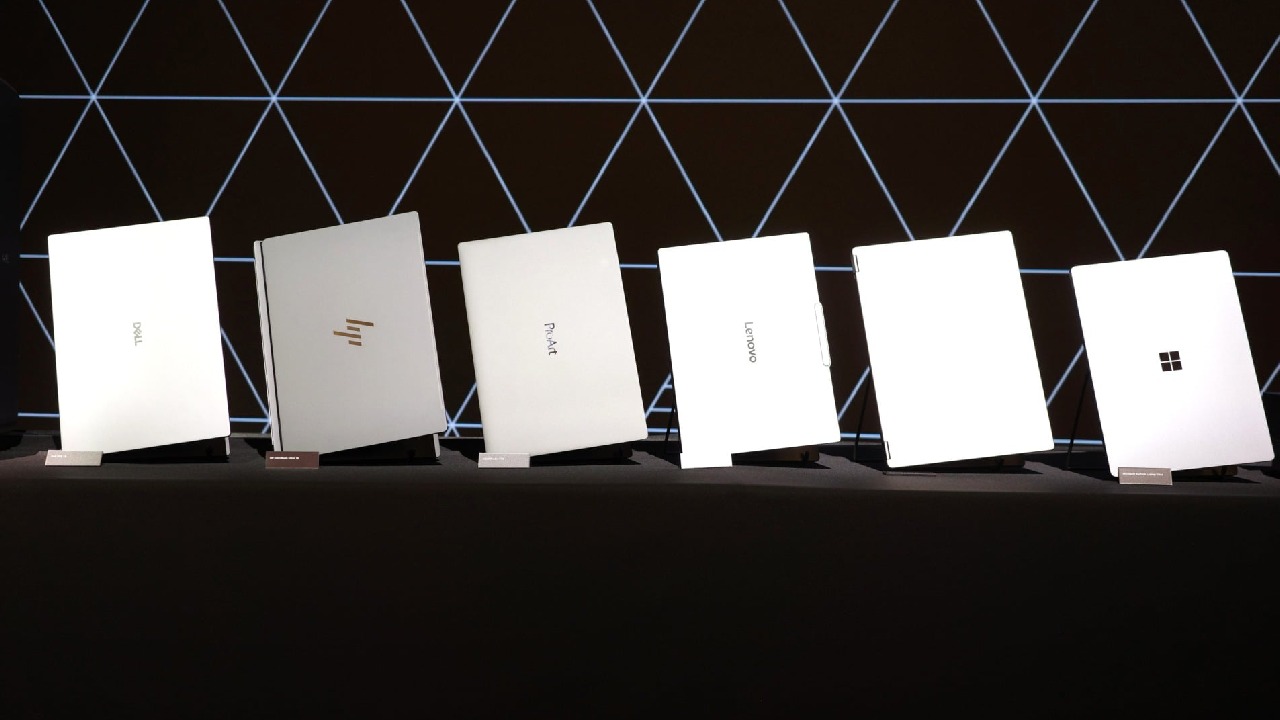
For the first time in years, NVIDIA, not Apple, is about to influence what the best laptop looks like. The company that makes graphics cards is becoming more relevant to the future of laptops than the company behind the MacBook. These machines look like MacBooks, but they are not. Every one of them runs Windows, and they could mark the beginning of a shift in the laptop market.
Then Apple changed the approach. The company moved away from Intel and built its own M-series chips based on the same architecture used in the iPhone. Suddenly, laptops could offer all-day battery life while staying cool and quiet without giving up performance.
Unified Memory Became Important for AI
Apple also put the processor and graphics on a single chip, allowing them to share a single pool of memory. Buy a Mac with 128GB of RAM, and the graphics can use all 128GB as well. At first, that looked like a design choice. Then AI arrived and turned it into something more important. AI models can be enormous, with some reaching 60GB, 90GB, or even 400GB.
AI also runs best on the graphics processor, so the important question becomes how much memory the graphics processor can actually access. On a normal Windows gaming laptop, the graphics card has its own separate memory. Even a desktop RTX 5090 tops out at around 32GB. A model that needs more memory simply cannot fit on the GPU.
A Mac with 128GB of unified memory can load a model that would never fit on the most expensive gaming GPU. By accident, the MacBook became a consumer machine capable of running large AI models locally. That means data can stay on the device instead of being sent to the cloud, and AI can run without requiring a subscription.
NVIDIA is the leader in graphics and has become central to the AI boom. Every time ChatGPT is used, NVIDIA hardware is involved somewhere in the infrastructure. But NVIDIA did not traditionally make the processor inside the laptop. Instead, its graphics hardware was placed next to a processor from another company.
That model was starting to face pressure from three directions. The first was local AI. Apple was gaining an advantage with laptops that could provide large amounts of shared memory. The second was portable gaming. Handheld consoles and thin gaming laptops were moving toward efficient combined chips from AMD and Intel, reducing the need for a separate NVIDIA graphics solution.
The third was creator laptops. For editing on the go, the MacBook had an advantage with battery life, heat, and noise. NVIDIA had to look at where laptops were going and decide whether it needed to build its own platform.
RTX Spark Brings NVIDIA Graphics Into The Equation
NVIDIA took an ARM processor, using the same efficient architecture that Apple uses, and fused it with its own graphics technology, allowing both parts to share a unified pool of memory. The top model comes with 128GB of unified memory shared between the processor and graphics. It follows the same basic memory approach that helped the Mac become useful for AI, but now NVIDIA graphics handle the workloads.
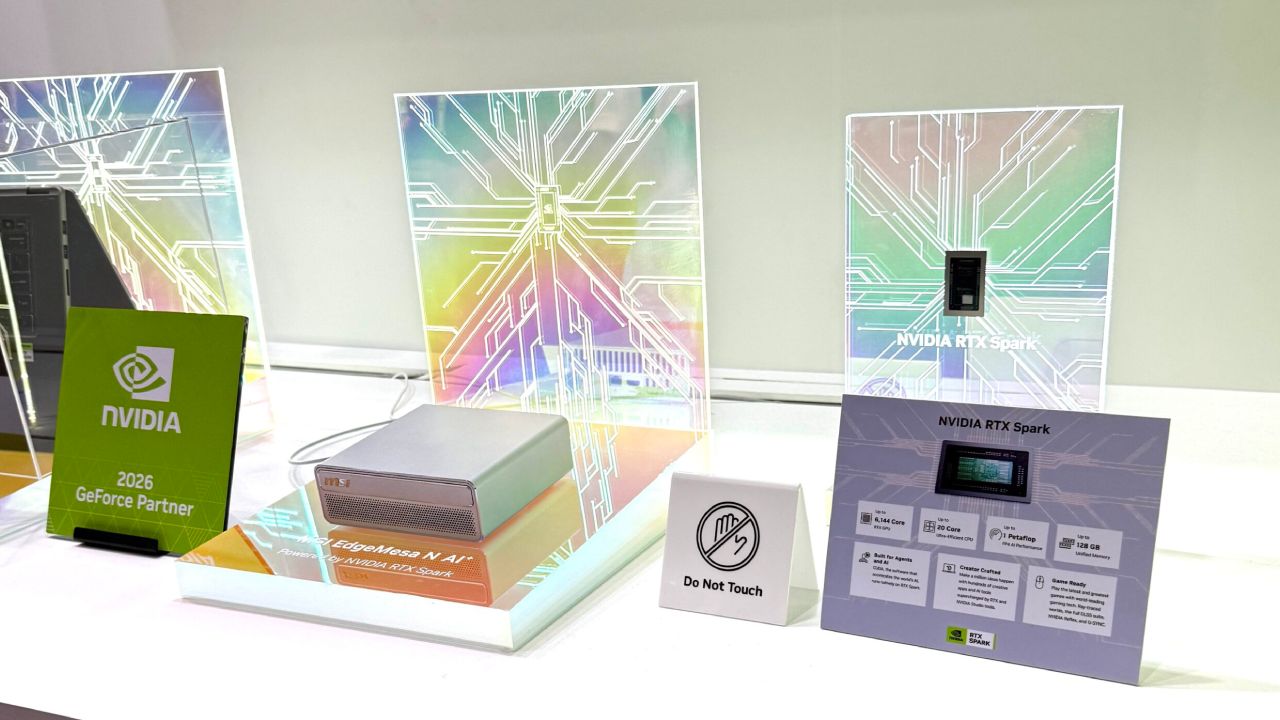
The launch also includes laptops from Asus, MSI, Lenovo, Dell, and Microsoft's own Surface lineup. Several of these machines look almost exactly like a MacBook Pro, and that design direction is part of the shift NVIDIA is trying to create.
Windows already had a chip designed to compete with Apple's approach: the Qualcomm Snapdragon. It can be roughly as capable as an Apple M4 in some areas, but matching Apple's efficiency was not enough to convince everyone to switch.
RTX Spark changes the equation by adding NVIDIA graphics. Snapdragon can match Apple in efficiency, while RTX Spark combines that efficiency with NVIDIA graphics. That means gaming, ray tracing, DLSS, and Windows applications that were previously unavailable on a Mac can now be part of the same laptop. It also changes the AI equation.
FP4 Gives NVIDIA Another AI Advantage
Modern AI models are increasingly quantized. It can be thought of like an MP3 for AI, shrinking the model while maintaining much of its quality. Some of the latest models use a format called FP4. NVIDIA graphics can run FP4 natively, while Apple's hardware converts it first. Using the same model, NVIDIA can therefore run the format directly.
There is another important part of the equation: performance away from the charger. On a Windows laptop, unplugging the charger can cause performance to fall significantly. RTX Spark is designed to maintain the same frame rate after the charger is removed, similar to a Mac. If that holds up in real-world testing, NVIDIA could be addressing one of the major advantages Apple has had in laptops.
Adobe is also part of the story. Adobe has been around for decades, and much of its software has been built around code that has existed for years. The company is now rebuilding Premiere and Photoshop to run locally and be optimized for NVIDIA's chip.
When Adobe rebuilds its software for a platform, that platform becomes more than an experiment. It becomes part of a market that software developers are willing to support. For Windows users, that could make RTX Spark more useful for creator workloads while retaining access to NVIDIA graphics.
The Processor Remains The Weak Point
The processor is still the weak spot. This ARM chip almost certainly will not match Apple's newest M5 in CPU performance. The desktop version of the same chip does not match Apple's latest processor either. However, the difference may matter less when the workload depends heavily on graphics. The GPU carries much of the equation for gaming, AI, and other accelerated workloads.
The second catch is price. A top-tier MacBook Pro with 128GB can cost around $7,000, while RTX Spark laptops are expected to range from $5,000 to $7,000. Memory pricing is a major reason for those numbers, and large unified-memory configurations are not cheap.
NVIDIA is not yet covering the entire laptop market. Apple has a chip that scales from basic laptops to professional workstations. RTX Spark is going after three specific groups: creators, gamers who want all-day battery life, and people who want to run private AI on their own machines.
That third group could become the most important. Local AI is improving quickly. New open models can perform tasks that previously required the cloud while using a fraction of the memory. In the next year or two, a large part of everyday AI usage may no longer require a paid AI service.
The laptop could simply handle the work locally, privately, and offline.
NVIDIA sees this shift. Microsoft sees it, and Adobe sees it as well. For the first time in years, the PC laptop market is moving in a different direction. Apple showed in 2019 that a laptop could combine efficiency and performance. RTX Spark represents NVIDIA's attempt to bring that approach to Windows while adding the graphics capabilities that have traditionally separated gaming and creator PCs from the MacBook.
The result is a laptop platform that combines ARM efficiency, unified memory, NVIDIA graphics, local AI, Windows compatibility, and gaming features. The end of the MacBook is not happening overnight. But RTX Spark could change the reason people choose a MacBook in the first place, making NVIDIA's move important for the future of laptops.
Editor, NoobFeed
Gaming Hardware Updates
No Data.