
The Walking Dead: Streets of Survival Review
PlayStation 5
A straightforward arcade beat ’em up that turns one of The Walking Dead’s most intense story arcs into a fast, punchy, and surprisingly tense single-player adventure.
Reviewed by Tahmid Mahi on Sep 18, 2026
The Walking Dead: Streets of Survival takes the world of The Walking Dead and strips it down to its most straightforward form: move forward, fight anything that stands in your way, solve a few environmental puzzles, collect resources, and keep pushing toward the next major encounter.
Instead of recreating the entire television series as a large-scale action game, it focuses on the All Out War storyline and builds an arcade-style beat ’em up around familiar characters, locations, and enemies. The Walking Dead: Streets of Survival also keeps the action focused on the conflict between Rick’s group and the Saviors, giving each stage a clear connection to the larger war.
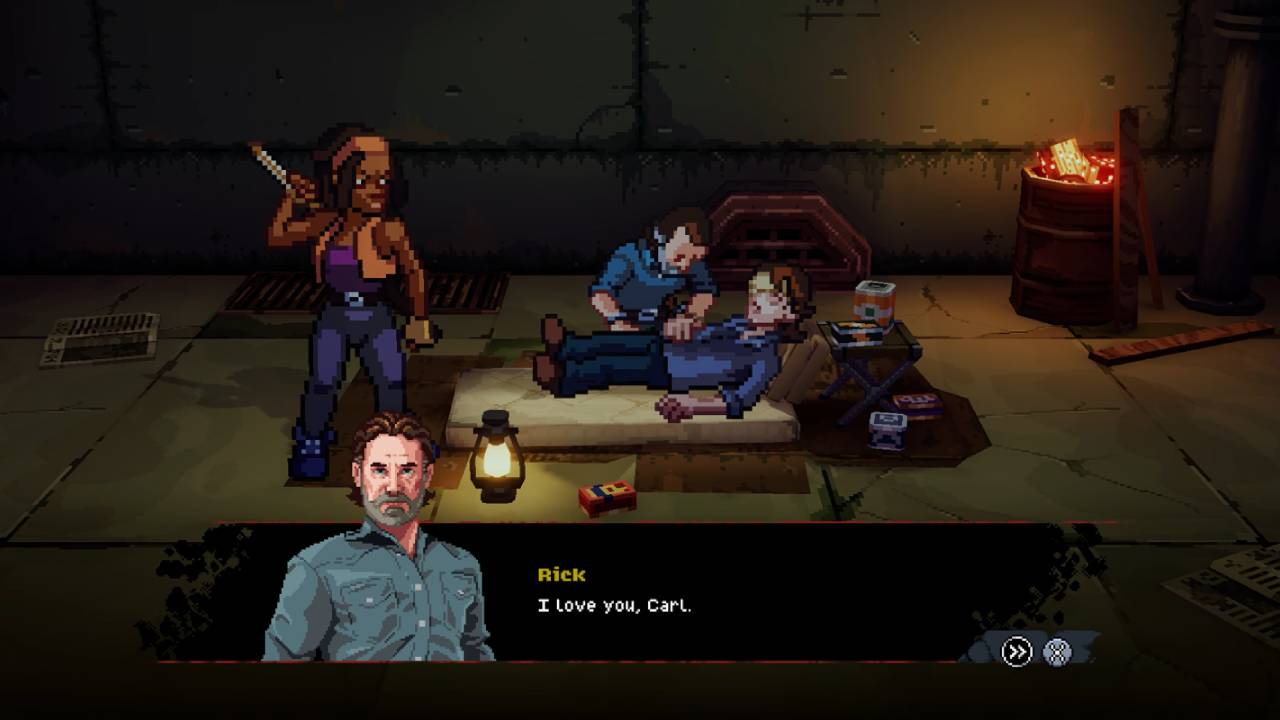
The game adds characters such as Rick, Daryl, and Michonne to the playable lineup, with Negan also available as an unlockable character.
That gives you several recognizable faces from the series while keeping the overall experience focused on action rather than on creating a huge open-world adaptation. The approach feels deliberately old-school, with linear stages, hordes of enemies, boss encounters, environmental obstacles, and a progression system layered on top of the basic beat ’em up formula.
The result is a game that does not try to reinvent The Walking Dead. Instead, it takes the series’ constant danger and turns it into a compact action experience. You are regularly surrounded by walkers, forced to manage limited resources, and pushed through areas where stopping too long can make things harder.
That structure works particularly well for a game built around short stages and repeatable combat, although the lack of cooperative multiplayer stands out because this kind of experience feels naturally suited to playing with someone else.
The story follows the familiar conflict surrounding Rick and his group during the All Out War period, putting you in the middle of a fight against both walkers and human enemies. You move through dangerous areas while facing threats from both sides of the conflict.
The Walking Dead: Streets of Survival uses the established characters and setting rather than creating an entirely separate version of The Walking Dead, so much of the appeal comes from seeing recognizable situations and personalities translated into a beat ’em up format.
You move through different locations while dealing with the threats surrounding the group.
Walkers are the constant danger, but the Saviors also appear in combat encounters, giving you something different to deal with instead of fighting the undead the whole time. The campaign also builds toward larger encounters, including a boss fight involving a walker version of Hershel, which gives later sections a stronger sense of escalation.
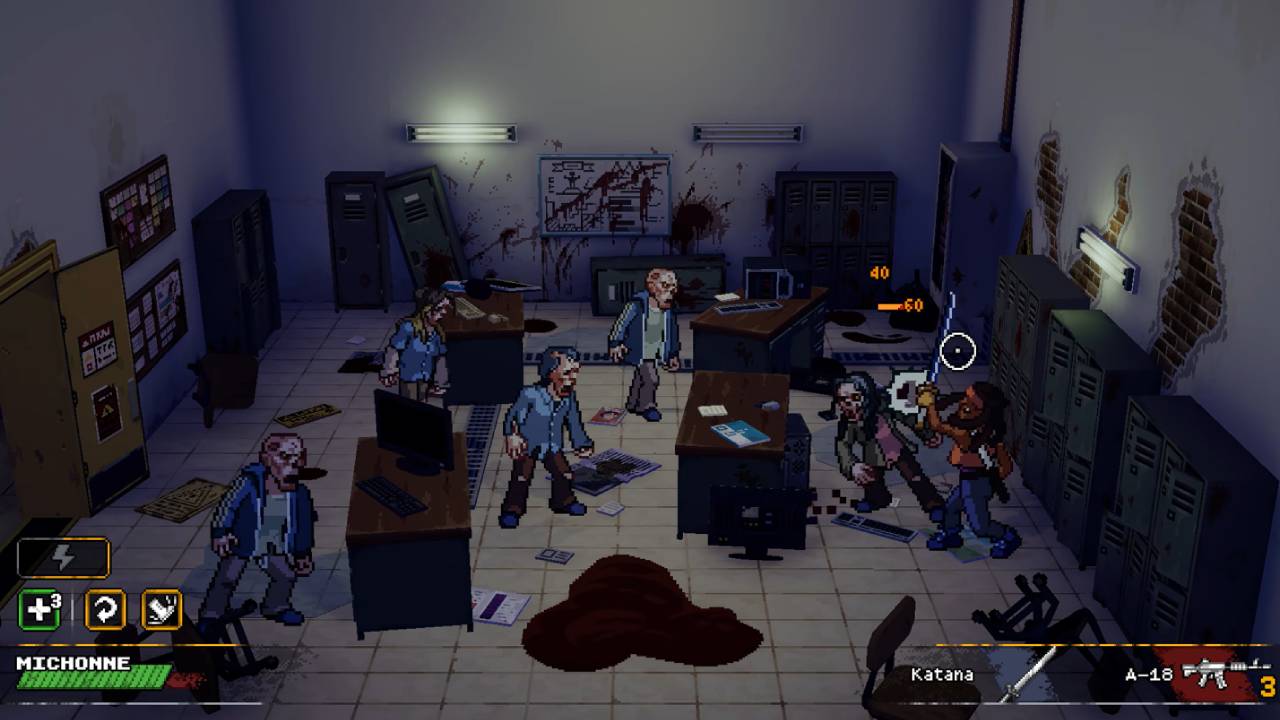
The narrative isn't especially long or complicated, and that fits the game's structure. The campaign takes roughly four to six hours to complete, so it doesn't have enough room to turn its adaptation of All Out War into a massive, story-driven adventure. Instead, the plot mainly gives you a reason to move from one stage to the next while letting the characters and situations connect to the Walking Dead universe.
Once you start playing, The Walking Dead: Streets of Survival runs on a simple loop that is easy to understand right away. You move through each area, clear groups of enemies, search the environment for useful items, overcome obstacles, and proceed to the next section.
The basic structure is familiar if you have played an arcade beat ’em up before, but The Walking Dead: Streets of Survival adds enough exploration and resource management to stop every stage from becoming a simple walk forward while punching everything in sight.
You can play as different characters, with Daryl and Michonne offering their approaches to combat.
The rage or adrenaline meter adds another layer to the basic combat loop. As you fight, you can build up the meter and use it to power up when things become crowded. This is particularly useful against larger hordes,s where enemies can easily trap you and leave you very little room to recover.
There's more exploration than you might expect from an arcade-style game. Some areas require you to search for keys, codes, or other items before you can continue. You may have to move through one section, discover that a route is blocked, and then backtrack to obtain whatever is needed to open it.
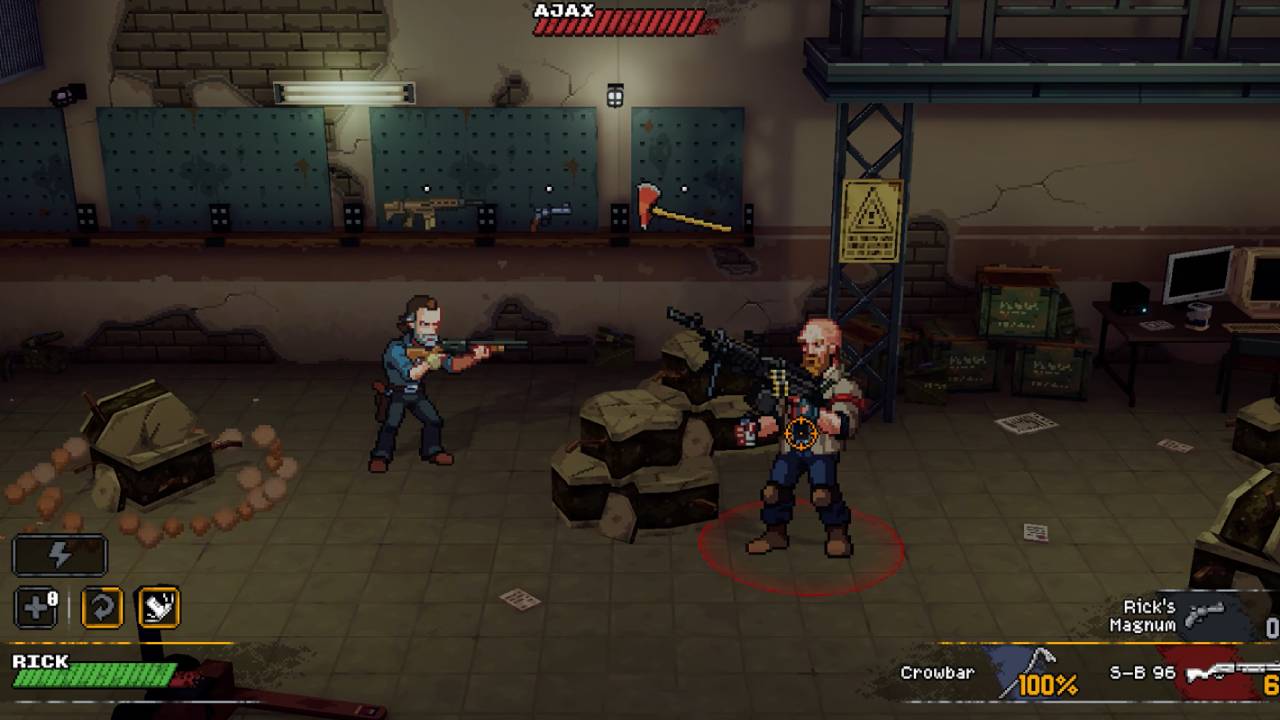
The stages also incorporate environmental objects into their design. You can interact with different objects to make progress, while some areas have hazards and obstacles that require you to think about where to go. This is where the game's level design does its best work, because the stages aren't just collections of combat arenas.
Combat is the strongest part of the experience because it keeps the basic controls easy to understand while giving you enough tools to handle different situations. Light and heavy attacks form the foundation, but weapons, pickups, rage abilities, and positioning add more to consider as the number of enemies increases.
Groups of walkers can overwhelm you, especially if they surround you on several sides. Don't just stand there and attack the closest enemy over and over; move around and make space. If it is too dangerous to get close to a group, you can use ranged weapons instead. But they cannot completely replace melee because ammo is limited.
The Saviors add another layer to encounters because human enemies change the rhythm of the fights.
You are not simply clearing slow-moving walkers every few seconds, and having different threats on the screen makes positioning more important. Larger encounters and boss fights push the experience further by forcing you to watch for attacks and openings rather than relying on the same basic combo.
You will spend a lot of time clearing similar groups of enemies, and the experience can become predictable if you play for long stretches. The Walking Dead: Streets of Survival is at its best when combat mixes with exploration, environmental interaction, and resource management rather than becoming one uninterrupted sequence of fights.
Progression gives the campaign another reason to keep going. As you play, you can also unlock skill trees for your characters to improve their combat abilities. The system doesn't completely transform the gameplay, but it gives you a reason to engage with the game's fights instead of treating every encounter as something you simply have to survive.
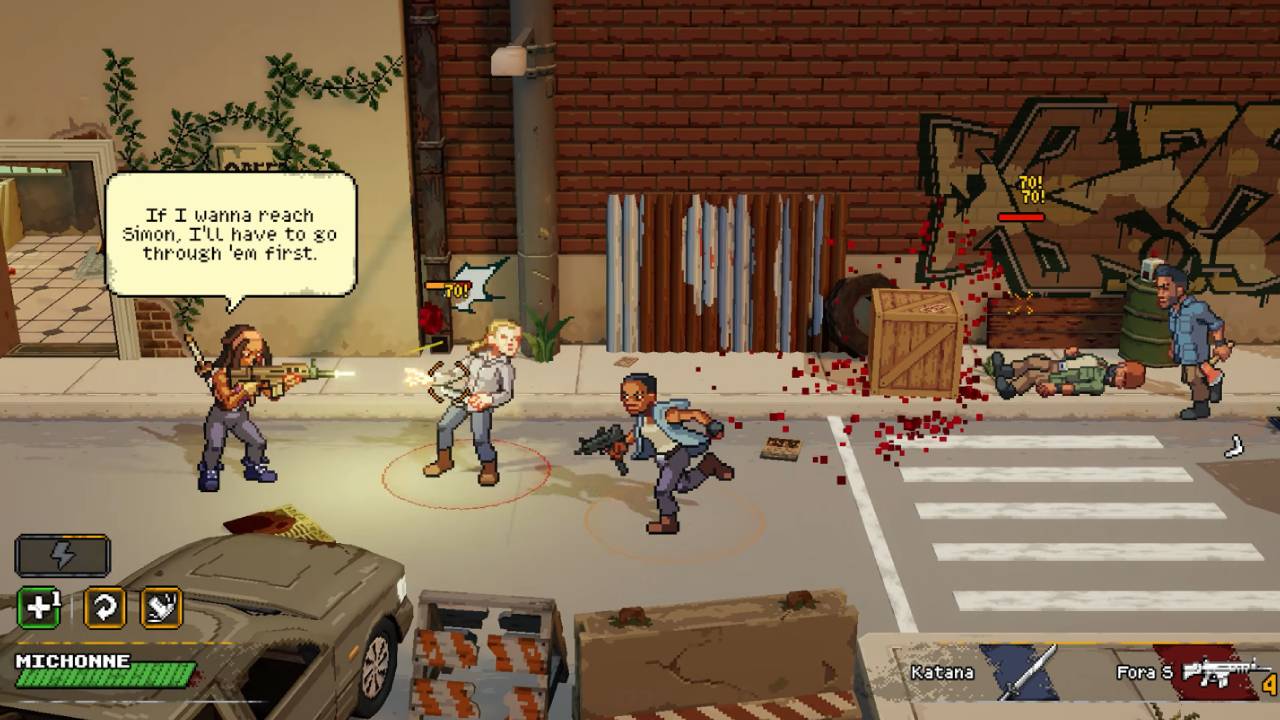
The progression also works alongside the game's unlockable content. You can unlock Negan, giving you another character to use after progressing through the experience. There is also an endless survival mode called Walker Pit, which takes the game's core combat and removes the normal campaign structure.
Walker Pit adds value after the short campaign ends. If you enjoy the basic fighting system, the endless mode gives you a place to keep using the characters and abilities you have developed. The deluxe edition also adds extra skins and the Hell on Earth difficulty, which significantly increases the challenge by removing checkpoints.
The biggest limitation of the overall gameplay is the absence of co-op.
Beat ’em ups have traditionally worked well as multiplayer experiences, and The Walking Dead: Streets of Survival feels like it was built with that kind of playstyle in mind. Fighting through large groups of walkers with another player could have added another layer to the experience, especially with multiple playable characters available.
Visually, The Walking Dead: Streets of Survival uses an art style that suits its comic-book roots and helps the game stand apart from a more realistic adaptation. The environments are detailed enough that the stages feel like actual places rather than simple backdrops, and the character designs still retain the recognizable appearance of the Walking Dead cast.
The visual presentation also works during larger fights. The Walking Dead: Streets of Survival still has an arcade feel when walkers and human enemies fill the screen, but it doesn't lose its identity as The Walking Dead. The environments are playable too, with objects, paths, and obstacles built into the level design, rather than just slapped into the background.
The Walking Dead: Streets of Survival makes good use of the PS5 hardware and the familiar layout of the DualSense controller, helping movement, attacks, dodging, and other actions feel responsive and easy to handle. The controller works well for the game's fast-paced combat, allowing you to move between attacks and abilities without dealing with an overly complicated control scheme.
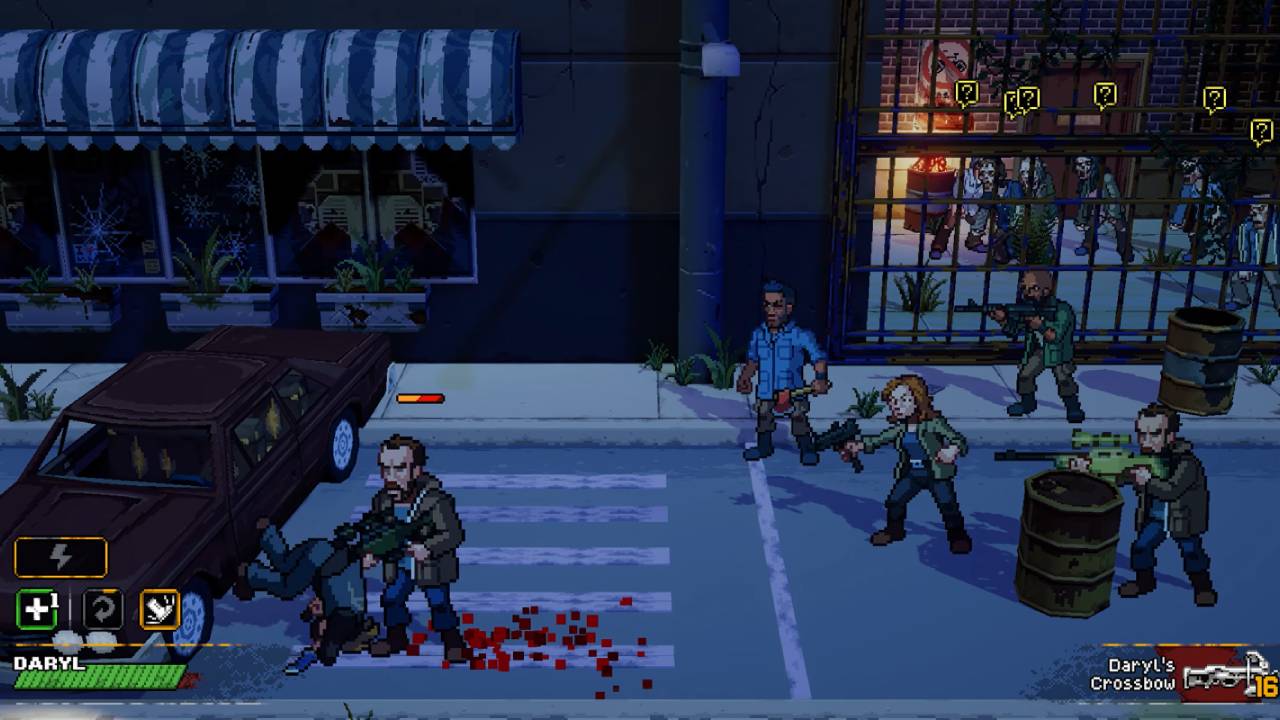
The sound design supports the action without trying to dominate it.
Combat sounds lend weight to attacks and impacts, while the overall presentation maintains the atmosphere of The Walking Dead. The music and effects work best when The Walking Dead: Streets of Survival starts throwing larger groups of enemies at you because the audio helps make those encounters feel more hectic.
Ultimately, The Walking Dead: Streets of Survival understands what kind of game it wants to be. It takes the characters and conflict from All Out War and turns them into a compact arcade beat ’em up, rather than stretching the concept into a much larger experience.
The campaign is short, but the combination of character progression, unlockables, environmental puzzles, boss encounters, and Walker Pit gives you more to do beyond simply reaching the credits. The campaign is relatively short, but character progression, unlockable characters, environmental puzzles, boss fights, and Walker Pit give you plenty of reasons to keep playing after the main story ends.
The combat is easy to pick up but has enough systems to reward you for paying attention to your resources, positioning, and special abilities. The puzzles and environmental sections also provide useful breaks from fighting, even if they are generally straightforward.
There are also a few decisions around the deluxe edition worth keeping in mind.
The additional skins and difficulty option add content, but tying Hell on Earth to the more expensive version is less appealing than making the difficulty available to everyone. Still, the core game offers a complete single-player campaign, plus an additional survival mode for players who want to keep fighting after the story ends.
At its best, The Walking Dead: Streets of Survival feels like a focused Walking Dead arcade game rather than an attempt to be more than it needs to be. You get recognizable characters, constant combat, resource management, simple environmental puzzles, and a progression system that keeps the short campaign moving.
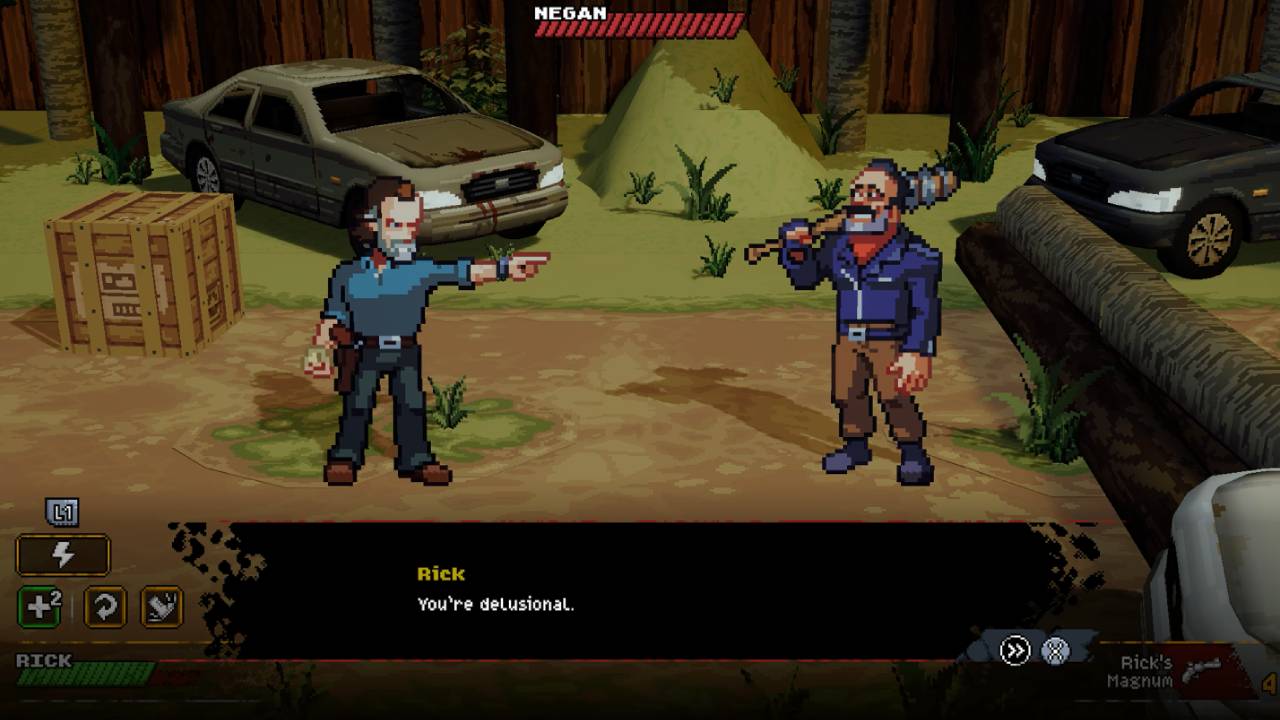
There is still the repetition you would expect from the genre, but the mix of mechanics provides enough variety to keep things engaging for the length. The short campaign won't offer as much content as a full-length action game, but Walker Pit mode and unlockable characters add replay value.
The Walking Dead: Streets of Survival ultimately succeeds by keeping its ambitions focused. You are not getting a huge Walking Dead adventure with dozens of hours of story. You are getting a fast-paced beat ’em up that lets you step into the shoes of familiar characters, fight through walkers and Saviors, solve environmental problems, upgrade your abilities, and test yourself in survival mode.
Editor, NoobFeed
Verdict
The Walking Dead: Streets of Survival delivers a fun, focused Walking Dead beat ’em up with satisfying combat, solid level design, and useful progression. Its short campaign and lack of co-op hold it back, but Walker Pit adds welcome replay value.
70
Related News
No Data.