
Digimon Story: Time Stranger Guide | How to Maximize Digimon Power
A clear walkthrough for scanning, converting, and raising Digimon to 100% and 200% power.
Game Guide by Faviyan Mustafiz on Oct 06, 2025
This guide explains how to obtain more Digimon and make them stronger in Digimon Story: Time Stranger, with a focus on the game’s scanning/convert system, scan-rate thresholds (100% and 200%), digivolution and d-digivolution strategies, and best practices for using the Load (sacrifice) mechanic to level up your core Digimon.
How scanning and conversion work

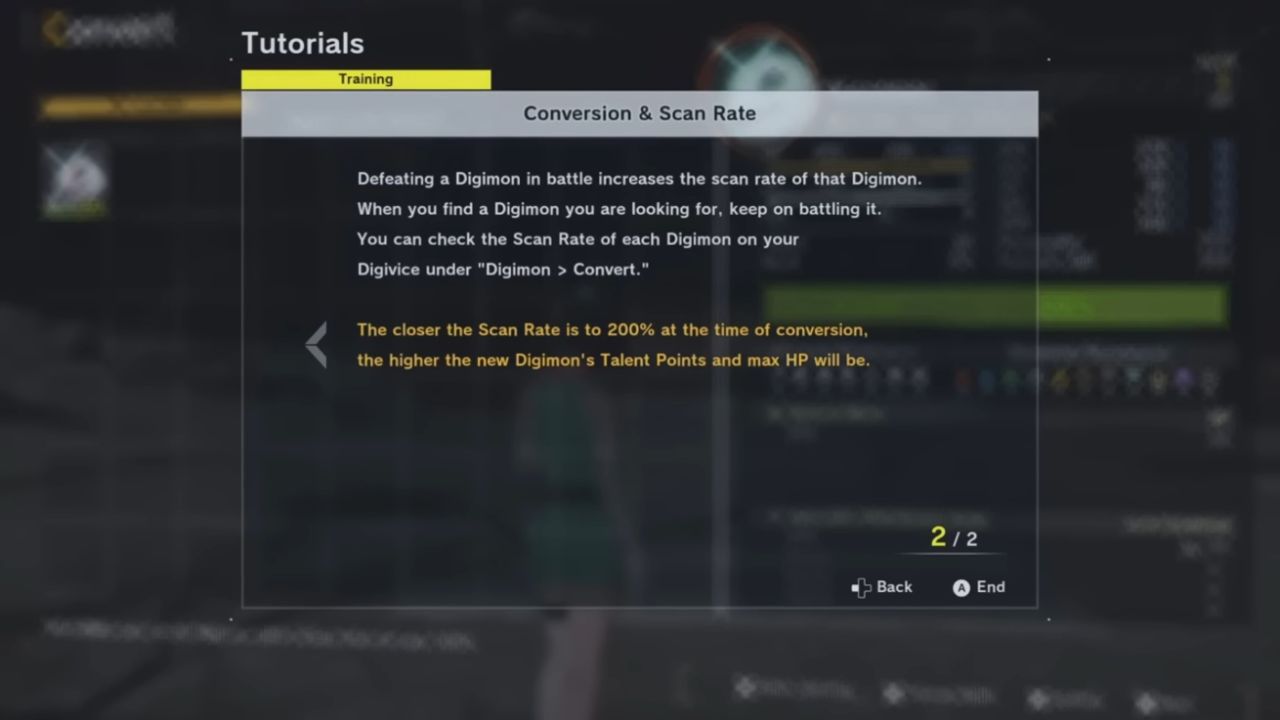
Enemies are not “captured” in the traditional sense; instead, you scan the essence of a Digimon during encounters and then create that species via the Convert option in the game menu once its scan progress reaches required thresholds.
Scanning progress for a given species increases each time you encounter it, and the exact amount gained per encounter is influenced by the Digimon’s stage (lower stages grant larger scan gains per encounter).
Understanding scan rate: 0% → 100% → 200%
The scan rate is a percentage value that ranges from 0% to 100% (and can be pushed to 200% with continued scanning). When a species reaches 100% scan rate, you can create (convert) that Digimon.
Continuing to scan after 100% raises the value toward 200%; a Digimon scanned to 200% can be created as a stronger version with higher starting talent and bonus stats, making it worthwhile to push important species to 200% before converting.
Why pushing to 200% matters (talent and bonus stats)
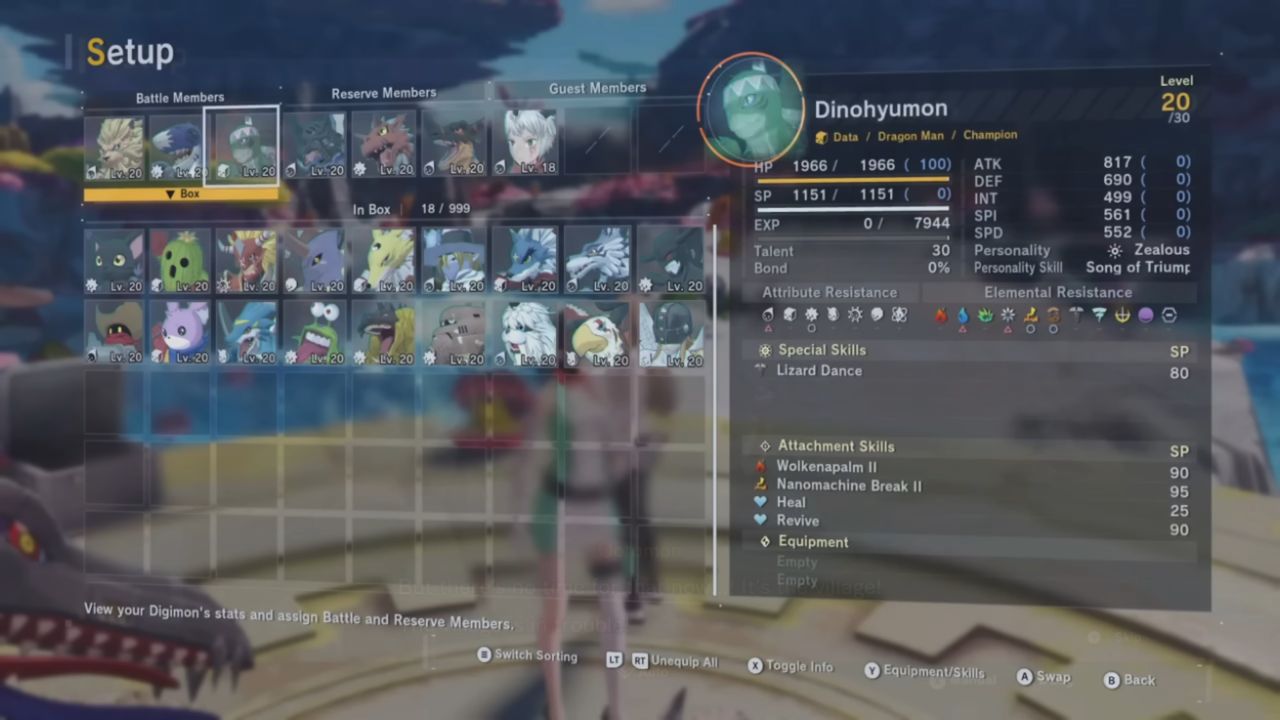
A Digimon created at 200% starts with higher talent and carries bonus stats that give it a head start compared with a standard 100% convert.
Raising a species to 200% is especially valuable for Digimon that require unusually high base stats or talent to reach later evolution stages, because those bonus stats reduce repetitive grinding later in the line.
Digivolution, d-digivolution, and branching evolution strategy
Many Digimon have branching digivolution paths. To fill out a Digimon compendium quickly, choose one evolution branch, train the Digimon to meet thresholds, then d-digivolve (devolve) back to a previous form and train again to reach alternate branches.
Because evolution and d-digivolution carry bonus stats forward, repeating this cycle makes hitting stat thresholds for rarer branches progressively easier. This method is effective for species that require very high stats to unlock a particular evolution.
Examples and name corrections to watch for
Some species names can be misheard or misspelled in early notes. For example, the tiny In-Training Tokomon is commonly required for early-branch evolutions; Lucemon is a rookie-level species that often requires a Tokomon with high INT or specific stat thresholds to digivolve properly in prior Story games — the same lineage logic applies in Time Stranger.
When tracking evolution requirements, verify the species name (for instance, Tokomon, Patamon, Angemon, Lucemon) and the exact stat prerequisites in your in-game compendium before attempting a targeted digivolution.
Why you must discover a form before d-digivolving into it
Even if a higher-stage form exists in the game, d-digivolving into that form is not always allowed unless that form has already been discovered naturally (encountered) at least once. For example, one cannot d-digivolve directly into Patamon from another branch if Patamon has not been discovered or unlocked previously.
Always explore and encounter Digimon naturally so their forms become available for future conversion or d-digivolution.
Using the Load function (sacrifice) to boost a Digimon’s XP
The Load mechanic allows you to consume extra Digimon to grant XP to a target Digimon. The amount of XP gained depends on the sacrificed Digimon’s stage and level.
When a species has reached 200% scan rate and you no longer need extra copies, converting and using those extra Digimon as load material is an efficient way to strengthen one primary Digimon. Do not hoard converted duplicates unnecessarily — using them as load fodder improves progression speed.
Practical tips to maximize scan rates and stat growth

When farming scan progress, target lower-stage enemies first to raise scan percentage faster per encounter. Prioritize pushing key species to 200% before converting to secure the talent bonus.
Use the evolve → train → d-digivolve cycle to unlock alternate branches while carrying over bonus stats. Give up extra Digimon that have been changed through Load to focus XP and speed up stat growth on your core team members. Check the in-game guide for species names and stat requirements to avoid wasting time on unnecessary stat resets or failed attempts to evolve.
Also, check our Digimon Story: Time Stranger Review and other guides below:
- Digimon Story: Time Stranger Guide | How to Level Up Quickly
- Digimon Story: Time Stranger Guide | How to Get All Starters Early
- Digimon Story: Time Stranger Guide | How to Get Overpowered Fast
- Digimon Story: Time Stranger Guide | How to Get Mega & Ultimate Digimon Early
- Digimon Story: Time Stranger Guide | How to Beat Chaosdramon
- Digimon Story: Time Stranger Guide | Everything About Types & Elements
- Digimon Story: Time Stranger Guide | Everything About Personality System
- Digimon Story: Time Stranger Guide | How to Get Lunamon & Coronamon Early
- Digimon Story: Time Stranger Guide | Avoid Major Story Progression Mistakes
- Digimon Story: Time Stranger Guide | Best Starter, Evolution Paths & Early Power Levelling
- Digimon Story: Time Stranger Guide | Digi Farm Explained & Best Training Tips
- Digimon Story: Time Stranger Guide | How to Get All Armor Digi-Eggs & Spirits
- Digimon Story: Time Stranger Guide | How to Get Lighdramon (Raidramon) Fast
- Digimon Story: Time Stranger Guide | How to Get Imperialdramon Paladin Mode
Contributor, NoobFeed
Latest Articles
No Data.