
Rising VRAM Costs Make the RTX 3080 20GB Interesting
Rising VRAM costs and limited GPU supply are making older high-end graphics cards more competitive in 2026.
Hardware by Shinji Okazaki on Aug 26, 2026
GPU prices are getting harder to justify, and the strangest solution might be a 6-year-old RTX 3080 with 20GB of VRAM. The GPU market is entering a period where memory capacity, availability, pricing, and power requirements are becoming increasingly important factors for buyers.
The GPU market matters right now because PC Partner, the company behind Zotac, recently warned that graphics memory costs are expected to increase further during the second half of 2026. The company also expects GPU availability to remain under pressure, with entry-level graphics cards potentially facing even tighter supply.
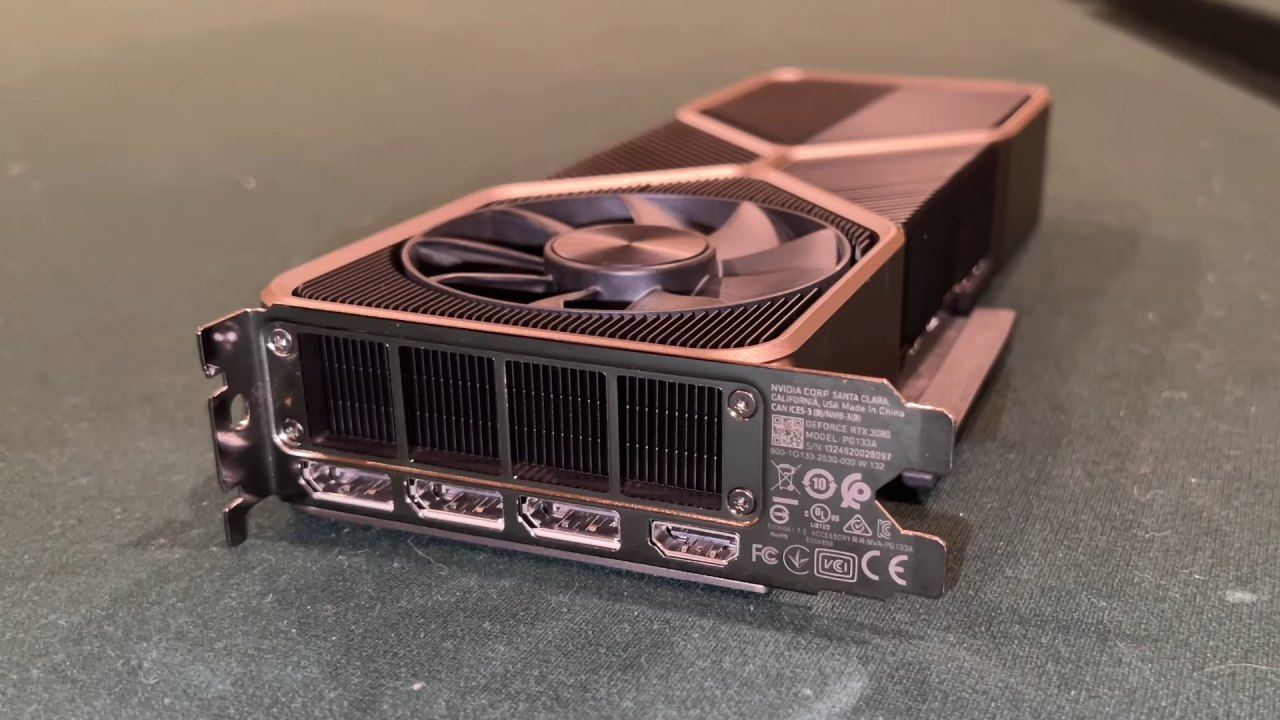
Rising Memory Costs are Putting Pressure on GPUs
Normally, when flagship GPU prices become too expensive, buyers can move down to cheaper cards, but if entry-level supply also becomes limited, that escape route gets weaker. Recent retailer sales data shows something important: buyers are still heavily favoring graphics cards with 16GB of VRAM. Paying less for an 8GB graphics card may save money today, but it could also limit the useful life of that GPU.
If you already own a capable 12GB or 16GB graphics card, upgrading just because something new exists may not make sense. There's another issue with the market for cheap GPUs. This is AMD's Radeon RX 6500. It has 16 compute units, 8GB of GDDR6 memory, a 128-bit memory interface, and an average board power of 92W.
It looks like a simple, fast 1080p game GPU on paper, but independent benchmark tests show that it's not worth the money. RX 6500 got about 49 fps on average across 10 games at 1080p. RTX 5050 was about 20% faster. A Radeon RX 7600 from a few years ago was still about 22% faster.
That changes the story: buying the newest graphics card doesn't always mean it's a better upgrade, especially if an older card performs better for gaming at the same price. RX 9050 needs to be priced aggressively before it's easy to suggest. Even if you want the newest GPU, performance and price are still more important if you're on a tight budget.
Intel's 32GB GPU Shows Why VRAM Matters
Now, here's where Intel becomes interesting. The Intel Arc Pro B65 comes with 32GB of GDDR6 memory. That is significantly more VRAM than most mainstream gaming GPUs. This is not really designed as a normal gaming card. Intel is targeting professional workloads, content creation, and local AI applications where larger memory capacity can matter more than maximum gaming FPS.
Higher-memory professional GPUs are becoming increasingly expensive. So, is 32GB automatically better? No. For gamers, driver support, gaming performance, power usage, and price still matter more than simply having the largest VRAM number. For AI workloads, 3D applications, and memory-heavy professional software, 32GB can allow workloads that simply will not fit comfortably.
Nvidia owners have another issue to watch out for: power delivery. ASUS recently added an automatic shutdown feature to GPU Tweak III for supported graphics cards equipped with its Power Detector technology. The system monitors individual 12V-2x6 power pins. If unusually high current continues for too long, the software can shut down the PC.
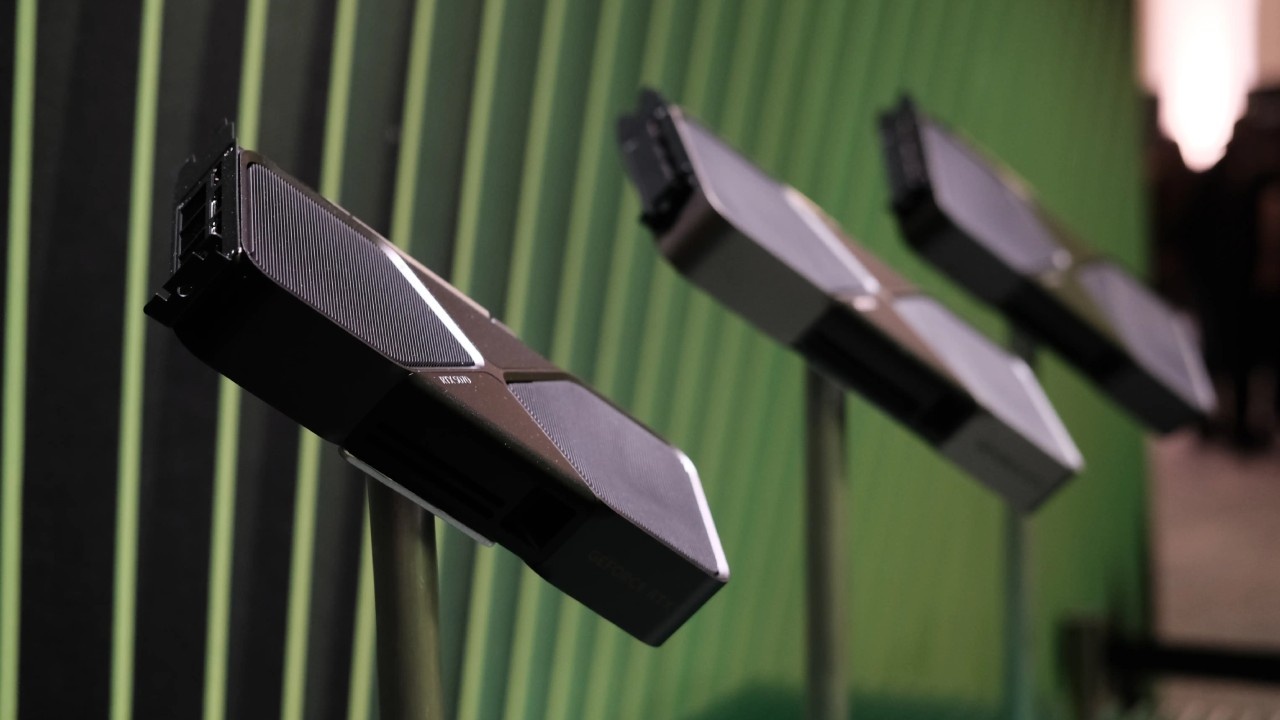
That doesn't mean every modern Nvidia GPU has a connector problem, but it does show manufacturers are adding another layer of protection around high-power graphics cards. A flagship GPU is already expensive, so buyers should also consider the power supply, connector installation, case airflow, and total system power before upgrading.
The RTX 3080 20GB Makes a Comeback
But now we reach the strangest GPU story. RTX 3080 is apparently making a comeback with 20GB of GDDR6X memory. These are not new official NVIDIA RTX 3080 models. They are modified RTX 3080 graphics cards. The original RTX 3080 launched with 10GB of VRAM, 8,704 CUDA cores, and a 320-bit memory interface.
These modified versions effectively double the memory capacity to 20GB while keeping the powerful Ampere GPU underneath. Suddenly, an old RTX 3080 becomes much more interesting. The original 10GB memory limit was one of the biggest concerns for long-term use. With 20GB, that problem shrinks for high-resolution gaming, texture-heavy games, rendering, and some AI workloads.
It does not support DLSS Frame Generation or Multi-Frame Generation like newer GPUs.
Because these 20GB versions are modified cards, buyers should not expect the same warranty coverage as with a standard official retail GPU. If you are considering one, those limitations need to be part of the buying decision. So, is an RTX 3080 20GB actually a smart buy?
Only at the right price. If it is significantly cheaper than a newer high-VRAM graphics card, the raw performance and 20GB memory can make it surprisingly competitive. The GPU market is making VRAM more valuable. Budget cards are not automatically better just because they are new. Older high-end hardware is becoming relevant again.
The fact that a modified RTX 3080 with 20GB can look attractive in 2026 shows how much the GPU market has changed. If you are choosing between a brand-new 8GB GPU and an older high-end card with 20GB, consider memory capacity, performance, efficiency, features, pricing, and warranty before deciding.
Editor, NoobFeed
Gaming Hardware Updates
No Data.