
DLSS 4.5 Gains and Regressions, Intel Under Pressure, Switch 2 Lite Rumors
A broad roundup of critical hardware, gaming, and industry shifts shaping the next phase of consumer technology.
Hardware by Tanisha Aria on Feb 06, 2026
In the wrap-up segment, several important stories that didn't need their own full discussions are brought together. These stories are still important for understanding the current state of hardware, games, and the tech industry as a whole.
There are arguments about GPU upscaling, changes in the CPU market, rumors about consoles, and big company changes. All of these things show that the industry is changing.
.jpg)
DLSS 4.5 Testing Shows Progress With Caveats
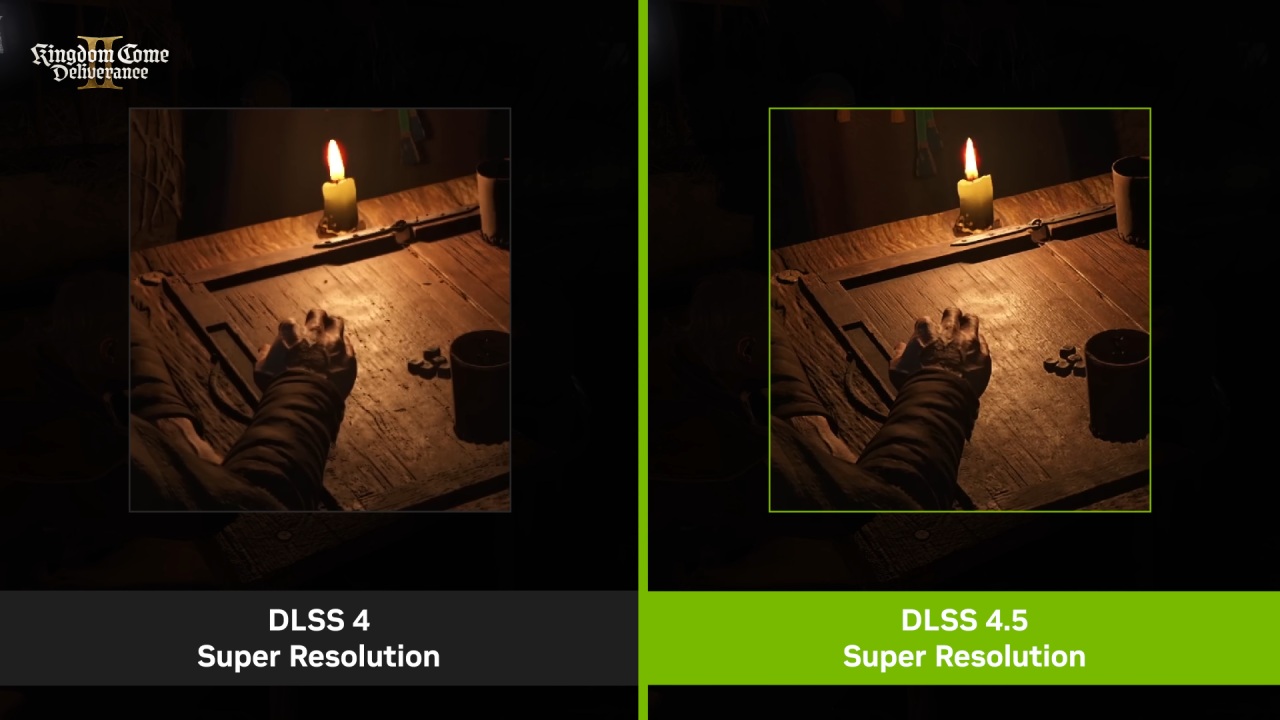
Unboxed just released a lot of tests for DLSS 4.5, which adds to what was said before and provides a clearer picture overall. The result mostly aligns with what we already thought after combining old and new data.
It seems like DLSS 4.5 is both two steps forward and three steps back. It's better most of the time, and it's a step forward all around, but it doesn't have the clean, easy upgrade path that earlier DLSS releases did.
While visual clarity is improving in many situations, it is worsening in others. It's not too strange that performance is a little slower in some games than it was with older DLSS versions.
Still, the experience isn't clear. You need to know a lot about DLSS4.5 before you turn it on. This is different from DLSS2, DLSS3, and even early versions of DLSS4, which were better all around.
It's more complicated than that. There are often too many DLSS versions in a single game, on top of all the other graphics options. For you, it can be hard to figure out the best setup.
We think Nvidia should make this easier to understand. It's safe to say the new DLSS 4.5 quality mode is at an ultra-grade level. It would be easier to understand if it were called exactly that. It would make sense for older GPUs not to support ultra quality, and no one would need long explanations or fixes.
Upscaling Expectations and Vendor Responsibility
There's no need to single out Nvidia here. Concerns about AMD are the same. Some people have talked about trying out FSR4 support on RDNA3, and one idea is to force it through driver-level toggles.
We agree that choices that are still being tested are not enough. You shouldn't have to use unofficial tweaks or secret switches to get modern upscaling features to work right.
How easy it is to use is important, whether you are on an RTX30-series card or a Strix Halo laptop. It is not okay to make older gear feel outdated by rolling out confusing new features at the wrong time. NVIDIA and AMD both need to ensure their technologies are not only powerful but also easy to use and understand.
Motherboard Issues and CPU Reliability Concerns
Reports say that ASUS motherboards kill Ryzen 9800X3D CPUs, which is another important point to make in the end. People have been discussing this issue behind closed doors for a while now. Still, ASUS has had to address it publicly, suggesting the problem is real and widespread enough to warrant attention.
As a buyer or system builder, this is a warning to stay up to date on changes to motherboard firmware, power delivery, and vendor responses. High-end CPUs aren't cheap, and problems like this make people less likely to trust the environment.
Intel Earnings and Growing Competitive Pressure
Intel's most recent earnings report did not paint a good picture. Intel's overall income was pretty much the same, even though it rose slightly in the data center.
However, it went down in the consumer segments. Being flat is the same thing as falling behind in a market where AMD and Nvidia are both on strong upward trends.
The success of stocks shows this to be true. After earnings, Intel shares fell about 5% and kept going down for days afterward. Intel has recently put out some good items, but the overall financial and market situation is still scary.
AMD and Apple Continue to Eat Into Laptop CPU Share
The split in the laptop CPU market is one of the most interesting pieces of information. Now, AMD and Apple each have about 20% of the market, leaving Intel with about 60%. It used to be that Intel had almost 90% of this market, so the change is big.
The fact that AMD sells about as many laptop CPUs as Apple shows how competitive the market has become. If AMD and Apple each get to 25%, Intel will drop to 50% and no longer be the leader. Stopping the loss here is very important because this is the last big area where Intel still has a big lead.
From our point of view, this makes Panther Lake very important. In the short run, it might be more important than Nova Lake. Before anything else, Intel needs to make consumer computers stable and trustworthy again.
Strix Halo Systems and Early Performance Indicators
Strix Halo keeps showing up in strange places, like a laptop with a Kojima theme that caught many people off guard. It's mostly just an interesting visual touch, but it shows how much attention this platform is getting.
More importantly, early scores for the Halo392 APU are now available. This processor has 12 cores and 40 compute units. The results look great, suggesting the performance could be very good. We will need more information, but first thoughts are positive.
Ubisoft Cancellations Highlight Industry Struggles
Jeff Keighley says that Ubisoft has scrapped six games and pushed back seven others. Soon, the company is also likely to lay off some employees. It serves as another lesson of how hard it is to make games right now.
We all know Ubisoft has released many great games over the years, which makes this situation even worse. Unfortunately, stories like this are becoming increasingly common in this business.
Switch2 Lite Rumors and Supply Concerns
There are already rumors going around about a new Switch model. Most of them point to a Switch2 Lite. There are arguments against this idea based on production nodes and efficiency. Still, many of them don't hold up when examined more closely.
It's not the most cutting-edge, but an 8nm method is still faster than older nodes. Lower clocks and less stringent yield standards make sense for a device that can be held in only one hand. When you play games that use a lot of power, the battery life may be shorter, but that's usually okay for a cheaper model. The message will likely be simple: it's the cheap choice.
There are also signs that the present Switch might run out of units soon. Even though similar problems haven't been mentioned with other consoles yet, supply issues in the current market are still hard to predict.
PS5 Pro Sales and Sony's Strategy
Sales of the PS5 Pro are now about the same as sales of the PS4 Pro when compared to their base models. The alignment is clear, even though the PS5 Pro came out later in the series.
This means Sony probably had strong data showing that people who want to buy a Pro are highly driven and willing to pay more. From a business perspective, asking more seems to be the right choice, even if some people don't like it. For many players, the value proposition is still better than building a PC with the same performance goals.
Final Thoughts
All of these stories show how quickly things are changing in this business. Upscaling tools are improving, but they are also becoming trickier. It is no longer certain that CPUs will dominate the market. Console makers are trying out new prices and shapes, and companies that have been around for a long time are changing what they stand for.
It's more important than ever for you to stay educated. It's important to pay attention to the little things when picking out hardware, watching industry trends, or just trying to figure out where technology is going next.
Also, check our other NVIDIA articles below:
- NVIDIA GeForce RTX 5080 Review (2025): Still A 4K Gaming Powerhouse?
- NVIDIA RTX 5070 Review: Mid-Range Muscle or Marketing Hype?
- RTX 5070 Ti Review: Performance, Thermals & Power Efficiency Tested
- ASUS GeForce RTX 5090 LC Liquid Cooled GPU Review: Unmatched Silence & Speed
- MSI GeForce RTX 5090 32GB SUPRIM SOC Review: Power Efficiency, Cooling, and Gaming Performance
- INNO3D RTX 5060 Ti 16 GB X2 Review: Gaming Benchmarks, Temps, and Power Efficiency
- HP Omen 45L Review: RTX 5090 Performance, Thermals, and Value Analysis
- ASUS TUF Gaming GeForce RTX 5060 Ti Review: DLSS 4, Power Efficiency, and Gaming
- ASUS Prime RTX 5060 Ti OC 16GB Review: DLSS 4, Ray Tracing, & Thermals Tested
- NVIDIA GeForce RTX 5060 Review: Specs, Gaming, and Cost per Frame
- MSI GeForce RTX 5090 GAMING TRIO OC Review: A Monster Power GPU
Contributor, NoobFeed
Gaming Hardware Updates
No Data.