
FSR Redstone Review: AMD's New Tech Launch Falls Short
Exploration of Redstone’s upgraded rendering technologies and their restricted availability within AMD’s newest RDNA 4 GPU lineup.
Hardware by Tanvir Kabbo on Dec 11, 2025
Today marks the official unveiling of AMD's new FSR Redstone platform, which the firm calls the start of a new age of gaming innovation. There have been high hopes for this release, especially given that many AI-enhanced rendering technologies are now available. But the truth is more convoluted.
While Redstone introduces upgraded machine-learning versions of frame generation, ray tracing denoising, and lighting acceleration, early testing reveals major problems—most notably severe frame pacing inconsistencies. Despite clear visual improvements over AMD's earlier FSR implementations, Redstone falls short of Nvidia's more mature DLSS ecosystem.
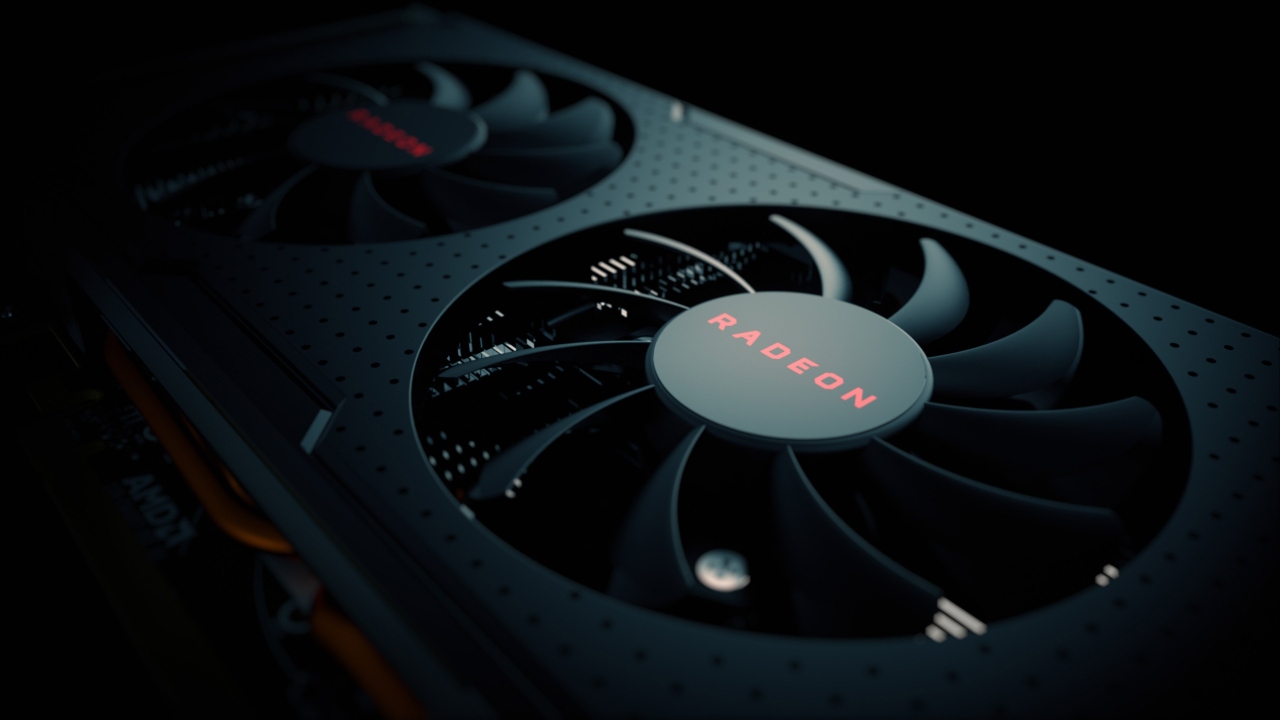
What's New and What Isn't
FSR Redstone combines multiple technologies under one brand. The FSR upscaling technique, which AMD previously called FSR 4, remains the same. AMD just took away the version number and didn't add any new features. The machine learning-based frame generation model is the most important new feature. Its goal is to bring AMD's graphics capabilities closer to Nvidia's neural rendering capabilities.
Redstone also introduces Ray Regeneration, a new AI-powered ray tracing denoiser comparable to Nvidia's Ray Reconstruction. However, its launch is limited exclusively to Call of Duty: Black Ops 7 Multiplayer. Another component, Radiance Caching, is AMD's neural-network lighting accelerator, but this feature is not expected to arrive until 2026.
All Redstone features are restricted to RDNA 4 GPUs within the RX 9000 series. Users with older RDNA 1, RDNA 2, and RDNA 3 cards receive fallback implementations based on older FSR 3-era analytical algorithms.
None of the machine learning improvements apply to those architectures, despite evidence that FSR 4 INT8 runs well on RDNA 2 and RDNA 3 hardware. At launch, AMD has not released this version publicly, even though the source code demonstrates its compatibility and efficiency.
Frame Generation: Strong Visuals, Broken Frame Pacing
The most heavily marketed component of Redstone is the machine learning frame generation model. It can be enabled through AMD's latest drivers in any game that supports FSR 3.1.4 or newer, giving players around thirty compatible titles on day one. In theory, this marks a significant step forward for AMD's ecosystem. In real life, the technology has a major flaw: frame-pacing issues that are easy to see while playing.
With the "double-tap" pattern clear, high-speed 960fps slow-motion pictures show that the time between frames isn't always the same; there are short and long breaks. This unsteady speed often looks like jutter when the camera moves. Screen breaking can still happen sometimes, even when FreeSync is turned on.
The problem can occur across many different systems, displays, and refresh rates, which means it's a timing issue that happens all the time, not just when you integrate things. By comparison, all DLSS Frame Generation tests conducted under identical conditions produced evenly paced and visually smooth output.
FSR Redstone has clear pace problems in a lot of games, such as Black Ops 7, God of War Ragnarök, Hogwarts Legacy, Cyberpunk 2077, GTA V Enhanced Edition, and F1 25. Some games, like Mafia: The Old Country and Black Myth: Wukong, behave better, though they too can have timing problems every now and then.
It looks like the main problem comes from how AMD's interpolation mechanism works when it releases the frames it makes. Instead of distributing generated frames evenly across rendered frames, the algorithm releases them too quickly after real frames, resulting in detectable uneven motion on high-refresh-rate adaptive-sync displays.
AMD has acknowledged the issue and is investigating, but given that similar pacing problems have persisted since the debut of FSR 3, a rapid resolution seems unlikely.
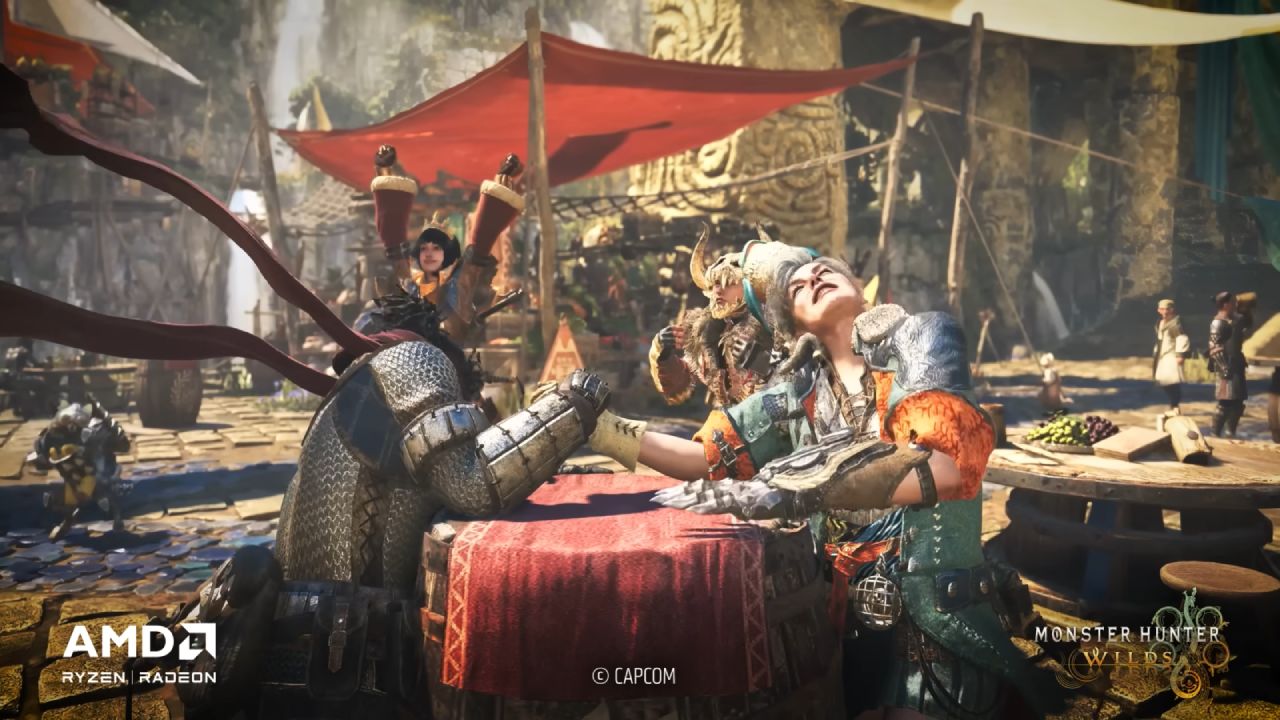
Image Quality: A Significant Step Forward
Even though the tempo is off, Redstone does make the visuals much better. Compared to FSR 3.1, the new model has far less shadow flicker, more stable edges, fewer disocclusion artifacts, and better temporal consistency. Motion stability and fine-detail interpolation also benefit from the enhanced machine learning approach. In some scenes, Redstone even surpasses DLSS in the stability of certain visual elements.
The improvements, however, vary from one game to another. Cyberpunk 2077 has too much blur and grain, probably because of problems with the engine's interface. Hogwarts Legacy has changing objects that rely on the scene's phase of movement.
When FSR's interpolation is used, F1 25 has broken road graphics in every other frame. Mafia: The Old Country, on the other hand, shows great improvements in shadow stability and fine detail keeping. These differences show that AMD's approach can deliver high-quality output. Still, it only works well when properly configured in each engine and rendering process.
Performance: Light Overhead, Competitive Scaling
From a performance perspective, Redstone's frame generation tends to introduce slightly lower overhead than both the earlier FSR 3 analytical model and Nvidia's DLSS Frame Generation. GPU output scaling is competitive and, in some cases, exceeds Nvidia's results.
Titles such as Mafia show approximately 69% higher output with FSR than with DLSS, while F1 25 shows 40% with FSR versus 38 percent with DLSS. God of War also shows strong scaling, with FSR increasing framerate by 72% compared to DLSS's 59%. Although the raw performance benefits are impressive, the frame pacing problems greatly diminish the practical usefulness of these gains.
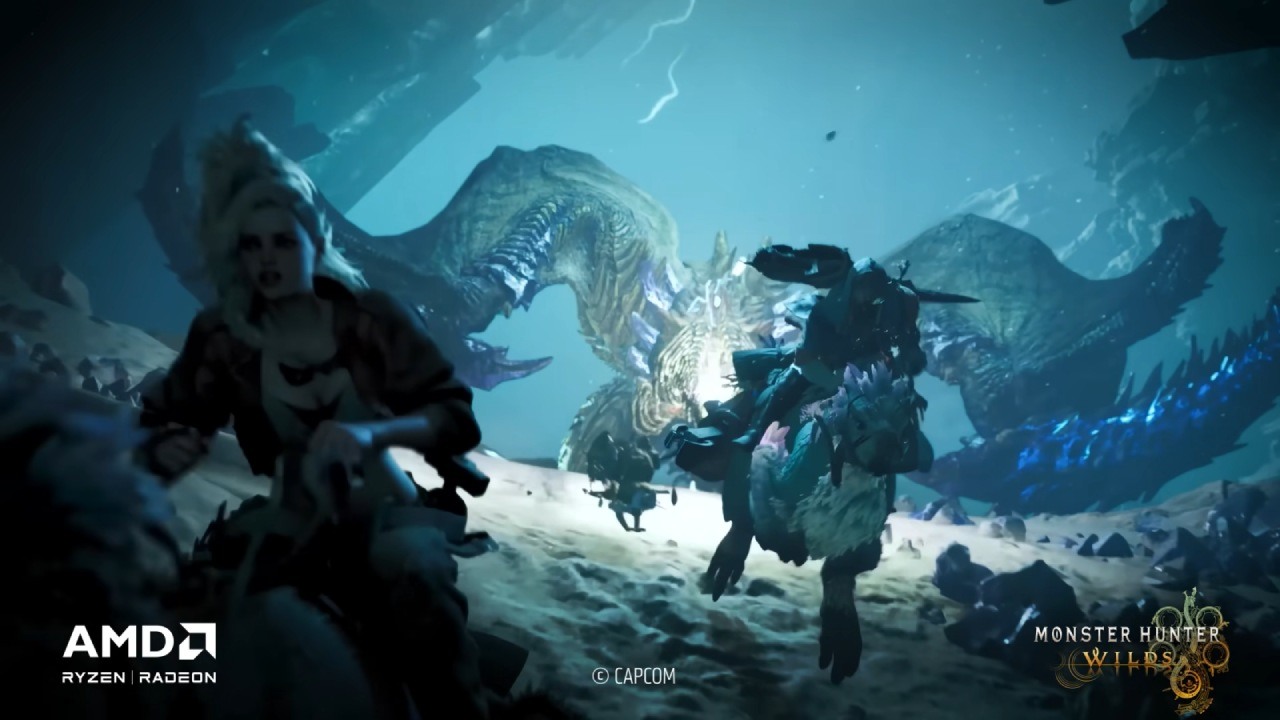
Ray Regeneration & Radiance Caching: Limited Availability
Redstone's ray tracing advancements are likewise limited at launch. At the moment, Ray Regeneration, AMD's AI-powered ray tracing denoiser, is only accessible in Call of Duty: Black Ops 7 Multiplayer.
There is no word on when it will be available in other games. Radiance Caching, the company's neural network lighting accelerator, won't be available until 2026, so we don't yet know how it will affect the real world.
Final Thoughts
FSR Redstone could improve AMD's AI rendering, but its launch is clouded by a frame-pacing issue. The improvements in visual quality are clear, and the lower performance overhead is a nice bonus. Still, the output is uneven and prone to judder, which goes against the whole point of frame creation. Redstone can't be trusted for general use until AMD can make contemporary adaptive-sync displays work reliably.
If you want smooth, consistent performance and a lot of game compatibility, Nvidia's GeForce GPUs are still the best pick. This is because their frame-making process is strong and works well with the rest of the system. When AMD fixes its timing issues, Redstone could really compete. But for now, it's a hopeful but flawed move toward images that can stand up to AI.
Also, check our other AMD articles below:
- AMD Ryzen 9 9950X3D Review: Setting The Standard For 2025 Gaming CPU
- AMD Ryzen 7 9800X3D Review: 3D V-Cache Goes God Mode with Stunning Gaming Performance
- AMD RX 9070 Performance Review: Thermals, Clocks, and Real-World FPS
- AMD Ryzen 5 7600 Review: Best Budget Gaming CPU of 2025?
- AMD Radeon RX 7800 XT Review: RDNA 3 Power For Midrange Gaming
- Sapphire NITRO+ AMD Radeon RX 9070 XT Review: The Ultimate 4K Gaming GPU
- AMD Ryzen 7 7800X3D: Delivers Gaming Performance Far Beyond Expectations
- AMD Ryzen 9 7900X Review: Powering the AM5 Era with DDR5 & PCIe 5.0
- Intel Core i9‑14900K vs. AMD Ryzen 7 7800X3D: Power Profiles & Gaming Benchmarks
Senior Editor, NoobFeed
Gaming Hardware Updates
No Data.