
Next-Gen Handheld Gaming Showdown: Panther Lake vs Ryzen Z1 Extreme & Z2 Extreme
Testing Panther Lake X9 388H against Ryzen Z1 and Z2 Extreme at realistic handheld wattages for gamers.
Hardware by Mitsuba Miyu on Feb 11, 2026
For the next wave of handheld games, there will be even more power. Companies are pushing the limits of portable hardware, and now gamers can get small devices that are as powerful as full-sized PCs.
The Intel Panther Lake X9 388H is starting to look like a strong opponent to AMD's Ryzen Z1 Extreme and Ryzen Z2 Extreme. This is especially true when tested at reasonable power limits for handheld devices, such as 17 watts and 25 watts.
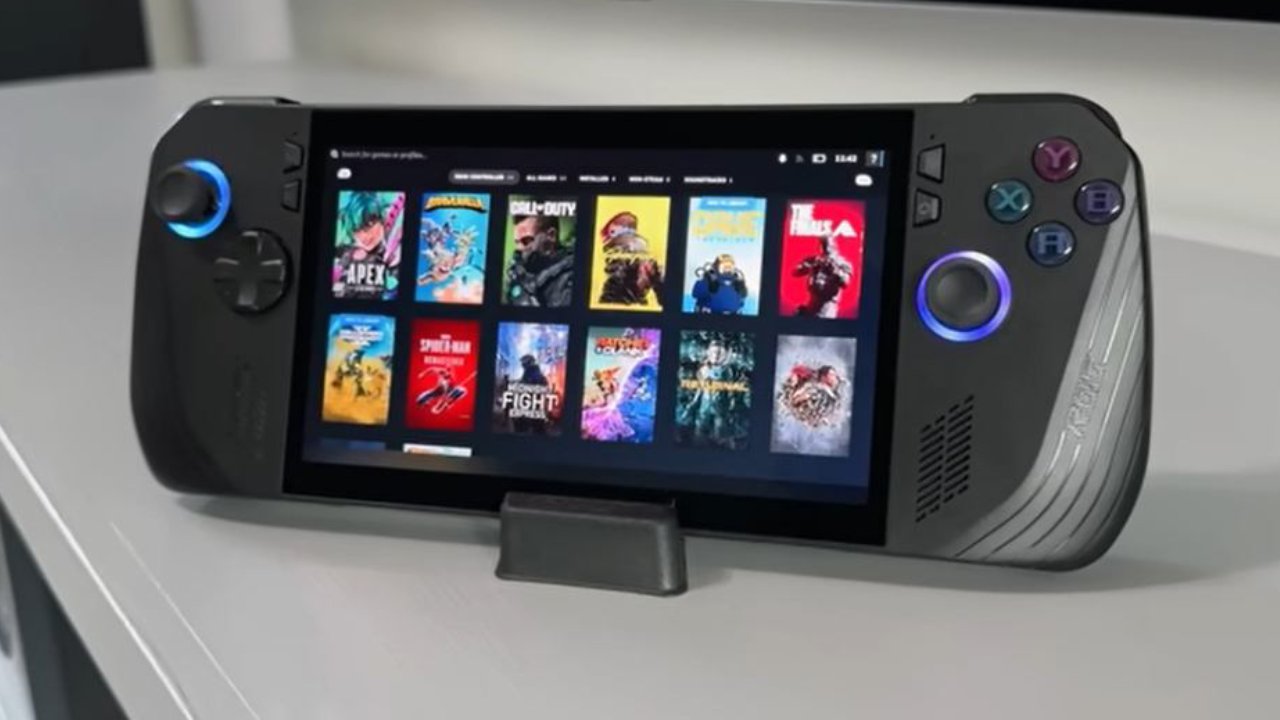
It's important to understand how these power levels work because handheld devices can't handle desktop-level wattage without overheating or draining their batteries.
Specs Breakdown: Ryzen Z1 Extreme vs Z2 Extreme vs X9-388H
The AMD Ryzen Z1 Extreme is still a good choice for portable game PCs. It was built on the Zen 4 architecture and features eight cores and sixteen threads. Its base clock is 3.3GHz, and its boost clock for all cores is up to 5.1GHz. It has 12 RDNA3-based processing units built into its GPU. To test, we used the ROG Ally X with 24GB of RAM and a speed of 7500 MT/s.
The newer AMD Ryzen Z2 Extreme builds on this with the Zen 5 design. It still has eight cores and sixteen threads, but they are set up differently. It has five Zen 5C cores and three Zen 5 cores. Boost clocks let three Zen 5 cores reach 5GHz, and the Zen 5C cores reach 3.3GHz.
The base clock for all cores is 2GHz. It has 16 RDNA3.5-based processing units built into its GPU. The Legion Go 2, with 32GB of RAM and running at 8000MT/s, is used to test the Z2 Extreme.
Here, the Intel Core Ultra X9 388H Panther Lake chip is put to the test. Intel has stated that it is working on a custom chip for handheld devices, but the X9 388H gives us a good idea of how well portable devices will perform.
It has 16 cores and 16 threads, with four speed cores that can boost up to 5.1GHz, eight efficiency cores that can boost up to 3.8GHz, and four low-power efficiency cores that can boost up to 3.7GHz. Its brand-new ARC B390 iGPU features 12 XE3 cores and a top speed of 2500 MHz. 32GB of RAM running at 9600MT/s was used for the test.
At handheld wattages of 17 to 25 watts, the differences between the CPU and GPU clocks become more noticeable because the chips can't hit their full potential. Despite this, Panther Lake still shows promise at these lower TDPs.
Geekbench 6: CPU Performance at 17W and 25W
The Ryzen Z1 Extreme scored 1,795 in single-core tests and 7,922 in multi-core tests at 17 watts. Due to the slower Zen 5C cores, the Ryzen Z2 Extreme got a little faster in single-core, but not by much in multi-core. It got 2,944 points for single-core and 11,180 points for multi-core at the same 17W TDP.
At 25 watts, the X9 388H's single-core performance barely reached 2,961, but its multi-core performance went through the roof at 13,815. In single-core mode, Panther Lake is about 35.5% faster than the Z1 Extreme, and in multi-core mode, it is 32% faster.
Panther Lake is 25% faster in single-core tasks and 37% faster in multi-core tasks than the Z2 Extreme. Even at wattages suitable for mobile devices, these gains show strong efficiency and multi-thread scaling.
3DMark Time Spy: iGPU Performance
As for GPU tests at 25 watts, the Ryzen Z2 Extreme is a little better than the Z1 Extreme. But the Intel Core Ultra X9 388H is the best. It has 83.2% better graphics performance than the Z1 Extreme and 58.2% better performance than the Z2 Extreme. These fake tests show that Panther Lake's iGPU could be used for high-quality mobile games.
.jpg)
Real-World Gameplay Benchmarks
Cyberpunk 2077
Cyberpunk 2077 ran at 1080p with Steam Deck settings, and the Ryzen Z1 Extreme achieved 42 FPS. The Z2 Extreme got 46FPS. It took 25 watts of power for the Intel Core Ultra X9 388H to reach 63FPS.
The Core Ultra kept up 46FPS even at 17 watts, which was faster than the Z1 Extreme's 32FPS and the Z2 Extreme's 39FPS. When compared to FSR on Ryzen devices, XESS scaling on Intel devices made gaming smoother.
Shadow of the Tomb Raider
It took the Z1 Extreme 59 FPS, the Z2 Extreme 64 FPS, and the X9 388H 79 FPS to run at low settings, 1080p, and 25W TDP. The Core Ultra stayed ahead of the Z1 Extreme at 17W (62FPS vs. 76FPS) and tied with the Z2 Extreme at 71FPS.
Forza Horizon 5
The Z1 Extreme averaged 76FPS, the Z2 Extreme 80FPS, and the Core Ultra 89FPS at 25W, middle settings, and 1080p. The Core Ultra did well at 17W, with 71 FPS, which was only 1 FPS behind the Z2 Extreme in some situations. We tuned PL1 and PL2 to make sure that the power transfer was stable for peak performance while keeping the handheld wattages safe.
Black Myth: Wukong
The Core Ultra got 62 FPS, the Z1 Extreme got 44 FPS, and the Z2 Extreme got 49 FPS at 25 watts and 1080p with 60% resolution scaling. The Core Ultra still had the best performance at 17 watts, with 49FPS, beating both Ryzen chips that used less power.
Horizon Zero Dawn Remastered
Integrated GPUs struggled with this game. The Z1 Extreme reached 30FPS at 25W, and a smaller resolution, the Z2 Extreme reached 31FPS, and the Core Ultra reached 48FPS, which is a big improvement in how well it can be played.
17W vs 25W FPS Uplift
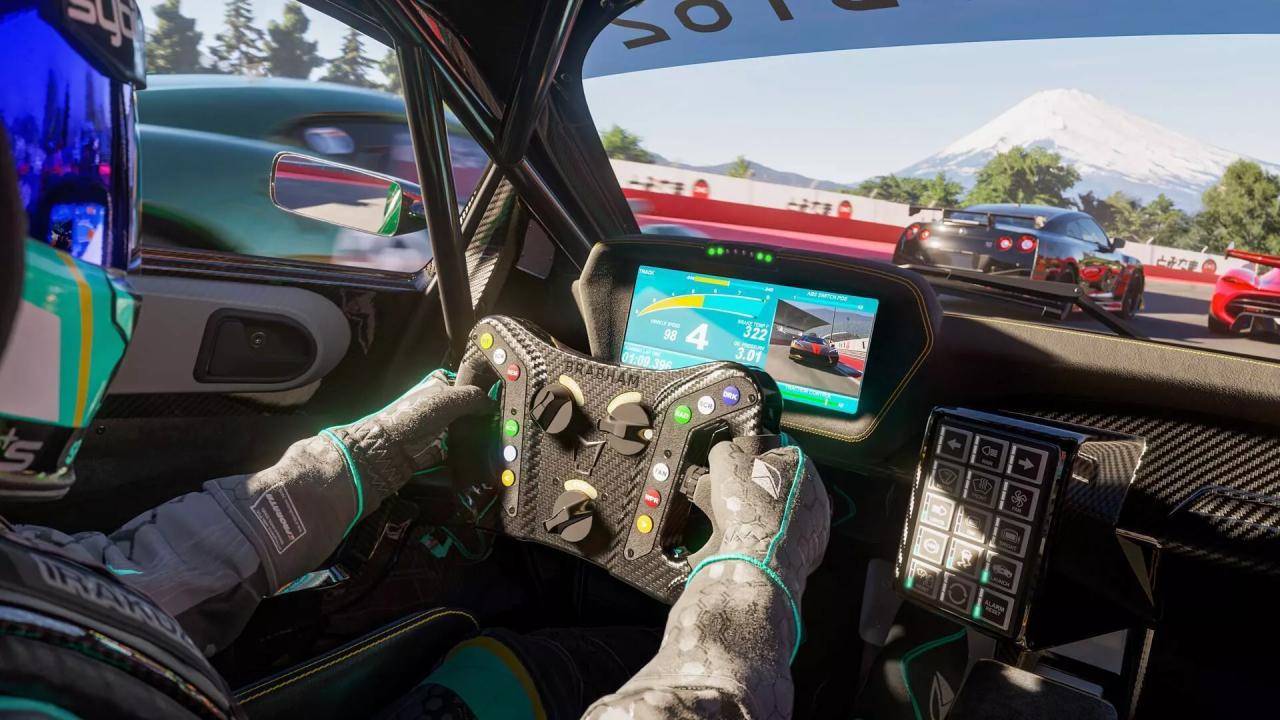
The Intel Core Ultra X9 388H outperforms the Z1 Extreme by about 34% and the Z2 Extreme by 7.5% in all games tested at 17W. Performance is even better when the TDP is raised to 25W. The average FPS increases by 40% over the Z1 Extreme and by 30% over the Z2 Extreme. Driver updates for Intel Arc GPUs keep improving performance, so future updates will likely make things even better.
Future Intel Handheld Chips
Intel is going to release a special chip for handheld devices that will likely include a version of the B390iGPU. Even though we don't know the exact specs, a setup with 12 cores and 12 threads might allow more power to be sent to the iGPU at wattages suitable for small devices. What the X9 388H did is a good sign for what handheld players can look forward to in the near future.
Final Thoughts
The Panther Lake X9 388H offers high CPU and GPU performance at 17W and 25W TDPs, making it a great choice for next-generation handheld gaming. When compared to AMD's Ryzen Z1 and Z2 Extreme, Panther Lake offers higher frame rates, better single-core scaling, and strong graphics performance built right in.
Panther Lake-powered devices offer significant benefits without exceeding the temperature limits of portable form factors, making them a viable option for replacing your handheld device.
Also, check our other handheld articles below:
- ASUS ROG Ally X Handheld Review: Double the Battery, Double the Comfort
- Nintendo Switch 2 Vs. Original Switch 1: A Full Comparison
- How To Connect A Camera And Join Voice Chat With Nintendo Switch 2
- Nintendo Switch 2 Review: Handheld Performance, Features & Value Breakdown
- ROG Xbox Ally X Vs. ROG Ally X: Display, Battery & Controls
- ASUS ROG Ally X vs. Steam Deck OLED: Display, Battery & Gaming Benchmarks
- MSI Claw 8 AI+ Review: Display, Controls & Gaming
- Nintendo Switch 2 vs. Steam Deck OLED: Gaming, Performance, Battery, Display and Value
- PlayStation Portal Review: Remote Play, Cloud Streaming & Travel Gaming
- PlayStation Portal vs. Lenovo Legion Go: Best Portable Gameplay
- Lenovo Legion Go S vs. Zotac Zone: In-Depth Experience Comparison
- How AMD Dominates the Handheld Market
Editor, NoobFeed
Gaming Hardware Updates
No Data.