
Nvidia DGX Spark Review: Desktop-Scale AI Performance in a Compact Workstation
Compact yet powerful, the DGX Spark bridges the gap between desktop computing and data center-level performance.
Hardware by Tanisha Aria on Oct 26, 2025
The Nvidia DGX Spark has finally arrived after months of anticipation since its debut at CES. It's a compact, prebuilt AI-focused machine that brings data center-grade performance to a small form factor.
The DGX Spark, a new era of high-performance, easily accessible computing for deep learning, development, and AI experimentation, was created for professionals, creators, and AI enthusiasts.
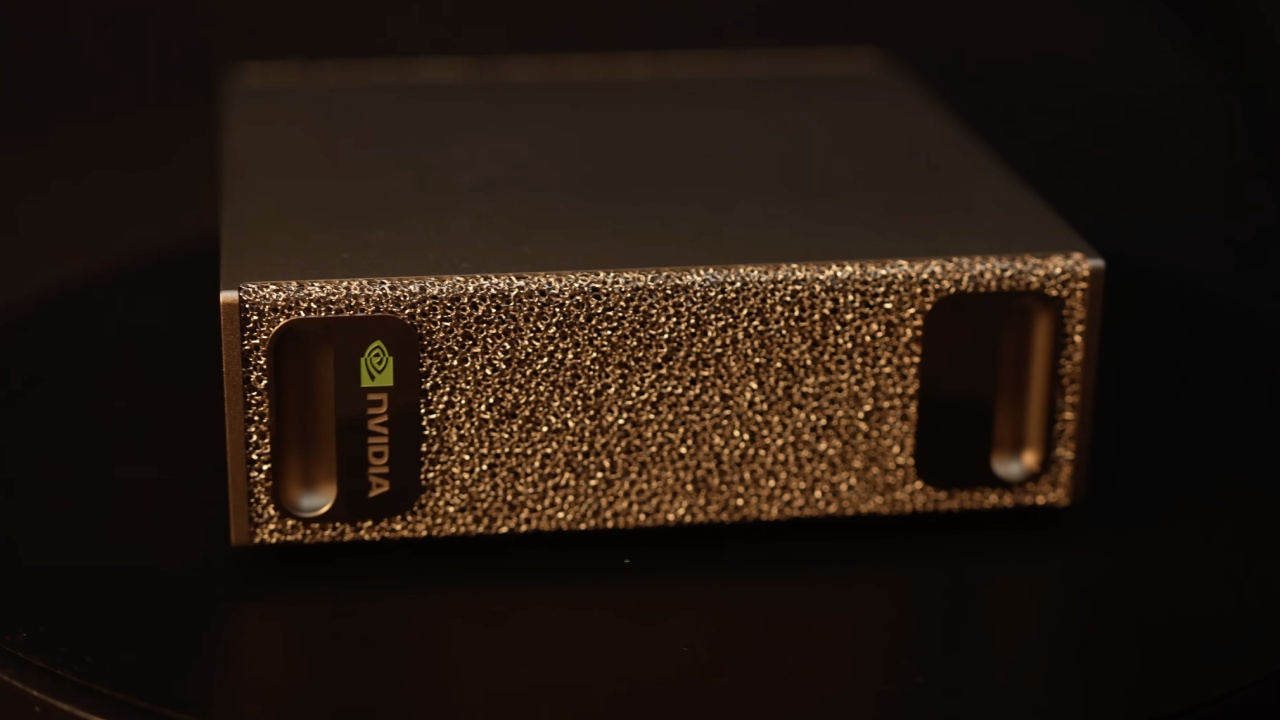
Unboxing the DGX Spark
The DGX Spark was finally available for purchase at MicroEnter after a nearly ten-month wait. With its sleek packaging and contemporary design aesthetics, the device instantly conveys a sense of high-end engineering.
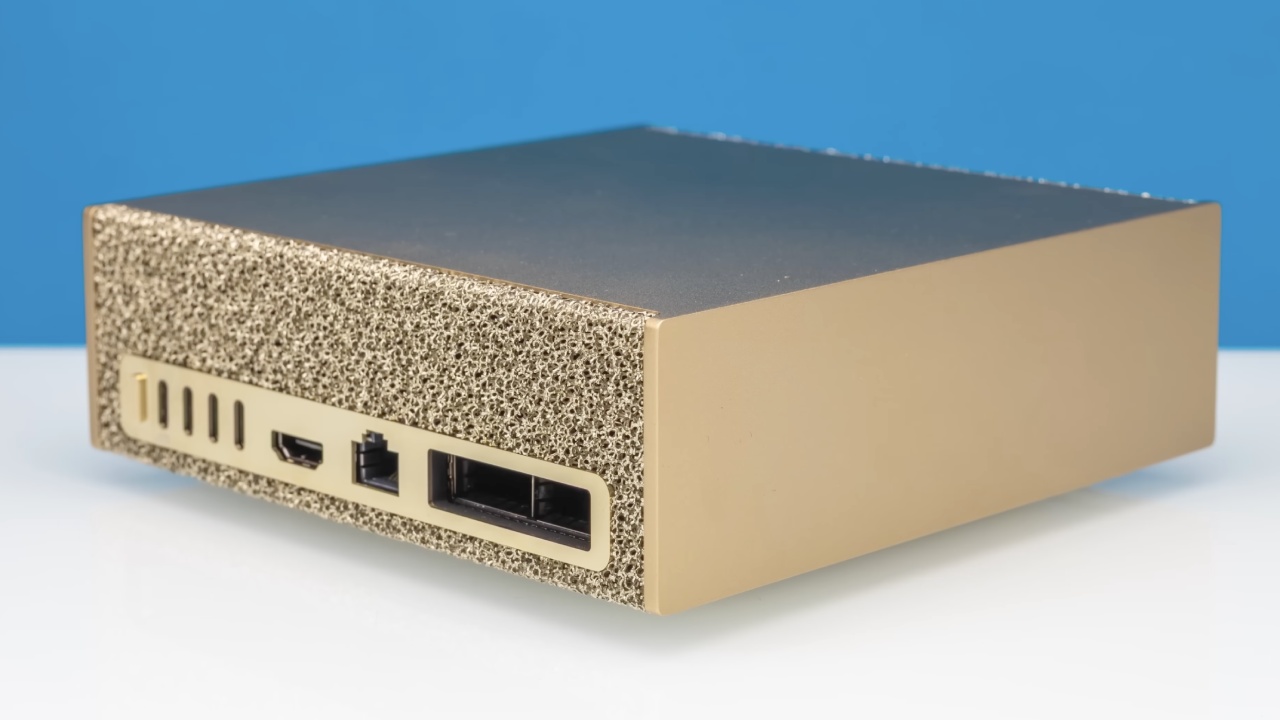
Despite being made of metal, the chassis has a foam-like texture that adds durability without compromising style. At first glance, its small size is surprising; it was obviously constructed with a purpose in mind.
Four USB-C ports, an HDMI port, a 10 Gbps Ethernet port, and two QSFP56 connectors—known as ConnectX7 by Nvidia—are all included in the design. By using these connections, users can create a scalable and potent compute cluster by directly connecting several DGX Spark units or by using a compatible switch.
A magnetic rear cover and front air intake vents make maintenance and cooling easier. Despite not having a stand, the device sits firmly and has rubber padding underneath, making it perfect for horizontal positioning.
Design and Build Quality
Every design choice in the DGX Spark feels intentional. The color scheme reflects Nvidia's signature "founder's edition" style—dark, industrial, and minimal.
The magnetic panels make internal access effortless, and the build exudes a data center-grade level of precision. With Wi-Fi antennas built in and efficient airflow through the metal chassis, it's a perfect blend of form and function.
Despite its compact nature, the DGX Spark carries serious hardware under the hood. With 128GB of unified memory shared between the CPU and GPU, it provides a memory architecture similar to Apple's unified memory system, optimizing performance for machine learning tasks.
Comparing Size and Purpose
When placed beside other mini PCs such as the Acer Veriton Vero, Mac Studio, and MinisForum models, the DGX Spark stands out not just in size but in purpose. While those systems are designed for general computing, Spark is tailored specifically for AI and machine learning.
It bridges the gap between consumer-level mini PCs and enterprise-grade AI servers, offering power and efficiency in a desktop-friendly format.
Performance Overview
Inside, the DGX Spark packs a 20-core processor, setting it apart from many mainstream CPUs. Even Apple's M1 Ultra and newer M4 Max chips don't match this core count. The CPU performance translates to faster code compilation and multitasking capabilities, particularly beneficial for developers handling complex projects.
In testing, the DGX Spark outperformed several premium mini PCs in Python-based workloads. For instance, it took 15.3 seconds to finish a Mandelbrot computation benchmark, while the Mac Mini M4 Pro took 16.5 seconds, and an AMD Strix Halo system took 16.24 seconds. These findings illustrate the computational benefit of Spark for workloads that are developer-focused.
AI Development and Model Performance
For users running local AI models, the DGX Spark delivers impressive results. In Llama CPP benchmarks using a 30B parameter model with Q4 quantization, the Spark achieved a prompt processing speed of 2,170 tokens/s and a generation speed of 83 tokens/s. This is nearly four times faster than the M4 Pro and significantly quicker than AMD's Strix Halo-based machines.
The speed advantage becomes especially evident during real-time AI-assisted development in code editors and environments like VS Code, where prompt latency affects workflow efficiency. Developers running code completion or inline editing tools will notice smoother performance and reduced lag.
Stable Diffusion and Visual Workloads
In Stable Diffusion tests using ComfyUI, the DGX Spark processed image generations in under 4s, achieving more than 6 iterations/s. In comparison, the Mac Mini M4 Pro took around 9.1s (2.38 iterations/s), and the Strix Halo system completed it in 6.8s (3.5 iterations/s). These results highlight how the DGX Spark handles compute-heavy tasks such as AI image generation, model training, and fine-tuning.
Designed for AI Enthusiasts and Professionals
The DGX Spark targets three main groups—developers, AI enthusiasts, and professional machine learning users. For developers, it's an excellent machine for compiling code and handling high-thread workloads. However, given its $4,000 price tag, it's not the best choice for general-purpose computing.
For AI tinkerers experimenting with local LLMs, model training, and fine-tuning, it delivers unmatched speed and convenience. And for professionals building AI models or researching performance-critical applications, it offers a desktop gateway into the Nvidia data center ecosystem.
Connectivity and Scalability
The networking capability of the DGX Spark is one of its best qualities. Two QSFP56 connectors are included with the 10 Gbps Ethernet port, allowing for high-speed interconnects to support multi-unit configurations.
This makes it possible for several Sparks to work together in a cluster, which is perfect for AI labs and other research organisations that require scalable power without relocating to a full data centre setting.
The GB200 Grace Hopper platform from Nvidia, which makes use of comparable Grace CPUs, Infinity Fabric, and CUDA architecture, is modeled by this setup.
Users can roughly recreate that environment for less than $10,000 by connecting two DGX Sparks, which represents a substantial advancement in accessibility for the development of advanced AI.
Native FP4 Support and Software Ecosystem
Models can operate effectively with little loss of quality thanks to the DGX Spark's native FP4 quantization support. FP4 precision is four times smaller than standard FP16 or FP32, resulting in faster computation and reduced power usage while maintaining acceptable output quality.
For users working with optimized models, this makes the DGX Spark an extremely capable inference machine.
On the software side, Nvidia's ecosystem ensures seamless integration from day one. The Spark runs a custom Ubuntu-based OS with pre-installed AI tools like LM Studio, Llama CPP, and ComfyUI.
Everything is configured out of the box—no complex setup, driver installations, or dependency issues. Users can immediately begin experimenting, training, or developing AI applications without the usual configuration hurdles.
.jpg)
Final Thoughts
A significant step towards democratising professional AI hardware is the Nvidia DGX Spark. With a Grace ARM CPU, CUDA cores, and high-bandwidth interconnects, it carries the power of the data centre into a desktop form factor. It is a serious professional workstation made for developers, researchers, and AI innovators; it is not a toy.
Devices like the DGX Spark will be crucial in bridging the gap between enterprise-level computing and high-end enthusiasts as the AI landscape changes. Nvidia has raised the bar for what a small AI workstation can achive, and the DGX Spark is set to become the preferred tool for developing next-generation AI thanks to its robust ecosystem support and upgradeable scalability.
Also, check our other NVIDIA articles:
- GeForce RTX 5090 Unleashed: Is NVIDIA's New Flagship the Ultimate 4K Gaming GPU?
- NVIDIA GeForce RTX 5080 Review (2025): Still A 4K Gaming Powerhouse?
- RTX 5090 Performance Testing In GTA 5 – 1080p, 1440p, and 4K Max Settings Benchmark
- NVIDIA RTX 5070 Review: Mid-Range Muscle or Marketing Hype?
- RTX 5070 Ti Review: Performance, Thermals & Power Efficiency Tested
- ASUS GeForce RTX 5090 LC Liquid Cooled GPU Review: Unmatched Silence & Speed
- MSI GeForce RTX 5090 32GB SUPRIM SOC Review: Power Efficiency, Cooling, and Gaming Performance
- INNO3D RTX 5060 Ti 16 GB X2 Review: Gaming Benchmarks, Temps, and Power Efficiency
- HP Omen 45L Review: RTX 5090 Performance, Thermals, and Value Analysis
- ASUS TUF Gaming GeForce RTX 5060 Ti Review: DLSS 4, Power Efficiency, and Gaming
- ASUS Prime RTX 5060 Ti OC 16GB Review: DLSS 4, Ray Tracing, & Thermals Tested
- NVIDIA GeForce RTX 5060 Review: Specs, Gaming, and Cost per Frame
- MSI GeForce RTX 5090 GAMING TRIO OC Review: A Monster Power GPU
Contributor, NoobFeed
Gaming Hardware Updates
No Data.