
NVIDIA GPU VRAM Changes Could Impact Graphics Card Pricing and Supply
Market conditions continue shifting as graphics card pricing responds to evolving supply chains and increasing demand from AI-related hardware.
Hardware by Masaru Hoshino on Dec 07, 2025
Even as people worry about shortages and rising demand, graphics card prices have remained very stable lately. We thought costs wouldn't go up much before, but Nvidia's new advances could change the market.
Allegedly, Nvidia has started passing responsibility to board partners for sourcing their own VRAM, which could affect future pricing and availability.
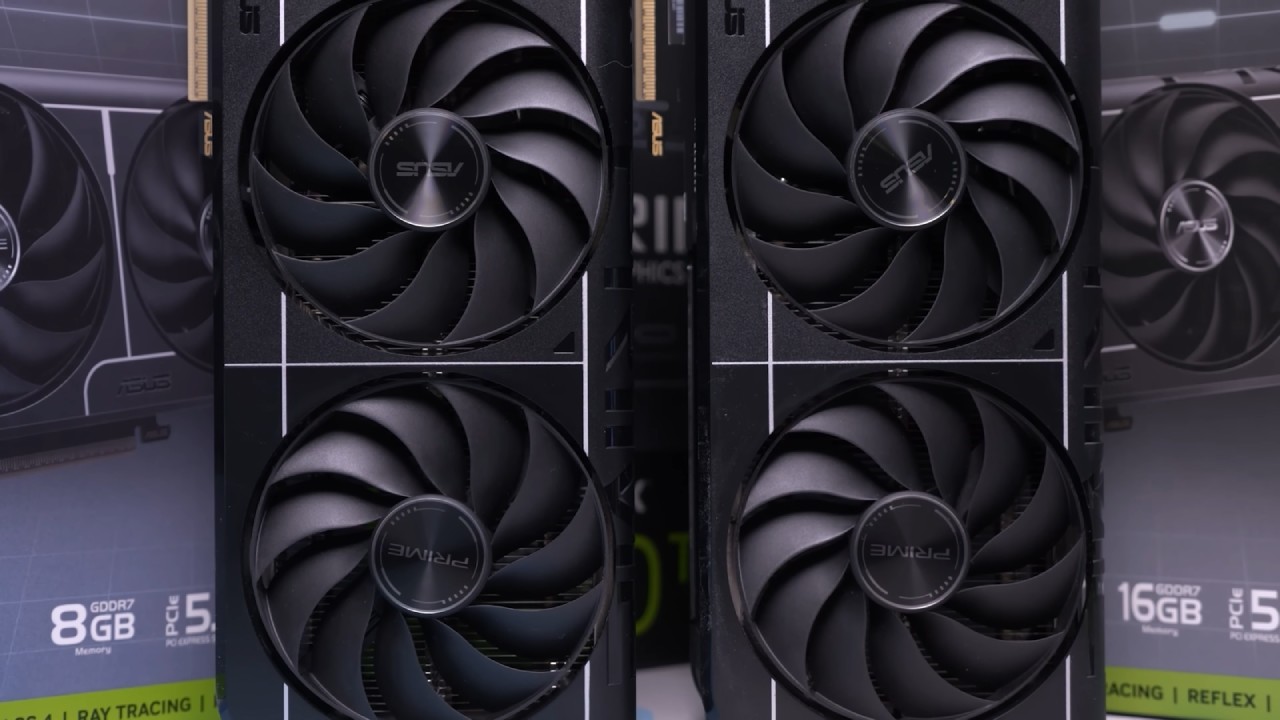
How GPU Components Are Sourced
Asus, MSI, Gigabyte, Aorus, and PNY are some of the board partners to which Nvidia sells its GPUs. These firms use Nvidia's proprietary technology, like the die structure, to make their own boards. Nvidia usually gives board partners bundled sets of dies on a whole substrate and RAM modules. This lets them build the PCB and add bespoke power phases or follow reference specs.
The most recent report says that Nvidia might have board partners get their own VRAM as they keep sending out the die packages. One reason could be that there aren't enough GDDR6 or GDDR7 chips available for consumer GPUs since companies like SKH and Samsung are focusing on making DDR5 chips for AI data centers, which are in more demand.
Supply and Demand Considerations
Due to AI buildouts, there is strong demand for DDR5 memory. This could mean less GPU-specific VRAM is made. Nvidia's consumer GPUs, such as the 5090 and lower-end models like RTX 6000, compete with enterprise GPUs used for AI training and professional tasks. Most of the time, these GPUs need 92GB of VRAM or more. Because of this strong demand for AI data centers, there may not be enough consumer GPUs and board partners.
Because of this, Nvidia may be holding VRAM modules for direct sales to AI infrastructure. This means that board partners will have to find their own VRAM. Prices could go lower because manufacturers adjust their prices based on how much they sell and how much money they make. Because of this, graphics card prices may go up, but not because it costs more to make them.
AI Solutions vs. NV Gaming
Nvidia's focus on AI-powered GPUs affects the consumer market. Enterprise GPUs for AI data centers consume significant amounts of VRAM, reducing the supply of consumer GPUs. This could have implications for the market as different pricing models emerge.
Asus, a board partner that sells a lot, may get better prices than PNY, a smaller partner. The direct link between VRAM makers and board partners could make prices more competitive or less predictable.
.jpg)
Possible Effects on the Market
Graphics cards are now easy to find in stores, but they used to be hard to find. The market would return to normal if stores stopped ordering items because it costs too much to keep them in stock.
If board partners have to buy their own VRAM, though, prices can go up. Consumer systems that use older platforms like AM4 or DDR4 still work well, and they are a good alternative to expensive GPUs.
The effect on pricing depends on the difference between Nvidia-supplied RAM bundles and sourcing directly from manufacturers. Larger VRAM cards, such as 32GB models, will be more affected than 8GB models. Nvidia's plan might also place the blame for rising costs on manufacturers rather than board partners, thereby avoiding a bad image.
Final Thoughts
Prices are still acceptable for now, but reports about Nvidia's VRAM sourcing policies could make GPUs more expensive in the near future. The actual effect will depend on how much the prices are different and how much supply is limited. Availability in stores is still high, which means that people can't resell them right away at higher costs.
Suppose the rumors about Nvidia's modifications prove true. In that case, the graphics card industry may see pricing changes driven by supply chain shifts and higher demand for AI-related products.
These changes are still only guesses until official announcements are made. Still, they might have big effects on prices and availability. Keeping an eye on communications from manufacturers and updates from board partners can help you get a better idea of what will happen in the industry in the future.
Also, check our other NVIDIA articles below:
- NVIDIA GeForce RTX 5080 Review (2025): Still A 4K Gaming Powerhouse?
- RTX 5090 Performance Testing In GTA 5 – 1080p, 1440p, and 4K Max Settings Benchmark
- NVIDIA RTX 5070 Review: Mid-Range Muscle or Marketing Hype?
- RTX 5070 Ti Review: Performance, Thermals & Power Efficiency Tested
- ASUS ROG Astral RTX 5090 OC Edition Review: 32GB GDDR7 & 4K Gaming Benchmark
- ASUS GeForce RTX 5090 LC Liquid Cooled GPU Review: Unmatched Silence & Speed
- MSI GeForce RTX 5090 32GB SUPRIM SOC Review: Power Efficiency, Cooling, and Gaming Performance
- INNO3D RTX 5060 Ti 16 GB X2 Review: Gaming Benchmarks, Temps, and Power Efficiency
- HP Omen 45L Review: RTX 5090 Performance, Thermals, and Value Analysis
- ASUS TUF Gaming GeForce RTX 5060 Ti Review: DLSS 4, Power Efficiency, and Gaming
- ASUS Prime RTX 5060 Ti OC 16GB Review: DLSS 4, Ray Tracing, & Thermals Tested
- NVIDIA GeForce RTX 5060 Review: Specs, Gaming, and Cost per Frame
- MSI GeForce RTX 5090 GAMING TRIO OC Review: A Monster Power GPU
Editor, NoobFeed
Gaming Hardware Updates
No Data.