

Nvidia’s Software Shift Changes GPU Market as AMD Launches the RX 7900 GRE Globally
The growing importance of VRAM continues to influence graphics card buying decisions across multiple price segments.
Hardware by Okazaki on Jun 15, 2026
The GPU market is continually changing, with software ecosystems, artificial intelligence, memory, and platform integration becoming more prominent in hardware designs. The performance of graphics cards is no longer the only metric to assess them. Support for drivers and software, shader management, power efficiency, and future platform strategy are all also important factors in upgrade decisions.
NVIDIA has officially announced the end of the popular NVIDIA Control Panel for GeForce Game Ready and Studio drivers. The features in the GeForce control panel remain supported for existing installations, except for users who opt for a clean install; the modern NVIDIA App now supports those features, according to NVIDIA.
NVIDIA Retires the Classic Control Panel
The Control Panel was easy to use, which many gamers preferred. It opened, made a setting change, and then moved out of the way. NVIDIA App, on the other hand, suggests users enter into a larger software environment. This change applies to both older RTX cards and RTX 5090s.
New features for the GPU experience are: Drivers, Application features, Shader handling, AI tools, VRAM management, Power consumption, and System control. The process can be easier, but this doesn't necessarily mean it is better. AMD targets the middle of the graphics card market with the Radeon RX 5700 or 5800 series.AMD targets the middle of the graphics card market with the Radeon RX 5700/5800 series.
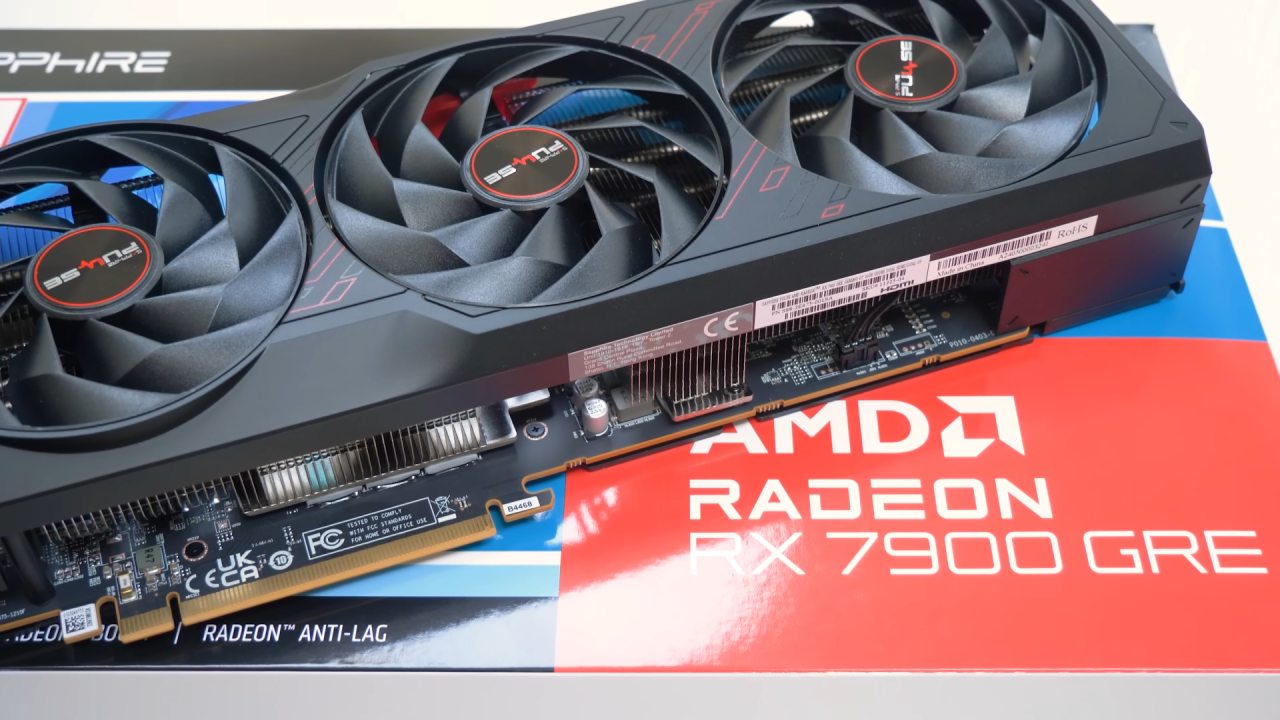
AMD is targeting the mid-tier graphics market with its worldwide launch of the Radeon RX 7900 GRE. It consists of a 192-bit memory bus, 12GB of GDDR6 memory, 48 compute power units, 3,072 stream processors, and 220W of board power. In AMD's range, it's between the RX 7600 XT and the whole RX 7900.
Gamers continue to worry about 8GB graphics cards, especially for gaming at 1440p resolution, and larger 16GB models can be costly. AMD is marketing the RX 7900 GRE as a “midpoint” option. The standard RX 7900, however, comes with 16GB of VRAM and a 256-bit memory bus. When the price gap between the two models is small, many buyers may be tempted to opt for the more expensive card. RX 7900 GRE relies heavily on aggressive pricing to justify its value.
AMD is targeting its products to a specific market. Its company wants the owners of its new RTX 5060 and 5070 to do so: compare VRAM capacity, gaming performance, power consumption, and price. NVIDIA continues to provide gamers with the same tools for creating and playing, and while they're also in the fray, AMD is taking on the battle where many will first feel the difference: frames per dollar. RX 7900 GRE isn't AMD's fastest Radeon graphics card. Rather, it could be one of the most viable choices if priced appropriately.
Nvidia's Vera CPU Communicates with Intel
Recently, Nvidia's Vera CPU was revealed in its first-ever public benchmarks. Though it is made for servers, not gaming systems, Vera brings Nvidia's own ARM CPU cores, called Olympus. NVIDIA had been the industry leader in GPUs for years, while Intel and AMD were the leaders in high-performance CPUs. According to Vera, NVIDIA is looking for the "full computing platform – CPUs, GPUs, networking, memory bandwidth, software and AI infrastructure.
Vera's performance was tested using NVIDIA-approved workloads. It showed strong performance when compared to Intel Xeon and AMD EPYC processors. The results are a big step forward, but the chosen standards can't be considered complete. The Long-Term CPU Ambitions of NVIDIA. The more interesting products in the future will be those built on Nvidia's competitive ARM-based CPU cores for servers.
It looks similar to how the integrated approach has been used on Apple's M-series processors, although it could be targeted at Windows AI PCs and future RTX-based systems. These aren't confirmation of an NVIDIA desktop CPU, nor do they provide any insight into a possible future RTX 6090. But they aren't just about NVIDIA graphics cards. The project continues to be centered on the servers, but adds another challenge for Intel.
Microsoft Introduces New Shader Delivery on AMD GPUs
The Advanced Shader Delivery Preview is now available for AMD GPUs running Windows 11. Microsoft's Advanced Shader Delivery Preview now supports AMD GPUs on Windows 11 OS. The system does not need to precompile shaders at game launch or during gameplay; they can be downloaded from the server and compiled for the specific GPU-driver combination.
The shader compilation process can take a long time and cause significant stutter during the first run. Under the new tech, Forza Horizon 6 took around 4 seconds to load on a Microsoft system, while it took nearly 90 seconds to load on a Radeon RX 7600 system, Microsoft reports. The outcome brings PC gaming closer to the type of convenience that consoles are known for.
These are the current requirements and limitations. These are the current requirements and restrictions. Currently, the feature only works on Windows 11 24H2, Xbox Insider access, RDNA 3 or higher AMD graphics hardware, and on supported Xbox PC App or Microsoft Store games released recently with an Adrenalin driver.
Despite those restrictions, there is still a sense of direction. NVIDIA provides shader technologies, Intel has implemented a precompiled shader distribution, and AMD is now a part of Microsoft's preview program. The emphasis is shifting, more and more, towards smoother gameplay experiences with less waiting time, rather than just higher frame rates.
NVIDIA has decided to phase out the Control Panel as GPUs are becoming software platforms.
AMD announced the Radeon RX 7900 GRE to address VRAM constraints and lower costs. Intel's Vera CPU proves that the CPU arena is no longer just Intel vs AMD. The RTX 5090 is a strong indicator of Nvidia's strategy for higher-end graphics cards, AI performance, DLSS, ray tracing, and power consumption. RTX 6090 hasn't been announced yet, but we shouldn't make any buying decisions based on speculation or rumors.
Future GPUs will be tested for AI capabilities, software support, VRAM capacity, and real-world gaming performance. Just looking at the numbers for any upgrade isn't enough before deciding on the next one. VRAM capacity, driver stability, supported features, game compatibility, and real-world pricing should be considered. The things you've considered can make a difference in your purchasing decision more than launch-day excitement or industry hype.
Editor, NoobFeed
Latest Articles
No Data.