

AMD Reveals First Zen 6 Benchmarks and Memory Outlook
AMD expects memory market pressures to continue as AI demand and supply expansion remain out of balance.
Hardware by Godrics01 on Jun 16, 2026
Memory supply issues, increased demand for AI, and the introduction of new processor generations remain key challenges in the PC hardware sector. AMD has already suggested that pricing problems with memory may persist for years to come, and new benchmark data previews what the company's next Zen 6 architecture may offer.
Meanwhile, developers are discovering new ways to keep old hardware alive, aided by AI-powered tools. However, if memory prices were going to return to their previous levels, AMD has provided information to the contrary.
AMD Anticipates Memory Supply Problems to Persist
In a recent conversation, AMD Senior Vice President and General Manager for Ryzen CPUs and Radeon Graphics, David McAfee, discussed the current memory crisis affecting various areas of the industry. Until memory supply and demand are better balanced, it will take around two more years, says AMD.
McAfee said major investments in new manufacturing capacity were a factor, but building memory fabrication facilities takes a long time. When the extra capacity is available, the industry could be at the end of this decade. The other challenge is here. AI-induced demand may continue to increase even as new manufacturing capacity comes on stream.
This means that additional supply won't necessarily lead to significant drops in memory prices. While AMD does believe prices will chip away over time, it is not expecting a quick correction in the near future. AMD continues to commit to long-term support for its sockets. AMD also confirmed its strategy of maintaining socket continuity across several generations of processors.
The company says the platform choices are largely driven by new industry standards that offer significant benefits. Technologies like DDR6 memory or the upcoming PCIe standards will warrant a change, but AMD said, "we don't want to force anyone into a new platform. This will continue AMD's efforts to preserve compatibility where possible to the end that it is beneficial.
AI to Support Preserving Older AMD Graphics Devices
Increased demand for memory and computing has resulted from the use of AI, but it's also been used to help address some unanticipated issues. The Phoronix report noted that Linux developers have been leveraging GitHub Copilot to support AMD Radeon HD 2000 to HD 6000 series GPUs. These GPUs were first released in the late 2000s but are still under development in 2026.
The report says one developer has made 59 commits to AMD's R600 Linux driver. Fewer people are willing to put in the time to work through older codebases, leaving legacy Linux drivers often maintained by a handful of developers. GitHub Copilot helped with parts of the refactoring process, Developer Gert Wollny says.
The AI tool identified repetitive coding patterns, refined the code, and streamlined maintenance tasks, thereby avoiding the need to create a complete graphics driver. The outcome shows that AI can help maintain a balance between hardware that is now over 20 years old and new technology.

AMD Shares First Zen 6 Performance Results
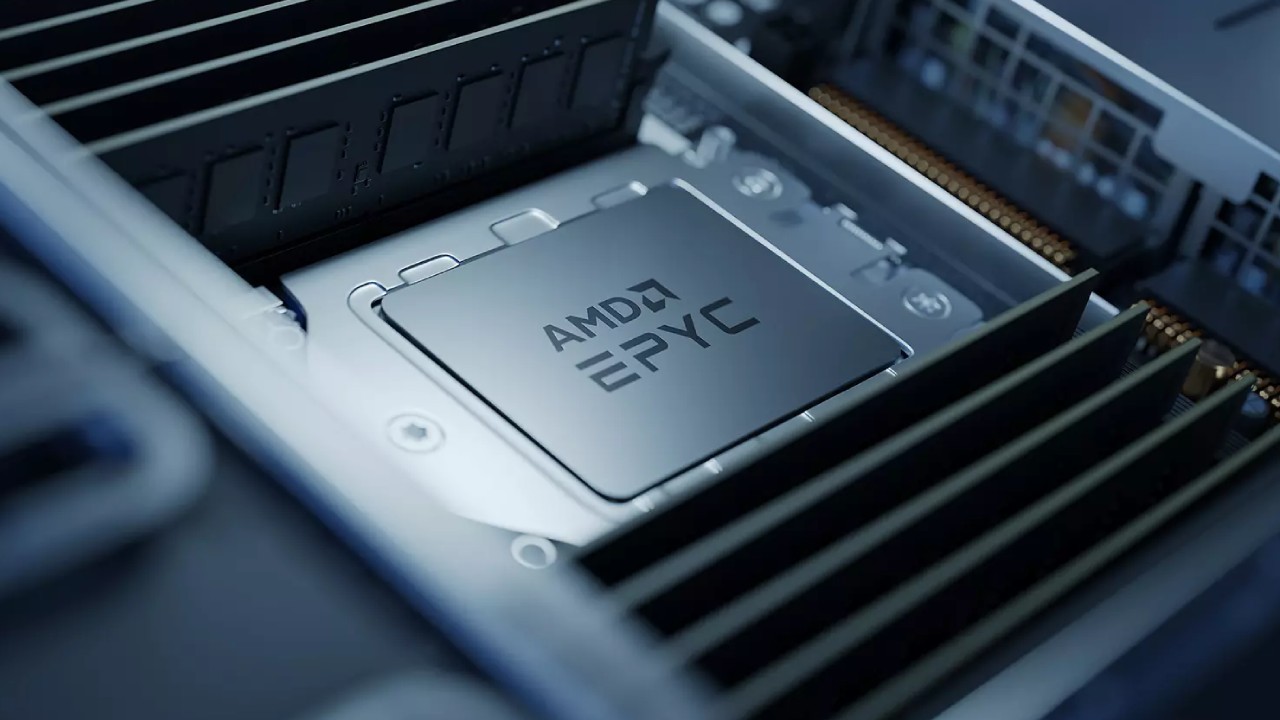
In a recent announcement, AMD shared the first benchmark data for its next-generation Zen 6 architecture. The company published a blog post that contrasts its new EPYC Venice processors with Nvidia's new Vera platform. While these products are aimed at the server market, they offer a sense of what performance to expect from future server Ryzen units, built on the same architecture.
AMD first showed rack-level performance data for Venice systems. But more came from the company's methodology documentation, which showed a breakdown of the benchmarks used for testing. Venice delivers strong performance against Nvidia Vera. AMD benchmarks show that its Venice chips have decent performance when compared to Nvidia's next-generation server CPU.
One such comparison was between an AMD Venice configuration with 256 cores and an 88-core88-core Vera processor. The results were normalized to a 100kW server rack to make the system's overall performance more comparable. AMD also provided comparisons of per-core performance with a 96-core Venice processor.
Although Venice might have lowered clock speeds with its increased core count, its per-core performance was still reported to be 11% higher than Vera's. The difference was even more striking when AMD considered a 64-core Venice model, which it claims offered a 27% per-core performance advantage. The numbers indicate that AMD's new server architecture may deliver significant gains in efficiency and computing power.
Comparing Venice with AMD's latest-generation Turin processors could provide even more clues about Zen 6's capabilities. With SPEC Rate integer performance measures, AMD claims that Venice is 50% faster than Turin. Some of that new gain may be due to Venice providing 33% more cores.
The comparison is more interesting than the rumors for future Ryzen processors.
Next-generation Ryzen chips may be as many as 50% more powerful than current 16-core processors with up to 24 cores. But the consumer processors may see even greater gains than the server benchmarks indicate if those reports are correct.
The most noteworthy one here is the use of Zen 6 cores. Over the years, AMD's dense-core models have consistently delivered instruction-per-clock performance similar to that of the standard Zen models. The main goal of the C variant is to pack more cores into a box of silicon than a new architecture can, not to introduce a new one.
That's why, given the similarities, users can be certain of the performance they can anticipate from future Ryzen products when they are released. Directly comparing the server benchmark results to actual Ryzen performance numbers isn't possible, but the data indicate a significant generational performance improvement. Zen 6 might offer one of the biggest gains in years, according to AMD's preliminary data.
Editor, NoobFeed
Latest Articles
No Data.