
SteamOS on ARM Could Become Easier With Snapdragon X2 Linux Support
Qualcomm’s Snapdragon X2 Linux Support Could Open a New Path for ARM-Based SteamOS Gaming Hardware.
Handheld by Shinji Okazaki on Oct 01, 2026
Qualcomm’s decision to officially support Linux on its Snapdragon X2 series could make ARM-based handheld gaming more practical. With Debian support planned and GPU and NPU drivers already upstream, the software side of these chips is moving toward a setup that could work with Linux gaming platforms.
Qualcomm is officially supporting Linux on the Snapdragon X2 series chips, with Debian support coming at the end of the year. The GPU and NPU drivers are already upstream, removing one software hurdle that has affected Linux support on ARM hardware.
Snapdragon X2 Brings Official Linux Support
That could make it easier for Valve to port SteamOS over to these ARM chips. Instead of relying on alternatives such as Android-based solutions, devices such as the AYN Thor or Conquer Pocket Fit could potentially use an official SteamOS build if the hardware and software support line up. The idea of an ARM-based Steam Deck Light has been discussed for some time, as an alternative to moving directly to a Steam Deck 2.
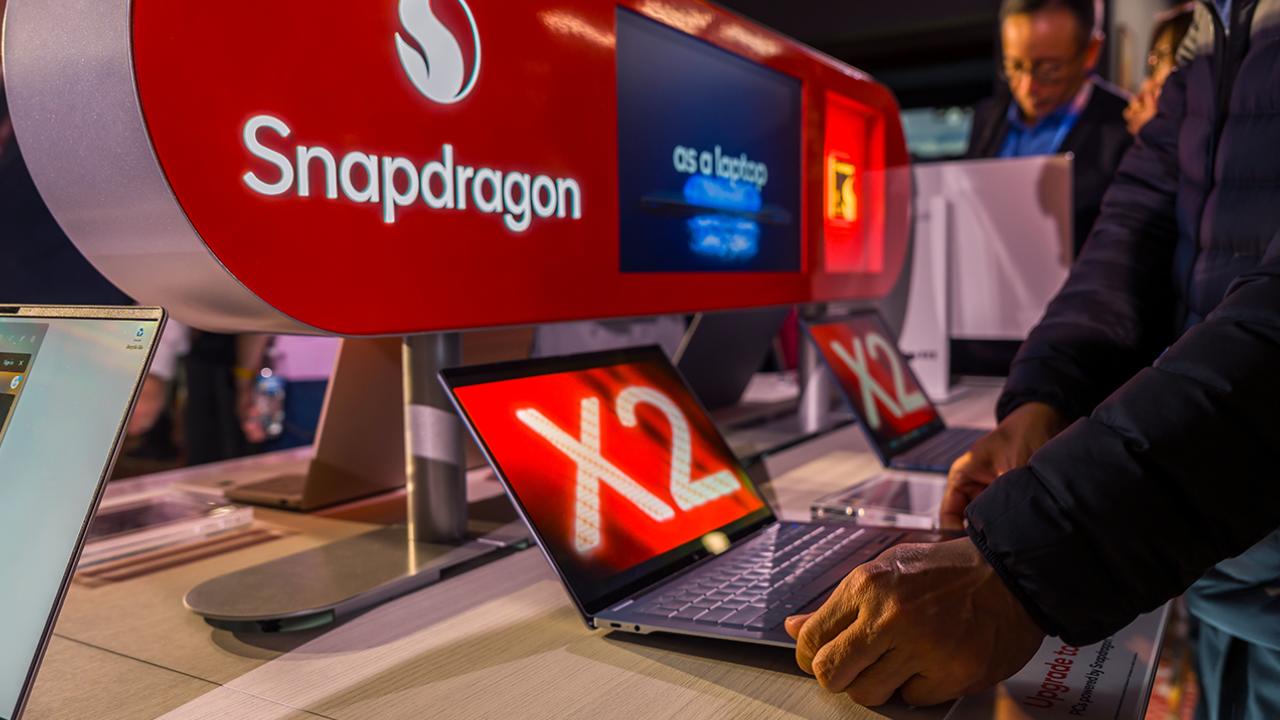
The Snapdragon X2 chipset could potentially power something like that, although power requirements and GPU performance still matter. ASUS ZenBook 14 and A14 already show how the Snapdragon X2 Elite can be used in a PC, but those devices are expensive. Once you push more power into the chipset, the efficiency advantage can shrink, making x86 another option.
ARM has a strong position on the CPU side, but the GPU remains the larger limitation for gaming. Steam Frame, for example, uses around 25W of total system power and can reach around 22fps to 23fps in Cyberpunk at 720p. Steam Deck uses a similar amount of total system power while delivering roughly twice the frame rate.
GPU Drivers Remain Important for ARM Gaming
Qualcomm is also working on extension support and incorporating Turnip driver work into its builds. That could reduce the need to install different GPU drivers for different applications and emulators. For users running ARM handhelds, this could mean less time dealing with different driver versions.
Instead of needing one driver for a particular emulator and another driver for something else, better upstream support could provide a more consistent Linux setup. The ARM CPU is already capable of handling workloads such as emulation. A powerful ARM CPU can handle demanding emulation workloads, including PS3 emulation.
The power required to reach the performance level already available on current handheld hardware remains an issue. Better GPU drivers and optimization can help, but they do not remove the underlying GPU performance gap. Qualcomm is not the only ARM platform that could be relevant to future Steam hardware.
Samsung’s Exynos 2600 uses RDNA4 graphics, making it one of the few mobile chips to integrate RDNA4. The next Samsung chip is expected to move to RDNA5 and use RADV, which Valve also uses. That combination could make Samsung’s platform another possibility for an ARM-based Steam Deck in the future.
The software layer could ultimately be as important as the hardware itself.
FEX, the fast emulator for x86, along with other middleware projects, can bridge ARM hardware and software designed for x86 systems. That matters because Valve’s work isn't limited to the hardware. The middleware and compatibility layers can determine how practical ARM becomes for PC gaming.
The Steam app on Android could also eventually install PC games directly on an Android device. With the required middleware libraries included in the app, PC games could run on phones without the same setup currently required on ARM handhelds.
At the Snapdragon Summit, Qualcomm announced Linux support and discussed bringing Turnip driver work into its own builds. That could reduce the need to sideload multiple GPU drivers. Instead of relying on separate driver packages and managing them manually, Qualcomm could include the required work in its builds.
Editor, NoobFeed
Latest Articles
No Data.