
XBOX’s Future Comes into Question as Microsoft Pushes Through Major Gaming Changes
Microsoft says XBOX is not for sale but the sweeping changes across its gaming division have raised questions about what its long-term strategy could look like.
News by Tahmid Mahi on Oct 01, 2026
XBOX has gone through a dramatic period of change in 2026, with Microsoft making major adjustments to how its gaming division operates. The company has shifted away from several ideas that previously defined the XBOX strategy, while also changing its studios, projects, and approach to exclusivity.
Now, comments from XBOX leadership have added another layer to the discussion by directly addressing speculation that Microsoft could eventually sell or spin off the gaming division. The statement comes as Microsoft continues making major changes to its gaming operations, giving the company’s latest restructuring even more attention.
The current restructuring follows an earlier period in which Microsoft emphasized a more open approach to its games.
XBOX leadership had previously argued that console exclusives were becoming less important and that players should be able to enjoy XBOX games wherever they preferred to play them. Game Pass was also positioned as a major part of the company’s future, becoming central to how Microsoft approached its gaming business.
That strategy has since shifted under new leadership. According to the transcript, Asha Sharma has introduced sweeping adjustments to the structure of XBOX, including changes to how studios are organized and decisions involving recently acquired companies. Some projects have apparently been canceled, and some studios have been merged, closed, or split from XBOX.
One interpretation is that Microsoft is attempting to rebuild the XBOX brand around a more traditional console strategy. That would mean placing greater importance on exclusive games and focusing on restoring the brand’s identity after years of emphasizing a broader ecosystem.
Games such as Gears of War: E-Day and Clockwork Revolution have become part of that discussion, particularly as Microsoft continues to determine which titles will remain exclusive and which will be released on other platforms. Their positioning also reflects the uncertainty surrounding how Microsoft plans to balance its first-party lineup with its broader multiplatform strategy.
However, another interpretation is that the restructuring is less about rebuilding XBOX as a traditional console business and more about preparing the division for a different future. The rapid consolidation of studios and cancellation of projects has prompted speculation that Microsoft could eventually look for a different operating model, partnership structure, or ownership arrangement for its gaming business.
During a recent New York Times interview, Asha Sharma directly addressed that speculation.
When asked whether the restructuring was connected to a potential sale of XBOX, Sharma reportedly gave a straightforward response: “XBOX is not for sale.” She added that Microsoft would do whatever was necessary to set the company up for success, including examining partnerships, operating models, and other options that could help the business achieve that goal.
The wording has nevertheless attracted attention because it leaves room for discussion about what Microsoft means by finding the right operating model. Saying that XBOX is not for sale directly addresses the immediate speculation, but the broader reference to partnerships and changes to how the business operates suggests Microsoft is still willing to make substantial adjustments.
The restructuring itself provides plenty of context for those questions. The transcript points to studios being merged into other parts of Microsoft’s gaming organization, projects being canceled, and companies that were previously acquired by XBOX being separated from the wider division.
These decisions mark a major shift from Microsoft’s aggressive acquisition strategy in the previous generation, when the company expanded its first-party portfolio by buying major developers and publishers. The current approach instead appears focused on streamlining the existing portfolio and changing how those studios and projects fit within the wider XBOX business.
Microsoft’s current approach also comes as the traditional XBOX console business faces a different market environment. The company has increasingly treated XBOX as an ecosystem that extends beyond its own hardware, with PC, cloud gaming, Game Pass, and other platforms becoming increasingly important parts of its strategy.
The transcript specifically highlights concerns about console sales and the pricing of future hardware.
Microsoft’s next-generation hardware project, referred to as Project Helix, is expected to represent a significant investment, while speculation surrounding its eventual price has already fueled discussion about how Microsoft plans to position the system. Microsoft has not confirmed any of the specific pricing figures mentioned in the transcript, so you should treat them as speculation rather than established details.
At the same time, Microsoft’s approach to Game Pass remains another important part of the situation. The company has spent years encouraging players to use the subscription service, including making major first-party releases available through Game Pass.
The transcript raises the possibility that Microsoft could eventually change how it handles new releases on the service, although those changes remain speculative. Any adjustment to Game Pass would also affect how players approach XBOX’s first-party releases and the value of the subscription itself.
That creates a complicated situation for XBOX because the company is attempting to balance multiple parts of its business at once. Microsoft wants its games to reach large audiences while also maintaining the value of its hardware and subscription services.
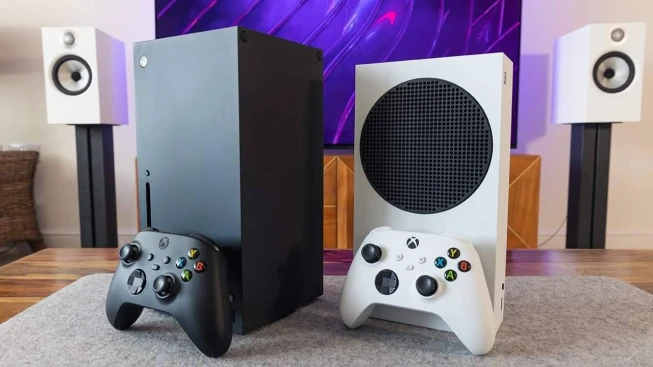
It has also continued releasing some games on competing platforms, further blurring the line between the XBOX brand and its dedicated console hardware compared to the more traditional approach seen during the XBOX 360 era. This broader strategy has made platform availability an increasingly important part of how Microsoft positions its games.
Gears of War: E-Day is one of the clearest examples of the changing strategy.
The game is being positioned as an important first-party release, while the transcript claims that the project was previously planned for PlayStation 5 before Microsoft’s strategy changed. The discussion points to presentation materials and trailer details as evidence of the game’s earlier plans, although Microsoft has not fully explained the broader circumstances behind those changes.
The same uncertainty applies to other upcoming releases. Some XBOX titles are expected to remain tied to Microsoft’s platforms, while others are expected to continue appearing elsewhere. Microsoft has not established a simple rule for which games will be exclusive and which will be multiplatform, leaving players to wait for individual announcements.
This uncertainty is one reason the speed of the current restructuring has attracted attention. The transcript argues that Microsoft has made more substantial changes to the XBOX business in a relatively short period than it did during several previous years.
From one perspective, the situation could indicate that the company has finally decided to address long-standing problems. From another perspective, the scale and speed of the changes could suggest that Microsoft is preparing the division for a broader transformation.
Microsoft’s own comments indicate that the company is focused on finding a sustainable model rather than maintaining every part of the existing structure. Sharma’s statement that XBOX will use the right partnerships and operating model leaves the door open to further changes without directly suggesting that Microsoft intends to sell the division.
There is also a broader industry precedent for companies restructuring large entertainment brands before changing how they operate them. The transcript compares the situation to examples from other industries where businesses have been consolidated before being sold or revitalized under different ownership.

For now, Microsoft’s official position remains that XBOX is not for sale.
That makes immediate speculation about a sale difficult to reconcile with the company’s stated plans, although it is clearly willing to make major changes to how its gaming division operates. Studio restructuring, adjustments to its release strategy, and continued uncertainty around exclusivity all point to an XBOX business still undergoing significant change.
The bigger question is what that new version of XBOX will ultimately look like. Microsoft has spent years moving toward an ecosystem-first strategy built around Game Pass, PC, cloud gaming, and console hardware, but its latest changes suggest that the company is reassessing how those elements fit together.
For players, the effects of that strategy will likely become clearer as Microsoft reveals more about its upcoming games, hardware, and Game Pass plans. Until then, Sharma’s statement provides one clear point: despite the speculation surrounding Microsoft’s gaming division, the company says XBOX is not currently being prepared for sale.
Editor, NoobFeed
Related News
No Data.