
Zeus GPU by Bolt Graphics: High-End Path Tracing and Expandable Memory Explained
Zeus GPU features dual PCIe Gen5x16, HDMI 2.1, DisplayPort 2.1, and flexible upgradeable DDR5 memory.
Hardware by Mitsuba Miyu on Jan 11, 2026
There is a new player in the GPU market that claims a groundbreaking graphics architecture that will change how speed is measured. The company says that their Zeus GPU can perform up to 3 times better in FP64 tasks than an RTX 5090 and up to 2.5 times better in path tracing and games.
Also, the architecture lets you stack multiple GPUs, providing unmatched flexibility for heavy workloads. The most interesting thing about Zeus is that its memory can be upgraded, a feature you don't often see in current graphics cards.
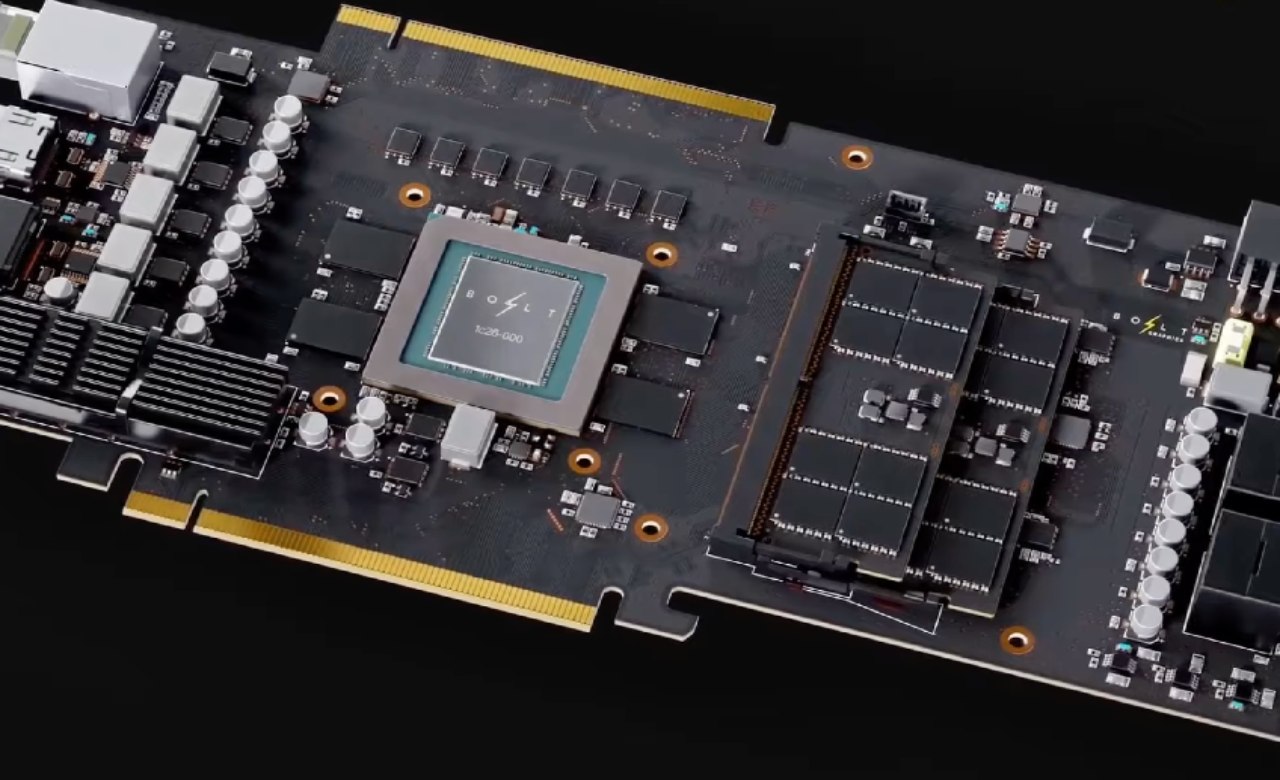
Bolt Graphics, a new company, is marketing Zeus as a high-performance alternative to well-known players in both the gaming and business computing markets.
Design and Connectivity
One thing that instantly stands out about the Zeus GPU is its unusual design. It has two PCIe Gen5x16 connectors, allowing users to add more cards for greater computing power. In addition, the GPU has an RJ45 port, HDMI ports, and DisplayPort 2.1 ports.
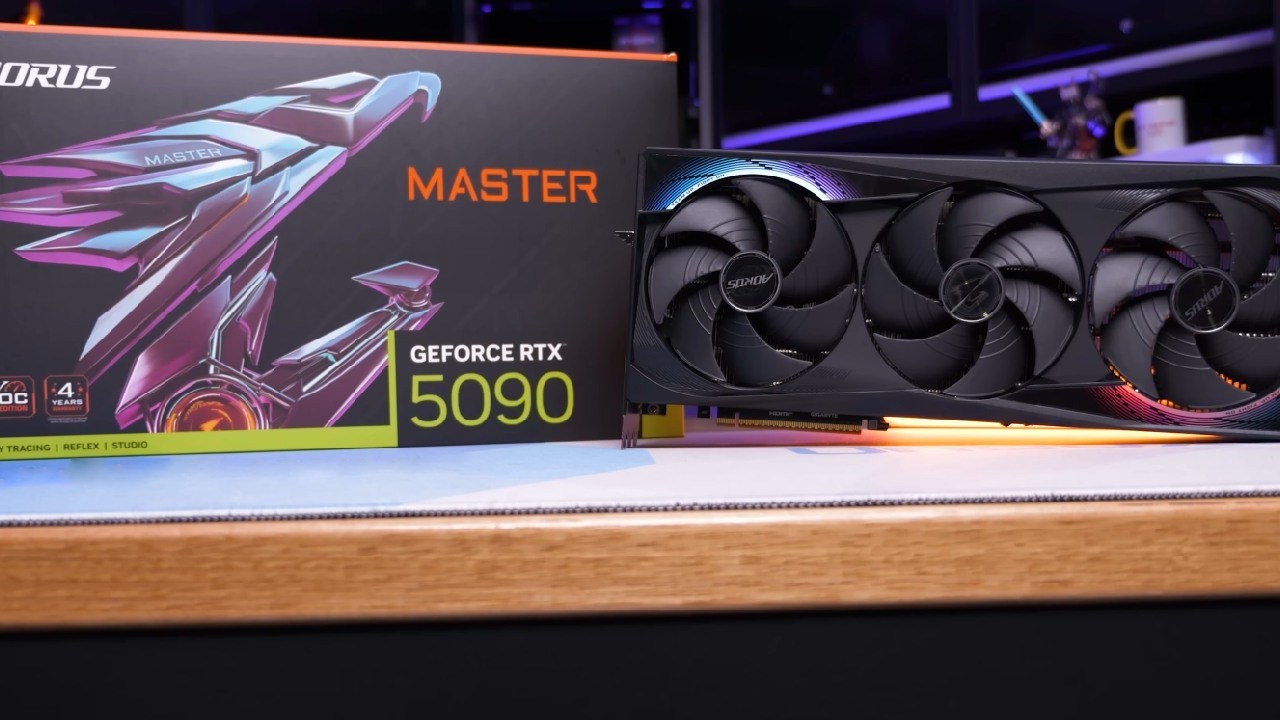
One great thing about this motherboard is that it has two DDR5 slots for upgrades and built-in LPDDR5X memory, so people can just plug it in and start using it. It gets its power from a single 8-pin PCIe connector and is said to draw only 225W, which is a lot less than an RTX 5090, which can hit up to 600W when fully loaded.
Architecture and Independent Operation
A RISC-V processor controls Zeus's design, which is one of the most interesting things about it. According to Bolt Graphics, this lets the GPU function as a separate computer. Since Linux can run straight on the card, you don't need to install it on a Windows PC first.
This enables systems to operate without a host PC, and for high-performance computers and rendering programs to run without one. Modern graphics APIs and engines, such as Vulkan, DirectX12, and Unreal Engine and Unity, are also supported by the GPU. This means it can be used for both games and work.
Performance Claims and Memory
Bolt Graphics says that a single Zeus GPU has three times the FP64 performance of an RTX 5090 and two and a half times the speed of path tracing. It is said that EM simulation works 300 times faster than similar gear. The total memory can reach 384GB, letting you work with much larger files.
Bandwidth is also very good; the Zeus 2C version delivers 725 GB/s using a hybrid memory architecture. A 400GB networking link lets GPUs talk to each other directly, which is great for render farms or setups with multiple GPUs.
Even though these numbers look good on paper, it's important to keep in mind that performance can vary widely in real life, depending on how well the software is optimized and how much work is being done.
Gaming and Real-World Performance
Bolt says that Zeus can render 4K path tracing at 120 frames per second with 25 samples per pixel, demonstrating its gaming and path-tracing skills. It's not entirely fair to compare multi-GPU setups to a single RTX 5090, even though the performance is very good.
The business says these tests are conducted in controlled settings with known ray-tracing patterns and steady triangle sets that use the best acceleration structures.
This means the results are based on ideal conditions and may differ when used in real-life games or with older APIs like DirectX 9 or DirectX 11. To achieve these theoretical results, driver and program support will be very important, as with any new hardware.
Limitations and Considerations
Even though Zeus 1C makes big claims, it delivers only 10 FP32 TFLOPS, which is only a tenth of what an RTX 5090 can do. This means the GPU might excel at tasks like FP64 computation and path tracing, but not at regular games.
Developer kits are scheduled to launch in 2026, with general production beginning in 2027. A lot of this information is still just guesswork until actual chips can be tested by outside parties. But even if some of these claims come true, it could make the GPU market, which has been dominated by two big players for a long time, much more competitive.
Implications for Competition
Zeus's arrival could make the GPU market more interesting by adding a fourth player. More rivalry between companies in the US and China has been discussed before. Still, driver support remains an issue for some of these products.
Even if Zeus doesn't live up to all its performance claims, the threat of a new rival could spur innovation and push established companies to improve the support for their hardware and software. This is good news for both users and producers.
Final Thoughts
Zeus doesn't have to be perfect in every way to make a difference in real life. Its fast FP64 performance, path tracing, and memory that can be expanded could already make it a hit with pros and gamers looking for different GPUs. Gamers and content creators are excited about the idea of more competition and choices.
There are still many questions about the Zeus GPU, such as how much it will cost, how well it will perform in the real world, and how mature the drivers will be. However, it is a brave attempt to shake up the high-performance computing and graphics markets.
Also, check our other hardware articles below:
- AMD Ryzen 9 9950X3D Review: Setting The Standard For 2025 Gaming CPU
- Amazon Luna 2025 Review: Is Prime Gaming's Cloud Service Your Go-To For Casual Fun?
- AMD RX 9070 XT Review: AMD's RDNA 4 Champion for 1440p Gaming
- GeForce Now Ultimate: Ditching Your Gaming PC For Cloud RTX 4080 Power?
- NVIDIA GeForce RTX 5080 Review (2025): Still A 4K Gaming Powerhouse?
- Intel Core Ultra 9 285K Review And Performance Breakdown (2025)
- AMD Ryzen 7 9800X3D Review: 3D V-Cache Goes God Mode with Stunning Gaming Performance
- Intel Core Ultra 9 285K vs AMD Ryzen 7 9800X3D: In-Depth Gaming Performance and Benchmark Comparison
- NVIDIA GeForce RTX 5080 Super Performance In Cyberpunk 2077: Path Tracing & DLSS 4.0 Tested
- AMD Radeon RX 9070 XT In Cyberpunk 2077: Ray Tracing & FSR 4.0 Tested
- Intel Arc B580 Review: The $250 GPU Revolutionizing 1440p Gaming
- Intel Arc B570 Vs. B580: Value, Specs, And Real-World Gaming Performance
- RTX 5090 Laptop Vs. M4 Max MacBook Pro: Ultimate Raw Performance Vs. Battery Endurance
- Intel Arc b580 Vs. RTX 4060: Game Performance And Value Analysis
- RTX5090 Hell Is Us Demo 4K Ultra Benchmark: DLSS Vs. Native Performance Guide
- NVIDIA RTX 5070 Review: Mid-Range Muscle or Marketing Hype?
- Nintendo Switch 2 Review: Handheld Performance, Features & Value Breakdown
- RTX 5070 Ti Review: Performance, Thermals & Power Efficiency Tested
- Samsung Odyssey OLED G81SF Review 2025: Ultimate 32-Inch QD-OLED Gaming Monitor
- AMD RX 9070 Performance Review: Thermals, Clocks, and Real-World FPS
- AMD Ryzen 5 7600 Review: Best Budget Gaming CPU of 2025?
- AMD Radeon RX 7800 XT Review: RDNA 3 Power For Midrange Gaming
- Asus ROG RTX 5090 Astral OC Vs. Founders Edition: The 4K Gaming Benchmark
- Intel Core i5-13400F Gaming Performance: Still Worth It in 2025?
- ASUS GeForce RTX 5090 LC Liquid Cooled GPU Review: Unmatched Silence & Speed
- ASUS ROG Ally X Handheld Review: Double the Battery, Double the Comfort
- Lenovo Legion Go S Review: The Ultimate Steam Deck 2 Alternative
- Sapphire NITRO+ AMD Radeon RX 9070 XT Review: The Ultimate 4K Gaming GPU
- Alienware 16 Area 51 Review: The Ultimate 2025 Gaming Laptop
- Alienware Area-51 Review: Unmatched 4K, Thermal, and Acoustic Performance
- AMD Ryzen 7 7800X3D: Delivers Gaming Performance Far Beyond Expectations
- AMD Ryzen 9 7900X Review: Powering the AM5 Era with DDR5 & PCIe 5.0
- Intel Core i9‑14900K vs. AMD Ryzen 7 7800X3D: Power Profiles & Gaming Benchmarks
- Intel Core i9 14900K: Specs, Benchmarks, and Competitor Comparison
Editor, NoobFeed
Gaming Hardware Updates
No Data.