
How Steam Machine Changes the Steam Deck Gaming Experiences?
Steam Deck games gain new gameplay possibilities on the Steam Machine through larger screens, higher performance, and improved visual immersion.
Hardware by Naheyan Tahmin on Aug 17, 2026
There's been one number to dominate the Steam Machine discussion ever since Valve announced it: the claim that the Steam Machine is more than 6x faster than the Steam Deck. That's been cited in the news numerous times, but there's been no official confirmation from Valve, so it's unclear how accurate the figure is when comparing the two game consoles side by side.
We traced it back to its origin and found it in both Valve's original announcement and their Steamworks developer documentation, both of which describe it as roughly 6x as powerful.
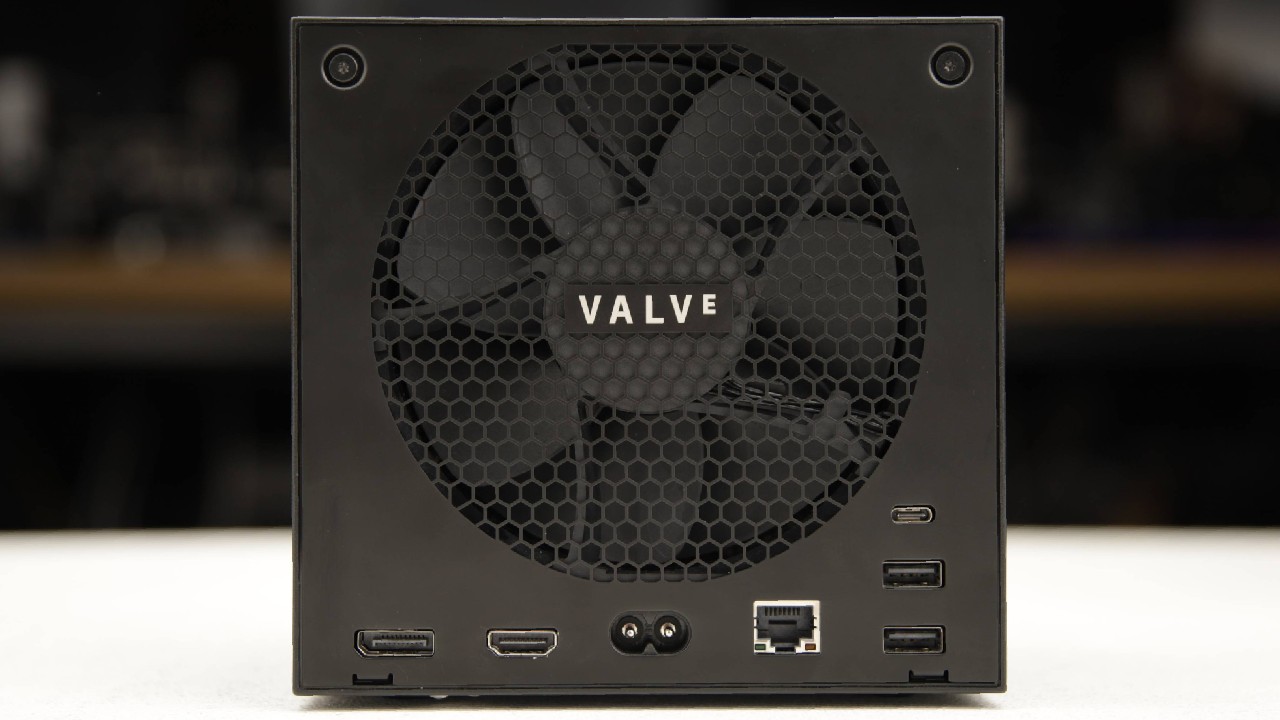
The wording is important because the data that follows is an engineering estimate and not a single tested benchmark. Still, it does represent a reasonable one when you dissect the hardware involved.
History of the 6x Claim
The comparison begins with the GPU, since that's where the claim originates. Steam Deck features an eight-compute-unit RDNA2 APU; its GPU and CPU share a power budget of approximately 15W. Steam Machine, on the other hand, has a brand-new 8GB of GDDR6 dedicated video memory, a 110W power limit, and 28 RDNA3 compute units that run at up to 2.45GHz.
On paper, the Steam Machine is 5.5 times faster than the Deck, with performance of 1.6 teraflops and 8.8 teraflops, respectively. The approximately 6x number is no longer a marketing gimmick.
Still, it appears to be a reasonable estimate when you factor in the newer RDNA3 architecture delivering more per teraflop, using dedicated video memory instead of shared memory, and a desktop-class Zen4 CPU that isn't competing with the GPU for power.
Gaming Performance For Verification
To actually test that number, we made sure the settings were identical between the two machines—all at 720p and maxing out GPU usage where possible—and recorded the resulting frame rates.
Their first test was in the Crimson Desert, one of the bolder open-world games either device could play. Steam Deck's lowest FPS in the test scene was 22 FPS, while the Steam Machine was at 120 FPS in that same scene. That's almost 5.5 times the frame rate, bringing the game closest to Valve's quoted figure among all games tested.
Black Myth: Wukong is a GPU-intensive game. The Steam Deck managed 12 FPS, and the Steam Machine hit 60 FPS, five times that amount, which is nearly the 60 FPS Valve claimed in the most GPU-intensive test in the series.
.jpg)
But that's not the case with Elden Ring. The Steam Deck was still limited to around 25 FPS, while the Steam Machine maintained a steady 60 FPS, not because of hardware limitations, but because games are capped at 60 FPS.
On paper, this equates to about 2.5 times, but the performance overlay revealed the Steam Machine's GPU was only about 70% used during the test.
A summary of what the Numbers Show is telling us overall.
Cyberpunk 2077 wrapped up the testing. Steam Deck's FPS ranged from 35 to 40, which is notable for a handheld console, whereas the Steam Machine reached up to 120 FPS in the same scene.
That makes the disparity 3 to 3.5 times at best, but closer to 3 times at worst, though the Steam Machine's GPU was again only at 70% to 80% utilization, which would indicate there was still some GPU capacity left.
In each of the four games tested, performance depended on the game's difficulty level and whether a frame rate cap was implemented, but the Steam Machine's performance was typically about five times that of the Steam Deck.
That puts it in the ballpark of, if not exactly on, Valve's claimed 6x performance, and game-specific caps and GPU usage account for most of the difference between the two numbers.
Editor, NoobFeed
Gaming Hardware Updates
No Data.