
Light No Fire is Taking Open World Gaming to a New Level with an Earth Sized Fantasy World
Hello Games is using everything it learned from No Man’s Sky to build a massive fantasy world where exploration, survival, building, and multiplayer adventures could make every journey feel meaningful.
News by Tahmid Mahi on Aug 17, 2026
After years of almost complete silence, Light No Fire is finally starting to feel like a game you should be paying much closer attention to. Hello Games, the studio behind No Man’s Sky, appears to be taking everything it learned from building and supporting that massive space exploration game and putting it into something even more ambitious.
The timing is particularly notable because Hello Games is no longer the same studio that launched No Man’s Sky in 2016. Back then, the game arrived with giant expectations, extensive marketing, and promises that the launch version struggled to meet.
Sean Murray has since described that period as madness and has admitted that he looks back at how heavily they marketed the game with some embarrassment. With Light No Fire, the studio has taken almost the opposite approach and has allowed the game to remain mostly out of the spotlight while development continues.
That decision became even more noticeable after The Game Awards in 2023 revealed Light No Fire.
Hello Games originally planned to return around six months later with a much more profound explanation of what the game actually was, but something changed after the reveal. The game quickly climbed toward the top of Steam’s wish-list rankings, giving the studio plenty of attention without needing another major marketing push.
You can understand that approach better by looking at what happened with No Man’s Sky. Ten years after its original release, Hello Games is still supporting the game and adding major free updates, and 2026 has reportedly become its biggest player year since launch.
That long-term support has given the studio something it did not have when No Man’s Sky first released: years of experience maintaining a huge procedural world and understanding how players actually use it.
That means you are not looking at a fantasy game that Hello Games intends to release, support with a couple of expansions, and then leave behind. The studio seems to be thinking about Light No Fire as another world that it could continue developing for the next decade.
If that philosophy carries over from No Man’s Sky, you could see the game change significantly over time as players find new ways to explore, build, survive, and interact with its world. The idea is less about delivering a finished experience and more about creating a foundation that can continue to grow.
The most significant difference is the setting and the scale.
No Man’s Sky gave you an entire procedural universe, while Light No Fire focuses on a single fantasy planet that is intended to be approximately the size of Earth. The game is not a compressed map you can cross in a short time.
.jpg)
That scale is supposed to affect how you actually experience the game. The world is expected to contain mountains, forests, ruins, settlements, and oceans that separate different parts of the planet. Instead of simply moving between small areas or loading into separate regions, you are supposed to feel like you are traveling across one enormous world.
The oceans are one of the clearest examples. Murray has confirmed that Light No Fire will contain real oceans that players will need large boats and crews to cross. That is important because the technology behind those vessels connects to work. Hello Games developed for No Man’s Sky’s Voyagers update.
Hello Games has confirmed that much of the technology behind those ships also powers Light No Fire. So, when you picture the boats in the new game, you should probably think beyond a small canoe that you pull out whenever you need to cross a lake.
The technology allows multiplayer crews to move around inside large moving structures while the world continues to generate around them. Moving that system into a fantasy setting could turn traveling across an ocean into an actual expedition rather than simply another method of transportation.
Getting that technology to work in No Man’s Sky was not a simple process, either. Hello Games had to rework major parts of its engine because players could physically walk around inside customizable ships while those ships were moving at extreme speeds. Now imagine taking that technology and putting it into a large fantasy vessel sailing across an enormous ocean.
That appears to be one of the main ideas behind Light No Fire.
The scale is not there simply so Hello Games can claim it has created another giant map. The game seems designed around making exploration itself matter more. If an ocean is large enough to require a ship and a crew, reaching another continent becomes an accomplishment, while a mountain built at a realistic scale could turn climbing it into a genuine journey rather than a short animation.
The same idea applies to the planet itself. If Light No Fire really does deliver an Earth-sized world, there could be enormous areas that you never see during your time with the game. Hello Games already understands what it means to create a world that is difficult to fully explore, since apparently less than 1% of the No Man’s Sky universe has been explored even after a decade.
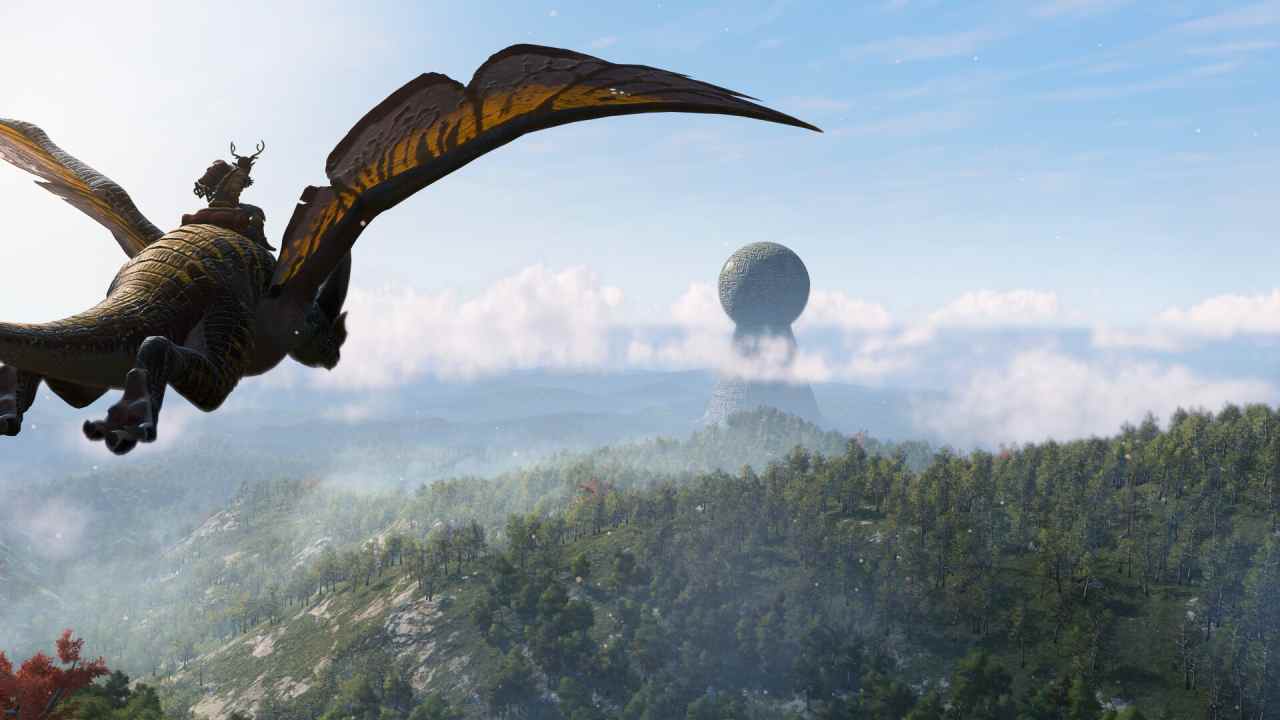
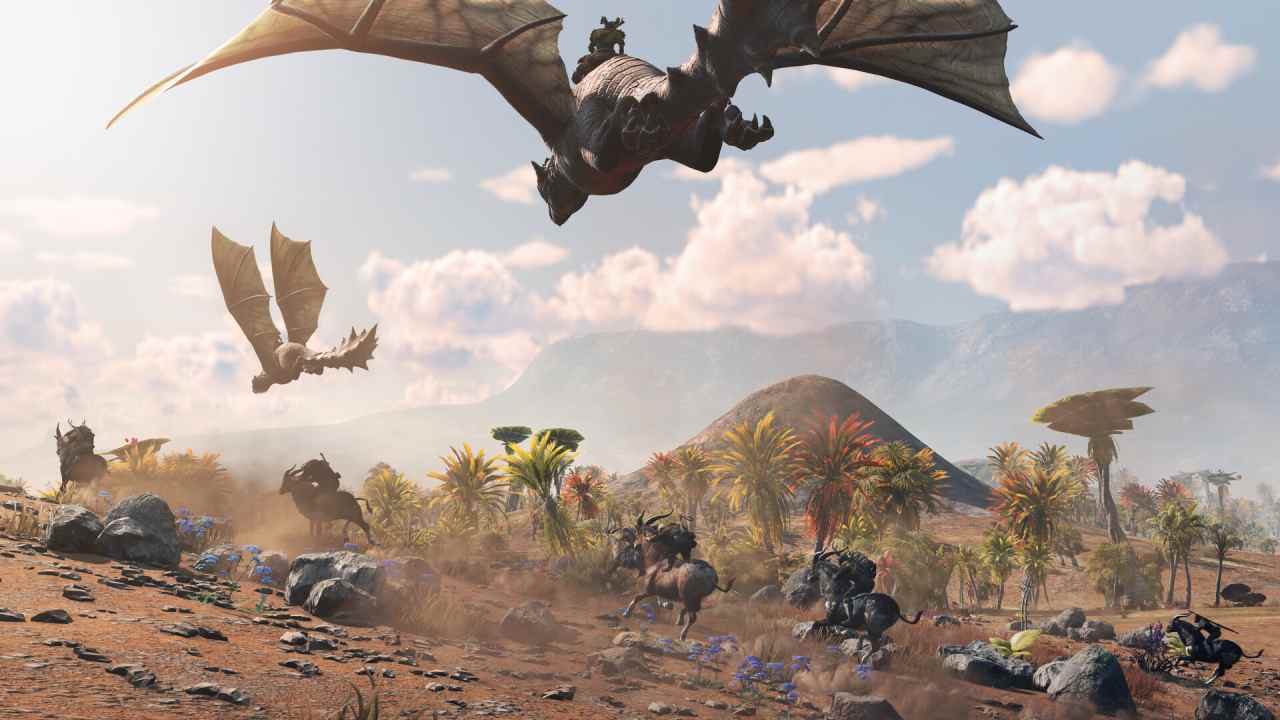
The reveal has already shown some of what you can expect to encounter. Dragons, giant birds that can be used as mounts, skeletons, strange humanoid races, huge ruins, and player-built settlements have all been shown.
.jpg)
You are also supposed to be able to create persistent buildings and communities, meet other players from around the world, survive together, or leave everyone behind and travel into unexplored territory on your own. That gives the world a stronger sense of role-playing than what you may have experienced in No Man’s Sky.
Hello Games describes Light No Fire as a combination of RPG depth and the freedom of a survival sandbox. That distinction matters because one of the criticisms aimed at No Man’s Sky, particularly in its earlier years, was that its procedural universe could feel enormous without always giving every part of it a strong sense of purpose.
Light No Fire has the opportunity to use that same technology while adding more emphasis on characters, creatures, combat, progression, lore, and fantasy world-building. The result could make the world feel more connected to what you are doing in it.
The gameplay shown so far also points toward a much more physical style of adventure.
Instead of laser weapons and spaceships, you have seen bows, swords, shields, fantasy creatures, and giant enemies. You have seen characters riding giant birds across enormous landscapes, climbing mountains, exploring ruins, and working together to build settlements.
The basic technology and philosophy of No Man’s Sky are still recognizable, but the fantasy setting changes the way you interact with the world because there is no spaceship waiting to take you away whenever you want.
Murray’s recent comments are also significant because he has said that people still do not fully understand how ambitious and crazy Light No Fire is. More importantly, he has indicated that Hello Games has been able to show more of the game for some time.
The lack of new information does not appear to be the result of development falling apart or the studio having nothing to show. Instead, Murray has said that he enjoys being able to work on the game without constantly having to explain every part of it to the outside world.
That approach is almost the complete opposite of the situation surrounding No Man’s Sky before launch. Hello Games does not need Murray to appear every few weeks and explain another feature or make promises about exactly how every mechanic will work years ahead of release.
The game already has significant interest following its first trailer, including a place near the top of Steam’s wish-list rankings. At this point, the studio can focus on finishing the game rather than constantly trying to convince people that it is worth watching.
The size of the development team makes the project even more unusual.
Hello Games is not a massive 500-person studio, and recent comments from Murray have placed the Light No Fire team at somewhere around 12 to 20 developers, while the wider studio remains relatively small. That is roughly comparable to the size of the team that originally shipped No Man’s Sky.
That experience could ultimately be the most important part of Light No Fire. You are getting a team that has already built one of the largest procedural game worlds, survived one of the industry's most difficult launches, and then spent a decade expanding and improving that same game.
Now, Hello Games is taking that experience and applying it to an Earth-sized fantasy world where exploration, survival, building, role-playing, and multiplayer travel all appear to be connected. If the studio can deliver on even a large part of that vision, Light No Fire could end up being much more than another survival game.
Editor, NoobFeed
Related News
No Data.