
Dispatch Fans Praise Shroud as One of Gaming's Most Underrated Villains
New analysis highlights why the masked antagonist commands every scene he appears in.
News by Zahra Morshed on Nov 25, 2025
The main character of Dispatch might not even be the heroes; it might be Shroud, the mysterious bad guy in a mask. Fans and developers agree that Shroud is one of the most interesting and underused bad guys in modern story-driven games. There have been a lot of community talks, breakdowns, and character analyses about this idea.
Recently, content creators have said things that have sparked interest in Shroud's personality, job, and the thematic weight he brings to Dispatch. A lot of people say that even though he only appears in a few scenes, he makes every one of them better.
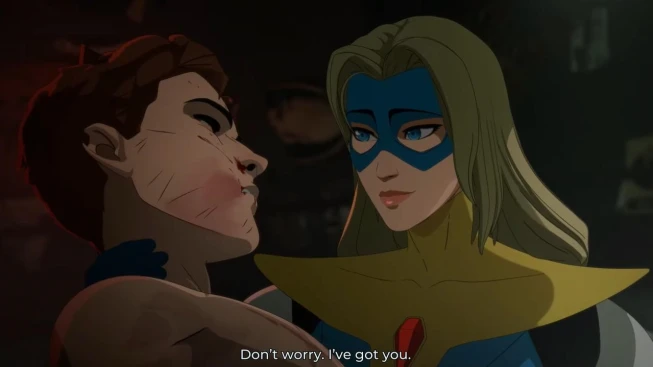
Shroud stood out right away thanks to his sleek metal mask, heavy armor, and Doctor-Doom-like shape. His habits, on the other hand—controlled, funny, and unsettlingly calm—make the effect complete.
Players talk about times when Shroud has a surprising, almost dry sense of humor. Fans have shared lines like "These look identical, Robert," which has become a meme, to support the idea that Shroud's personality is just as well-thought-out as his combat suit.
He seems scary, but he's actually very charming. He's the kind of bad guy who can scare and entertain at the same time.
Analysts say that Shroud's psychological tricks are similar to those used by Batman's Scarecrow. His strength is not physical strength, but dominance: he sets the tone, runs the show, and keeps people in line by making them afraid.
One thing that keeps coming up is his obsession with making predictions. He sees the world as an algorithmic one, where all variables, behaviors, and moral traits must fit into a system that he can manipulate to his benefit. When he's wrong, it's because a character changes or acts in a way that goes against his morals, showing where his reasoning is flawed.
The main idea of Dispatch is linked to this theme: people can change and are not limited by the roles society gives them. That way of thinking is completely different from Shroud's, who sees the world as fixed and predictable.
Almost every fan discussion thinks that the scene where Shroud walks into the bar is one of the best parts of Dispatch.
Players who know about him from earlier in the game can tell right away who he is as soon as he sits down next to Robert.
What comes next is a lesson in building tension in a story: He kills the waitress without thinking, showing that he is in charge. He tells Coupe or Sonar (based on the player) off for being rude to Blond Blazer, showing how strict his morals are when it comes to "old-world heroes."
He has a lot of funny, charming, and scary sides to him. He shows that he always knows more than everyone else in the room by figuring out the exact percentage that Blond Blazer could beat his men.
Fans love this scene because it shows almost every side of Shroud's personality: his fun, his threat, his respect, his logic, and his ability to surprise people.
A scene that gets a lot of attention is when Shroud gives Robert a strange story about how his father died. Players who have read the prior comic to Dispatch know that the story has been changed.
Shroud exaggerates things like violence, motives, and feelings, but not just to be mean; she does it to get people to respond. Each response is saved as data. Each piece of info helps his prediction algorithm get better.
This tendency to manipulate has become one of his most defining traits. Fans say it makes him more interesting, dangerous, and terribly flawed.
In the final battle, Shroud seems like he can't be stopped. He blocks every move the other player makes. He reads every plan right away. His predicting engine changes all the time, which gives him an edge that is hard to beat.
But as soon as the uncertain Z Team shows up—something from another world—his system starts to fall apart.
He can still adapt, but chaos makes his algorithm work harder, which shows his main weakness: he is only as strong as his ability to guess how people will act, and people, especially those who change or redeem themselves, are hard to predict.
A lot of fans say that the end choice about Astral Pulse was one of the best parts of the game's design. The player can pick "Give him the real Astral Pulse" or "Give him both and make him choose."
The second choice has become well-known.
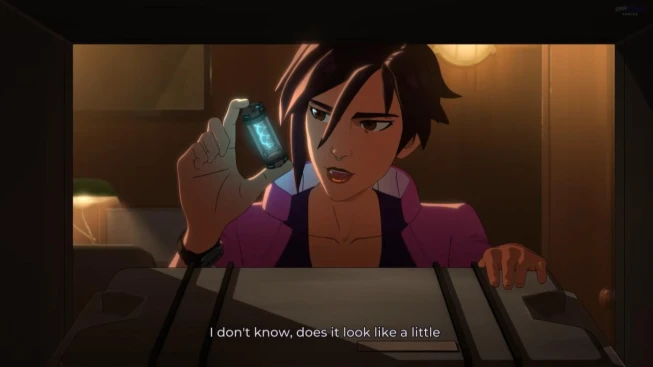
Players use his need to predict the future against him by giving him two identical things. He asked for the Astral Pulse. The player did as asked. He just didn't see the hole: both were given at the same time.
For many, this is the final moment when the player beats him—not by force, but by using his own ideas against him.
Fan opinions are mixed, but they all agree on one thing: Shroud isn't used enough. Even though he's only in a few scenes, each one is a treat. Some critics say the game would have been better with a prequel, more tasks, or more character-focused scenes that showed his history with the Brave Brigade.
His dislike for Astral, his respect for heroes like Blond Blazer, and his strange love for old-fashioned values all point to a deeper story that players wish they saw more of.
Contributor, NoobFeed
Related News
No Data.