
GTA 6 Development Secrets Revealed by Former Rockstar Developer
Behind-the-scenes insights show how Rockstar builds massive worlds, trailers, and next-gen experiences.
News by Zahra Morshed on Apr 13, 2026
There is a rare view coming out of the closed world of making blockbuster games, showing what goes on behind the scenes of development that usually defines expectation cycles. Conversations from people who used to work for Rockstar Games have moved the focus from theory to the process. What comes out is not a leak of secrets, but a change in how we think about complexity. When you look at GTA 6 through the lens of production truth, the myths start to fall apart.
Most of the talk about big releases is centered around trailers, rumors, and incomplete readings of unfinished material. However, most people still can't see how growth works on the inside. People who have worked on games like Grand Theft Auto V and Red Dead Redemption have told us that the discipline is based on revision rather than speed. Scale isn't reached by making one big discovery; it's reached by stacked systems that get better over time.
.jpg)
One of the most telling parts is the sound design, which isn't always given enough attention when people talk about realism.
In big, open worlds, every encounter needs to be sounded out. Just the sound of footsteps can need thousands of different versions to sound real on different surfaces, at different speeds, and in different environments. During the early stages of production, there is often an abundance of options, which lets artists test the limits of their creativity before they are limited. Over time, these huge libraries are trimmed down, improved, and curated to find the best mix between quality and speed.
This method is in line with Rockstar's production culture as a whole. The framework is limited by technical issues, but at first, there are no limits on artistic exploration. Teams are told to go beyond what they think are the limits, before memory limits, processing overhead, and system integration make them focus on the end implementation. It is a process that accepts extra as a way to get precise, making sure that what is left is both planned and useful.
The public, on the other hand, often gets the signals sent during growth wrong. When a video comes out, people often think it shows a nearly finished version of the game. In fact, these sequences are very carefully put together as parts of a much bigger system that is changing. Engineers who used to work there say that each frame is carefully planned. Even though other parts of the game are still changing, camera angles, lighting, and environmental features are getting better to show a certain vision.
This selected polish doesn't lie. It's told in a smart way. Trailers are like carefully chosen stories that are meant to show tone, ambition, and direction rather than full utility. Systems are always changing, even when they're not obvious. Mechanics are tried, broken, rebuilt, and made better over and over again during development. Performance problems are fixed along with improvements to the graphics and changes to the system, and this is often done under tight deadlines that go late into the night.
The word "downgrade," which is often used in online conversations, shows how expectations and processes are not always aligned. It's not unusual for changes to appear or work differently between early video and the final release. They are a natural part of growth. When working on jobs this big, optimization needs to make trade-offs. When you understand this dynamic, you can change the way you talk about it from assuming compromise to recognizing that engineering choices are made on purpose.
.jpg)
Another aspect that isn't often talked about is how separated large-scale production is.
Even though Rockstar is a very big studio, information is spread out among many specialized teams. When developers work on AI, environment design, animation blending, or task scripting, they mostly work on discrete systems. This system makes the project more efficient and safe, but it also means that no one person can see the whole picture.
Reports say that people who work a lot on GTA 6 might not know much about the game's story or overall design. A lot of complicated productions use this level of segmentation all the time. It's based on the idea of "need-to-know," which keeps the focus on operations while protecting intellectual property. In a time when information can spread quickly, this kind of discipline has become an important part of Rockstar's way of doing things.
This controlled setting includes talking to people outside the company. Unlike many companies that release updates all the time, Rockstar stays out of the public eye on purpose. The lack of regular commentary builds anticipation while keeping control of the story. It's very different from the move toward transparency in the industry as a whole, but it still works to keep people engaged over the long term.
People are also paying more attention to the technology that makes these encounters possible. People have made assumptions about big changes because of rumors about how Rockstar's own RAGE engine will change over time. A more balanced viewpoint points to continuity instead of change. A lot of people think that Red Dead Redemption 2's engine is one of the most advanced open-world systems ever made. Building on that base makes things more efficient and consistent.
Most likely, progress is being made by making things better in a number of areas. Better control of memory lets environments get more detailed without affecting stability. More efficient use of the CPU allows for more complex simulations, especially in places with lots of people. As time goes on, physics systems change to make interactions more realistic, and animation processes get smoother and faster.
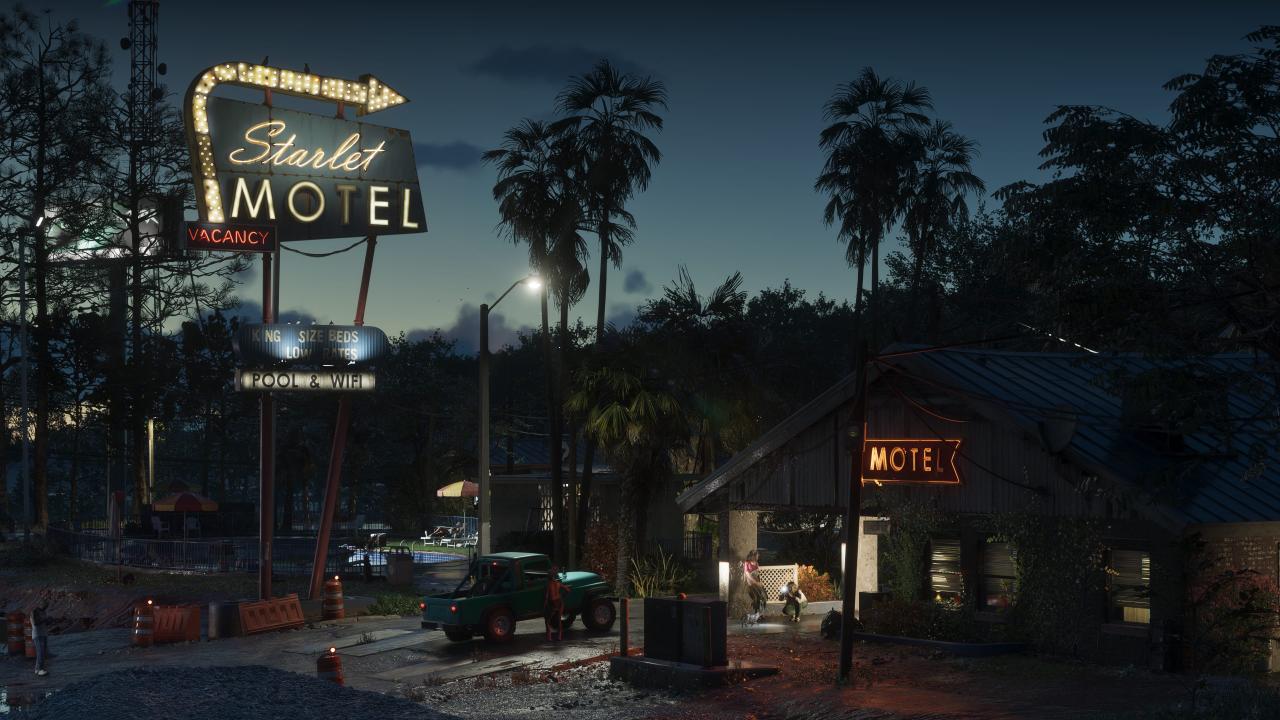
Lighting technologies keep getting better, which makes games more realistic without lowering their speed.
When put together, these small improvements make big leaps in potential. Instead of throwing away years of development experience, Rockstar seems to be building on it, which is in line with best practices in the industry for long-term progress. This way of doing things makes sure that every new game builds on the engine's existing knowledge while still adding useful improvements.
In this case, the impact of Red Dead Redemption 2 is especially important. For environmental storyline and systemic immersion, that game was the best of its kind. Non-player figures had complex actions that changed based on the player and the world around them. Wildlife systems worked on their own, which added to the feeling of realism that went beyond planned events. Even though these things weren't always noticed, they did affect the whole experience.
Many people think that these ideas will be used to guide the development of GTA 6. Moving from the border to a modern city brings new problems, but the main idea stays the same. Size isn't the only thing that makes a world alive; the small exchanges that give it a sense of continuity are also very important. The systemic complexity, NPC routines, and environmental reactions all work together to make the ecosystem feel alive even when the player isn't there.
This change is more than just cosmetic improvements. It shows a stronger dedication to simulations, where the world follows its own rules instead of just responding to what the player does. In spite of the fact that it takes a lot of computing power and careful balance, this way of building open worlds is a big step forward. The goal is not to overload with information, but to make sense of things by linking systems together.
Understanding this context changes how we think about waiting. Instead of just looking at visual quality or lists of features, the focus moves to the architecture that makes the experience possible. It becomes clear that growth is not a straight line that leads to completion, but a dynamic process that is shaped by trying things out, making changes, and trying again. Each part is important to the whole system, which needs to work well in a variety of situations.
So, the mystery surrounding Rockstar's process is not there by chance. This happens because decisions were made to value craftsmanship over speed. This balance between keeping things secret and getting things done has become something that sets Rockstar apart in a very competitive business. By keeping people from seeing what is being worked on, the company protects the story's integrity and lets teams work without outside pressure.
These ideas give us a more realistic view of what's to come as the conversation continues to develop. GTA 6 isn't just the next game in a popular series. It's the result of a long, complicated process that challenges common ideas about size, technology, and sharing stories. The reality that made it possible is neither completely ordered nor completely disorganized. It is a mix of the two.
That conflict is where its power lies. The difference between the polished look and the iterative work that went into making it shows how current game development works. For this field, you need to be both precise and flexible, because everything can change at any time until the very end. Realizing this change turns anticipation into understanding, showing a process that is as complicated as the worlds it wants to make.
Contributor, NoobFeed
Related News
No Data.