
Intel Panther Lake Benchmarks Show a New Era for Thin and Light Windows Laptops
Intel Core Ultra Series 3 Introduces a Major Shift in Laptop Performance and Efficiency Balance
News by Tanisha Aria on Jan 21, 2026
Intel released its new Core Ultra Series 3 processors, which are also known as Panther Lake. They got a lot of attention right away because Intel made some big claims about how well they would work.
When people heard claims like "a 77% improvement in GPU performance," they were naturally skeptical, especially since benchmark data isn't always very reliable.
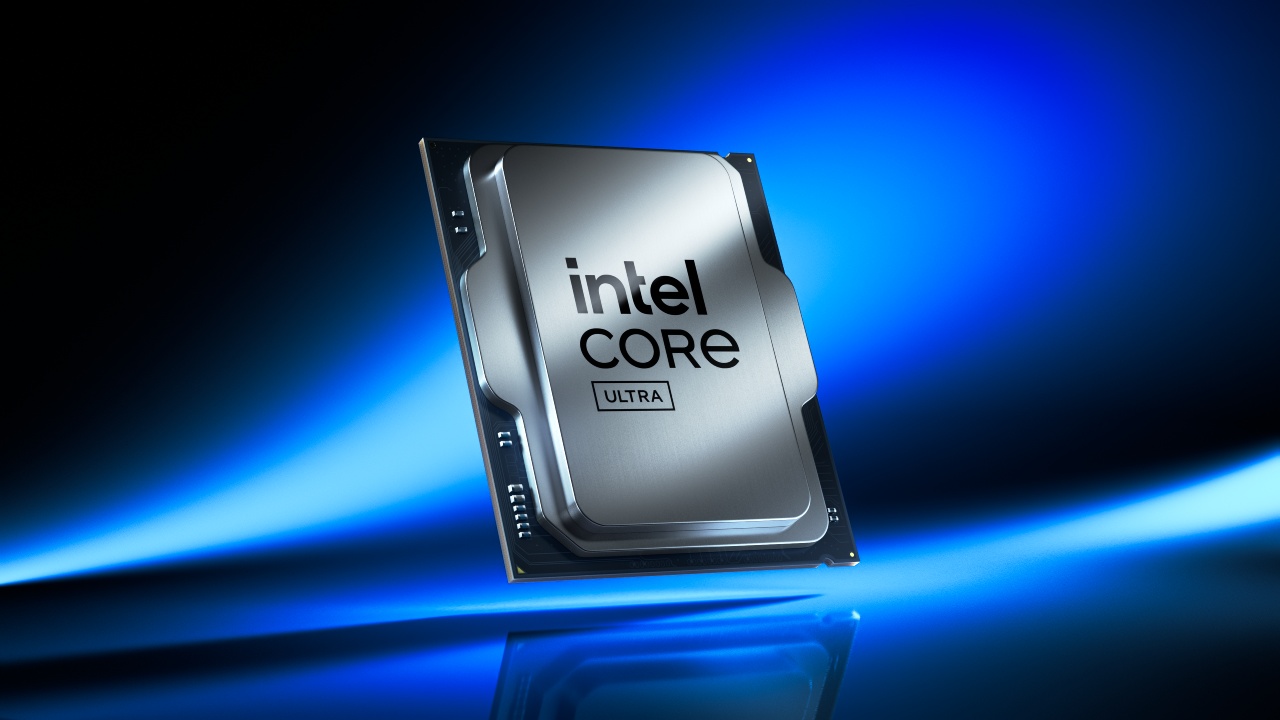
But those questions faded when tests were conducted in the real world. Panther Lake is one of the biggest steps forward for Windows laptops in a long time. It finally ends the long-standing trade-off between speed and battery life.
Advanced EUV lithography was used to build Intel's new 18A (1.8nm) process node, which is at the heart of Panther Lake.
In general, smaller transistors mean better speed and efficiency.
However, Panther Lake's improvements go beyond scaling. In the history of transistor design, there have been only two big changes. The first was the switch to FinFET with Intel's Ivy Bridge processors in 2011. These processors used a 3D gate layout, making them much more efficient.
These days, transistors are so small that even FinFET designs struggle to fully control current flow. This causes power to leak out and be lost. To fix this, Intel developed RibbonFET, a gate-all-around transistor design that uses vertically stacked ribbons to provide much better current control. This change further increases transistor density, reduces leakage, and improves efficiency.
As a result, Panther Lake delivers 15% better performance per watt and 30% higher chip density than Intel's earlier 3nm designs.
Intel says that Panther Lake delivers 50% better multi-threaded performance than Lunar Lake and 30% lower power consumption for the same multi-threaded task. System-on-chip power is also lower. Compared to Lunar Lake, SoC power is 10% lower, and compared to Arrow Lake, it is 40% lower.
These price cuts are very important because Lunar Lake systems have already demonstrated their efficiency, with real-world use cases achieving up to 24 hours of battery life. With Panther Lake, laptop makers can now confidently say that their machines have battery lives of more than 20 hours. For once, those numbers seem reasonable for daily use.
Panther Lake supports a wide range of memory configurations. This includes ultra-fast LPDDR5 that can reach up to 9600 MT/s, traditional SODIMM support for laptops with enough room inside, and LPCCAMM for thinner designs that still want memory that can be upgraded.
Because of this, makers can create systems that are thin and light for portability, performance-focused, or upgradeable in the future.
Having a GPU built in is the most noticeable change. Based on Intel's Arc Battlemage design, Panther Lake features a GPU with up to 12 Xe cores. Intel says that the GPU speed is up to 50% better than both Lunar Lake and Arrow Lake. Both of those processors were already better at integrating graphics.
Much of this claim is supported by real-world tests. Forza Horizon 5 ran at 1800p on high settings with frame generation off, and the frame rate hit about 71 fps with little stutter and smooth frame delivery. Frame rates stayed around 65 fps even while playing games, unlike older Intel iGPUs, which struggled to maintain 60 fps.
Games that were troublesome before are also getting a lot better. Large areas of Valheim, for instance, load more easily than they used to. Once the first assets are loaded, stuttering goes away for the most part, and at 12:00 p.m., using Vulkan, gameplay hits about 60 frames per second.
Some stuttering can still happen when scenes load quickly, but this is more of a problem with the game engine than with the GPU.
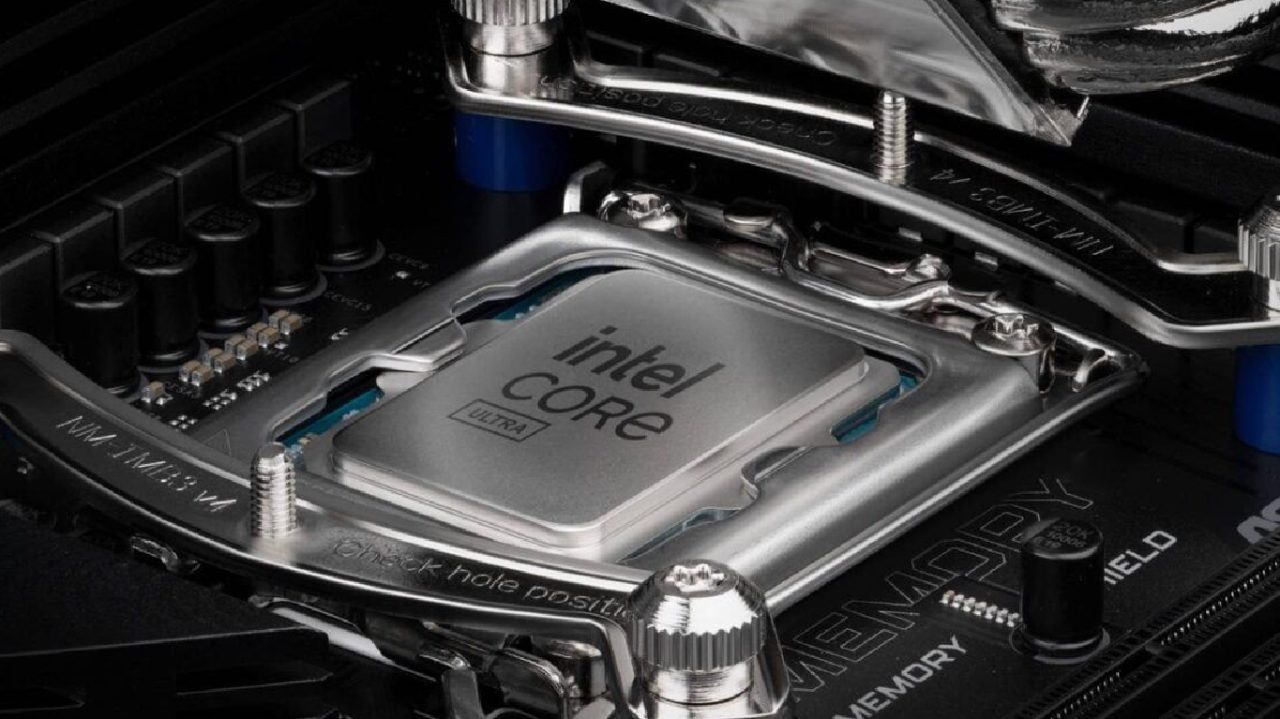
The consistency of DirectX performance has also improved a lot. DirectX11 has an average frame rate of 54 frames per second and a minimum frame rate of 44 frames per second. DirectX12 has an average frame rate of 57 and a minimum of 47.
The main thing to remember is that performance between the two APIs is now much more stable.
There are no longer any major stuttering or drops that come out of the blue.
One change that really stands out is XeSS3 frame generation. For every rendered frame, the technology can make up to four frames. This can boost frame rate from about 50 to almost 200 in games that support it.
Frame creation used to cause significant ghosting and other visual issues, but those problems are mostly gone here. Even moving things stay clear, so frame generation is a real choice, not a compromise.
Instead of telling you to lower the settings or screen, it makes more sense to leave frame generation on for smoother gameplay with no obvious visual issues.
Shared system memory has been another long-standing problem with integrated graphics. When computers with 16GB of RAM run out of VRAM, they might slow down a lot.
This problem is fixed in Panther Lake by giving the GPU its own specialized memory through the Arc control panel. This is especially helpful for games that need more than 10GB of VRAM and for work tasks like teaching AI models that use a lot of memory.
Panther Lake can be paired with dedicated GPUs in some computers for users who need even more graphics power. In these setups, you don't need the full 12Xe-core iGPU, and Intel has versions with only 4Xe cores. The Xe cores inside these models are still the same, but they are called Intel Graphics instead of Intel Arc.
The Intel Core Ultra X9 388H is at the top of the list. It has 16 cores, a highest turbo frequency of 5.1GHz, and the full 12Xe-core Arc GPU. The Intel Arc brand is used on models with 12Xe cores, while the normal Intel Graphics brand is used on lower-end models with fewer Xe cores.
The Intel Core Ultra 5338H stands out because it is the only model with an Arc B370 GPU featuring 10Xe cores. Even though it's not as fast as the full 12Xe-core models, it's a great deal and has much better built-in graphics than the Ultra 5336H.
The first versions of Panther Lake look good, but a powerful processor is only as good as the laptops it runs. The platform's GPU and energy savings make it great for high-end ultrabooks, premium thin-and-light models, and designs that are all about performance. These devices have better thermals, longer battery life, and better performance in the real world than older generations.
Once more reviews are out, we'll know more about Panther Lake's CPU performance and battery life, but first impressions suggest that it sets a new bar for what integrated graphics and efficient laptop CPUs can do.
Contributor, NoobFeed
Related News
No Data.