
Nintendo's Pricing Shift Signals Trouble for the $80 Game Era
As hardware prices rise and game pricing experiments shift, Nintendo may already be stepping back from its $80 strategy.
News by Mahi Araf on May 21, 2026
You're living in a time where game prices and hardware costs feel like they're constantly shifting, almost like yesterday's price already doesn't matter today. That trend has been creeping further into the video game industry, and you've likely noticed it most clearly with rising console prices and shifting game pricing strategies across major publishers.
One of the clearest recent examples is the Nintendo Switch 2. In Japan, a price increase has been rolling out, and while the exact timing has been a bit unclear depending on the region, the direction is obvious: hardware is getting more expensive. In the United States, the Nintendo Switch 2 has already moved from around $450 up to $500, reflecting that broader upward pressure on consumer tech pricing.
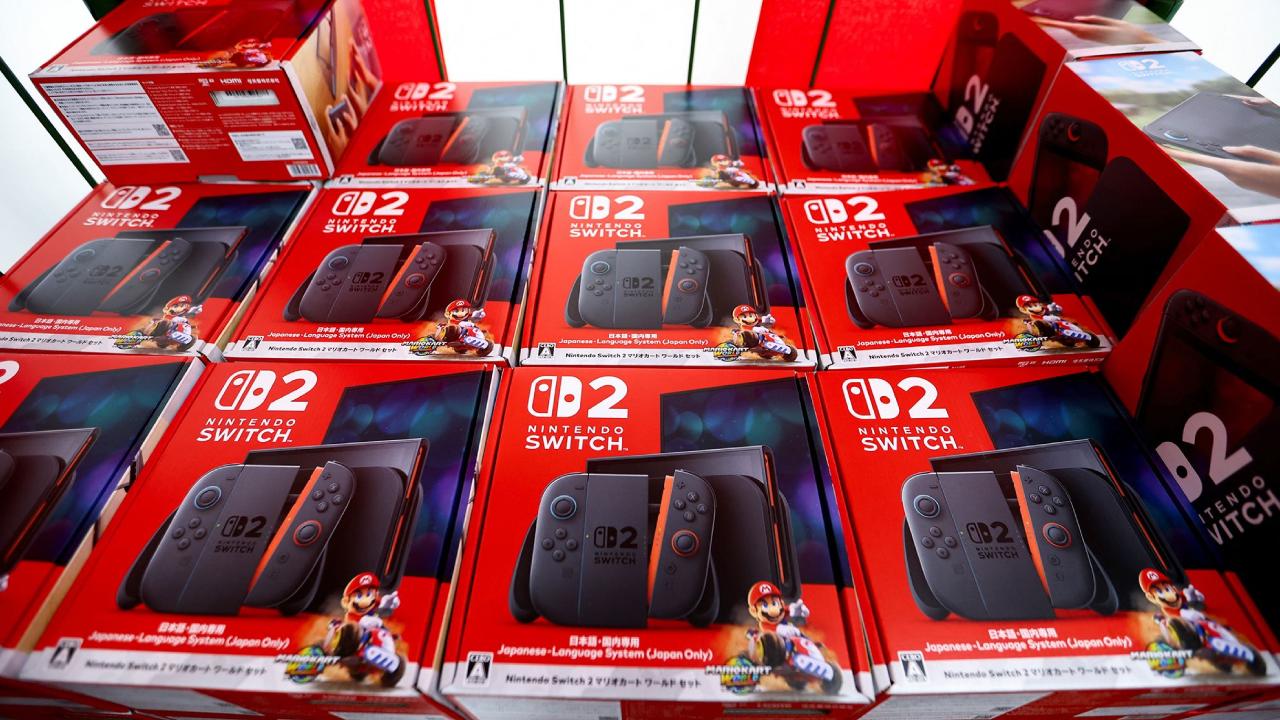
Alongside that, bundles and promotional deals have become part of how the system is positioned. You've seen offers that package the console with a major title like Star Fox for around $500 total, which effectively changes how the value of individual games is perceived when they're tied into hardware sales.
But the bigger discussion isn't really about hardware.
It's about what's happening with software pricing, especially the idea of $80 games. That's where things start to look less certain. At the moment, the only clearly defined $80 Nintendo Switch 2 game is Mario Kart World. That title sits in a unique position because, unlike older games or upgraded editions, it doesn't really have alternative pricing paths if you want it new. If you're buying it at retail, that $80 price is basically fixed unless you go second-hand or find some unusual discount situation.
That's different from what you've seen with upgraded versions of older titles like Kirby and the Forgotten Land or Super Mario Party-style releases that received enhanced Switch 2 editions. Those kinds of games are already in circulation, often available used, and in many cases have cheaper access points or upgrade paths that reduce the impact of a higher price tier.
Mario Kart World doesn't really have that structure.
If you want it, you're paying the full price. That alone made it a kind of test case for whether consumers would accept an $80 standard. Initially, the answer looked like yes. Early sales were strong, partly because the console itself bundled the game. When you break down the numbers, it makes the purchase feel closer to a lower effective cost for the game since you were buying the system anyway. That helped soften the reaction to the price point.
But over time, the situation changed. Sales didn't collapse, but they slowed noticeably compared to the initial launch period. That slowdown was significant enough to come up in investor discussions, which tends to signal that the company itself is paying attention to performance beyond just launch hype.
From an investor's perspective, this matters in a different way than it does for regular players. Investors aren't tracking gaming culture or online discussion trends in real time. They're focused on return, performance, and long-term stability. So when concerns start appearing in that space, it usually reflects broader signals in the data rather than isolated opinions.
Even with that slowdown, there isn't a strong case that Nintendo has had many other opportunities to apply an $80 price tag to new games. Since Mario Kart World, there hasn't really been another release that clearly justifies that same pricing tier in the same way, at least not in the current lineup.
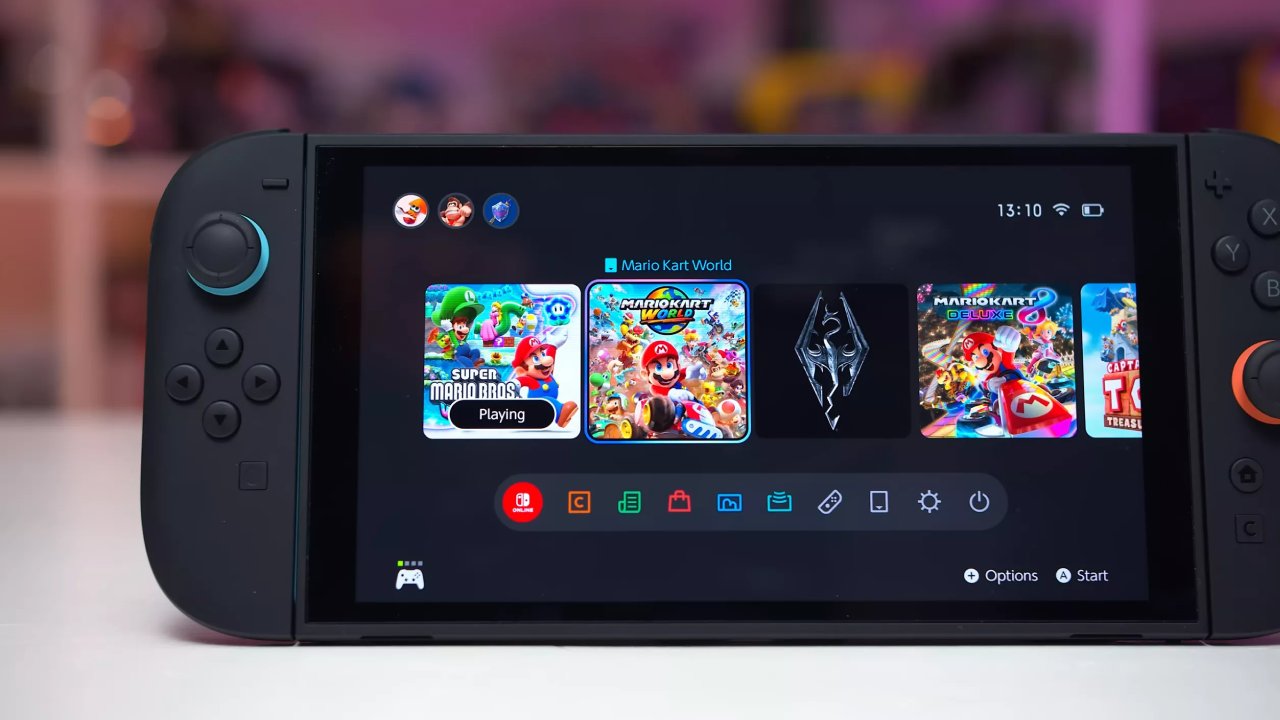
There's also a growing argument that even Mario Kart World itself may not fully feel like an $80 experience in the traditional sense. It's a strong game, and it clearly has value, but the pricing still feels like it's being tested against consumer expectations rather than naturally accepted across the board.
This is where the broader industry context becomes important.
You can look back at older pricing eras and see games that cost $70 or $75, especially in the cartridge era on systems like the N64 or Super Nintendo. At that time, higher prices were often tied to manufacturing costs, especially for cartridges that needed more memory and more complex internal parts. That made production more expensive, which directly influenced retail pricing.
Those costs often hit third-party publishers harder, especially when they deal with cartridge manufacturing through platform holders. That's part of why Nintendo's own games tended to be priced slightly lower than some third-party releases.
Today, that cost structure is gone in the same way. With digital distribution now dominating a large part of the market, physical manufacturing is no longer the primary driver of pricing. Even physical games don't carry the same production burden they once did. On top of that, digital purchases have become more common because of convenience, earlier availability, and instant access.
That shift alters the perception of pricing increases.
When production costs are no longer the main justification, consumers tend to look more closely at value, content, and perceived worth. Nintendo's recent pricing patterns suggest they are already experimenting with different tiers rather than committing fully to a universal $80 standard.
You've seen situations where games land at $70 physically but have lower digital prices. In some cases, digital versions are even $10 cheaper than physical copies. There are also examples where older or differently positioned titles come in at lower digital price points compared to physical releases.
Retailers have also started influencing this structure. Some of the physical copies have been dropped to lower price points than originally anticipated through price matching or competitive alignment, with stores like Walmart and Amazon adjusting their pricing on certain titles. That kind of retail behavior affects how pricing stabilizes across the market.
You've also seen examples where certain games land in the $50 to $60 range, depending on platform or format, while others stay closer to $70. That variation suggests Nintendo is actively testing how different price tiers affect demand across different audiences.
Even within their own lineup, pricing consistency isn't fully locked in. Some titles land at $70 physically and $60 digitally, while others sit lower depending on region or retailer adjustments. This kind of dispersion makes it hard to set a stable $80 baseline for future releases.
To further frame the situation, it helps to look at other recent releases.
For example, games like Splatoon Raiders have demonstrated that the pricing of physical and digital versions can differ significantly, with the digital version sometimes being marketed as a more affordable option. Meanwhile, Yoshi releases have also been observed with split pricing models depending on the format.
On the other hand, there are still cases where higher pricing hasn't guaranteed stronger performance. Metroid Prime 4, despite the long development cycle, did not gain strong sales momentum. Despite some positive reception from players, Mario Tennis Fever also struggled commercially. Both of these were priced at higher tiers, which raises questions about how much pricing alone can influence success.
That connects to a broader industry lesson. Even outside Nintendo, companies like Xbox previously explored the idea of $80 games and quickly backed away after negative feedback. Since that reaction, the idea hasn't really resurfaced in a meaningful way, suggesting that the market resistance is still strong.
There's also the question of premium editions and early access pricing, where higher tiers exist above standard editions. While those can push total spending higher, they rely on optional purchases rather than making the base price itself inaccessible. Nintendo, however, has traditionally focused on a more uniform experience where the game you buy is simply the game you get, without layered access models.
That makes it harder to justify a permanent $80 baseline unless the entire market shifts in that direction.
There are also hypothetical scenarios where Nintendo could attempt higher pricing for major flagship releases like a new 3D Mario or a major Zelda title. Those kinds of games tend to sit at the top of their lineup in terms of visibility and sales power. But even then, the question becomes whether it makes more sense to sell fewer units at a higher price or more units at a slightly lower price.
.jpg)
For example, selling two games at $70 generates more total revenue than selling one at $80, which is part of why the $70 range still feels like the more stable ceiling in the current market. It maintains broader accessibility while still increasing revenue compared to older generations.
There's also the reality that a portion of the audience will simply refuse to go beyond $70, regardless of the game. That group is unlikely to be converted at an $80 price point, which limits the upside of raising prices unless content demand is extremely strong.
Taken together, these points suggest a market that is still adjusting rather than settling.
Nintendo appears to be experimenting, but not fully committing to $80 as a standard. The slowdown in Mario Kart World's momentum, combined with broader pricing flexibility across digital and physical releases, suggests that the company may already be reassessing that strategy internally.
What you're seeing now is less a clear transition to higher pricing and more a balancing act among system price increases, perceived game value, and consumer resistance to higher entry points. The direction isn't fully locked in yet, but the early signals suggest that the $80 game may remain more of an exception than a new standard going forward.
Senior Editor, NoobFeed
Related News
No Data.