
Anima Gate of Memories: I&II Remaster Review
PC
A cult classic returns to modern platforms with ambition and flaws.
Reviewed by Wasbir Sadat on Nov 15, 2025
Anima: Gate of Memories, developed by Anima Project, was inspired by the huge world of the Anima Tabletop Role-Playing Game (TTRPG). The first game received mixed reviews upon its release, but it quickly gained a loyal following among both RPG and TTRPG fans.
Those who liked the game's unique world, dual-character fighting, and non-linear progression, but the game wasn't very popular because it was difficult to learn and featured confusing puzzles and platforming elements.
.jpg)
A few years later, Anima: The Nameless Chronicles came out, but it wasn't a straight sequel. Instead, it was a companion story told from the point of view of The Nameless, the main bad guy in the story. This story had a more focused narrative and cleverly utilized characters and locations from the first game to weave a dual-perspective plot.
Many people think that The Nameless Chronicles is better than the first one because it has a tighter story, more difficult tasks, and smart connections to what happened in the first game. In 2025, Anima Project launched Anima Gate of Memories: I&II Remaster, which enhanced the games' graphics, resolutions, and platform support, allowing them to be played by a new generation of players.
Most would see Anima Gate of Memories: I&II Remaster as a chance to play both games together as a single trilogy. The lighting, textures, and support for current hardware have all been improved; however, the core gameplay and systems remain largely unchanged from the originals from the mid-2010s.
The first Gate of Memories is about The Bearer, a thin female protagonist who uses magic, and her rough-around-the-edges partner Ergo, a rough-and-tumble male who is stuck inside a magical book. This book now talks, sings, and makes weak jokes, which bring some humor to a story that would otherwise be sad.
The story is about exploring a world that doesn't follow a straight line, finding memories, and fighting powerful enemies.
The player navigates through a series of realms, each featuring mini-bosses, platforming challenges, and environmental puzzles.Players take on the role of the named antihero in the companion game, The Nameless Chronicles, which offers a new perspective. The story here is much more focused, and it cleverly ties in with Gate of Memories.
Many of the same locations are reused from the first game, although they are often modified in small ways. Players can learn about both sides of the war by fighting The Bearer and Ergo more than once. Although Chronicles adds to the story and lore, new players should still play the original game first, as skipping it could make the story less clear.
.jpg)
Both games take place in a dark, ominous world where memory, loss, and consequences are major themes. Locations range from vast, run-down mansions and tower-filled realms to beautiful outdoor scenes, including grassy fields and worlds with seasonal themes.
The story mostly comes from the surroundings and the player's actions, with only a little help from NPCs and in-game objectives.
The main type of game that Anima Gate of Memories: I&II Remaster is a real-time action RPG. In battle, exploration, and puzzle-solving scenes, players have direct power over their characters. You can switch between The Bearer and Ergo without any problems, even in the middle of a combo. Each character has their own life bar.
You can try out different jobs. For example, Bearer can be used as a ranged attacker, and Ergo can be used for close combat, even though their move sets are very similar at first. When the Nameless is playable, they add some variety to the game's mechanics by charging attacks that can't be blocked, but the changes are still small.
Character-based combat with a focus on a mix of light hits, heavy attacks, and aerial juggling, making it feel like games like Devil May Cry. Players are encouraged to mix up their combos by having stamina and magic meters that limit how many times they can hit or cast a spell. A style meter encourages different moves and punishes repeated hits or taking damage, which works like a subtle reward for more creative ways to fight.
Exploration is more important than battle. To move forward, players have to find their way through maze-like worlds, solve puzzles in the surroundings, collect memories, and beat mini-bosses. There are branching paths, optional goals like freeing prisoners, and hidden collectibles in many places that change the story and the way you play.
Players often have to solve platforming problems, which can be awkward because figures move in ways that are more suited to fighting. When you fall during jumps or fight while you're in the air, you often get hurt or killed quickly, which can be frustrating. The hub system is like a center band of connective tissue. It's where you can buy items, save places (which are often cleverly hidden, like a makeshift bed), and entrances to other worlds.
Progress is kind of open-ended; boss fights may seem impossible at first, but you can go to other worlds to level up, get new gear, and remember old things before coming back stronger. This structure, which doesn't follow a straight line, is a great design choice that encourages exploration and quick decision-making.
.jpg)
Anima Gate of Memories: I&II Remaster's combat has a lot of tactical depth, mostly because of how the stamina and magic meters are managed, the different attack combos, and the style meter that rewards different tactics. In the middle of a battle, players can switch between The Bearer and Ergo to try out different strategies.
Some of the more difficult fights, like fighting two enemies at the same time in different worlds, are especially satisfying.
The method does have some problems, though. Early on, fighting may feel limited until you unlock certain skills through the skill tree. Encounters that involve a large number of projectiles or repeated dash attacks can also lead to "stun-lock" situations.
There is a wide range in the quality of boss fights. Some are creative and fun, while others are punishingly hard, with hits that can completely drain a player's health and force them to rely on consumables.
In the same way, the puzzles in the game have both good and bad parts. Many of the tasks are clever and make you want to explore further. Some of the best-designed puzzles and interactive elements of the environment, like moving platform sections in towers, are the ones with more than one answer.
The game doesn't give many instructions or hints, so players have to depend on trial and error to move forward. If there aren't any task logs, waypoints, or clear goals, it can be hard to know what to do next.
Also, layouts that are too complicated, with lots of hidden rooms and paths that lead in the wrong direction, make it necessary to go back over things over and over, which can get frustrating. In general, both combat and puzzles are fun to play and pay attention to, but they can be hard for newcomers to understand at first because they are sometimes unclear.
A character's growth is based on a skill tree that lets them learn new moves and improves their stats at the same time. Early skills often feel necessary, which makes the early parts of the game stiff and combat-heavy until all the basic skills are unlocked.
Upgrading equipment only slightly raises numbers and can sometimes lower secondary stats, which forces players to make strategic decisions. Leveling up and earning moves makes the game more interesting, but progress can feel sluggish at times, especially in the beginning.
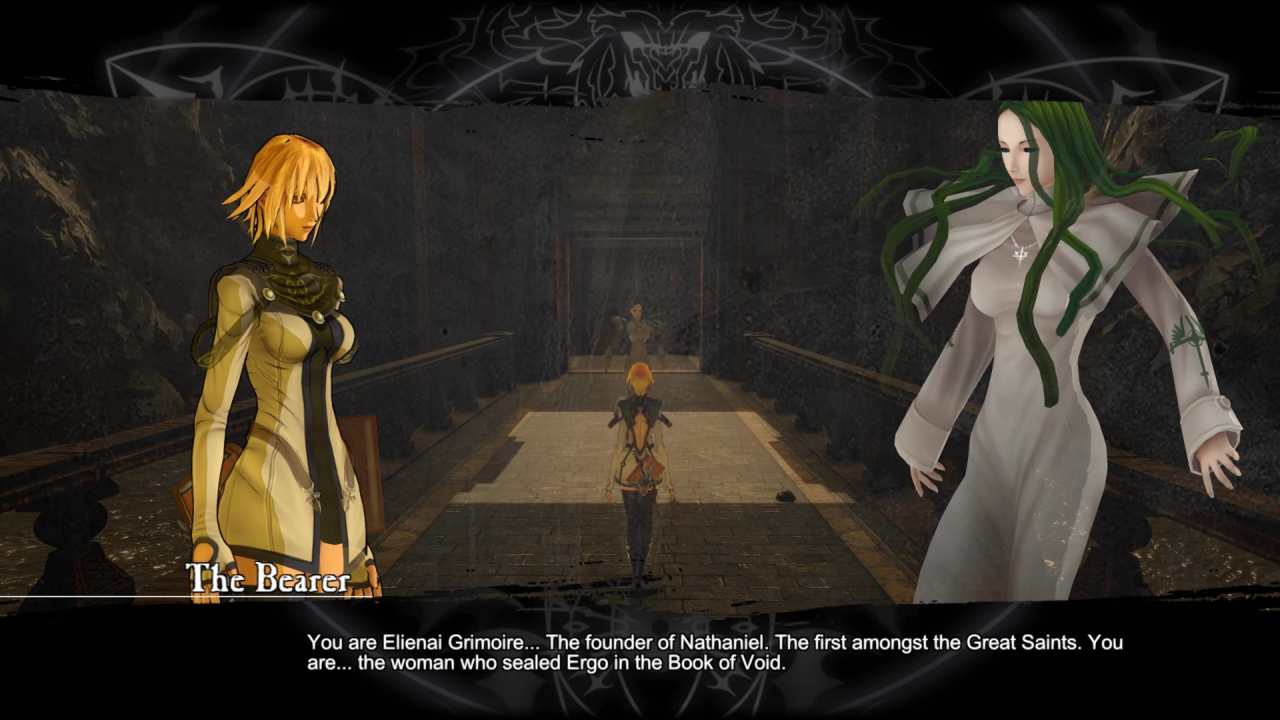
Anima Gate of Memories: I&II Remaster brings the graphics a lot more up to date compared to the 2018 release." The character models, backgrounds, and lighting have all been improved, and outdoor locations, such as the Great Plains, appear bright and appealing.
A lot of the game, though, takes place in darker, duller places, such as mansions and towers, which lessens the overall visual effect. Character models that are too stiff sometimes stay still in cutscenes while the backgrounds move, which can be jarring. There are still a few small graphic issues—Ergo's cloak, for example, looks like it's made of cardboard—but overall, Anima Gate of Memories: I&II Remaster makes the world look better.
There are some good and some bad things about the sound design in Anima Gate of Memories: I&II Remaster. The orchestral music is one of the game's best features. It really captures the magical and somber mood of the world, making places like Gaia and the Arcane Tower feel more real.
Combat stingers and outdoor effects, on the other hand, feel weak and outdated, and some audio cues are unclear or absent, especially during chaotic battles.
Voice acting remains a weak point in both games, with most of the characters sounding flat and emotionless. Characters like Ergo are a nice change of pace because they talk in a playful and funny way, but overall, the conversation feels stilted and has trouble conveying the emotional weight of the story.
Although it's not perfect, Anima Gate of Memories: I&II Remaster is an engaging experience. It has great worldbuilding, dual-perspective stories, and non-linear design, giving it a level of depth that you don't usually see in middle-tier action RPGs. The orchestral sound, moody lighting, and ambitious realm design make the setting stand out.
However, it's also flawed due to its origins: fighting works, but it can be slow at times; platforming is awkward; puzzles can be difficult to understand; and voice acting is often emotionless. Modern players who are used to goal markers, clearer maps, or streamlined advancement may find the game frustrating, especially in the beginning.
The remake does a nice job of bringing these classics to a new audience, but it still seems like it was produced in the 2010s. Those who like complicated stories with several points of view and complex design will like this, even if it's not flawless. Those who expect combat to be smooth and polished, or who seek contemporary comforts, may have a hard time truly accepting it.
Contributor, NoobFeed
Verdict
Anima: Gate of Memories I & II Remaster is a cult classic with better graphics, a lot of backstory, two ambitious storylines, and tactical action. Puzzles and platforming might seem stiff at first, but anyone who likes exploring and stories will like
82
Related News
No Data.