
Black Jacket Review
PC
Mipumi Games takes a simple casino card game and transforms it into a dark, addictive roguelike brimming with risky decisions, powerful deck combinations, and an underworld mystery that keeps you invested.
Reviewed by Maisie Scott on May 13, 2026
Card-based roguelikes have become one of the most saturated genres in gaming over the last few years, but developers are still finding ways to reinvent familiar mechanics. Some studios have started experimenting with recognizable games, rebuilding them into something entirely different rather than falling back on traditional fantasy card systems.
Games such as Balatro proved that even poker could become the basis for an addictive roguelike experience, while Inscryption showed how card mechanics could be tied to disturbing storytelling and mystery. Some studios have begun experimenting with recognizable games, rebuilding them into something entirely different rather than traditional fantasy card systems.
Balatro showed that even poker could be an addictive roguelike, and Inscryption proved the potential of card mechanics combined with disturbing storytelling and mystery. Some studios have also started experimenting with games people recognize, rather than just falling back on fantasy card systems and reworking them into something else entirely.
Black Jacket looks like the next step in that evolution.
Developed by Mipumi Games and published by Skystone Games, the title takes the basic structure of blackjack and turns it into something far more strategic and unpredictable. But instead of simply recreating the casino experience, the developers have built blackjack into a backbone for deck-building systems, roguelike progression, unique card effects, and narrative-driven gameplay.
It’s a game that, despite being based on one of the simplest card games ever created, feels surprisingly fresh. Black Jacket is released on consoles and PC with Xbox Game Pass day one, and it quickly becomes clear that the developers were not interested in creating a simple gambling simulator.
Instead, they created a dark and stylish roguelike in which every match is tense, every card can turn the tide completely, and every run slowly reveals more about the strange world you find yourself trapped in. Even the simplest decisions can lead to risky situations in which a single unexpected draw can change the flow of a match.
In Black Jacket, you play as a lost soul in the underworld with little understanding of how you got there. You know only that you need coins to escape. The ferryman who controls the way out of the darkness wants more than you can possibly gather easily. The underworld itself is run on a twisted system.
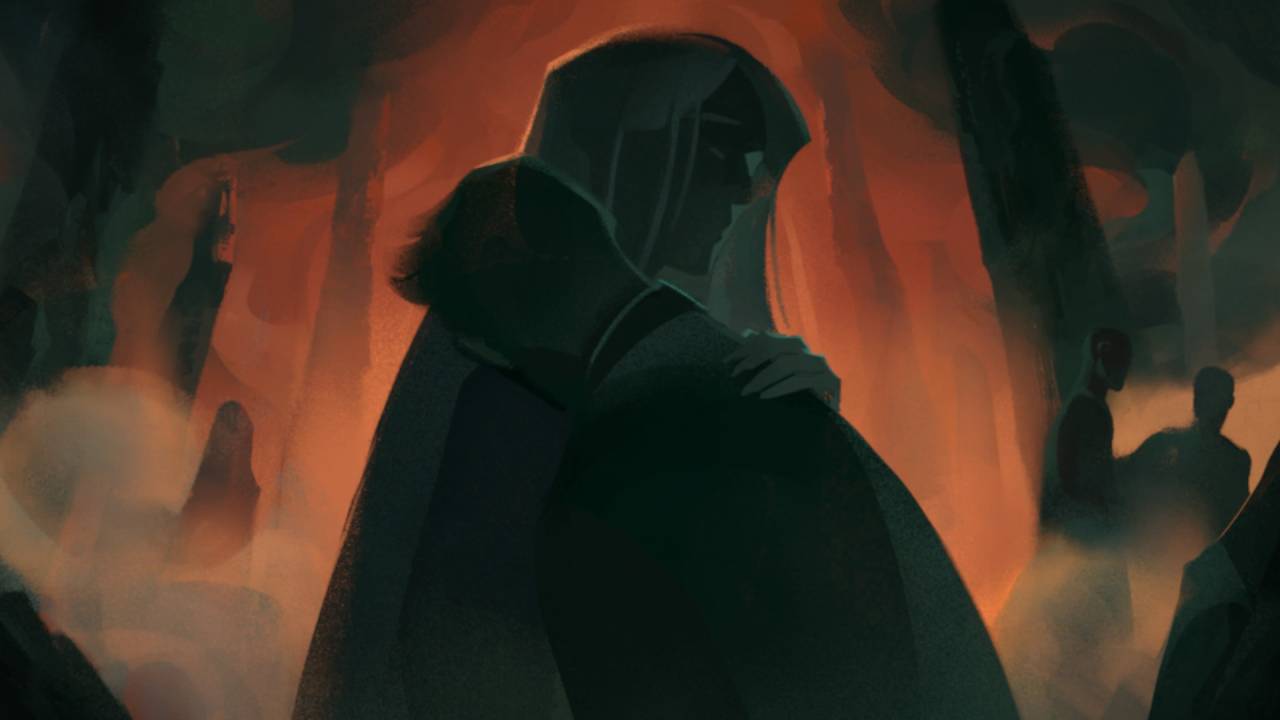
In this weird world, you are guided by an enigmatic character called Reed, whose calmness contrasts with the bizarre environment. From the beginning, he teaches you the basics of the game while slowly introducing you to the strange logic of the underworld. As you move forward through the runs, the game gradually reveals pieces of your past life through recovered memories and conversations with other souls trapped with you.
One interesting thing about the story is that many opponents you face are people you knew in your previous life.
Each victory brings more memories and dialogue, slowly changing your view of who these characters actually are and how they all got themselves into this endless cycle of gambling and punishment. Nothing is as deceptively simple as it looks in the underworld; the game is always telling you.
The story itself is captivating, blending mystery with personal relationships and regret. But the story, although well set up, sometimes seems less developed than it could have been. A lot of the story unfolds through slideshow scenes and quick interactions, which sometimes fail to give emotional moments enough depth.
The story is one of the strongest aspects of the game, despite these limitations, as it gives you a reason to keep playing beyond just winning matches. You’re not just trying to beat bosses or unlock cards. You are unearthing memories, discovering more about the people around you, and gradually putting together why this strange version of hell exists in the first place.
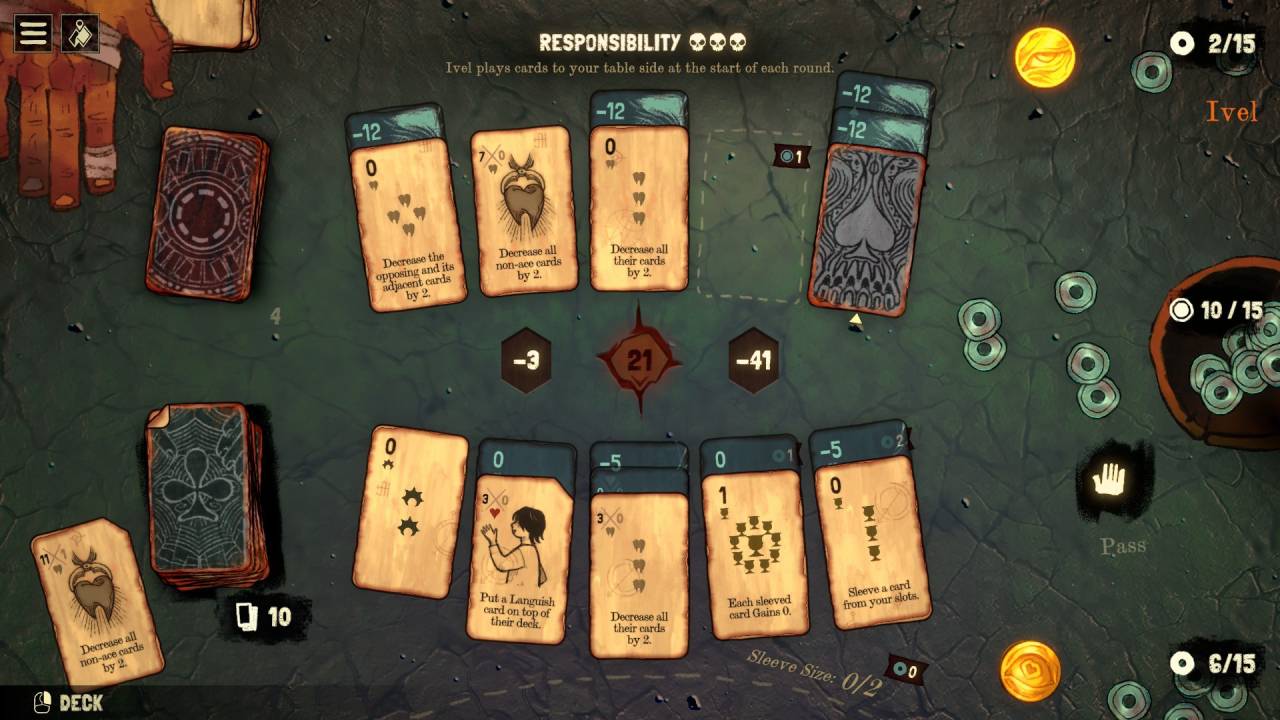
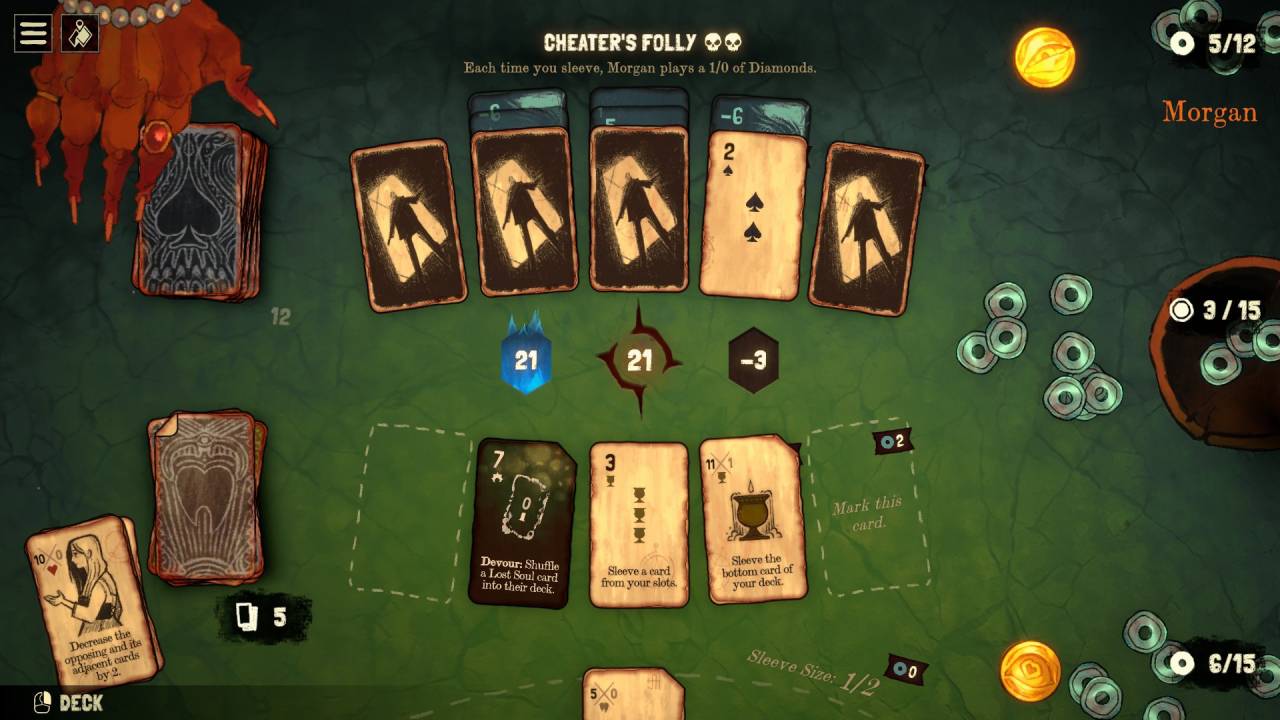
At its core, Black Jacket still follows the rules of blackjack. You and your opponent draw cards and try to get as close to 21 as possible without going over. Anyone who has played blackjack will immediately understand the basics, such as face card values, blackjack hands, and how important it is to know when to stop drawing cards.
But Black Jacket turns those simple mechanics into something so much more strategic. On each side of the table, there are five card slots, and each turn is a careful balance of risk and reward. You’re constantly trying to figure out if you should draw more cards, save some cards for later, or control the board with special effects before your opponent takes it over.
The game also adds awakened cards, which entirely change the way blackjack works.
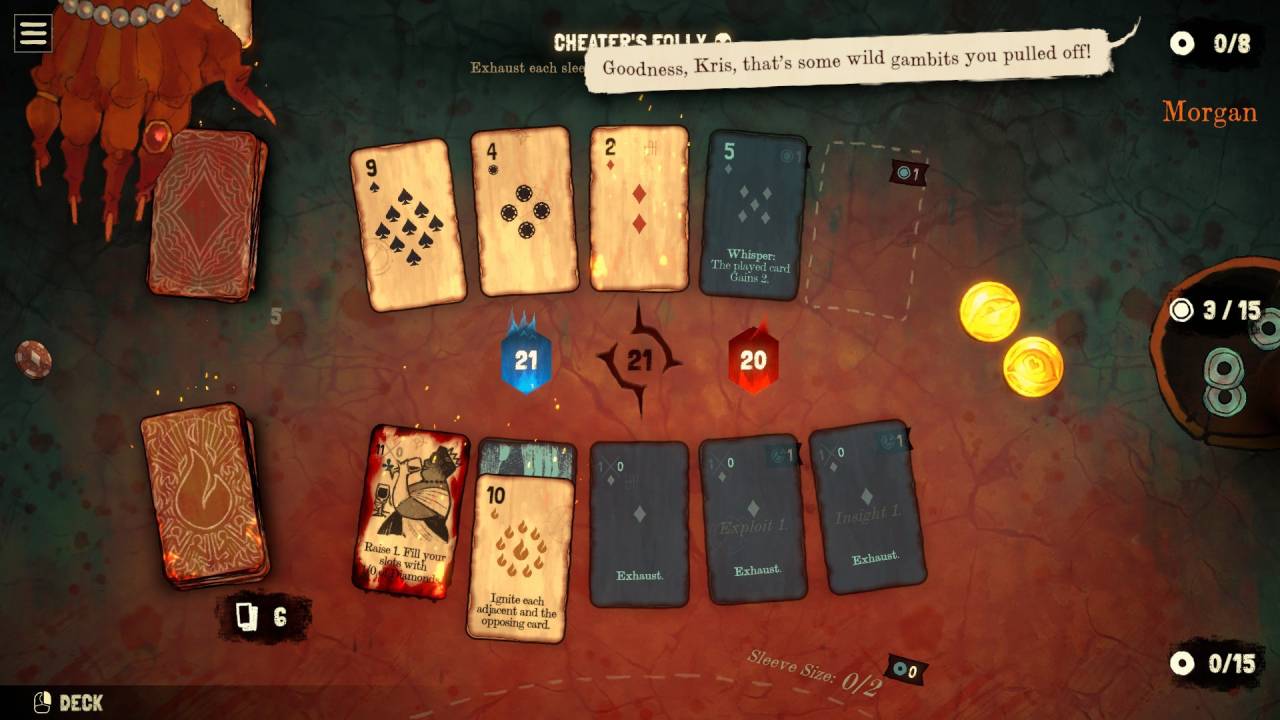
Some cards show future draws, some burn cards in play, and some eat neighboring cards to increase their value. Some cards even increase the cost of turns to bet, making opponents lose coins faster. Such mechanics create moments where a game can turn either way in a matter of seconds.
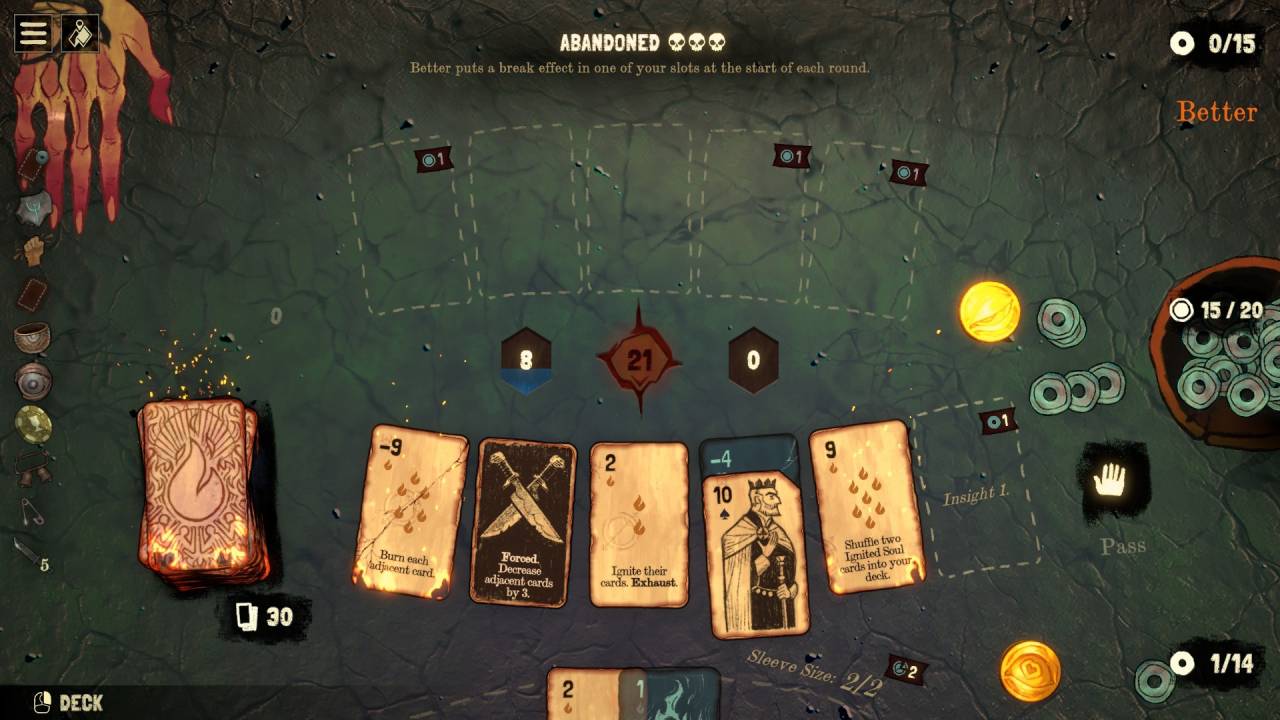
Deck types are another major part of the experience. Throughout the campaign, you unlock unique deck archetypes like Burn, Digestion, and Break. Burn decks set cards on fire and create destructive effects across the table. Digestion decks consume cards to strengthen themselves or trigger bonuses.
Break decks reverse numerical values entirely, meaning high-value cards can suddenly become negative. Once these systems begin stacking, the game stops feeling like normal blackjack and becomes more like a strategic puzzle game. This forces you to constantly rethink every move before committing.
The roguelike structure also adds a huge amount of replayability. Each run sends you through branching paths filled with shops, special encounters, bosses, and random events. During runs, you can purchase additional cards, remove unwanted ones from your deck, awaken existing cards, or buy artifacts that provide passive bonuses and entirely new abilities.
Artifacts are especially important because they can change your strategy entirely. Some of these will boost rewards, and others will change card effects or interact in powerful ways with certain deck archetypes. Some card and artifact combinations are surprisingly creative, and finding them is one of the most satisfying things.
The game also encourages experimentation, as runs are short enough that you can keep retrying without frustration. The majority of trips last less than an hour, but the constant stream of unlocks, dialogue, and progression means that even in defeat, you rarely feel like your time has been wasted.
Blackjack is technically a card game.
The matches are far more like tactical combat encounters or strategic puzzles. Each enemy has its mechanics and abilities that require you to adapt your playstyle. Some foes modify card values, some assault you with aggressive betting systems, and bosses often introduce entirely unique rules that change how matches work.
Boss fights are especially memorable, as they make you re-evaluate your deck and strategy all the time. The roguelike systems mean boss abilities might change between runs, so you can’t rely entirely on memorization. You must learn how your cards interact and how to respond to unexpected situations.
One of the best things about the combat system is the feeling of finally pulling off a complex plan. There are so many times when you feel completely backed into a corner, only to suddenly find a combination of cards or abilities that turns the match around. Getting those surprise victories feels really beneficial because the game is constantly encouraging creative thinking.
There are often times when you’re completely stuck, and then suddenly you find a set of cards or skills that swings the game around. Those surprise wins are so rewarding, as the game always encourages creative thinking. It makes you pause for a moment and realize how many different ways you can break the system in your favor.
At the same time, luck still plays a major role. As with any card-based experience, a good run can be ruined by bad draws. Some boss abilities also feel unfair in early encounters before you’ve figured out how to counter them. The game does a decent job of balancing this frustration, though, as many of the powerful abilities used by enemies can eventually be used by you as well.
Black Jacket foregoes traditional XP grind systems, but it still plays an important role in progression. Winning runs unlock new decks, artifacts, dialogue, and story content, and repeatedly defeating bosses reveals more narrative details. However, each boss has to be defeated multiple times to fully uncover their story, encouraging long-term replayability.
The progression system is excellent.
It doesn't have the constant grind but still rewards persistence. Instead of grinding for experience points all the time, you're always unlocking new ways to play and new layers of the underworld. You’re not grinding experience points ad nauseam; you’re unlocking new ways to play and peeling back more layers of the underworld.
Black Jacket has a striking visual identity that immediately sets it apart from a lot of other card games. The art style is dark and atmospheric but not visually overwhelming, so it’s easy to read cards and effects during matches. The underworld is filled with creepy lighting, shadowy places, and weird character designs that really emphasize the game’s unsettling tone.
One of the most significant highlights is the animation during gameplay. Watching cards catch fire, vanish, change, or trigger chain reactions makes every successful play feel meaningful. Even basic things like putting cards on the table have a lovely weight and presentation. The effects never become distracting, but they give enough visual energy to make long runs interesting.
The sound design also contributes a lot to the atmosphere. The background music creates a tense, mysterious atmosphere during runs, and the sound effects in matches enhance major moments and highlight excellent plays. Voice acting is another surprisingly strong point. Reed’s calm but unsettling delivery fits right into the underworld setting.
The game is not free of technical problems. Occasionally, the interface can be cluttered with card descriptions or obscure parts of the screen, making it difficult to make important decisions. Some bugs were also visible, like a black screen bug that appeared at the end of some runs. Fortunately, these issues are not common enough to spoil the overall experience.
Blackjack works because it understands that blackjack alone would never be enough to sustain a full roguelike experience. Instead of just relying on gambling mechanics, the game continually adds new systems, effects, and strategies to its core, so every match feels unpredictable and exciting.
Deckbuilding and roguelike progression meet narrative mystery and ever-changing mechanics for an experience that’s easy to learn but surprisingly hard to master. With awakened cards, powerful artifacts, strange deck archetypes, or unexpected boss encounters, every run brings new possibilities.
The game does suffer from a lack of storytelling depth, and luck can create some frustrating moments, but those issues are never enough to overshadow how creative and engaging the overall experience becomes. Mipumi Games have managed to turn one of the simplest card games ever into something that is truly unique.
If you like games such as Balatro or Inscryption, Black Jacket is one of the more fascinating card-based roguelikes to come out recently. The dark atmosphere, strategic gameplay, satisfying progression systems, and endless experimentation make it very difficult to stop playing once a run starts.
Editor, NoobFeed
Verdict
Black Jacket turns blackjack into a smart, addictive roguelike full of strategy, risk, and creativity. The story could use some depth, but the gameplay systems and replayability make it easy to recommend.
89
Related News
No Data.