
Blightstone Review
PC
Early Access
A dark fantasy tactics journey where each choice leaves a mark.
Reviewed by Nusrat Choity on Jan 21, 2026
The number of dark fantasy strategy RPGs is growing, and Blightstone is sure to be one of them. It was designed with a clear idea in mind: stress shouldn't come from things being perfect, but from things that happen. Since it was made as an early access game, the story isn't too long or complicated, and the game doesn't try to be too dramatic.
Instead, it focuses on structural depth, stories that are driven by the players, and the slow burn of player loss. Blightstone doesn't try to be a direct sequel or continuation of a series. Instead, it feels like a response to grid-locked strategy games and roguelites that are too easy to beat.
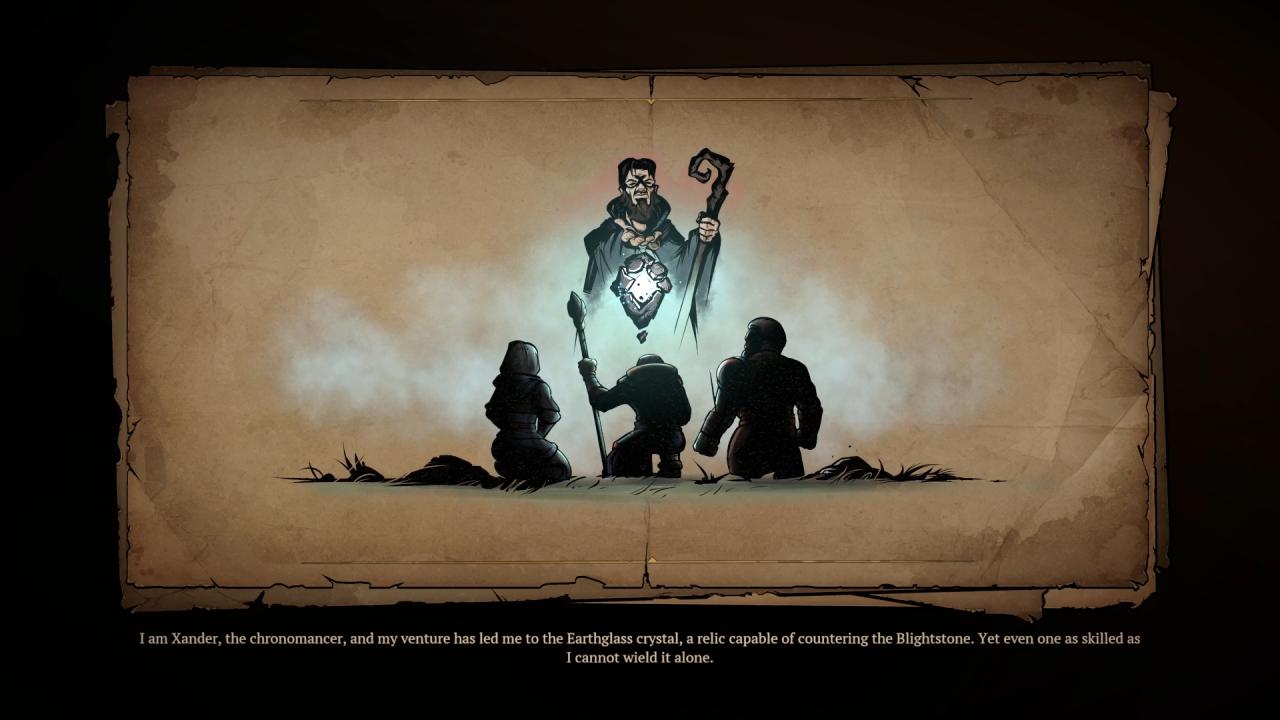
On paper, its goal is simple: guide a powerful crystal through a land possessed by demons. But the way it plans to achieve that goal makes it stand out. From the first run, it's clear that Blightstone isn't so much interested in heroic power dreams as he is in how people can adapt, improvise, and stay alive when their health, resources, and even their sanity are always in danger.
In Blightstone, the story is told in a very simple way on purpose, which works in its favor.
Demonic forces are attacking the world. They are led by the Demon Lord, an evil being whose power spreads through the Blightstone, a bad force. In order to complete your mission, you must carry an Earthglass crystal to the Infernal Rift, where it can be destroyed along with the evil that caused it.
The story is told less through cutscenes with a lot of dialogue and more through hints, the mood, and the settings you are put in as you go. This method keeps the attention on the game while still giving it a strong sense of purpose. The dark fantasy tone stays consistent because there isn't a lot of extraneous information. Instead of depending on exposition dumps, the world's decay, desperation, and danger speak for themselves.
Blightstone is a turn-based strategy RPG with roguelite elements at its core. It is built around repeated runs that stress learning, adapting, and making long-term decisions. Each run starts with putting together a small team of three heroes. Along the way, you can add more heroes if you need to.
From a hub-like starting point, you use an overworld map to plan your way to the end goal. You can go in different directions on this map, and there are shops, events, and hidden chances that make you constantly choose between risk and profit. To move up, you need to do more than just win fights.
You should also know when to fight, when to back off, and when to rest. Damage stays after a fight, grows over time, and takes a long time to heal. This structure makes sure that the trip is just as important as the battles themselves, which supports the idea that survival is a marathon, not a sprint.
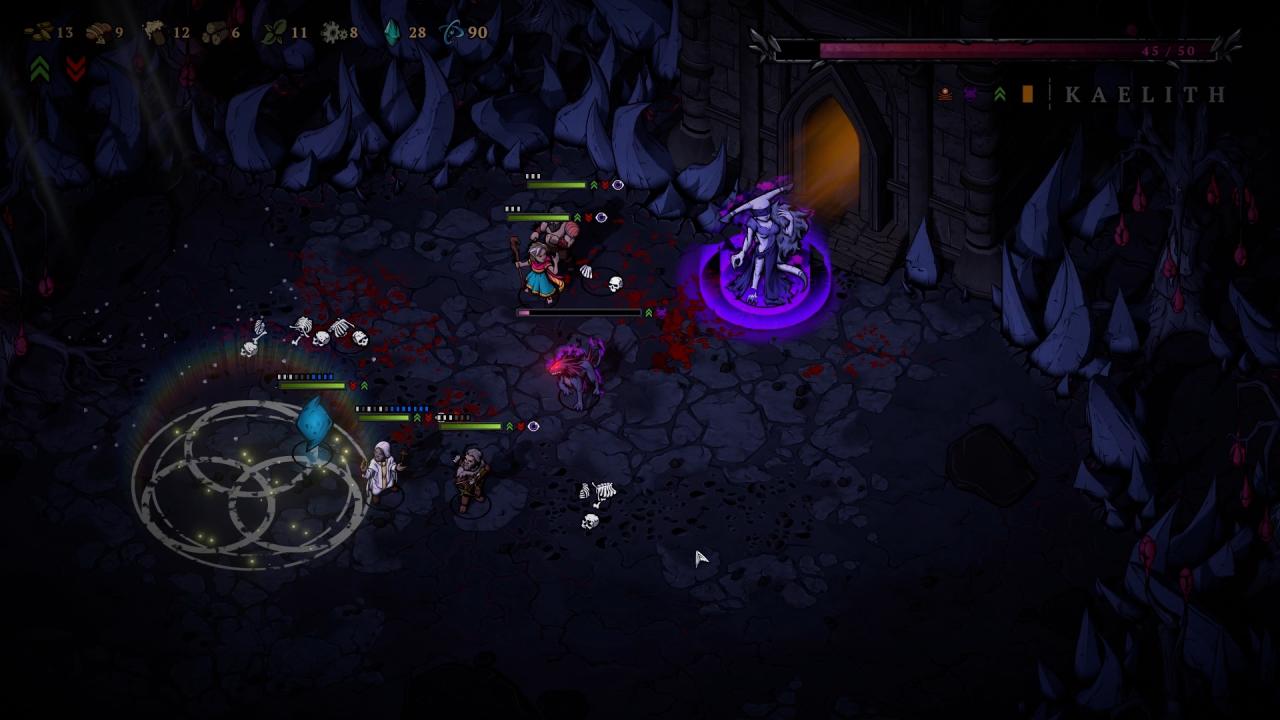
When it comes to combat, Blightstone really stands out. It has a familiar action point system, with each character getting two points per turn to move or use an ability. But that's about all the links with other tactics games. The battlefield doesn't have any grids, so you can place your units exactly where you want them without being limited by tiles.
With this freedom, battle becomes a spatial game where line of sight, cover, and knowing your surroundings are very important.
Attacks can be blocked by big things, landscape features, or even other characters. This makes for natural situations where positioning feels natural instead of forced. Interactions with the environment are very important. You can set fire to grass to get rid of cover, electrify water to deal more lightning damage, explode barrels to take control of an area, or throw enemies into danger, off ledges, or into each other.
Weather systems add another layer of changeability. When it rains, lightning hits are stronger, fog makes it harder to see and aim, and wind makes it hard to fight from far away. These systems promote creativity by giving points to players who try new things instead of always doing things the same way.
There are some issues with the way the fights are set up. Not every meeting has a lot of environmental tools, and fights can feel easier when there aren't many of them. This difference, on the other hand, often works in the game's favor because it keeps environmental tricks from becoming boring.
This method works well with enemy design because enemies have their own skills and tactics that need to be respected. When mistakes are made, they are quickly punished, and careless placement or actions that aren't used can lead to huge losses. Combat isn't so much about doing everything perfectly as it is about dealing with mistakes, changing on the spot, and limiting damage over time.
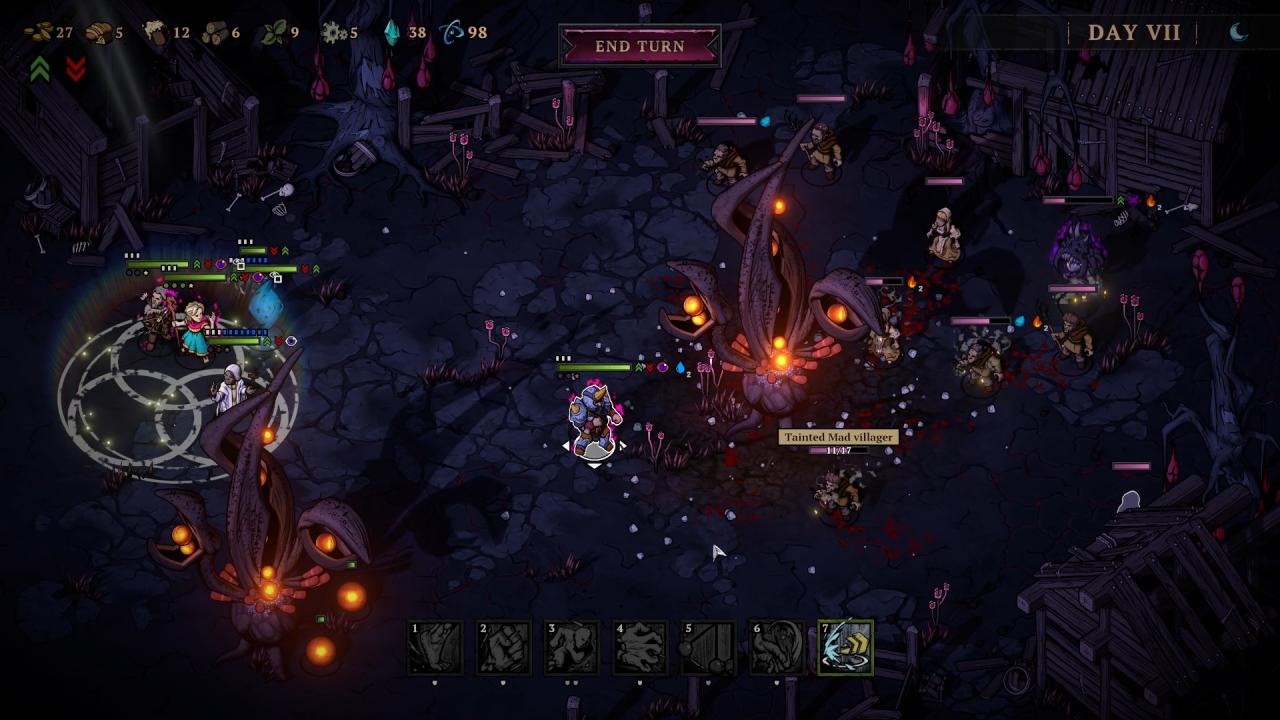
In Blightstone, you can move forward on two levels: during a single run and across multiple tries. As characters level up during a run, they get access to random ability choices or stat upgrades. This forces you to build your teams based on chance rather than strict planning.
Getting gear changes how you play even more. Weapons and armor not only change how well you do, but they also change how your character looks, which reinforces the feeling that you're growing. But this growth is not stable. It is possible for characters to die during a run and lose all of their skills and gear. Even if replacements show up later, the loss is still very real, which shows how expensive failure is.
Blightstone has meta-progression systems that let you get new classes, crystal powers, and permanent upgrades when you're not playing runs.
These changes make things more flexible without making things easier, so that experience will make future runs easier to handle, but never simple. Gems that are collected give the Earthglass crystal new powers, so it also changes over time. As time goes on, it starts to take part in battle and gains the ability to move, attack, and change its surroundings.
This smart design choice changes an escort goal that could have been idle into a strategic tool that needs to be kept safe and can also give strong support. Between fights, it's important to keep track of your supplies. After a certain number of fights, the group has to set up camp.
This begins a phase where they have to carefully give out the few things they have. Food keeps the team going, wood keeps campfires going, and different materials let characters heal, make, or do special things that are unique to their class. Each hero has their own camping skills, such as finding goods, healing, or buffing the whole group. It's not always easy to decide how to spend these funds because recovery choices and long-term sustainability are often at odds with each other.
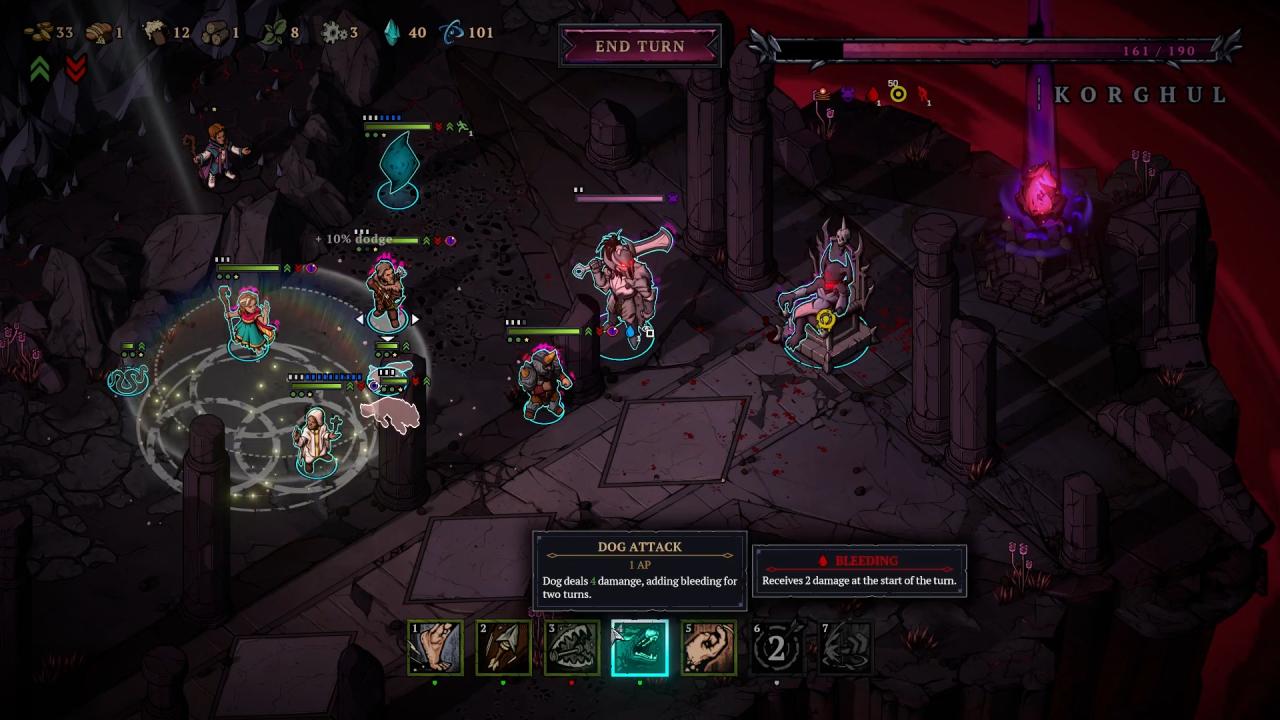
The Blight infection system is on top of this. As the nights go by, corruption grows in the party, which can lead to debuffs, instability, or even total breakdowns if it is not stopped. Taking care of Blight requires more work and resources, so you have to choose between being ready for battle right away and your mental and physical health in the long run.
The main idea of the game is emphasized by this system: survival is about balance, and every benefit has a cost. Blightstone's art style is drawn and stylized, and it combines a dark fantasy look with a slightly comic-book look. Color and lighting are used to show corruption and ruin in the environments, making them moody and oppressive without becoming muddy to look at.
The character designs are clear and expressive, and the changes that can be seen in the characters' gear make the experience even more real. The presentation isn't flashy in a movie-like way, but it works well and fits the tone of the game nicely. It's also great that the information you can see during battle is clear and supports the gridless system without making the screen too busy.
The approach to music design is also very simple. The music stays moody and quiet, building stress without drawing too much attention to itself. The soundtrack doesn't rely on catchy melodies; instead, it focuses on mood, letting sounds from the surroundings and battles do most of the emotional work.
This simple method makes sure that the sound doesn't get in the way of the gameplay. It's easy to hear and understand the sound effects, which are useful for giving important feedback during battle and when interacting with the surroundings.
Blightstone is successful because it knows what it wants to be. In terms of plot, it's not an epic or a power dream based on being very strong.
Instead, it's a tightly planned tactical experience that stresses outcomes, flexibility, and thinking about the long run. Its layered systems, gridless combat, and interactions with the world make each encounter feel new and difficult, and the roguelite structure makes sure that every run teaches you something new.
It's still in early access, so there isn't a lot of content yet. There are some parts that need more work, but the base is strong and well-built. People who like strategy depth, games that let them make their own decisions, and games that don't hold their hand will enjoy Blightstone. It's an interesting journey that feels earned instead of given.
Contributor, NoobFeed
Verdict
Blightstone is a dark roguelite game with deep, choice-based tactical fighting. It boosts stress by letting people leave, encourages new ideas, and punishes carelessness. A strong base with lots of room to grow.
72
Related News
No Data.