
EA Sports College Football 26 Review
Xbox Series X|S
A conflicted return to the gridiron glory days.
Reviewed by Azfar Rayan on Jul 18, 2025
Longtime fans of the NCAA football series have been eagerly awaiting EA Sports College Football's comeback after more than ten years of inactivity. Following College Football 25's gentle reintroduction last year, College Football 26—which was developed by EA Tiburon—is the second installment in the revived brand.
Although the current iteration of this cherished series was made possible by last year's release, 26 aims to improve on that formula. With enhanced gameplay mechanics, improved graphics, and more engaging game modes like Dynasty and Road to Glory, it aims to elevate the college football experience.
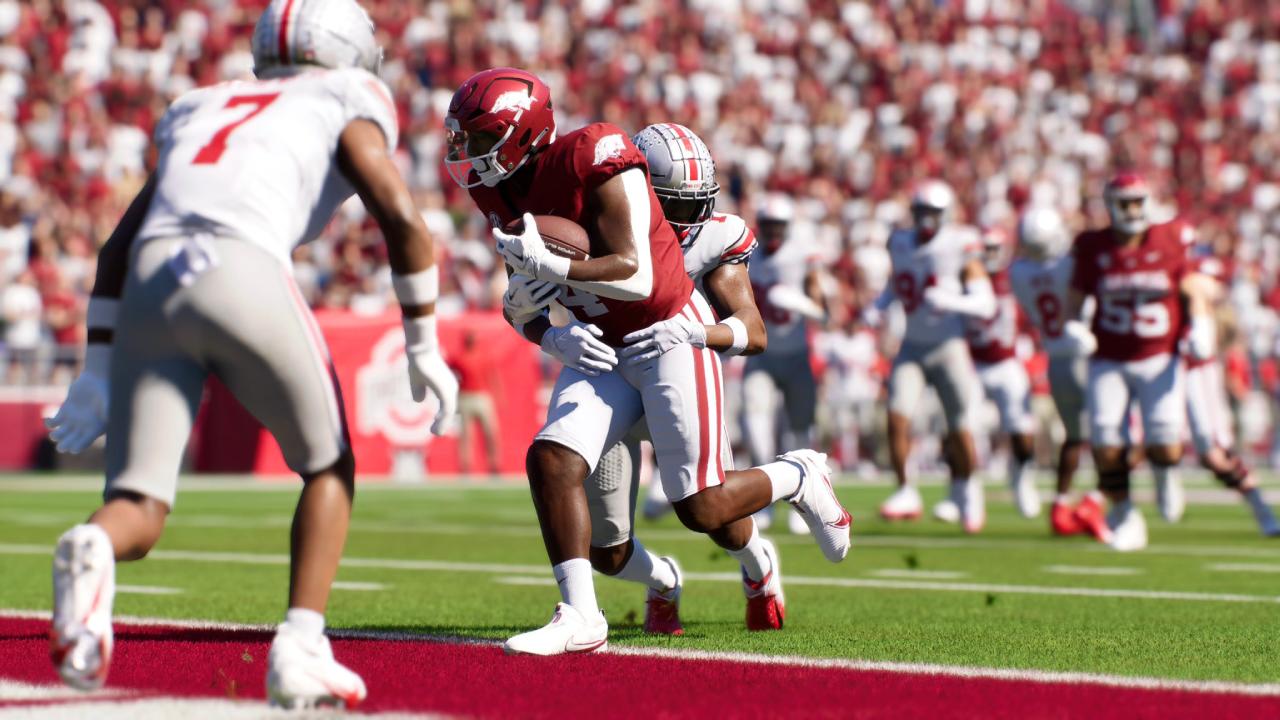
This sequel attempts to update college football for a new age, building on EA's lengthy history of creating American football simulations. The finished game, however, feels like EA is still awkwardly straddling the line between innovation and stagnation, offering an experience that is both familiar and aggravating in equal measure, even with a few welcome additions and adjustments.
Although Road to Glory in EA Sports College Football 26 lacks a conventional plot, it does offer semi-scripted, story-driven gameplay. In this mode, you start as a high school athlete with promise and work your way up the ranks to become a college football great.
College Football 26 is an intriguing idea on paper. Sadly, there is not enough player agency or depth in the execution. You only have control over specific drives depending on preset goals, as opposed to playing entire high school games like in previous editions, like NCAA 14.
These goals, which differ based on the style of play of the school you have chosen, typically entail meeting predetermined standards, such as rushing a specific kind of touchdown or finishing a throw inside a predetermined range.
Although this system appears clever, it ultimately feels restrictive and even punitive. Smart improvisation and creativity are rarely rewarded. For example, College Football 26 would not consider a play successful if you break a 40-yard touchdown run during a play where the objective was to complete a short-yardage option.
Ironically, then, even accomplishing something noteworthy can hinder your advancement. This inflexibility is particularly annoying when teammates under CPU control execute spectacular moves that, while technically successful, fail the mission because they did not follow the precise path specified.
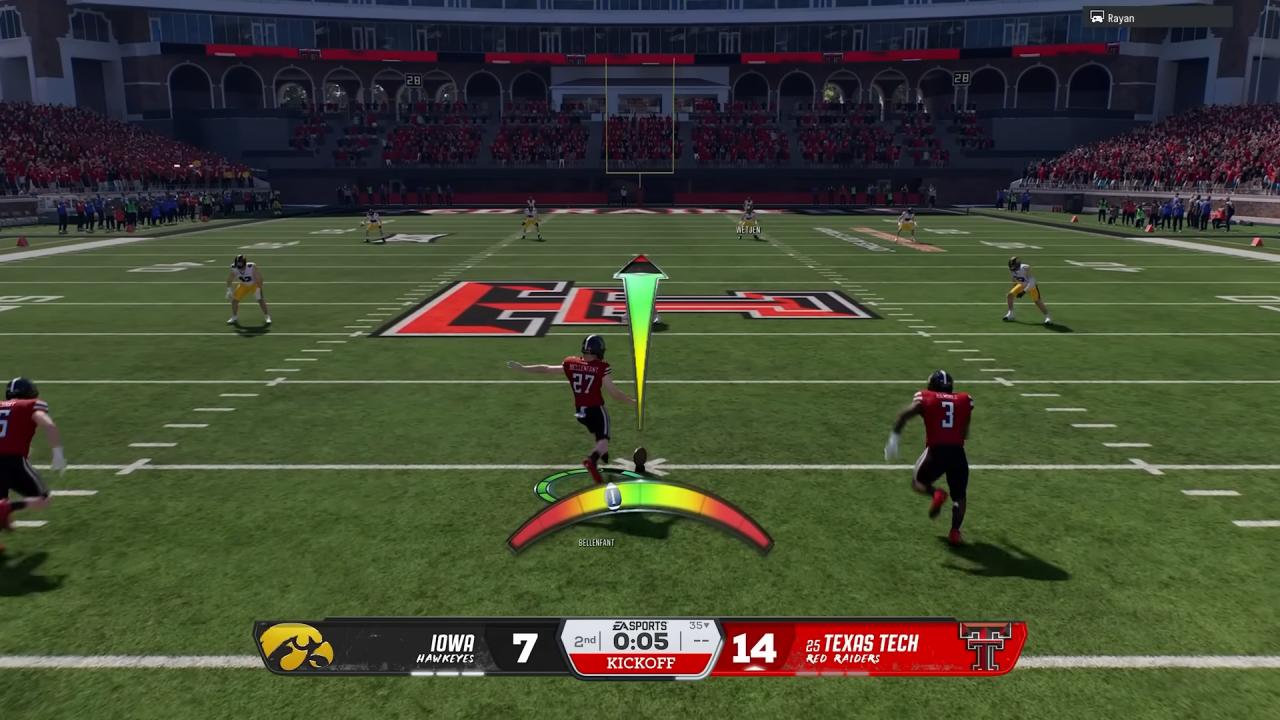
The problem in College Football 26 is made worse by the fact that you have little influence over your own career. You can only call a limited number of coach-selected plays as you progress through Road to Glory. A big portion of the strategic fun is lost because you can't freely explore the entire playbook.
Character contact and dialogue are similarly scarce, mostly limited to text-based menu choices that are uninteresting and lack narrative resonance. The overall mode lacks emotional engagement and does not offer a diverse or captivating path through college football, even with the return of a high school prologue.
While there are some signs of improvement, College Football 26's gameplay is still incredibly inconsistent. Compared to last year's entry, there are undoubtedly some areas that have improved. Particularly on the Xbox Series X, the action feels more responsive and fluid in the moment.
Player movement feels more fluid overall, and the animations are crisper and more concise than those in EA's Madden series. Gang tackles now occur more realistically, eschewing the clumsy animations and odd ragdoll physics that beset previous iterations, while running backs no longer collide with their own offensive linemen while waiting for gaps to open.
The game gains a tactical edge with subtle yet significant additions, such as dynamic substitutions and no-look interceptions. For instance, being able to switch players during pre-snap adjustments helps you better manage injuries and endurance, especially in longer matches or when playing online against other online players. The switch can still be very important for avoiding serious injuries from wear and tear, even when it only takes effect at the following snap.
Another feature is the no-look interceptions, which greatly enhance realism. Defensive backs used to be able to make improbable picks even when they weren't watching the ball. These defenders now realistically deflect passes when out of position in College Football 26, making the game more equitable and authentic.
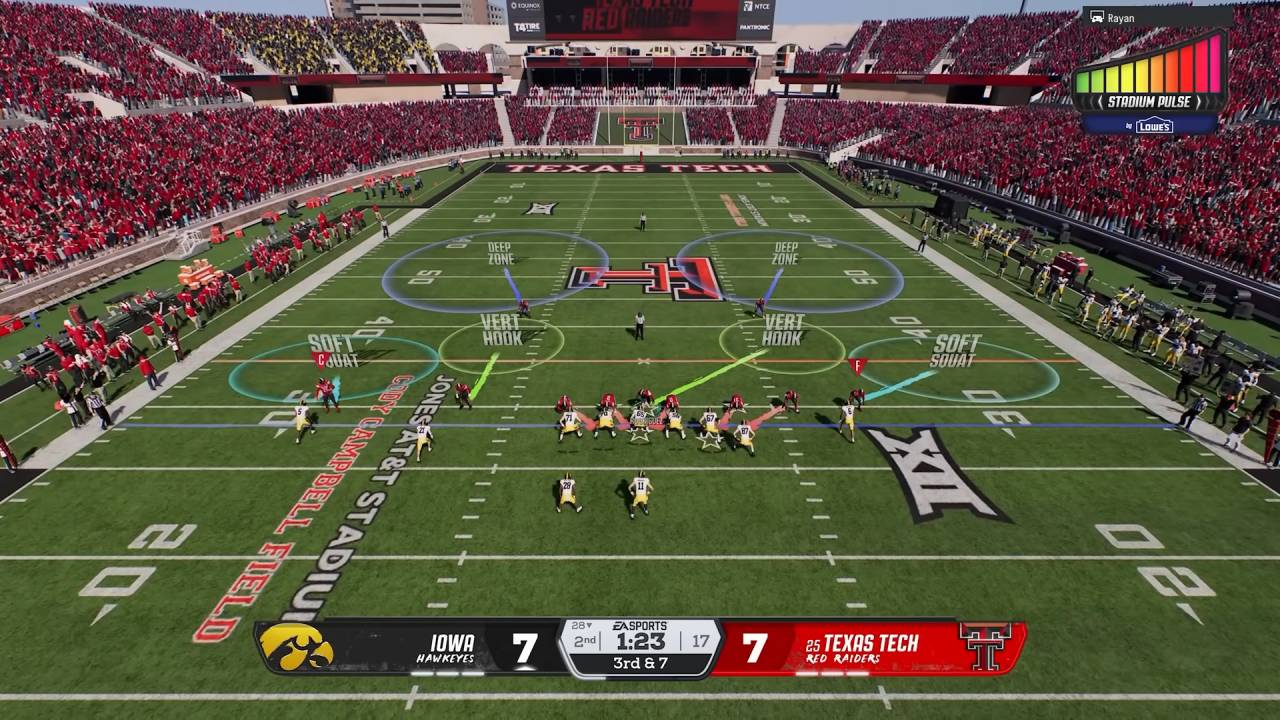
In a similar vein, linebackers are no longer able to make hilariously oversized leaps to catch throws in midair. Now that they know they won't be penalized by improbable interceptions brought on by extraordinary defender reflexes, quarterbacks may throw with a little more assurance.
But in College Football 26, these improvements are outweighed by recurring, obvious problems. The gameplay feels inconsistent and frequently unfinished on offense. Even when wide open, wide receivers frequently miss throws. Receivers flinging the ball behind their heads for no apparent reason is one particularly annoying animation.
Throws from the quarterback are also unstable. The ball often sails above the intended target, even when the improved placement accuracy mechanism is used and a perfect meter reading is obtained in the green or blue zones.
Trying to climb the pocket rarely solves the issue, and this occurs even when there is no pressure or blocking lines in front of the quarterback. Users can regularly dominate drives by using the stiff-arm maneuver, which is laughably overpowering, and fumbles, which happen far too frequently, typically two or three times per game.
The situation worsens on defense. The AI still has trouble with the fundamentals. Even when standing unopposed or in the ideal position for a user lurk, defenders make simple interceptions.
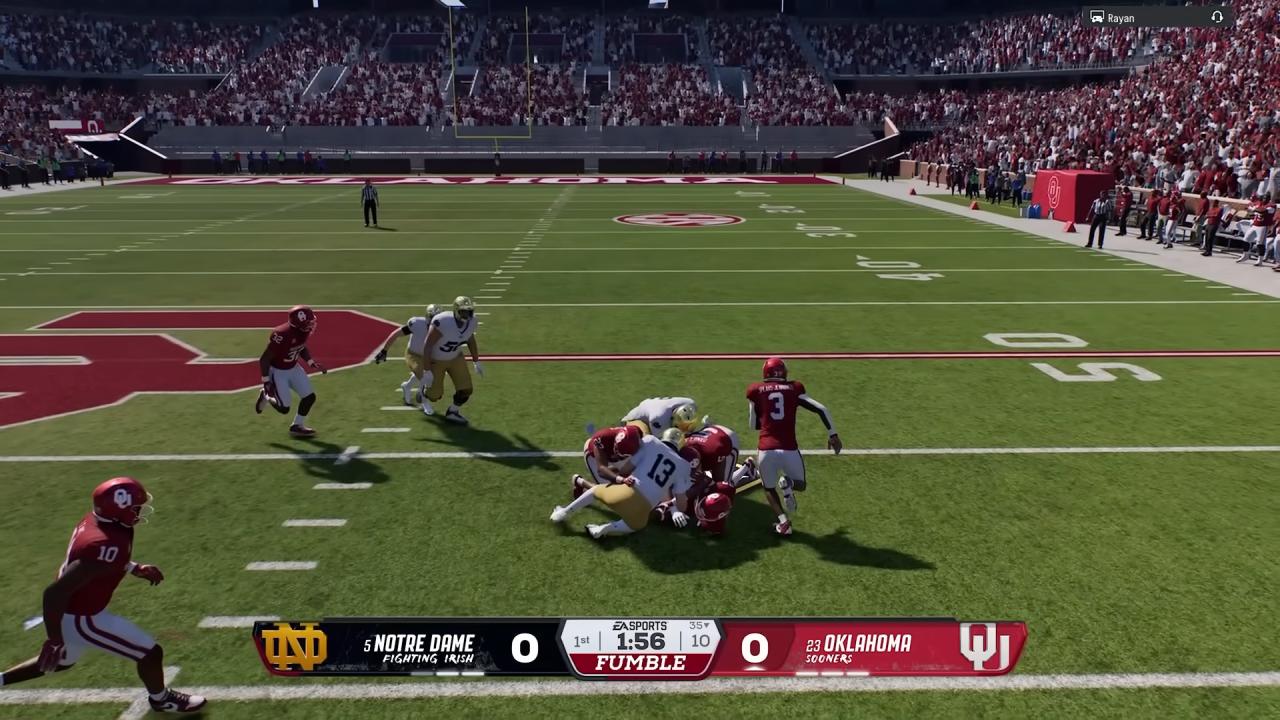
Many formations break zone coverage, such as cover four, when crucial receivers are left wide open because deep blue defenders occasionally stray into shallow zones. Defensive players loop behind ball carriers rather than effectively breaking off routes due to poorly assessed pursuit angles.
You feel like you're up against a flag football team that lacks coordination. The supposedly useful "guess route" feature, which allowed you to allocate defenders to specific routes, is either broken or not sufficiently described to be of any use. Even fourth-and-long plays are frequently converted because of broken animations or receivers out-jumping two defenders at once, and defensive stops are extremely uncommon.
Even the best judgments can lead to failed plays because of the shortcomings in receiver behavior and quarterback mechanics, which can leave you feeling more frustrated than successful. Meanwhile, clever location and timing are frequently undermined by subpar AI and flawed animations, making defense more of a guessing game than a skill test.
Different modes have different progression mechanics. Progress in Road to Glory is strongly linked to reaching particular drive-based goals. Reaching those objectives increases your trustworthiness in the eyes of schools and can positively impact scholarship offers.
However, this system's rigidity makes it simple to lose important progress due to comparatively minor errors or spontaneous moments. Progression in Ultimate Team feels quite commercialized. It's hard to stay competitive unless you're investing real money because new cards and player packs are released nearly every day.
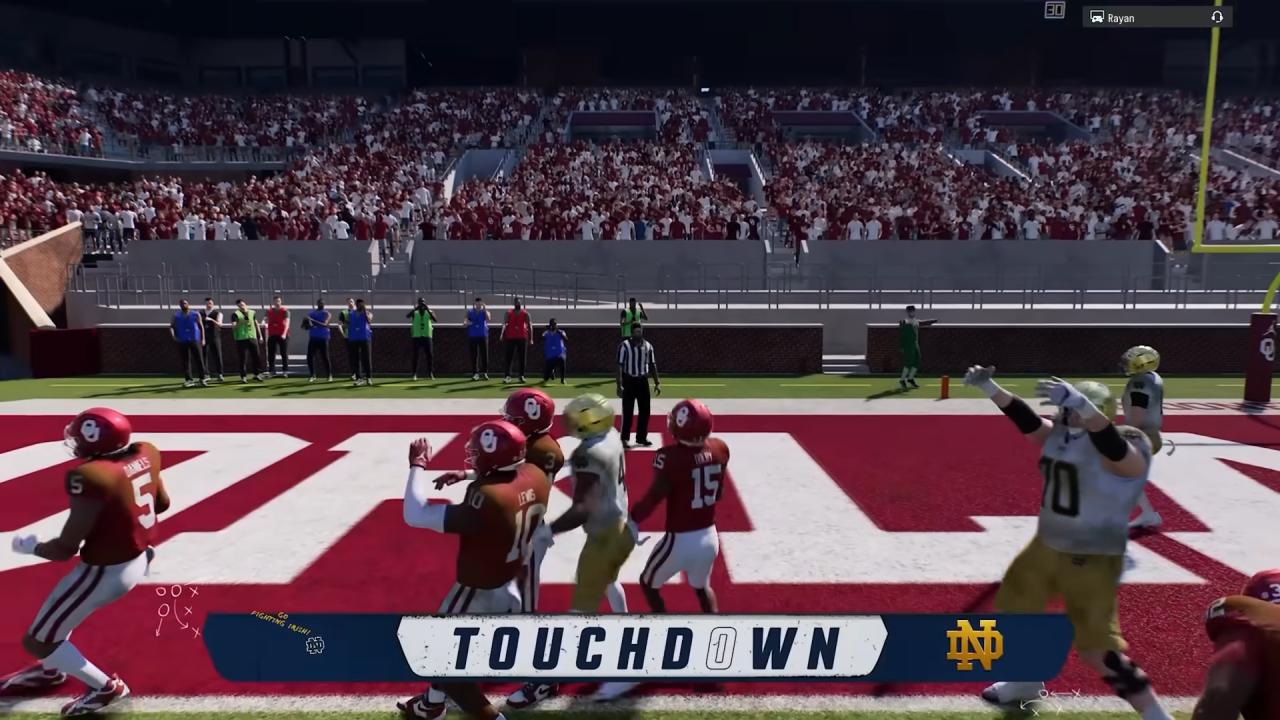
You might receive some prizes for grinding solo challenges, but they are a little compared to what people who pay can get. It discourages younger or frugal players from spending time on Ultimate Team by making it essentially a pay-to-win game.
College Football 26's graphics performance on the Xbox Series X is adequate, but it doesn't show significant improvement. Stadiums look fantastic, with lively crowd movements and stunning lighting. This year's coach models and sideline exchanges are more varied, and the crowd's excitement lends a certain authenticity to the event.
But College Football 26 makes no real effort to promote the hardware. Instead of being a complete redesign, it feels more like an improvement on last year's graphics. Despite being more fluid than Madden, the animations are still far from flawless. Although there are now more cutscenes, none of them really advance the plot or provide dramatic flair.
The sound design was also a lackluster. On the plus side, stadiums have a boisterous, vibrant vibe that perfectly captures the excitement of an authentic college football game. But the commentary is disappointing. Although Chris Fowler, Kirk Herbstreit, and the rest of the crew first deliver some strong lines, their conversation soon gets monotonous.
Their commentary turns into background noise after a few games, and their lines start to blend together. Additionally, the soundtrack doesn't change as your season goes on because there isn't any dynamic feedback or adaptive commentary based on your in-game performance.
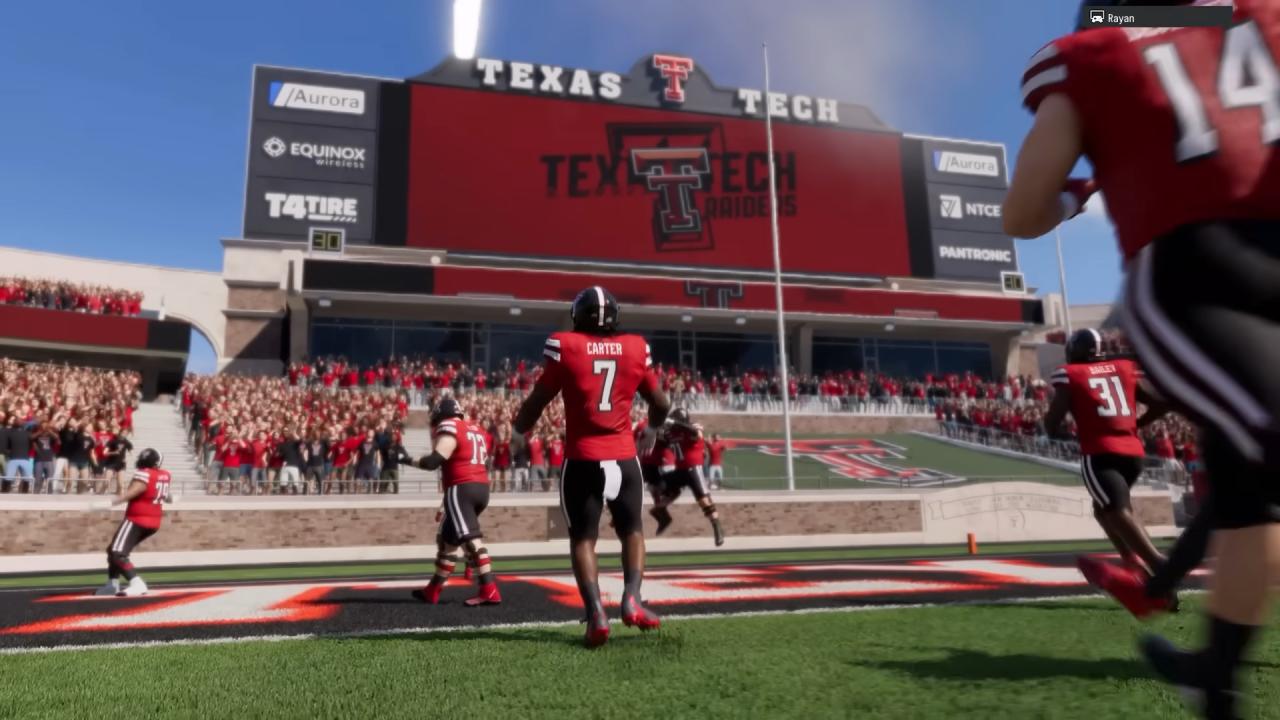
Even with the addition of quality-of-life enhancements in College Football 26 like comprehensive coaching archetypes and adaptable transfer portal settings, Dynasty mode is still entertaining. Many fans will value the personal touch that the coach creation modification choices, which include new wardrobe styles and attitude sliders, bring.
However, these positive aspects are overshadowed by unfixed gameplay bugs that affect all modes. Road to Glory is hardly the same as it was before, and both defense and offense are rife with contradictions. Non-paying users are turned off by Ultimate Team's emphasis on revenue.
Senior Editor, NoobFeed
Verdict
Although there is room for improvement, the execution seems hurried. More than anything else, College Football 26 requires time, time to refine, time to correct fundamental mechanics, and time to pay attention to community input.
64
Related News
No Data.