
Éalú Review
PC
Beyond the Bark's debut brings a wooden world of wonder, danger, and deep emotion to life.
Reviewed by Subaiyta Jahan on Oct 22, 2025
Éalú, the first game from new developers Beyond the Bark, has something quite unique in contemporary gaming: a world nearly entirely handcrafted. The game is about a mechanical mouse trying to escape a strange maze, but the story isn't what sets it apart. It's the way it's done.
Éalú is full of stop-motion animation, from the main character's trembling gears to the creepy wooden passageways. This is not a copy on a computer. Every person, movement, and shadow is real before they are photographed and put in the game. The end effect is an eerily haptic experience that seems like walking into a dream made by hand.
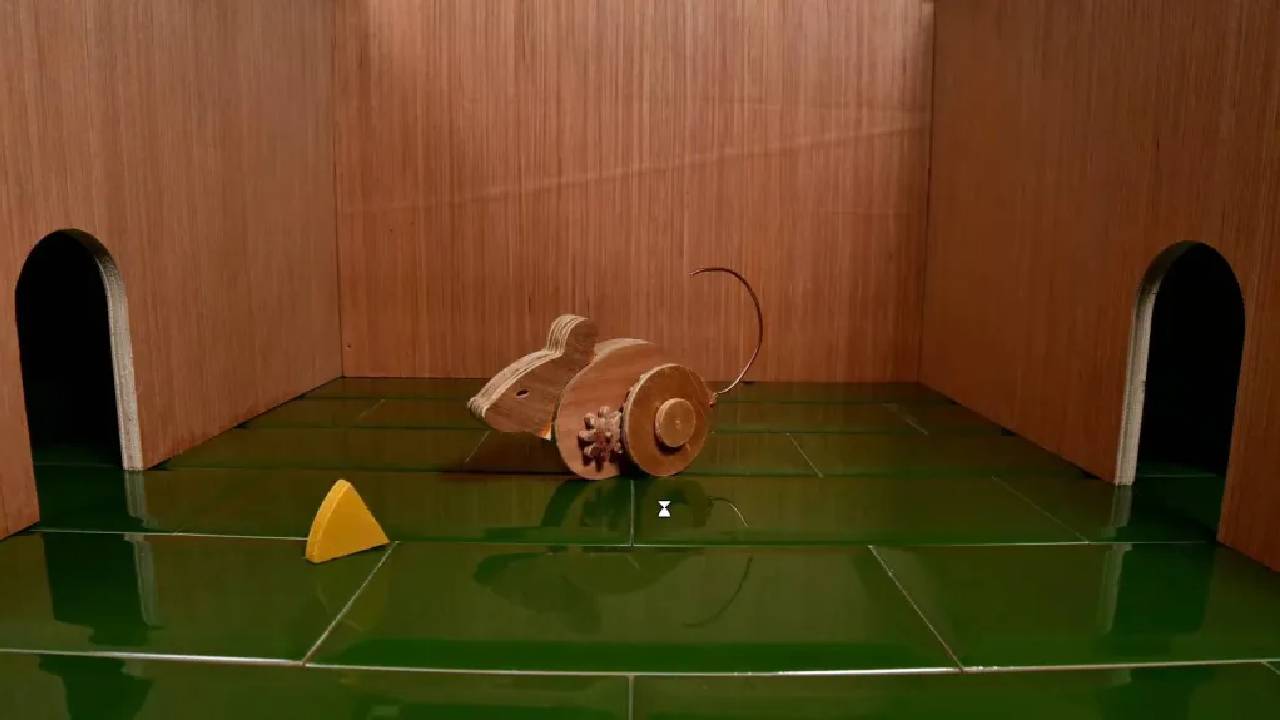
Developer Ivan Owen explains that Éalú was made using physical sets constructed in a small shed in Ireland. "Every character, set, and movement was animated by hand by a single animator (myself)," Owen shares. "There is no sprite for the main character, a clockwork mouse. Instead, I animated the mouse in situ in over 70 physical sets and created every single action it takes, resulting in 512 animation clips.”
Éalú records actual footage of actual objects, in contrast to stop-motion simulation games like Judero, Fallout, or Doom. Digital techniques cannot adequately capture the labyrinth's eerie authenticity, given the meticulous composition of each shot. Every moment feels alive because of the small faults of handmade craftsmanship, the gentle flicker of light, and the cracking of wood.
Éalú seems to convey a simple narrative on the surface: a little mechanical mouse stuck in a labyrinth that keeps changing, looking for a way out. But there is something deeper behind that simplicity. As the mouse investigates, the maze begins to show its real colors, turning from a puzzle box into a psychological mirror.
This story is conveyed by visual signals and performance that invokes powerful emotions.
First, the environment might be interpreted by the player; certain regions appear safe, while others appear ominous. But with time, this lucidity begins to fade. Friendly signs might become traps, and what once seemed like danger could wind up being salvation. This story is told through visual cues and a wordless performance that evokes strong emotions, much like a silent film open to interpretation.
Owen claims that Éalú stimulates inquiry and contemplation about human nature. The game encourages players to seek objectives that might be harmful, simulating how individuals can be seduced by
Within a maze of wooden hallways, Éalú's gameplay centers on exploration, pattern identification, and decision-making. You can interact with switches, hidden systems, and enigmatic objects that could be useful or harmful in each room.
It's surprisingly simple to play: click to move the mouse, look for safe pathways, and investigate tips. All the findings, nevertheless, are important. A mistake can set off lethal traps, such as a crumbling building crushing the little hero, or a knife slashing out of the wall.
.jpg)
Every decision seems significant because of the design. Tension is created by the restricted space, which encourages cautious observation rather than careless exploration.
Éalú's puzzles blend in seamlessly with the environment. They rely more on mood and instinct than on logic grids. To decipher color, form, and texture as clues to what is real or illusory, players must learn to read the maze like a language.
Some interactions end tragically, but each failure reveals new layers of understanding. In this way, the game rewards curiosity even when it punishes mistakes. It's a delicate balance between fear and fascination that keeps the player emotionally invested.
The game's eerie beauty is enhanced by the imperfections of the handcrafted graphics.
Éalú's visual presentation is its best achievement. Everything you see, including the walls, lighting, and figures, is made of wire, cloth, and wood. While the faults of handmade graphics add to the game's creepy beauty, the stop-motion process gives it a rhythmic, dreamy pace.
The labyrinth itself is a living, breathing, moving character. Every shadow and camera angle has emotional significance. Like a fairy tale made from discarded toys and buried memories, it is both lovely and eerie.
This handcrafted approach isn't just an artistic gimmick—it's the soul of Éalú. It transforms a simple escape story into an intimate work of art, grounded in real-world texture and human touch.
The soundtrack of Éalú is a fantastic match for its pictures. Every gesture, creak, and scrape enhances the physical illusion. Ambient noises and gentle mechanical hums fill the quiet, rather than a loud soundtrack.
Subtle aural clues, such as the faint clink of metal gears or the whisper of movement in a dark passage, highlight tense moments. Without ever sacrificing immersion, these noises evoke apprehension and caution.
The mouse metaphorically symbolizes human resilience and a search for significance.
Éalú explores themes of connection, curiosity, and consequence in greater detail than only its puzzles and visuals. The voyage of the mechanical mouse represents the search for meaning when restricted, and thus becomes a metaphor for human perseverance.
.jpg)
"An expression of optimism that there's a pathway to accessing what's really nice about our digital age while maintaining our connection to each other and nature," Owen writes as the story's conclusion. Even though the graphics are sad, Éalú ultimately praises compassion and resilience.
Éalú breaks the mold for game design.
Éalú is an amazing first game. It's a handmade stop-motion game that blends beauty with an emotional storyline. It goes against the grain of traditional game design by prioritizing texture, movement, and visual narrative over dialogue or digital perfection.
The fatalities are terrible and the puzzles are simple, but they all work together to give the player a sense of immersion in a living, breathing wooden world where every sound and shadow is real. Éalú offers a memorable experience that lasts long after the screen goes dark, with a playback duration of two to five hours.
Contributor, NoobFeed
Verdict
A stunning stop-motion adventure that turns craftsmanship into emotion. Éalú is eerie, poetic, and deeply human, a rare work of art in a digital world. (4.5/5)
90
Related News
No Data.