
Eclipsium Review
PC
A Descent into pixelated isolation – haunting and personal walking-simulator that trades clarity for emotion, blending pixel horror with surreal melancholy.
Reviewed by Subaiyta Jahan on Oct 29, 2025
In terms of atmospheric storytelling, the emergence of independent developers has created new opportunities. Now that big-budget publishers have removed their restrictions, tiny teams are free to experiment with novel mechanics and storytelling.
A publisher specializing in bringing spooky and daring experiences to life, Critical Reflex, is one of those spearheading the movement. Eclipsium is a game that falls somewhere between a psychological thriller and a surrealist artwork, thanks to their partnership with Housefire.
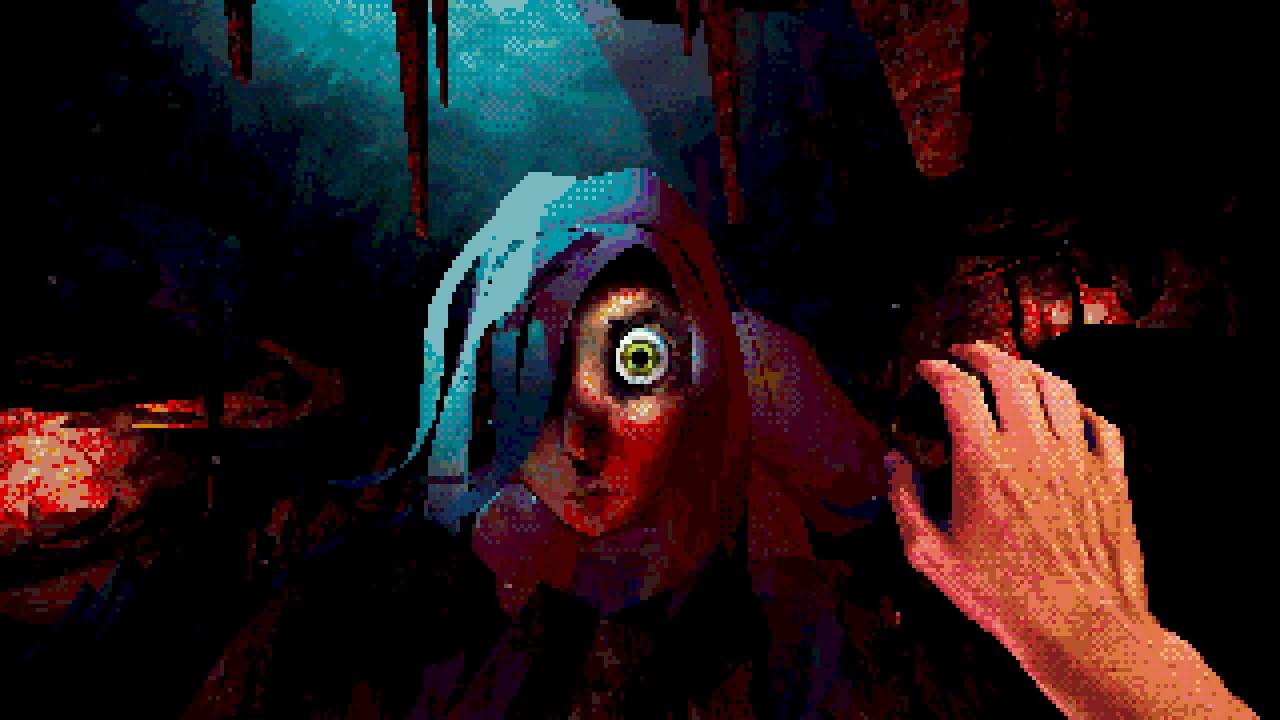
Eclipsium, despite not being a conventional horror game, portrays terror in its most basic, human form: the discomfort of loneliness, the dread of the unknown, and the silent horror of continuing when all your instincts tell you to quit. What emerges is not merely a game, but a trip that is surprisingly beautiful, purposefully painful, and intensely personal.
In the low light of a medical room, Eclipsium opens. The nameless wanderer wakes up confused, and her only instruction is to "move forward." Although "her"—a mysterious character at the center of this mission—is mentioned, it is unclear who she is or why she is important. The plot is revealed in bits and pieces, including a terrifying pig farm, a rotting world, and several mysterious settings that seem to lie between nightmare and dream.
The story is almost entirely presented through ambiance and imagery rather than words. Every space has a symbolic quality, offering a window into the innermost thoughts of the developer or the wanderer. Early on, themes of self-destruction and sacrifice appear, as growth often comes at the expense of losing aspects of oneself.
These symbolic and real sacrifices allude to a conflict between the need for wholeness and the anxiety that comes with it.
Eclipsium is so captivating because it defies easy interpretation. It doesn't guide the player or describe its universe. It relies on the audience to watch, deduce, and experience instead. Even while you know you'll never fully understand the story, it begs you to piece it together, much like reading a diary of partially erased ideas.
Eclipsium is fundamentally a walking simulator, although it goes beyond what is typically expected of the genre. Moving forward is the only activity necessary for progress. Tension and uneasiness are created by the purposefully sluggish tempo. By focusing your attention on the soundtrack, the world's texture, and the weight of each step, this minimalism enhances immersion.
In contrast to many other games in its genre, Eclipsium uses mutations to add mechanical variation. The wanderer acquires odd skills during the game, like a flaming attack and a bladed hand. These abilities, which can affect traversal or puzzle-solving, are more expressive than combat-focused.

Even though the game has few mechanics, its tempo keeps everything interesting. Seldom will you be confused or uncertain about what to do next. Your progress is always aided by subtle design elements like flickering lights, dim walkways, and environmental clues.
But the game's deliberate slowness could irritate some players, particularly in sections that require timed movements or precise jumps. It may seem rigid at first because the early parts lack responsive feedback, but it quickly becomes apparent that this slowness is a feature of the game's emotional design.
Eclipsium's problems are simple yet significant. They exist to disrupt rhythm rather than to question reason. Every problem is different and is a quick test of perception or intuition. None depend on traditional pattern matching, levers, or codes. Rather, they echo the game's bizarre tone: align shapes, change settings, or find shadowed passageways.
Some of these puzzles are ambiguous, it is sometimes impossible to determine what led to success.
Sometimes you can't tell what led to success because some of these riddles are unclear. Even so, the sense of purpose behind this perplexity serves to further the game's overarching theme of bewilderment and surrender.
The best moments happen when the distinction between puzzle and performance is blurred by the interactions between your mutation powers and the surroundings.
There is still an opportunity for improvement. Clearer visual clues or a little tighter logic chains might help several sequences. Some answers seem less like ingenious deductions and more like fortunate coincidences. Overall, though, the riddles accomplish their goal of keeping you interested, uneasy, and always wondering about the place you live in.
Combat in Eclipsium exists more as a metaphor than a mechanic. Direct action is occasionally enabled by the wanderer's transformations, though these instances are brief and symbolic. Transformation shows advancement; there is no leveling system or conventional XP grinding. Every new skill feels like a concrete representation of the emotional price of progress, simultaneously empowering and corrupting.
The story's tone is nicely reflected in this method. Loss is a necessary part of growth. Progress entails making sacrifices. Additionally, the idea of growth is strongly felt in the changing music and graphic design, even though there are no experience points or skill trees to pursue.
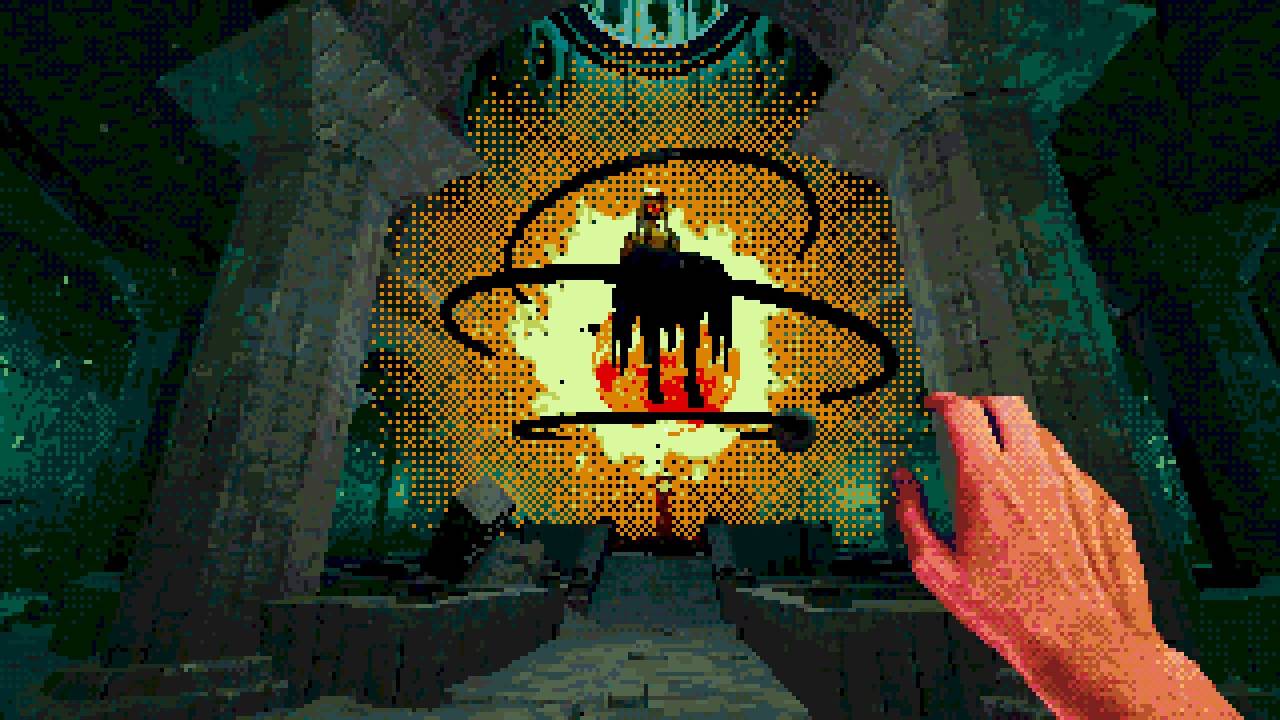
The sight of Eclipsium is breathtaking. Nightmarish surrealism and nostalgic nostalgia are combined in its pixelated artwork. Think of Castlevania after an acid dream: warped skies, flickering, seemingly breathing landscapes, and incandescent ruins. Every image has a surreal feel, thanks to the frequent shifts in perspective, as if the Earth itself were melting away with every step.
The FMV parts, brief yet powerful, give the game a distinct cinematic flair by blending seamlessly with the pixel landscapes. The way light wanes through hospital drapes and fog clings to abandoned hallways are examples of environmental storytelling that is evident in the backgrounds. Each pixel has a sense of purpose and has been hand-painted with meaning.
This is a world that doesn't just look good—it feels alive, fragile, and wrong in the best possible way. Ten out of ten for visual identity alone.
The immersion of Eclipsium depends on its acoustic design. You are drawn further into the experience by the aural texture created by the ASMR-inspired soundtrack, which blurs the boundaries between comfort and discomfort. The sounds of the hospital lights, the crunch of dirt, and soft murmurs are all interspersed with eerie tunes that fluctuate with the surroundings.
It is composed of about twenty original tracks and is not so much background noise as it is an emotional language. It provides a moment of respite in quiet times and intensifies anxiety in quiet ones. Eclipsium would be far less emotionally impactful without it. A breath before the next disturbing revelation, the audio direction makes even the quiet meaningful.
The control method is straightforward but purposefully confusing at times. Although movement and camera control frequently feel natural, the game occasionally defies expectations by making the camera take over. One particularly notable moment requires the player to simultaneously balance movements and look as a huge eye tracks every move they make. It's unpleasant, uncomfortable, and incredibly creative.
But not all mechanical decisions are successful. Certain puzzles lack feedback or clear reasoning, leading to unnecessary trial-and-error. Immersion may be briefly disrupted by these events, but it is never destroyed. Overall, rather than being convenient, the control and design logic support the emotional goal of the experience. Fifteen out of twenty in this category.

Eclipsium thrives on subtle consequences despite its linear form. Even though there aren't many possible outcomes, the emotional impact your journey has relies on what you focus on. You will miss half the story if you ignore the details, such as the architecture, the way the shadows change, or the faint wall artwork.
Even when it doesn't feel like it, every stride forward is a decision. The game's themes of persistence and inevitability are strengthened by the lack of branching routes. This is a place where you are supposed to endure fate, not control it.
Innovation in walking simulators is generally challenging, but Eclipsium is unique. It uses psychological discomfort and environmental storytelling rather than the cliched jump-scare techniques common in most independent horror games. Even though their riddles are simple, they are creatively designed and frequently resemble kaleidoscopic illusions.
The combination of ambient music, pixel art, and FMV produces a completely unique aesthetic. It's an uncommon game that creates its own mood rather than relying on cliched tactics. The end effect is novel, daring, and artistically truthful. An impressive ten out of ten for uniqueness.
The trajectory of Eclipsium is impressive. With deliberate use of camera angles and transitions, environments are gradually revealed in an almost sensual way. For example, the revelation of the pig farm astonishes not with terror but with awe-inspiring beauty and unreal fear. It seems as though an invisible director's hand is directing each scene.
A lot depends on the lighting, which can be harsh in some spaces and gentle in others. The player feels both lost and watched because of the way each place is framed, which conveys a sense of loneliness and insignificance. This is cinematography in pixels, not just level design. A perfect score for artistic direction.
Although "fun" may not be the best way to describe Eclipsium, it is incredibly captivating. The experience requires curiosity, patience, and the ability to endure discomfort while sitting. It makes up for its lack of energy with atmosphere and intrigue.
Every segment has a unique atmosphere, and each image serves as an incentive for continuing. Even seemingly out-of-place scenes, such as the unexpected sword assembly near the conclusion, are fun because of their unpredictable nature. The deep tension of the game keeps you interested from beginning to end, even if it encourages introspection rather than enjoyment.

Eclipsium manages to be engaging for a genre that is sometimes written down as "boring." 9 out of 10 for replay value and engagement.
Eclipsium is a horror game that is actually an emotional journey. It goes against the notion of what fear ought to feel like. It gives something more subdued than monsters or jump scares: the terror of being alone, of uncertainty, and of losing oneself.
Although some players may find the sluggish pacing, methodical gameplay, and sparse plot off-putting, those who are prepared to accept its cadence may find the experience unforgettable. A picture of hopelessness and tenacity is painted with each mutation, dim hallway, and eerie tune.
A few puzzles falter, the logic falters, and several mechanics might use some work, so it's not a flawless game. But it is only more human because of its imperfections. Honesty is what Eclipsium strives for, not perfection. And in doing so, it turns into something unique: a walking simulator that makes you feel something. Score: 8.5 / 10
Contributor, NoobFeed
Verdict
A haunting, introspective experience that transforms simplicity into art. Emotionally resonant, visually stunning, and unlike anything else.
85
Related News
No Data.