
Gatekeeper Review
PC
Is a top-down twist on a sci-fi roguelite enough to get you playing Gatekeeper?
Reviewed by Mahi Araf on Aug 06, 2025
So Gatekeeper, huh? Doesn't ring a bell? We know, it doesn't. Here's the sad bit: if you're a roguelite enthusiast, you should be all over this game, only if you'd have heard about it. But fear not, because the debut title from indie developer Gravity Lagoon, published by Hyper Train Digital, quietly stepped into Early Access back in May 2024, but ever since then, crickets.
Gatekeeper isn't your average roguelite; it boasts a surprisingly polished gameplay experience, which you wouldn't often expect from a game so criminally underrated, that nobody's playing it. Despite having flown under the radar, it's a roguelite haven that borrows ideas from genre classics. The developers don't have an extensive history in the industry, but Gatekeeper proves they've studied the genre well.
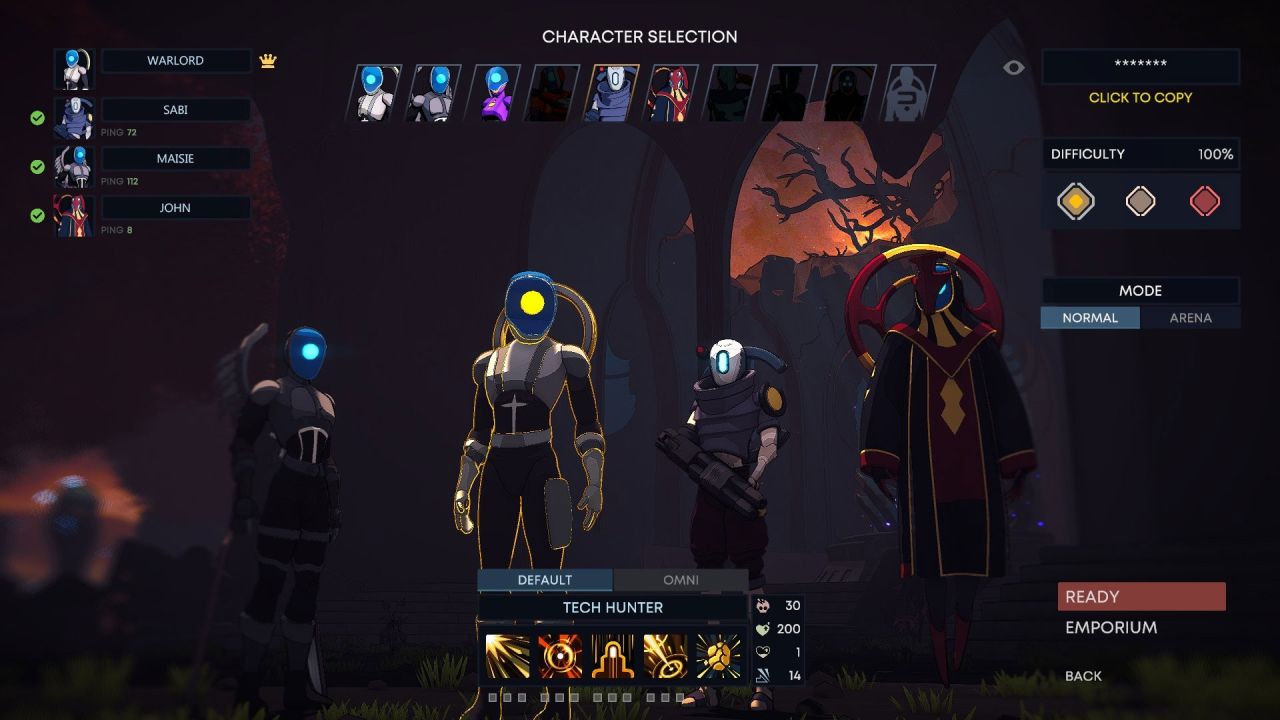
At its core, the game is an isometric roguelike shooter with the heart of Risk of Rain 2, the perspective of Diablo, and the pace of a bullet hell arena fighter. With the game officially launched after over a year of Early Access development, the game still has yet to hit the ground running, struggling to find a community for its co-op services.
Gatekeeper is the archetype of what a perfect roguelite should deliver: minimalism and functionality over glam and extravaganza. So you're a Gatekeeper, a protector of an ancient cosmic relic that's under siege by endless waves of enemies. Each planet you visit has been colonized by these invaders, and you're the conquistador saving the day, hence progressing deeper into the universe.
The story isn't particularly deep, but it doesn't really need to be. That would take away from the charm of Gatekeeper ; you can't expect immersive storytelling from a game that is essentially a top-down shooter. The mystery of the world, the variety of characters, and the satisfying combat loop do most of the heavy lifting.
Each playable character has their own background and powers, but lore takes a backseat to action, and in my books, that lands Gatekeeper a name as one of the must-play roguelites out there. You can't talk about Gatekeeper without talking about its gameplay. The moment you drop into a mission, the pace is relentless.
You won't ever have a clue of where the enemies are swarming you from, weapons blaze constantly, and your screen quickly turns into a battlefield, with explosions left and right. The game is structured around moving from one planetary zone to another. Along the way, you complete challenges, defeat bosses, and collect loot in between. Sounds fun, doesn't it? We have barely even scratched the surface so far.
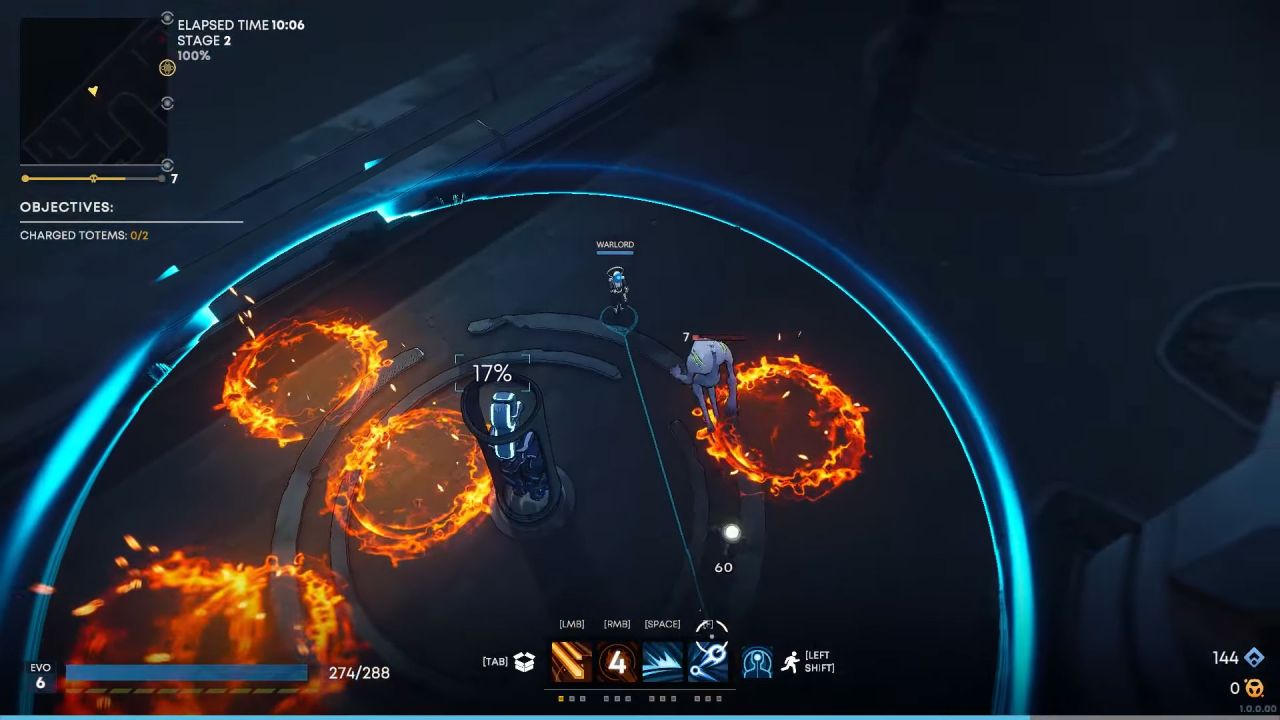
Every character has a dash, three main skills, and a standard attack, all of which can be upgraded through randomized modifiers that dramatically alter your build each run. Let me walk you down on the one I beat the game with—Hybrid, one of the two characters you get at the start. You'll love his damage output.
So the first upgrade will get you a decent 50% damage to burning enemies, another gives you a 15% bonus to elemental damage, and lastly, a 50% chance to get an additional disc. So one disc can bounce up to 20 times, dealing 100% of your damage per hit, so double that and you get 40 hits. Sounds OP? You bet it is. Some characters are ranged; others lean into melee styles, like Dawnbreaker, who you can't unlock without a special in-game currency. The wide array of characters creates plenty of diversity in combat approaches.
There's also a refreshingly smart distinction between directional and cursor-based dashing, making movement feel different from character to character. In terms of design, it's hard not to draw comparisons to Risk of Rain 2. The random upgrade system, the intensity of late-game enemy mobs, and even the layout of planetary arenas scream Risk of Rain 2, but Gatekeeper does it better in many ways.
You'll fulfill challenges to unlock new planets, but as you progress, challenges will add random debuffs; for example, one of them requires you to take constant damage, but don't be scared—you'll also be provided upgrade choices as well. Gatekeeper differentiates itself with its top-down angle and an almost arcadey tone. Combat is twitchy, fluid, and reactive. Most weapons and skills have satisfying feedback.
It's this combination of accessible mechanics and layered build depth that keeps each run feeling fresh, even if the structure remains largely similar to Risk of Rain 2. Gatekeeper has two planets. Each planet has two challenges, and you are required to beat both to get to the bosses.
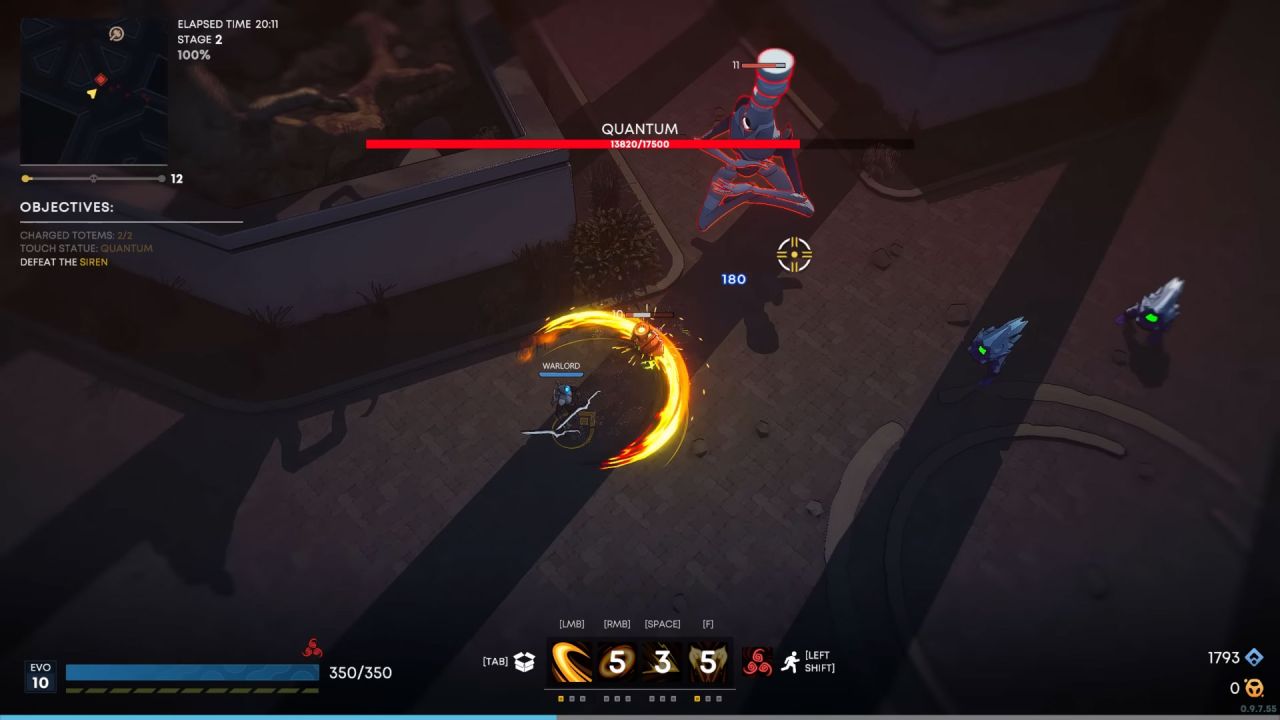
Now, after you've defeated the boss, off to the next planet you go. It's smart and efficient, allowing you to rack up currency and unlock power-ups in the upgrade area. Gatekeeper has this upgrade area between planets, so the more challenges you beat, the more power-ups you earn.
There's a map with an emporium where you unlock or ban items. You earn that by defeating enemies or beating the game. You can also unlock "Triads"—these are powerful item combos that trigger effects. You'll combine triads by collecting three specific items and activating them at a shrine. It's worth your time because triads give big bonuses.
Some new ones can be unlocked after beating the game. The upgrade screen gets more interactive the more you progress. For example, one upgrade reflects incoming damage. Another launches projectiles. Some unlock new triads or boost damage to low-HP enemies (great for boss fights).
The game's difficulty curve is not too overbearing, with enemies that demand both skill and awareness. Some will explode on contact, others will restrict your cooldown usage, and the bosses—yeah, quite intimidating, it must be said. What's nice is that the game punishes sloppy movement and rewards strategic play.
If you build a character around high burst damage or cooldown reduction, you'll tear through weaker enemies but might struggle with swarms. If you invest in elemental stacking or bounce mechanics as explained with Hybrid, you can wipe out large groups, but risk being overrun. The enemy AI isn't overly complex, but combined with the dense mobs and fast movement, you always feel like your back's stacked against the wall.
The graphics are clean. Very vivid for an isometric game. Planet surfaces vary in design; you'll encounter glowing alien wastelands and lush, corrupted forests. You never know where you'll end up, and that adds a touch of unpredictability to the game. Each biome has a distinct color palette. The enemies stand out enough to be visually readable even during intense battles.
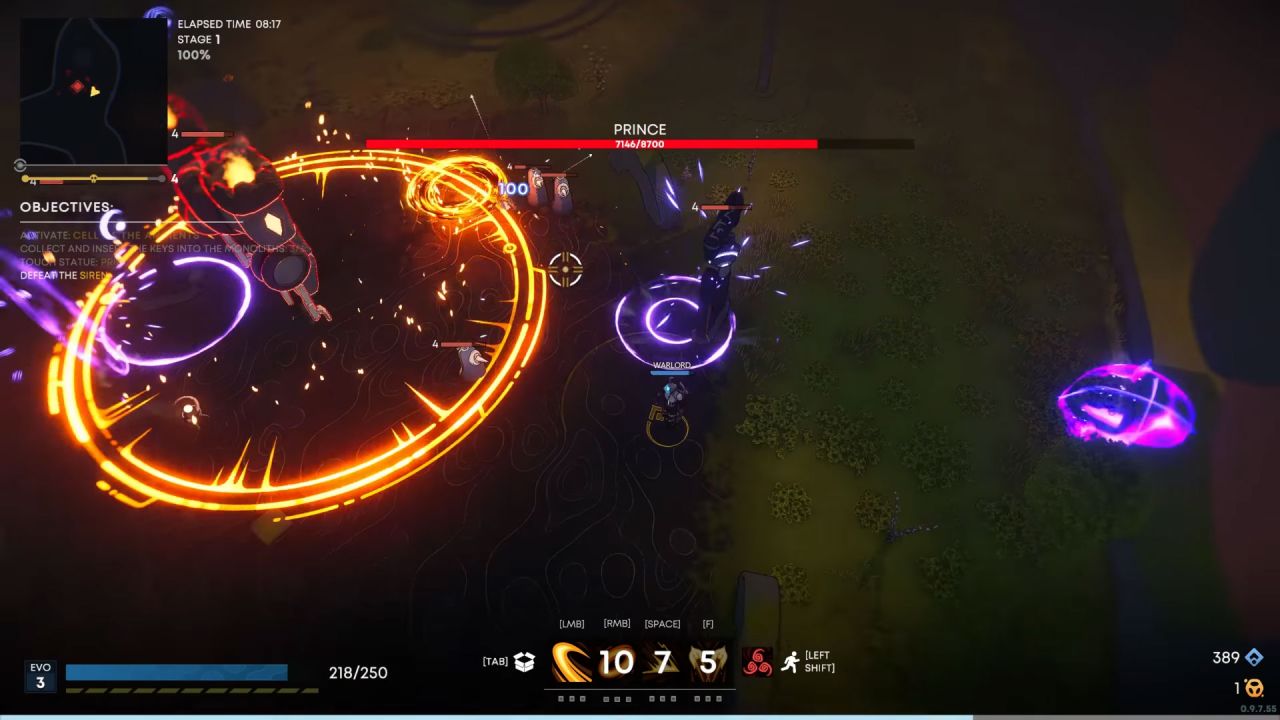
Spells and attacks all have a personality of their own, and the animations are smooth and weighty. Although the game's design is not anything to write home about, it has a polished aesthetic that works well for the genre. Gatekeeper has nailed the formula for engaging yet minimalistic visuals that make up for a compelling roguelite experience.
The soundtrack, too, is fitting, if not particularly memorable. The music keeps up with the action, rising up to the occasion for boss battles, but it often fades into the background. Sound effects are where the game excels. Weapons pop with energy; explosions have weight. There's no voice acting, but it doesn't feel like a missing element. You'll mostly be too busy dodging bullets and triggering cooldowns to notice.
There's a downside to Gatekeeper, though, and it's a significant one: the community is all but nonexistent. Despite being an online-compatible co-op game, matchmaking is more or less dead, with all due respect to the studio. You'll most likely end up playing solo.
The game's best bet is its single-player mode, and it's fully playable and enjoyable that way, but it's obvious the co-op experience was intended as a major feature. Developers need to be held accountable for not making enough of a marketing push for an otherwise stellar game that perfects the roguelite experience in its very first attempt.
The other key complaint is that there's no way to pause or save your run in single-player. If you need to exit mid-run, your only option is to abandon the run entirely. For a game where a single run can last over 40 minutes or more, that's a frustrating limitation.
That said, Gatekeeper has more than enough promise to warrant attention. For just $15, it's an absolute steal. The core gameplay is to die for any roguelite fan like myself. The variety of characters and triad mechanics adds impressive build depth.
The visuals and effects are sharp, and the enemy design is clever enough to keep you on your toes. With the official release of Gatekeeper, we certainly do hope you'll give the game a try, because once you play Gatekeeper, you'll want to gatekeep. Gatekeeper could absolutely grow into a cult favorite, and we're all in for the ride.
Senior Editor, NoobFeed
Verdict
Gatekeeper has combat to keep you hooked and visuals to keep your schedule booked—the perfect roguelite game may just be right under your nose, waiting for you to give it the audience it deserves.
75
Related News
No Data.