
Heroes of Might and Magic: Olden Era Review
PC
Early Access
A layered return to classic Heroes gameplay with modern systems, competitive depth, and early access imperfections.
Reviewed by Tahmid Mahi on May 03, 2026
You’re stepping into Heroes of Might and Magic: Olden Era. A game that clearly sets out to bring back the identity of the classic Heroes formula, especially the one established by Heroes of Might and Magic 3. Instead of trying to completely modernize or reinvent the series, it leans into what made those earlier titles work so well.
You’re dealing with a structure that combines strategic map control, city management, and tactical combat, all tied together through a turn-based loop. This isn’t a new direction for the series as much as it is a deliberate return to form. The developers are essentially building a modern version of something that already has a strong foundation.
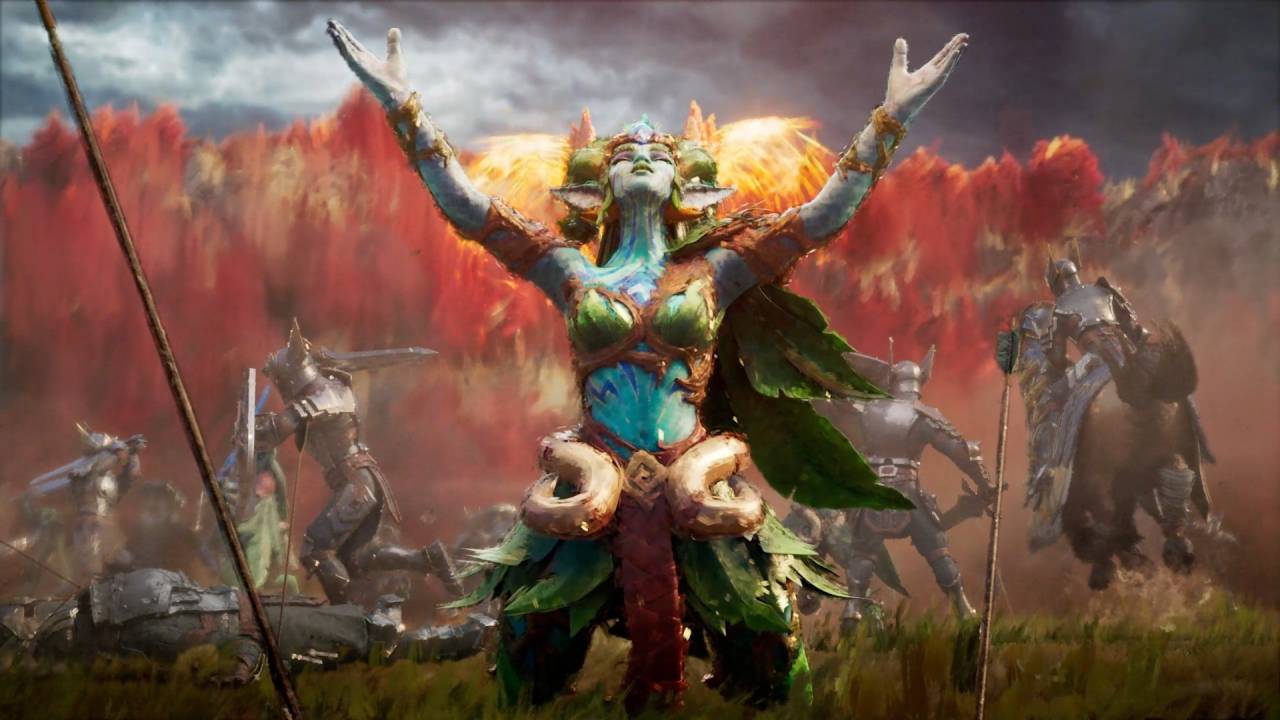
The game has been highly anticipated, with a large number of players already interested before release, and that expectation shows in how carefully it sticks to the core design.
Even if you’re coming from outside the series and haven’t played previous entries, the structure is still easy to understand. Longtime players will immediately recognize the mechanics and pacing, while at the same time, new players will be introduced to them. It exists in a space between nostalgia and accessibility, offering something that feels familiar but with the addition of extra systems.
Now the story is a conflict between different factions, with the early campaign putting you right in the middle of the conflict between the Dungeon faction and the Hive faction. The Hive is a destructive force, an insect-like infestation that spreads across the map, bringing chaos and fire in its wake. It creates a separate opposing force to propel the story forward.
Now the story is a struggle between different factions, with the early campaign putting you right in the middle of a conflict between the Dungeon faction and the Hive. The Hive is an invasive, insect-like force of destruction that spreads across the map, bringing chaos and fire with it. It gives a different counter-force to push the story forward.
This isn't some deeply layered story you're dealing with here. It's a functional setup that pushes the gameplay forward. Now the story is a struggle between different factions, with the early campaign putting you right in the middle of a conflict between the Dungeon faction and the Hive.
The Hive is a destructive force, an insect-like plague that spreads across the map in a wave of chaos and fire. The Hive becomes a real counterforce, propelling the story forward. This isn’t a multi-layered story; it’s a functional setup that moves the gameplay forward.
You also have access to standalone scenarios and other modes that divert the focus from storytelling outside of the campaign.
These modes allow you more freedom to interact with the game systems and to experiment with factions and strategies. In these cases, the story becomes less of a focus and more of a backdrop to the gameplay. Ultimately, the story is there to support the strategic experience, not detract from it.
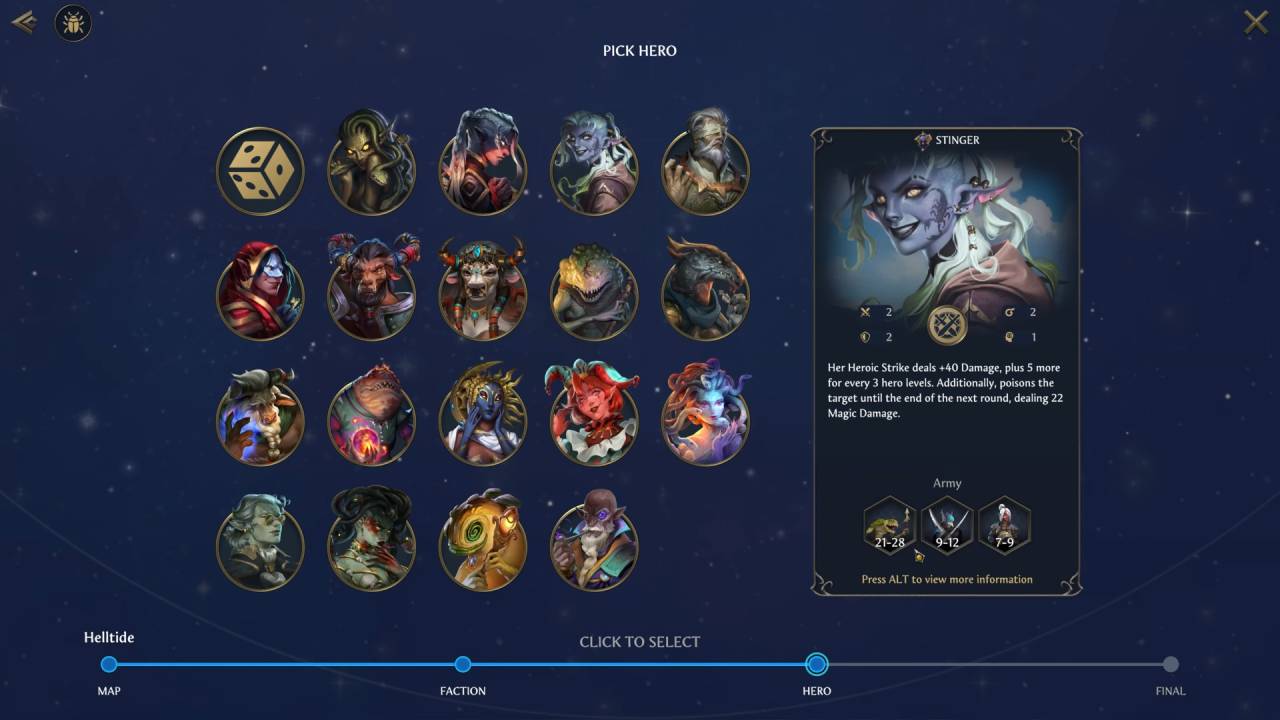
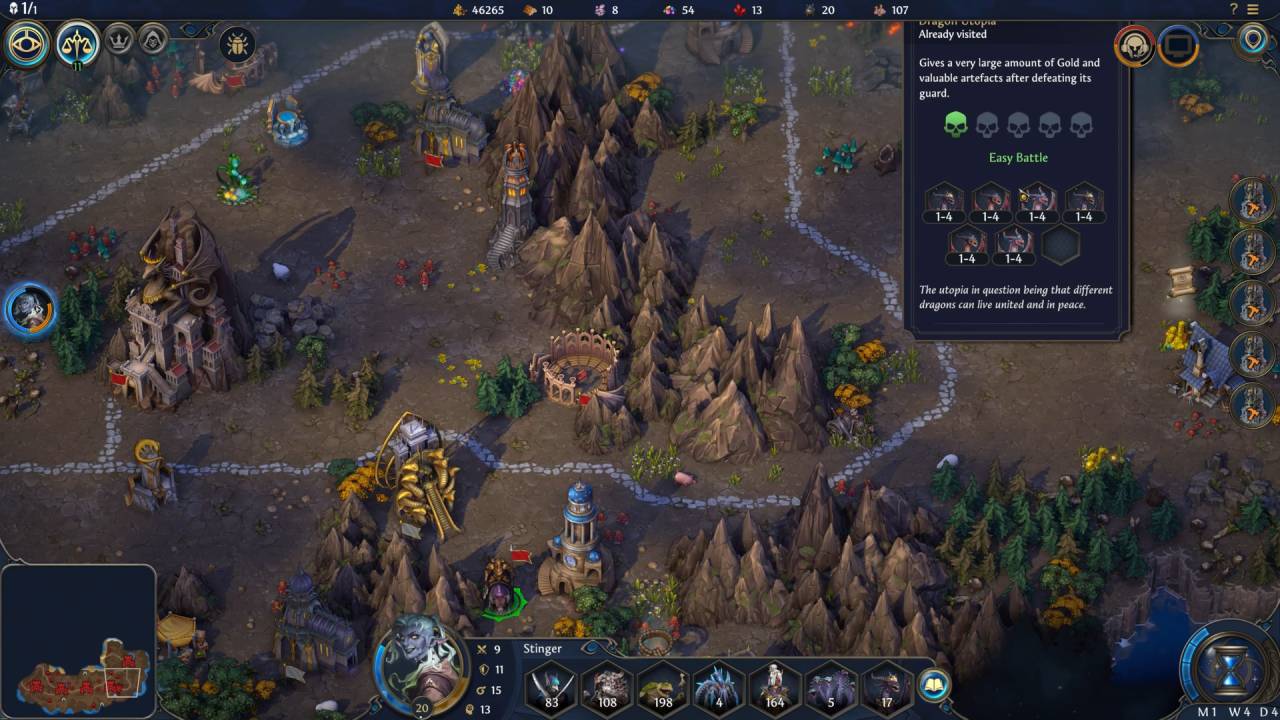
There are two main layers to the gameplay, and you switch back and forth between them. On one side, you are managing the overworld, moving your heroes across a large map with resources, structures, and enemies. On the other hand, when you meet enemy forces, you are fighting tactical battles.
When you’re on the overworld, your focus is on exploration and expansion. You can move your heroes a certain number of movement points each day, capture mines, gather resources, and explore new areas. As you uncover more of the map, you always feel like you’re going forward.
Part of your overall success is city management. You start with a town and can grab more as you get bigger. These towns provide resources, unlock new units, and provide upgrades that improve your faction. Each turn you can construct or enhance structures that directly affect your army and economy.
There is a new addition to this formula, the law point system, which adds another progression layer. These are acquired through hero experience and town development and may be used on a variety of bonuses. These changes might mean improving units, adding resources, or adding to some faction traits. This allows you more influence over how your faction develops over time
Another important system is the astrology points that allow you to directly purchase control spells. In older games, spells were tied to specific schools of magic, which could cause balance problems. Here you have more direct access to the spells you need, which makes magic feel more consistent.
Army management is tied to weekly cycles, where your towns generate new units.
Then you can assign these units to heroes and build armies that travel around the map. If you lose units in battle, it costs you real resources. They are gone after the fight. That makes every fight matter, especially if you take foolish risks. You’re always asking yourself if a fight is worth the risk of losing.
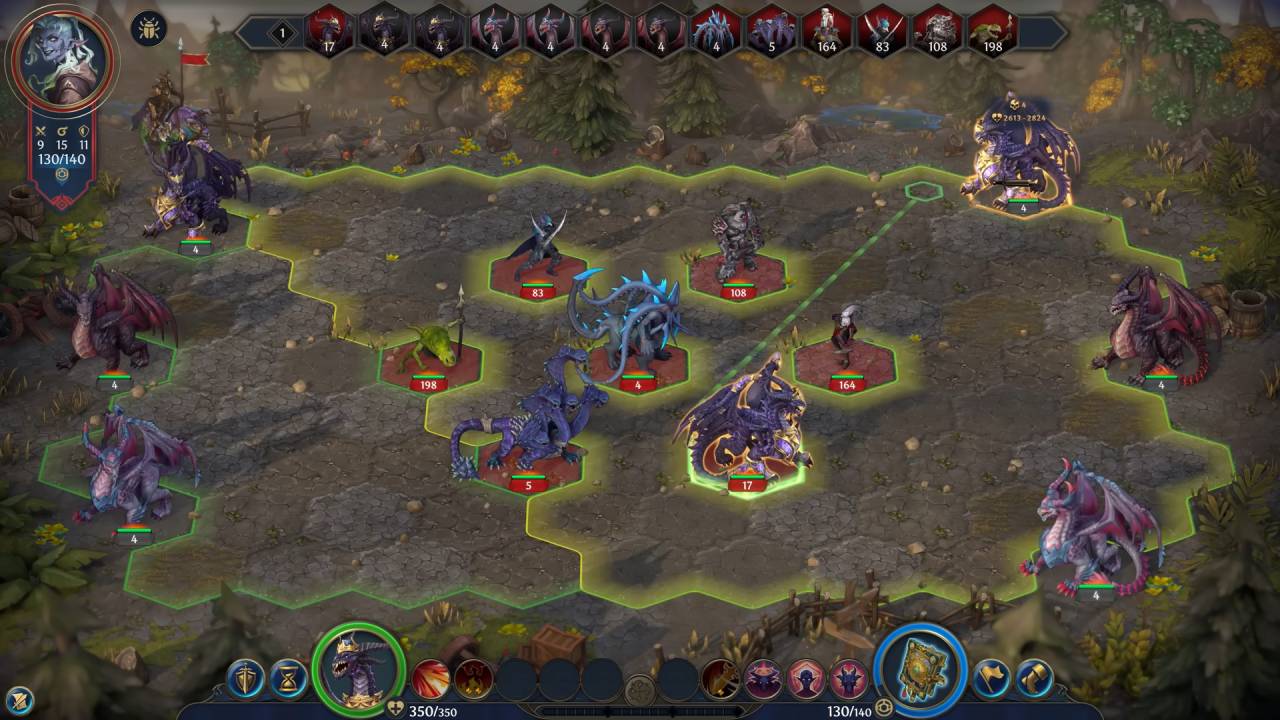
Combat is handled on a hex-based grid where you control your units one at a time. Each battle begins with both sides positioning their troops and then proceeds to a turn-based sequence of actions. You move, attack, and use abilities while keeping track of turn order.
There’s a shared resource system in combat where you build up points through actions. You can spend these points to buy abilities for your units or your hero. You also have spells, which are a different type of resource that can cause powerful effects. There's direct damage, buffs, debuffs, and summoning additional units. This approach provides variety to each encounter and keeps battles dynamic.
The combat has weight to it because you lose your stuff permanently. If you lose part of your army, you lose those units and must replace them. This makes every fight suspenseful, particularly when facing stronger opponents. It favors slow planning and punishes fast action. You learn to respect enemy strength quickly.
The system is excellent in clarity and depth but has some limitations. Terrain is a much less important aspect than in some other strategy games. Battles tend to feel more like controlled board-like engagements than dynamic environments. Some players will like the simplicity; some will want more environmental interaction.
Melee units are normally less safe and less reliable than ranged units. These factors can affect your strategy, especially in the early game. The variety of units, spells, and abilities still has enough depth to keep things engaging, though. The more you learn about the systems, the more you see how much strategy is actually involved.
Progression is heavily dependent on hero experience and faction development.
Heroes gain experience through fighting and exploring and evolve as they level up. You can pick a set of skills at each level, but the skills come from a random pool. This system provides some variety but can also limit your ability to fully control your build.
Winning battles increases your total faction strength. Some factions profit directly from victories, gaining greater advantages or increasing the size of their armies. This creates a cycle in which success breeds more success. It pushes you to keep moving forward. Push you forward.
The progression systems determine how you play each match. You’re always playing the short-term survival game with the long-term growth game. Depending on your strategy, you may want to invest in better units, spells, or economic upgrades. The game is flexible, and its adaptability is one of its strengths.
Olden Era is designed with a focus on clarity while keeping the fantasy aesthetic. Graphics have been toned down to make them less exaggerated than in past versions. Units and environments are easier to read, which helps in exploration and combat. Each faction has its own visual identity, reflected in its units and buildings.
Cities and environments are designed to match the faction themes. This makes it easy to see who owns any particular area. The overall presentation is functional, not too detailed. It adds to the gameplay without being distracting.
The sound design really adds to the experience without being too obvious. The combat effects creators did an impressive job, and the background music maintains a consistent tone. The audio helps reinforce the pacing of the game. It stays in line with what you would expect from a strategy title.
You’re looking at a game that successfully brings back the core identity of the Heroes of Might and Magic series while adding new layers to keep it relevant.
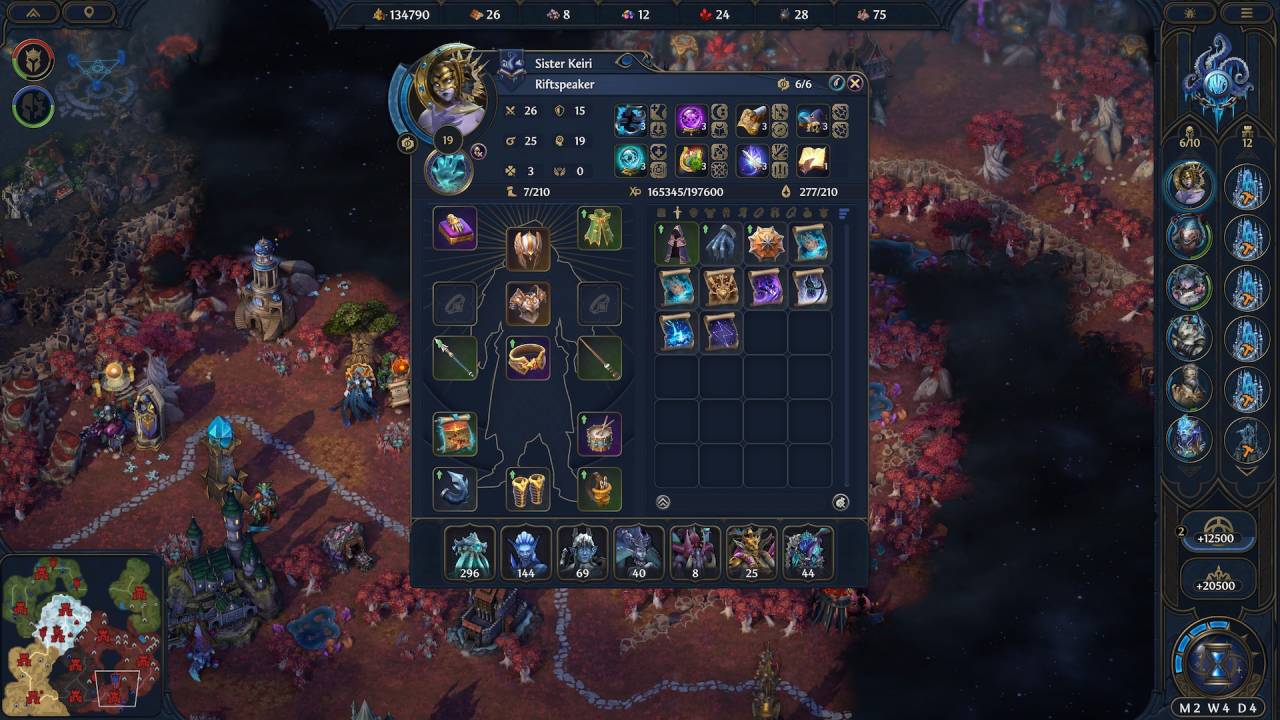
The mix of overworld strategy, city management, and tactical combat still feels as good as it did in the old days. New systems such as law points and astrology points add depth but not too much complication. The addition of structured PvP modes makes it more welcoming to the competitive crowd as well.
At the same time, the game is still in early access, and that shows in several areas. While it’s missing features like full co-op and can have issues with balance, it also has the odd bug that can impact gameplay. There are a few systems like AI difficulty and UI design that could use a little more polish.
The core experience is engaging, despite these issues. The combat is satisfying, the progression systems are meaningful, and the overall structure keeps you invested. Whether you play for fun or to improve your strategy, there's enough here to make you want to return. It's a good base to build on to create something more.
Editor, NoobFeed
Verdict
Heroes of Might and Magic: Olden Era makes a strong early access return to classic strategy, offering deep systems and engaging combat, but still needs polish, balance improvements, and more content before reaching its full potential.
80
Related News
No Data.