
Hozy Review
PC
A beautifully crafted cozy escape that struggles to fully express itself.
Reviewed by Asura Kagawa on Mar 30, 2026
In a time when cozy games have made a name for themselves, Hozy is a well-thought-out improvement on the model made popular by games like Unpacking. Amazingly, this first project was made by a team of only five people, but it shows a lot of energy and attention to detail.
Instead of just copying what has already been done, Hozy aims to expand the cozy genre by combining repair mechanics with the satisfying feeling of unpacking. As a result, the game is instantly recognizable while also being unique in how it is put together.
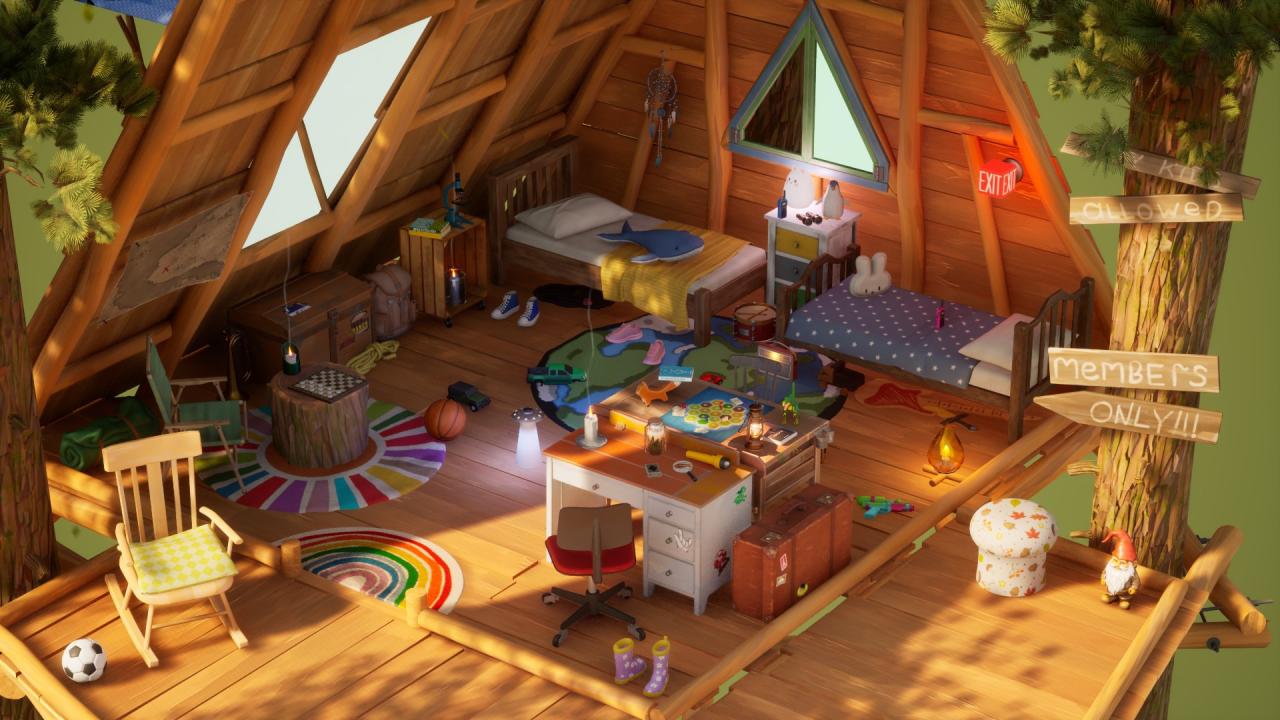
It gives players a carefully chosen, low-stakes experience focused on fixing up and decorating private spaces. It's clear what it wants to do, but how it's done is very close to being both accessible and limiting.
In its story, Hozy shows itself to be more than just a sandbox decorating game. The game's nine diorama-style levels give hints of a story involving the main character's father and the people who were important in his life. Each space you fix up seems to have an emotional weight to it, with speech bubbles or short breaks between levels delivering small bits of conversation.
On paper, this setup looks like it could lead to a quiet, reflective journey that is on par with the subtle writing of other games in the same genre. The story doesn't feel fully formed or connected, though, when you read it. It's never clear what's going on emotionally, and the story isn't clear enough to leave a lasting memory.
In contrast to other cozy games that effortlessly blend story and gameplay, Hozy keeps the story out of the way. It doesn't change how you approach each room in a meaningful way, and it doesn't change in a way that rewards player effort. The story then becomes more of an afterthought than a main point, leaving a sense of unrealized promise.
The main part of Hozy is a simple yet fun gameplay loop split into two main parts: remodeling and decorating.
Each level starts with an empty, unkempt area, usually full of trash and grime, that lacks any personality. Your first job is to make the room habitable again. This includes using a tool that looks like a magnet to pick up trash, sweeping floors, cleaning windows, and painting or covering surfaces.
These acts are meant to be slow and thought-out. You can't just rush through things; for example, if you try to take too much trash at once, it will spill out, slowing you down. This way of thinking about design goes well with the cozy genre's focus on rest. It's designed so that every action feels good, from moving a squeegee across glass to rolling paint onto walls.
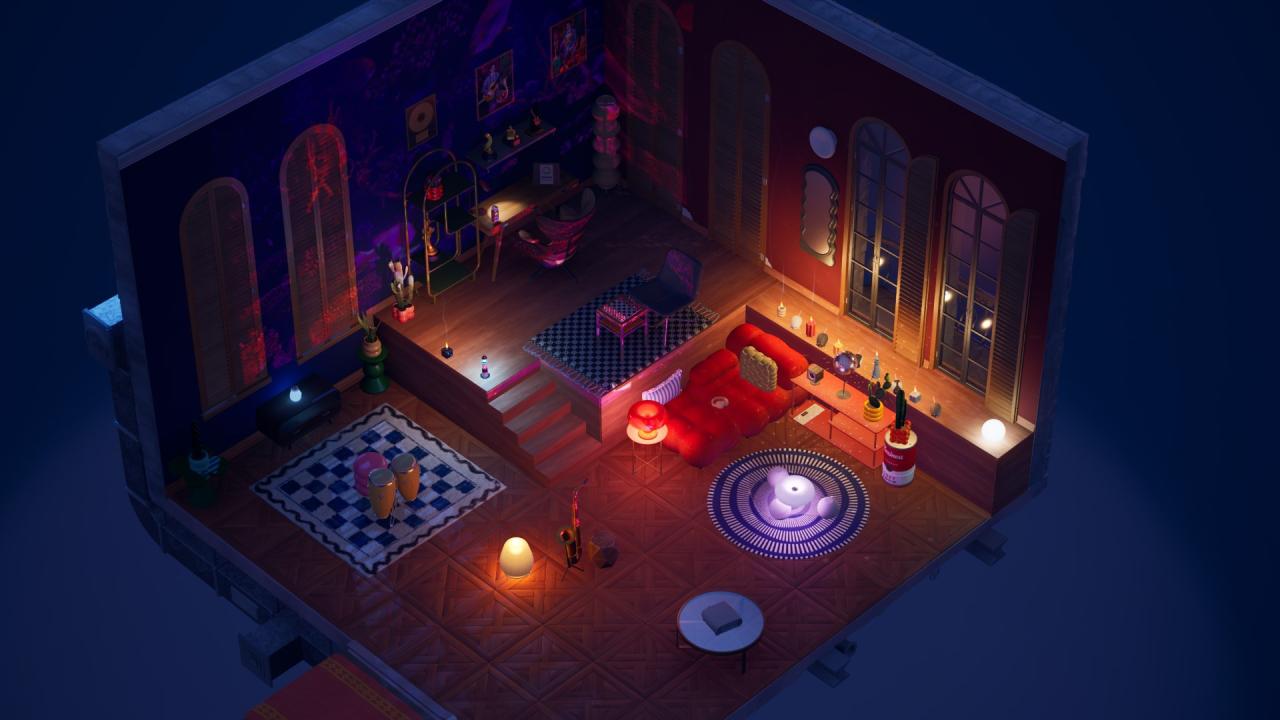
After the renovations are done, the decorating phase starts.
You can arrange the space however you want once the boxes of furniture and decorations arrive. To make a design that flows, you can rotate and stack items and try out different layouts. You get to be a little creative as you choose where each thing goes and how the room should look and feel.
At the end of the process, you take a picture of your finished place, which is a small but satisfying reward that makes you feel even better about your work.
Hozy doesn't have typical tasks or ways to fight. Instead, its "challenge" lies in thinking about space and making decisions about light during the decorating process. A soft puzzle element is figuring out how to arrange furniture in a way that looks good, or how to make the most of limited room and resources.
But this part is purposely kept to a minimum. There are no timers, fail states, or pressure to improve your ideas. This way of playing makes the game very easy to get into and stress-free, but it also makes it less interesting. If players are looking for more difficult puzzles or different gameplay types, they might not enjoy this one.
The game relies heavily on intrinsic motivation, or your own desire to make something beautiful, since there are no set tasks.
When that drive comes together, the experience is very fulfilling. When it doesn't, the game can feel boring, especially if you have to do the same things over and over in different levels.
Hozy doesn't have a standard XP system or way to move up. There is only one way to move forward, and that is to finish each model. You can move on to the next level once you're done fixing up and arranging a room. This simple structure supports the game's low-pressure design, letting players go at their own pace without worrying about optimization or grinding.
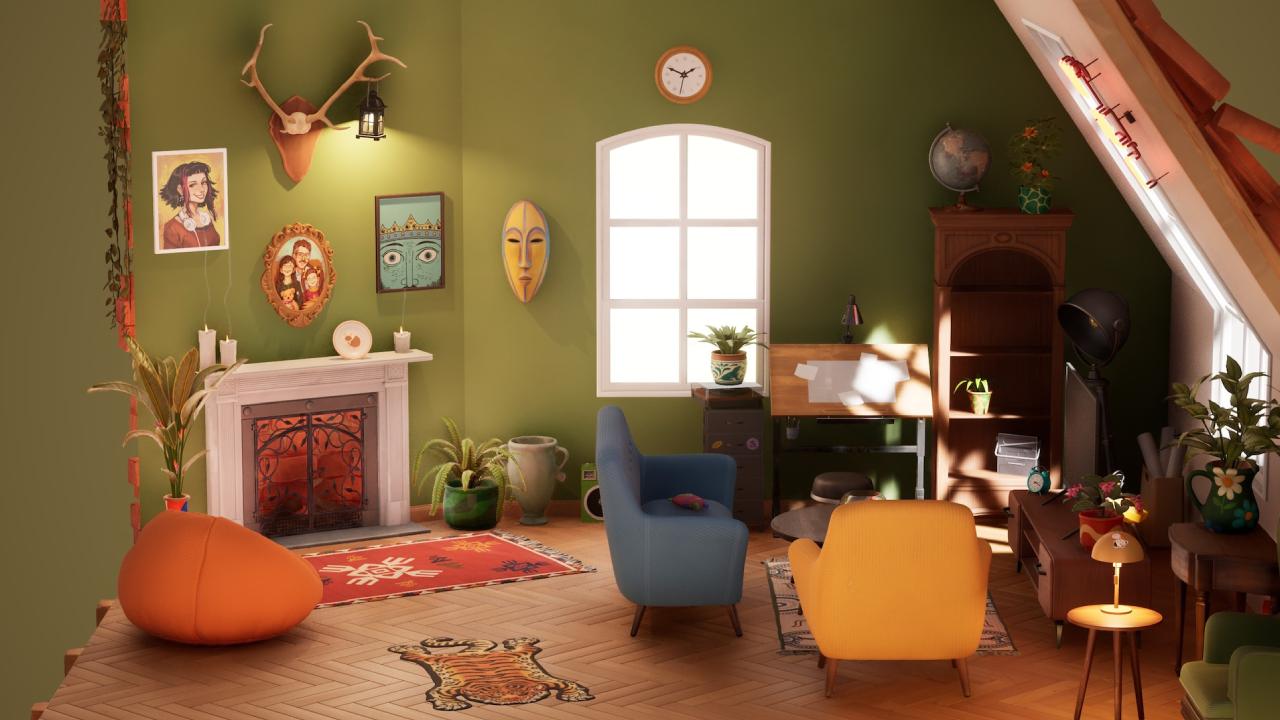
There is a cost to this simplicity, even though it fits with the cozy genre. There isn't much reason to go back to levels that have already been finished if you can't unlock upgrades, new tools, or useful progression systems. The lack of long-term rewards or customization options also makes it hard to play again and again, making it feel more like a one-time journey than a creative outlet you can use over and over.
Visual expression is one of the best things about Hosy. The game looks very realistic while still having a soft, friendly feel. Each piece of furniture is carefully crafted, and the settings are full of small details that bring them to life.
Lighting is a very important part of improving the environment.
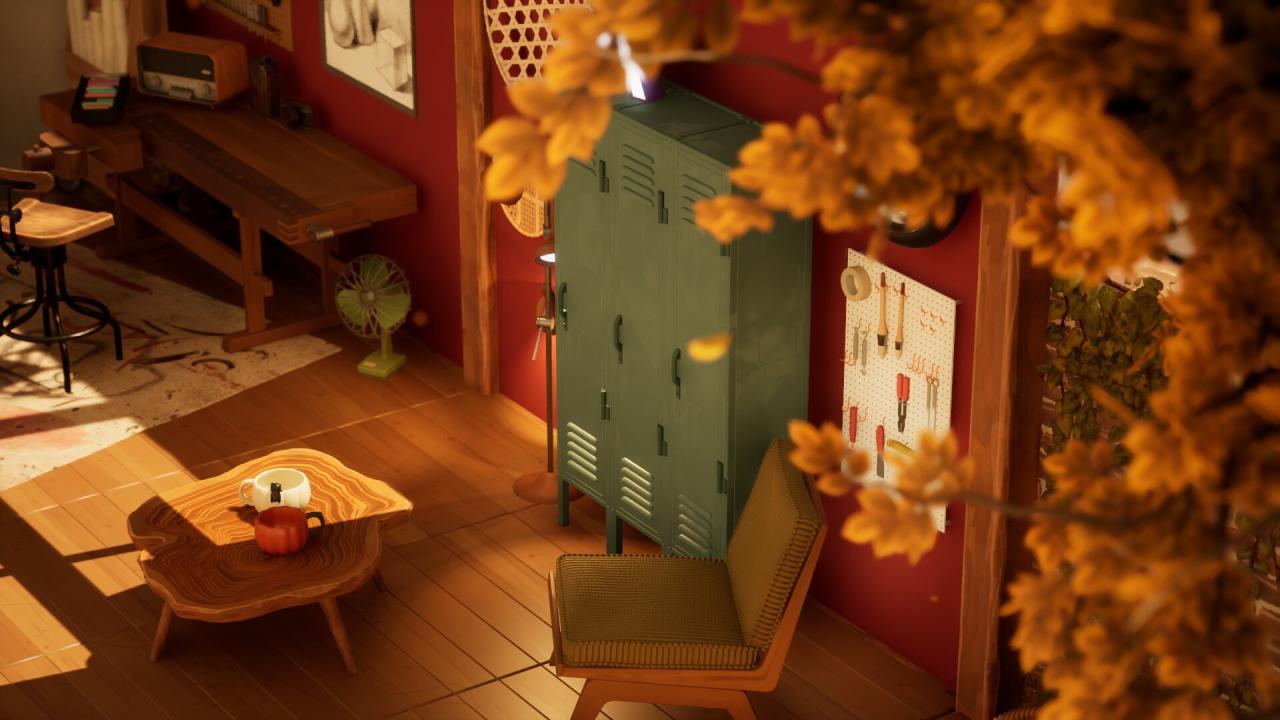
Sunlight streams in through windows, giving rooms a warm, natural glow. Lamps and other artistic lights give rooms more depth and make them feel more personal. Small changes in the surroundings, like dust particles floating in the air or leaves blowing in through open windows, make the feeling of being immersed even stronger.
The diorama's style is another thing that stands out. The game feels like a well-planned little world, with each level having its own flavor and mood. The different locations, from homey homes to more styled or bizarre ones, keep people interested, even if the gameplay stays the same. Overall, Hozy is a wonderful visual experience that reveals how hard the devs worked to make it.
If the visuals are what draw you in, the sound design will keep you there. Hozy is very good at making sounds that are close to ASMR. From the squeak of a window being cleaned to the soft thud of things being put down, every contact makes a satisfying sound. These small sound cues give the game a tactile feel that makes even the simplest acts feel good.
The background sounds are just as amazing. Each setting has soft background noises, like traffic far away, birds singing, dogs barking, or the rain pattering on the windows. The world feels alive because of these features that give each room a sense of place that goes beyond its walls.
Along with this, there is a beautifully written soundtrack that changes based on the level. Whether it's soothing and calm or a little creepy, the music makes the mood better without getting in the way. The sound design and music make up one of the most interesting parts of the game and greatly contribute to its relaxing atmosphere.
Hozy is a cozy game that gets the genre's essence: comfort, happiness, and the joy of doing small things that matter.
Its renovation and decorating loop is always fun, and the tools are easy to use, and you can really feel the feedback. The graphics are beautiful, the sound design is top-notch, and the whole experience is utterly charming.
The game has some good points, but it also has some major issues. Even though the story sounds interesting, it doesn't come together well or make me feel anything. It can feel like the limited artistic freedom—whether it's due to set color palettes, furniture, or design choices you have to make—goes against the genre's focus on self-expression. The game's short length and lack of reasons to play it again make the experience feel brief.
Hozy does what it sets out to do, which is to be a relaxing, low-stakes escape that is hard to put down once you start reading it. It provides hours of real comfort and happiness for people who like cozy games or just want to relax. It might not change the genre, but it definitely deserves to be in it as a wonderfully made, if a bit limited, experience.
Staff Writer, NoobFeed
Verdict
Hozy is a visually stunning, relaxing cozy game with satisfying renovation and decorating mechanics, immersive sound design, and charming details—though limited narrative and creative freedom slightly hold back its full potential.
78
Related News
No Data.