
Lessaria Review
PC
Lessaria, a humble but promising revival of the hands-off fantasy kingdom sim.
Reviewed by Mezbah Turzo on Nov 14, 2025
City builders and colony sims have come a long way from the days of neat grids and structured economies. These days, it's not just about balancing resources; it's about managing people, moods, and struggling against survival, among other things.
Games like Majesty showed us that a little anarchy can be just as fun as order, and that keeping a community alive is often more about being able to change than being in charge. Lessaria continues in that legacy by combining survival and administration in a setting that seems both familiar and new.
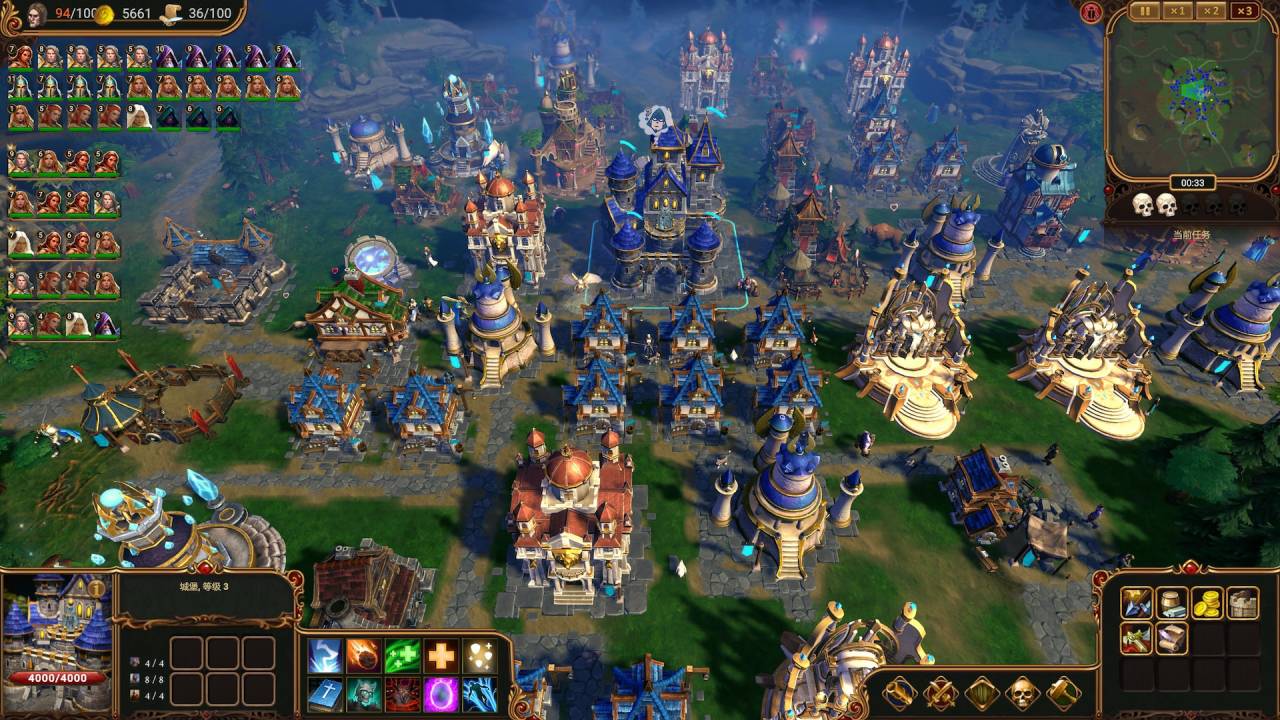
Lessaria puts you in charge of a small band of settlers trying to build a home in a world that doesn't really care if they make it or not. It's part colony sim, part survival game, and a bit of both at once.
You'll spend just as much time keeping your people fed and sheltered as you will planning your next expansion. It doesn't rush you. Things move along at a steady pace, with a rhythm of building, gathering, and fighting off enemies. The goal is to go from merely getting by to living in a settlement that feels real, which is what makes these games so easy to lose hours in.
The gameplay loop in Lessaria hits familiar notes for fans of strategy and management sims. You start with your central castle and, from there, set up your resource-gathering buildings: lumber mills, stonecutter camps, and the rest of the medieval starter pack.
The core resources are what you'd expect: gold, manpower, and materials, but there's also the King's Influence, a regenerating currency used for short-term boosts like speeding up workers or helping your economy through a rough patch.
Gold isn't just conjured from thin air either; it has to be collected through tax collectors, which adds a nice layer of realism (and a bit of medieval bureaucracy). As your settlement grows, you'll unlock guilds, where you train and manage heroes.
These heroes are the backbone of your defense and exploration efforts, but they're not simple pawns. Each has skills, perks, and upgrade paths, leveling up through exploration or combat depending on their class. They're also mercenary-minded, acting only when properly paid, a small but fun touch that keeps you juggling priorities and gold reserves.
While the heroes are all visually different, and each has different abilities, skills, and intended functions, they pretty much all serve the same way, and so, eventually, all of them sort of just meld together.
Most buildings contribute to your tax base, so expansion naturally fuels your economy. In turn, that lets you invest in fortifications, ballista towers, guard posts, and other ways to keep your kingdom from becoming monster chow.
Upgrading your castle steadily unlocks new structures, hero types, and utilities. The blacksmith lets you forge better gear (and make a tidy profit doing so), while the magic shop heals heroes and provides magical upgrades. Then there's the library, the statue of kings, and plenty more decorative or defensive options to fill out your city's footprint.
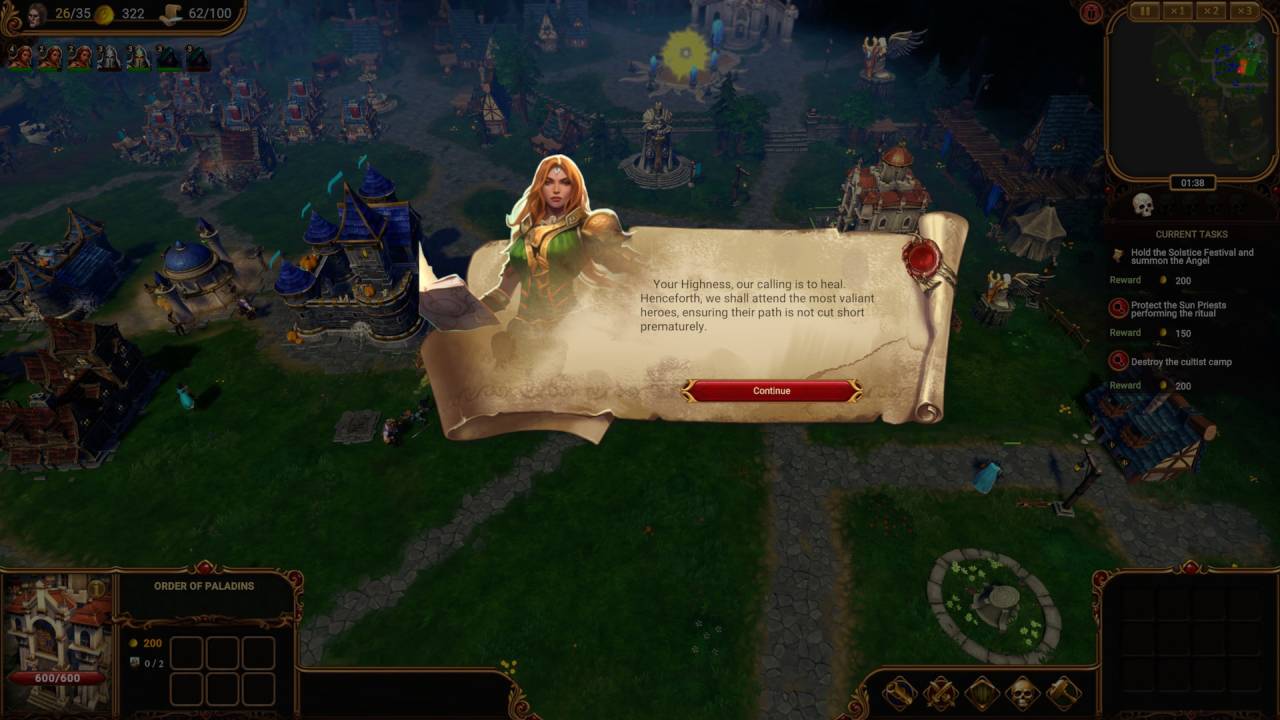
At its core, Lessaria revolves around a simple but satisfying cycle: build, earn, hire, expand, and defend. The more you look, the more you notice how everything fits together. Heroes require better gear to become stronger, which means more money, which in turn means more effective tax collection, or new sources of income, which means greater expansion and more heroes to protect the caravans.
It's always a balancing act, but if you play intelligently, you'll gain rewards and the loop will keep you busy for hours. There is a campaign and a story inside it, but a lot of it is basically like a skirmish mode with some dialogue.
The pacing in Lessaria is deliberate; it starts out calm and methodical, giving you time to learn the rhythm of your economy before slowly turning up the pressure.
The early game is mostly about efficiency: balancing production, keeping workers happy, and managing that precious flow of gold. But as your settlement grows, the challenge starts to creep in.
Enemy raids become more coordinated, waves hit harder, and you'll quickly realize that half-measures won't cut it. Each new wave tests how well you've layered your defenses and upgraded your heroes, pushing you to constantly adapt your strategies.
It's a satisfying escalation rather than a difficulty spike. Every new threat feels earned; the game gives you all the tools you need - it's just up to you to use them wisely. Fail to keep up, and your city will start to buckle under the pressure; prepare well, and you'll get that glorious feeling of watching your fortified settlement stand firm against chaos. It's a familiar loop for the genre, but Lessaria executes it with enough tension and balance to keep things exciting throughout.
For all its charm and solid pacing, Lessaria has one glaring problem: its heroes just don't feel alive. They might look different and have varied abilities, but beyond that, they all behave the same. They wander, fight, retreat when low on health, and repeat.
There's none of the individuality or personality that made Majesty's heroes memorable, no reckless thieves chasing gold into certain death, no rangers cautiously scouting the fog for experience, no berserkers charging headlong into danger. In Lessaria, everyone just… does their job. Efficient, maybe, but soulless.
The progression system also feels oddly disconnected. Instead of heroes getting new skills as they level up, most skills are "researched" in a guild and then unlocked right away. It takes away the feeling of growth; heroes don't change; they just get better from a menu.
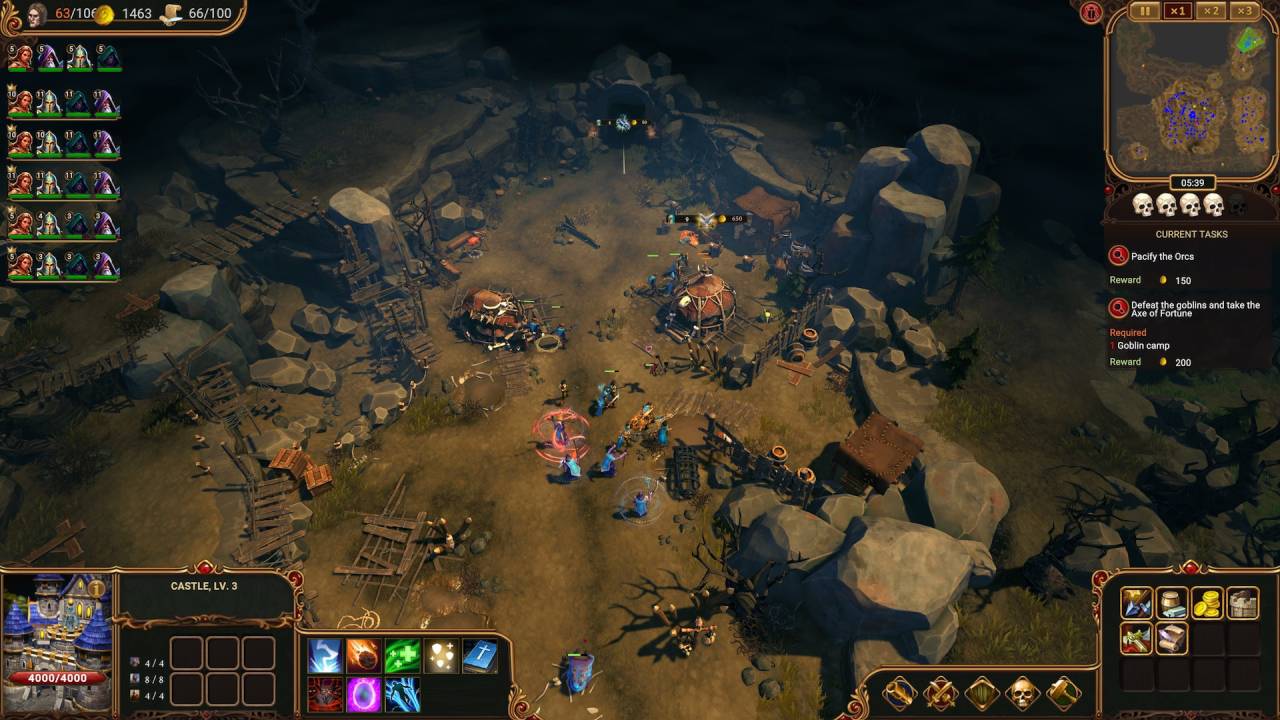
The training camp, which lets you quickly level up heroes to level five for a small fee, makes progression seem easy. Why care about a rookie's journey when you can just buy your way past it? Granted, it is necessary, but it still feels somewhat superficial.
Then there's the party system, another feature that looks fine on paper but flattens the game's difficulty. Forming a party turns the challenge from tense to trivial. It would've been far more engaging to see heroes form bonds dynamically, building friendships or rivalries based on shared fights or rescues, instead of the player simply clicking "form party."
Lastly, a few design choices make Lessaria unnecessarily frustrating. The camera constantly yanks your attention away mid-action for narration pop-ups, sometimes blocking crucial moments. Mission pacing can get interrupted to the point of breaking the flow. Double-clicking is missing, which feels weird. And while the visuals are clean, the buildings often blend together too much, a step back from Majesty's immediately readable art style.
All of it adds up to a game that plays fine but lacks that intangible magic, that feeling that your heroes are more than just units. Lessaria captures the mechanics of Majesty, but not its soul.
Lessaria looks fine, not amazing, not bad, just fine. The medieval-fantasy look works well enough, and the environments have a nice storybook charm to them, but the visuals do feel a bit dated at times. Buildings can look too similar, and the color palette, while cozy, doesn't always help with readability. It's not ugly by any means; it's just one of those games where the atmosphere does more heavy lifting than the actual graphics.
The UI follows the same pattern. It's functional and clear, but also somewhat plain and uninspiring. Everything's neatly arranged, the menus make sense, and it doesn't get in your way, but it also lacks much personality. It feels like a solid foundation rather than a finished design, something that could use a bit more flair or visual identity down the line.
The audio, on the other hand, does a great deal to enhance the experience. The soundtrack has that familiar blend of soft fantasy strings and light percussion, and it fits the tone perfectly, calm when you're building, tense when the monsters show up. Some effects and voice lines can get repetitive, especially the narrator, but overall, the soundscape keeps the world feeling alive even when the visuals can't quite carry it.
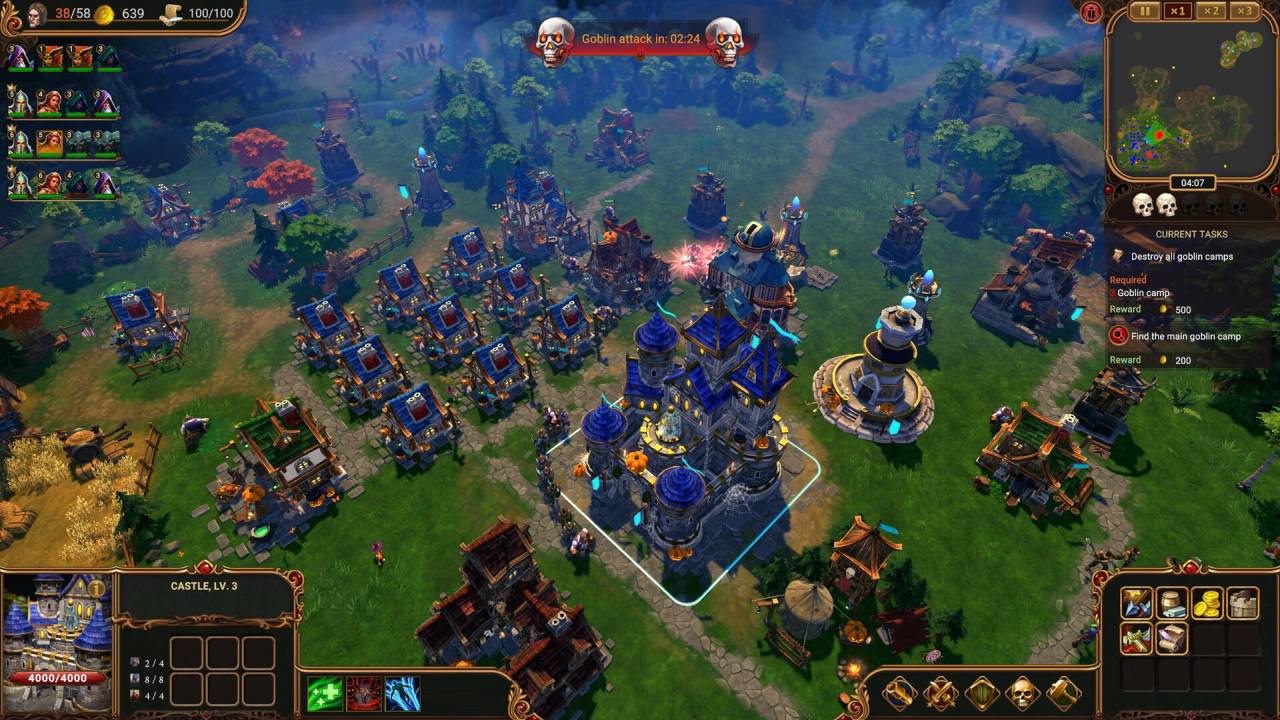
Lessaria is a charming attempt to revive a type of game we haven't really seen in a while, part city-builder, part hands-off management sim, part adventure-sim. It does a lot of things right: the pace is just right, the difficulty builds up naturally, and it's weirdly satisfying to see your little heroes run off on their own adventures.
However, it also struggles to give those heroes any real life or personality, and the way it's put together can feel more practical than creative. There is still a strong base here. Lessaria could become something truly special if she put in a little more work and heart. It's only a good start right now, but you hope the developers continue to progress.
Contributor, NoobFeed
Verdict
Lessaria revives the classic Majesty-style kingdom management formula with modern touches and steady pacing. It's a fun, if somewhat plain, fantasy sim that rewards patience and strategy but could use more personality and polish.
75
Related News
No Data.