
Simon the Sorcerer Origins Review
PC
A trip down memory lane with one of gaming's most charming wizards, where puzzles are hard and old-school design quirks are funny.
Reviewed by Nusrat Choity on Nov 01, 2025
Simon the Sorcerer was one of the best point-and-click adventures in the early 1990s, along with Monkey Island and Discworld. AdventureSoft created the first game, a humorous and charming parody of classic fantasy stories. It was a blend of Lord of the Rings parody and cheeky British satire.
It was a mix of Lord of the Rings parody and cheeky British satire. You played Simon, a sardonic teen who inadvertently wandered into a magical world full of talking animals, sardonic wizards, and puzzles that often defied reason. Despite its extreme difficulty, the series was a huge success, selling over 600,000 copies - a notable achievement for its time.
But Simon the Sorcerer lost its way, like many franchises that tried to update. Many people thought it was a mistake for Simon the Sorcerer 3D to go to 3D, and the sequels never quite captured the charm of the first game. For a long time, it seemed like Simon's sarcastic voice had been lost to time.
Three decades later, Smallthing Studios has brought the wizard back to life in Simon the Sorcerer Origins, a prequel made with the original creators' permission, Simon and Michael Woodroffe.
This new chapter aims to blend hand-drawn art with modern design concepts while maintaining the series' irreverent tone. The question is: Does it bring back that old magic, or does it get lost in its own spellbook?
Not in a fantasy world, but in 1993, the year the first game came out, does "Simon the Sorcerer Origins" begin. Simon is a normal, sarcastic teen who is moving into a new house with his mom. There are many nostalgic elements at the beginning, such as Rick Astley's "Together Forever" playing on his cassette player and the snappy dialogue of a kid who is unhappy and feels out of place.
Simon finds a locked door in his new house that he can't open. When he tries to open it, a magical portal pulls him into another world, a strange medieval world full of strange creatures, magical forests, and strange people. There, he meets Calypso, the wise old wizard, who tells him a prophecy about a child from another world who will find the First Wizard's lost books. And so Simon starts his unwilling journey to follow the Sorcerer's path.
The writing keeps the original series's funny, tongue-in-cheek style. Simon often breaks the fourth wall by arguing with the narrator, complaining about how tedious his tasks are, and making fun of them with the dry humor characteristic of British comedy.
Fans will be happy to see familiar faces again, like the evil Sordid (though in a younger form) and Simon's loyal dog, Chippy. Chris Barrie, known for his work on Red Dwarf, reprises his role as Simon's voice from the original CD-ROM version. This gives the character the same sarcastic charm that made him so famous.
The story isn't new, but it gets the spirit of the old games right: it's self-aware, funny, and full of smart references to pop culture and fantasy tropes. It takes you back in time and brings together old and new audiences.
Simon the Sorcerer Origins is basically a point-and-click adventure. To move forward, you will need to explore areas, pick up objects, interact with people, and solve puzzles. The developers have updated the interface just enough to make it run more smoothly without losing the charm of the genre.
Long lists of verbs, such as "Push," "Pull," or "Talk To," are no longer there. Instead, commands that depend on the context make interactions easier. For example, when you click on an object, Simon will automatically perform the correct action.
The controls on PC are simple: you can double-click to run, use one key to highlight interactive objects, and drag and drop items in your inventory to combine them. The system works surprisingly well on consoles: the left stick controls Simon, the bumpers switch between hotspots, and the triggers highlight areas that can be interacted with.
It's much easier to use than the clunky analog cursor controls that were a problem with earlier console versions of adventure games. This time, Simon's magical hat has a special job. It works as both a spellbook and an inventory.
As you move forward, you unlock different "versions" of the hat, each of which gives you a different magical power that can change the things inside it. For instance, you can change normal things into magical versions of themselves or cast spells that change the world around you. It's a smart mechanic that adds a new level of strategy without making the game too hard.
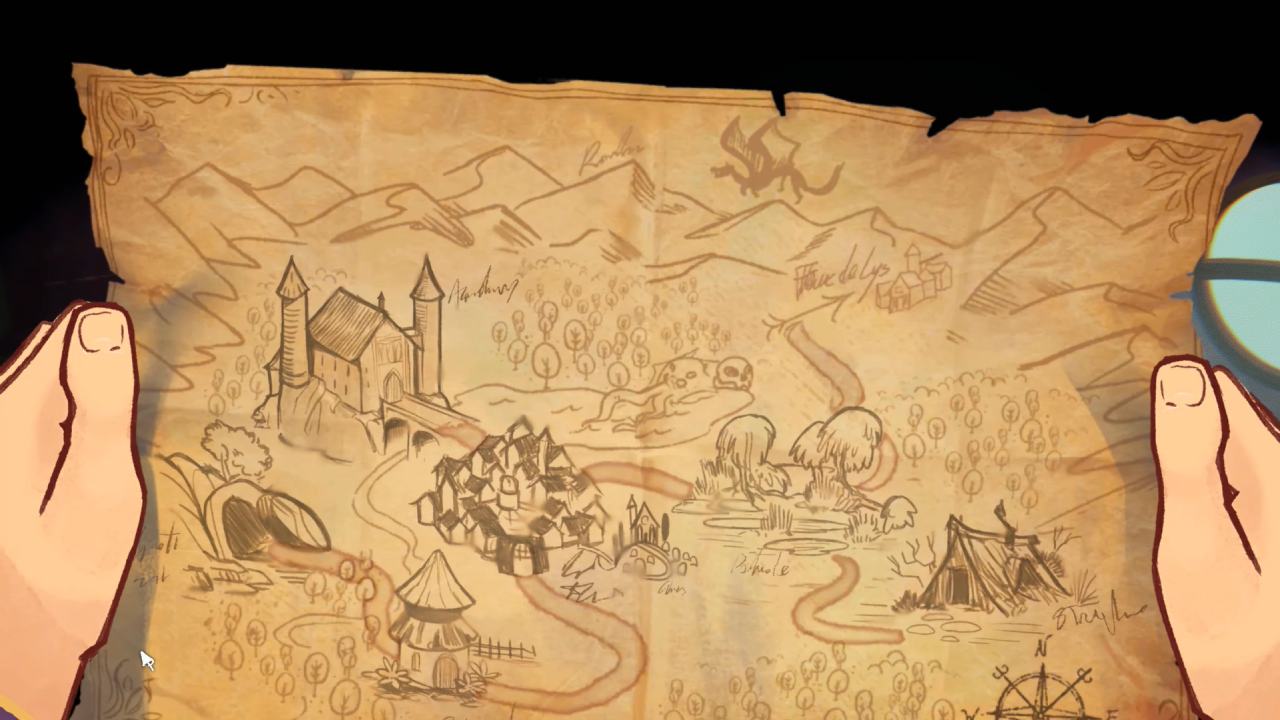
A fast-travel map is also included in the game to reduce backtracking, which is a nice touch for a genre known for its lengthy gameplay. Every place is full of personality, from cobblestone towns and spooky forests to strange workshops full of moving gears and magical junk. And every object has a possible joke or interaction, so you get points for looking around.
The puzzles in Simon the Sorcerer Origins are both good and bad. On the plus side, many of the early challenges are logical and enjoyable. You must find an item, use it creatively, combine it with something else, and then proceed.
The first hour or two goes by smoothly, encouraging people to try new things without feeling like they're being punished.
But the puzzles get harder to figure out as you go deeper. Sometimes the solutions that should work don't register, so you have to try almost every combination of items until you find the developer's exact sequence.
Some puzzles even seem to need very specific steps, like making a potion that is just a little bit different or doing a series of magical transformations that are very complicated. It seems like the game penalizes you for using your brain too much.
This frustration is exacerbated by the lack of a reliable hint system. There is one wizard at the beginning who gives vague advice that isn't very helpful. This means you can spend hours wandering around, not knowing what to do next, only to find out that the answer was an interaction you missed because it wasn't clearly marked.
This design flaw makes what could have been a great revival less fun. When you play a puzzle game, you might get annoyed instead of happy because you think the game is purposely making the puzzles harder. People who have played old-school point-and-click games before may find this nostalgic, but new players will likely find it frustrating.
The humor, on the other hand, often makes things better. Simon can make you laugh even when you're angry with his sarcastic comments when you fail a puzzle. And when the answers do click, you can't help but feel satisfied. There is a lot of love and hate in this relationship.
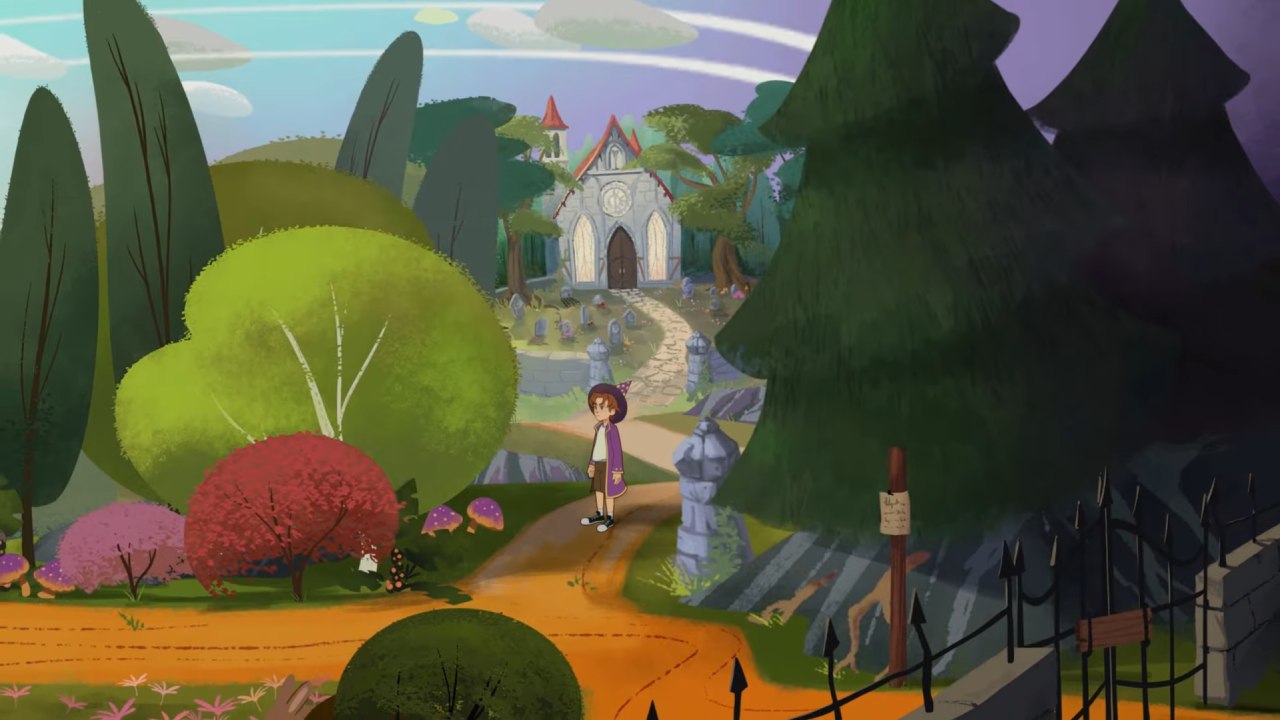
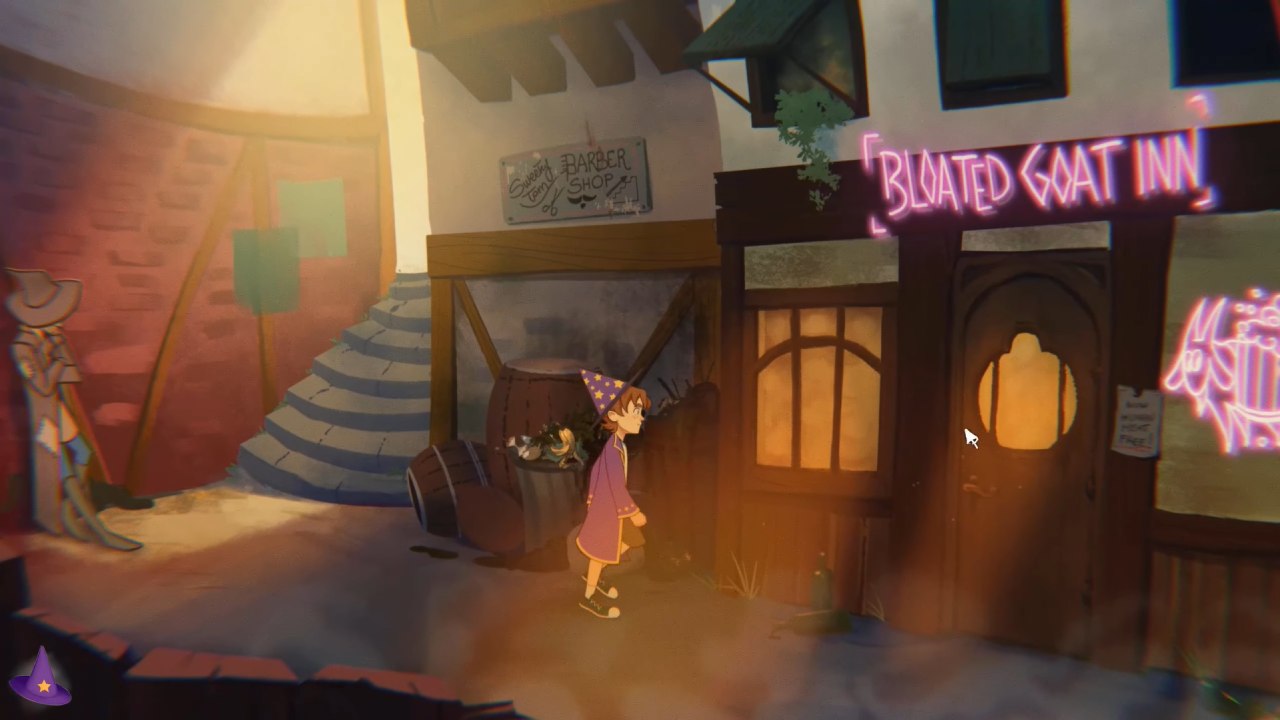
Simon the Sorcerer Origins is beautiful to look at. The world is entirely hand-drawn, featuring detailed backgrounds and smooth animations that bring the fantasy world to life. Every place looks like a moving painting, from the flickering candles in a wizard's tower to the rivers that shine in the moonlight.
Smallthing Studios' art direction perfectly captures the feel of 90s adventure games, utilizing the best animation technology available today. Character designs still feature their cartoonish exaggeration, with humorous body language and expressive faces that make the game even funnier. The transitions and animations are smooth, giving the game a cinematic feel without losing its classic charm.
Some long-time fans miss the pixelated look of the originals, but the new style is both nostalgic and new at the same time. It's a colorful world that makes you want to explore, and it looks great on devices like the Steam Deck.
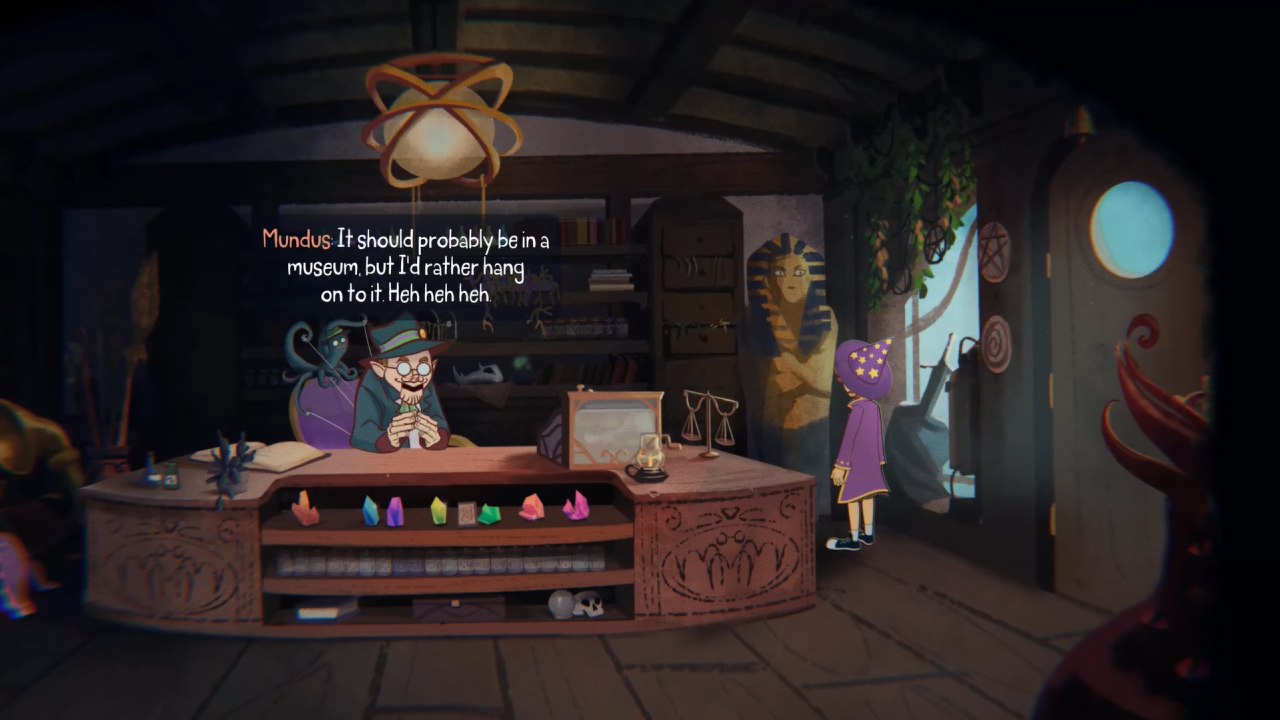
Voice acting is one of Simon the Sorcerer Origins's strongest points. Once again, Chris Barrie portrays Simon with impeccable comedic timing. Each line is enhanced by his sardonic tone and piercing delivery. Grumpy wizards and eccentric shopkeepers are just two examples of the wonderful supporting characters, each with a distinct voice that perfectly suits their unique personalities.
Sharp and full of witty jokes, the dialogue finds a balance between warmth and satire. The performers bring the game's absurdity to life, and the game accepts and revels in its silliness.
Mason Fisher, who is known for his work on Eye of the Beholder 3, wrote the music that ties everything together. The music transitions from playful orchestral themes to soft, ambient sounds that perfectly fit each scene. It sounds great and makes you feel both nostalgic and new. It's the perfect match for the game's beautiful graphics.
Simon the Sorcerer Origins is a heartfelt effort to bring back one of the best names in adventure gaming. It's full of charm, wit, and nostalgia—a loving tribute to a time when people hunted pixels and made silly jokes. The writing is excellent, the art direction is outstanding, and the voice acting is exceptional. You can tell that the developers really love the source material in every frame.
Sadly, that love can make them hold on to the past too tightly. The puzzle design sometimes feels stuck in the early 1990s—random, punishing, and sometimes broken. The game could turn off players who want a fair challenge instead of nostalgic frustration if it doesn't have a good hint system or modern logic flow.
There is still magic here. The world beneath the broken puzzles is full of funny and creative things. Every sarcastic comment and hand-drawn scene reminds you why Simon became a cult classic in the first place. It has flaws, but it is definitely heartfelt.
If you like this kind of game, Simon the Sorcerer Origins is worth the trip. You get to see the old wizard's spark come back to life after thirty long years.
Contributor, NoobFeed
Verdict
A charming and nostalgic return that is full of art and humor, but struggles with some issues in the puzzle design. A spell that almost works: heartfelt, funny, but not perfect.
95
Related News
No Data.