
STARBITES Review
Xbox Series X|S
STARBITES blends cozy sci-fi storytelling, mech-based combat, and stylish anime aesthetics into an ambitious indie RPG experience, even if some repetitive design choices hold it back from greatness.
Reviewed by Wasbir Sadat on May 21, 2026
At first, STARBITES found its audience among turn-based game fans; over time, it attracted players who enjoy games in the vein of old favorites like Octopath Traveler, Persona 5, Wild Arms, and even Xenogears. Developed by IKA Games and published by NIS America, the title was immediately distinguished by its unique aesthetic, mech-based warfare system, and post-apocalyptic sci-fi premise.
Many players first considered STARBITES to be bad. At first glance, it appears to be a low-quality, dated indie RPG. But once people play it for a time, the fighting mechanisms, the character relationships, and the curiously compelling advancement loop slowly reveal what kind of game it is.
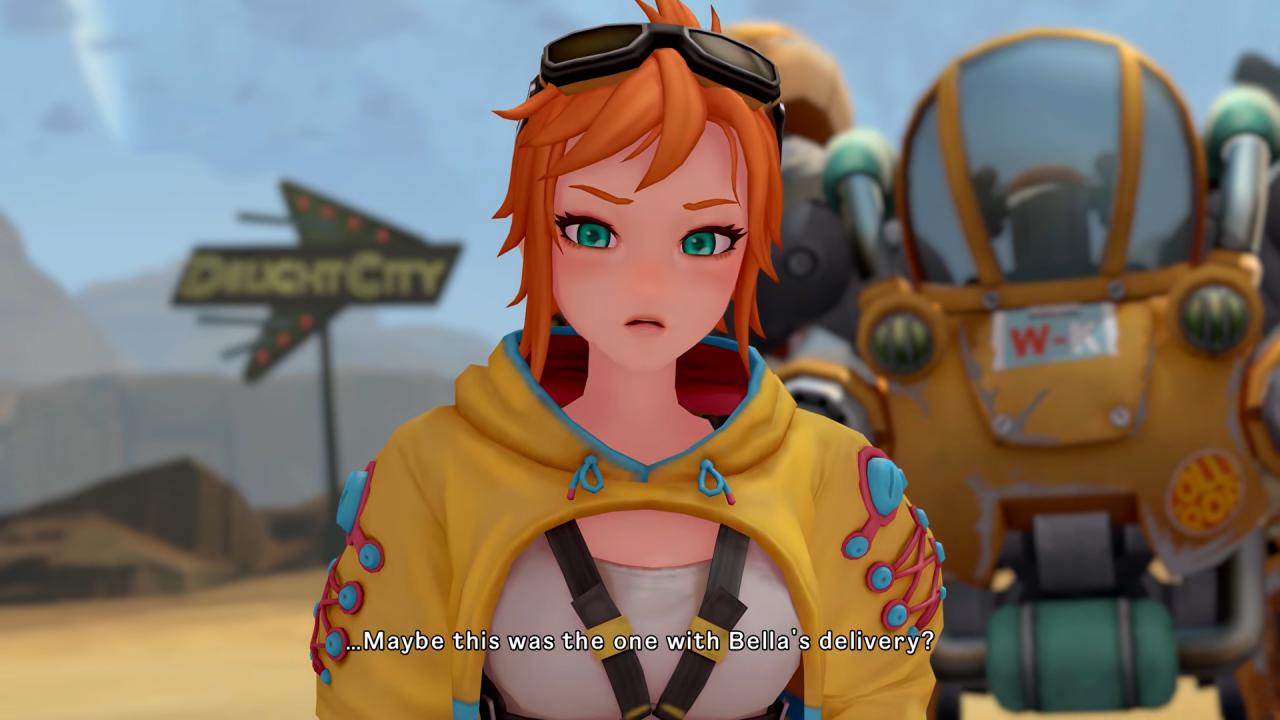
The interesting thing about STARBITES is that it is always stuck between two extremes. It's not a tough strategy RPG, but it's also not a simple story adventure either. The graphics aren't the most cutting-edge, but it has a style that sets it apart from most independent RPGs. There are fun ways to customize your character and your fight, but the game struggles with repetition, pacing, and exploration, keeping it from reaching its full potential.
The setting is set on Bitter, a desolate desert planet that was annihilated in a war between galaxies.
The landscape is filled with the wreckage of satellites, great machinery, and spaceships lost. What was once a tourist hotspot is now a massive wasteland of rubble and mechanical rubbish. The world continues to make me feel like I'm breaking apart and getting used up. There aren't many towns left, supplies are scarce, and most people are just trying to get by day to day.
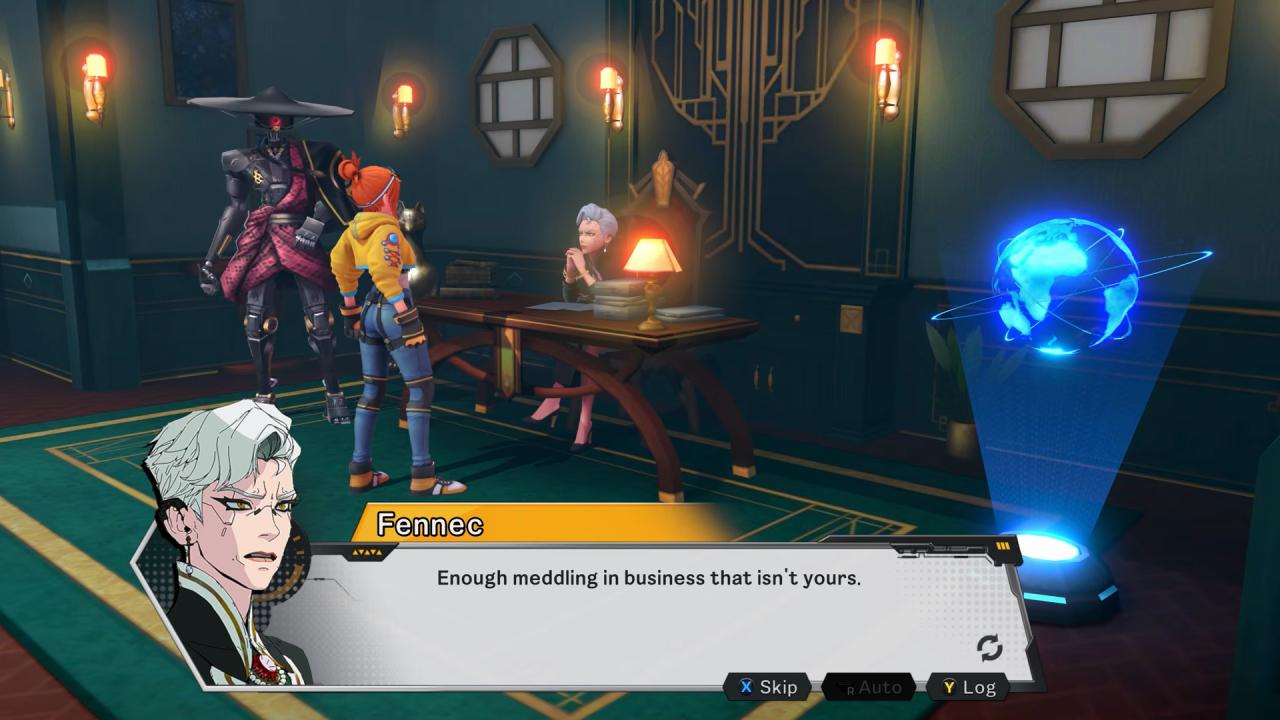
You play as Luka, a young woman stuck on Bitter because of the huge debt she got from her parents. Like a lot of JRPG main characters, Luka wants to leave her home world and do something bigger than the hard reality she lives in. But it's a lot harder for her to leave Bitter than she thought. A strong leader on the planet named Fenick pretty much runs everything.
He sends Luka on risky jobs and errands, promising freedom. As the game unfolds, Luka is joined by new companions, such as Gwendel, an alcoholic mechanic who likes explosions, and Badger, the gang's silent but mysterious power. One of the best things about the game is that they can work together. The talks and exchanges between the three major characters feel genuine and entertaining, which helps keep the plot interesting throughout the slower periods.
The story moves at different rates at different times. It is acknowledged that the first four hours are slow, and some players may find it difficult to get emotionally invested during that period. But as the story progresses, the characters become more likable, and the setting becomes more interesting. The latter leaves the party feeling rushed and underdeveloped, which is a shame.
Two characters are introduced late in the novel and receive little attention, making them seem less essential than Luka, Gwendel, and Badger. Despite these shortcomings, the game's overall tone is beautiful. STARBITES has a surprisingly pleasant sci-fi anime vibe, despite taking place after the end of the world. The game never really tries to be too scary or tug on the emotions. It’s more about friendship, excitement, and making it through a shattered world.
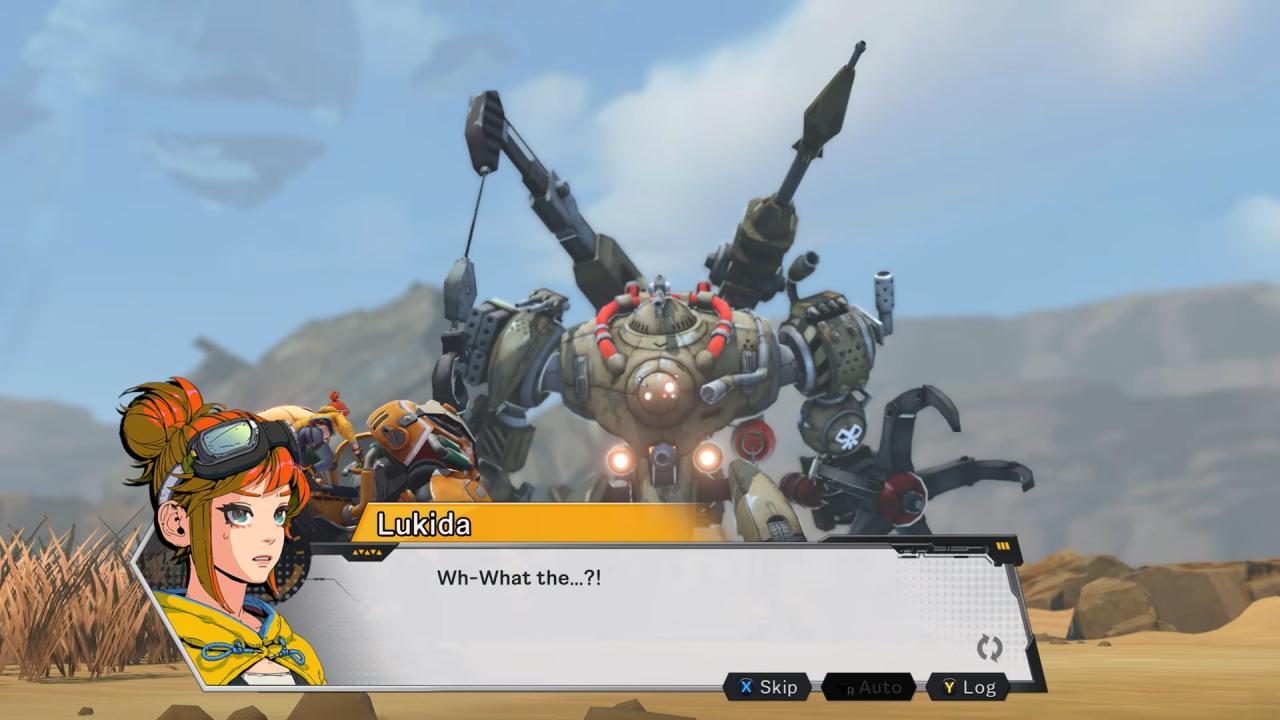
At its heart, STARBITES is about exploration, advancing your party, building structures, and completing story-driven objectives. game jumps back and forth between cities, overworld exploration, dungeon-like sections, and fights.
In towns, the vision shifts to a side-view exploration mode. The overworld, meanwhile, is a top-down experience that allows players to zip between locations on motorbikes and mechs. Exploration is a major component of the overall gameplay loop. Players are always searching for materials, treasure, resources, and hidden stuff that can be used to create upgrades.
There is also a scanning tool that lets you see neighboring goals and secret goodies. Unfortunately, the scanning technique employed here is simpler than older RPGs like Wild Arms 2. It covers a lot of ground and even points players towards the next goal, preventing them from becoming too irritated.
Customization is another big focus. You operate a mech that can be equipped with multiple engines, armor, cores, and upgrades. Some robot sections even change the machines' appearance, but not all upgrades do. actual depth is in the engine system, which determines how many core places players can use, allowing them to design alternative builds and play in different ways.
The best element of the game is the ability tree system. Every character can follow several different paths to improve skills, stat enhancements, passive bonuses, and battle. Better yet, players can reset all of their skill trees at any time without penalty. So people will be more willing to try new things, rather than being punished for early mistakes. allows you to experiment with support-oriented, aggressive damage builds, or hybrid build approaches, as you like.
Despite all of these changes, the game still struggles to evolve its core gameplay loop. The early goings are thrilling as players discover new systems, powers, and choices as they go through the game. toward the middle of the game, a lot of the events start to feel like they’ve happened before. The big maps and the constant fighting really start to drag things down.
STARBITES really shines when you battle. The battle mechanism is quite similar to games such as Octopath Traveler; it blends turn-based tactics with shield destruction. Every enemy has a weakness to a specific sort of attack or elemental talent.
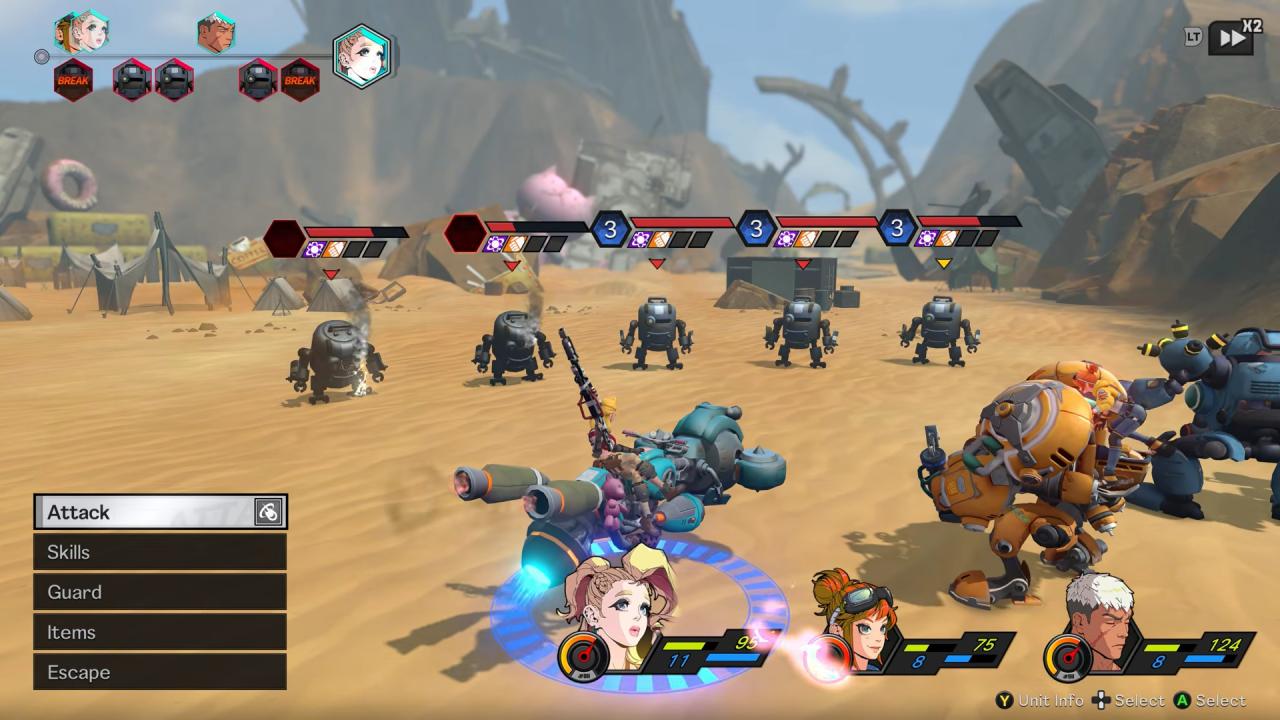
These flaws can be repeatedly exploited by players, allowing them to shatter opposing shields, shock them, skip their turns, and deal much more damage. The battle system is simple to grasp but exciting to learn. There's a clear turn-order timetable for who moves next, letting players strategically shift the course of battle. Skills can even affect the order of turns in real time, making tactical choices even more challenging.
Driver's High is a special attribute that offers the group increased power during battle.
It’s like overdrive mode. As bouts drag on, players build up a meter that can make assaults greatly more powerful and completely disrupt the flow of games when bosses are difficult. This feature makes battles more visually engaging and fun, even when the conflict drags on too long.
SS fights tend to be more fun than regular encounters since they have new rules that make players think about things differently. Some bosses encourage players not to rely solely on exploiting weaknesses, but to modify their approach rather than repeating the same one.d And though the combat method is pretty much the same over the ages.
As players acquire larger characters and stronger builds, many battles become simple. Most difficulties are already adequately addressed by the initial team, so later party members don't feel needed. The game constantly adds new skills, but it rarely forces players into situations that require creativity. The problem is made worse by the XP system.
Characters in the front of the conflict gain a lot more experience than characters in the back. Backup characters can aid in combat against attackers when their shields are shattered, but they are still behind in level. This makes it less likely to try new things later in the game, as unused characters get less powerful relative to the main squad.
Grinding itself isn’t too painful, as materials and XP are rather plentiful. The purpose of the game is not to be exceedingly difficult, but to be fun and easy to play. Still, STARBITES doesn't offer any major post-game material or replay hooks, so those looking for substantial endgame content or high-level optional tasks may find themselves disappointed.
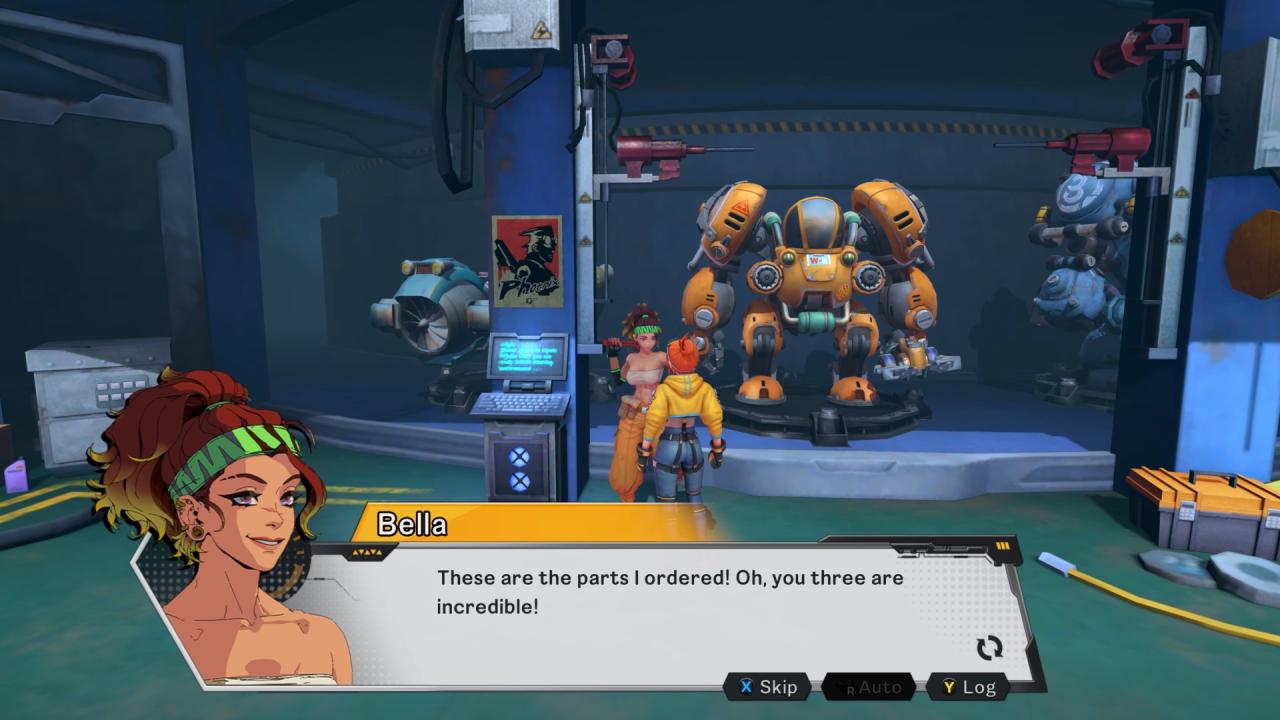
STARBITES looks like a collection of various things in the best possible way. The graphics aren’t as good as in recent AAA RPGs, and some gamers would even think some areas of the game appear as they did on the PlayStation 2. Character models and background elements can get a bit too simplistic at times, and some animations need a bit more work.
But despite these problems, the game works because of its distinct art style. The art design lends the game charm, and the distinctive settings help Bitter feel new while taking place in the same desert over and over. The mechs, character designs, and fast battle motions make the battles fascinating to watch.
Many fights seem massive and powerful, like the ultimate powers in games with bigger budgets.
Which makes the struggle much more interesting than one might imagine. The character animations are so compelling, lending personality to discussions and combat. The visuals are not very good overall, but the presentation is sweet enough to make up for any technical problems.
It’s surprising to see such quality of voice acting for an independent RPG of this scale. There are voice files in both English and Japanese, and both include performances that give the group a lot of enthusiasm. The game's graphics are not very good; therefore, the quality and quantity of voice acting are a great surprise.
The music is a nice contribution to the game's ambiance, a decent mix of sorrowful, desolate themes and brighter, adventure-themed pieces. The soundtrack adds to the overall comfy sci-fi vibe that defines the entire experience. The sound presentation, including good sound effects during battle and mech fights, helps make the game more immersive.
At the end of the day, STARBITES is a game full of contradictions. It’s both delightful and monotonous, daring yet limited, comfortable and occasionally frustrating. The game is engaging because it features compelling characters, strong gameplay, a stylish aesthetic, and exciting customization options.
This is enough to make Bitter's universe different from other independent RPGs, and the battle system is deep enough to keep people interested for dozens of hours. However, the game’s vast areas, monotonous combat, clunky movement, uneven pacing, and late-game party members who never quite get to shine prohibit it from fulfilling its full potential.
Depending on the platform, technological issues such as control problems and glitches during exploration might also make the experience less enjoyable. STARBITES is a terrific game with a lot of heart for fans of turn-based RPGs, anime-inspired adventures, and sci-fi realms after the end of the planet.
It may not reinvent the genre, but this game certainly proves that smaller independent RPGs can still have engaging battle mechanics, interesting characters, and a unique style that sticks with gamers long after the game ends.
Contributor, NoobFeed
Verdict
STARBITES is a charming indie JRPG with fun turn-based combat and strong character work, but repetitive exploration, uneven pacing, and limited late-game depth keep it from reaching its full potential.
74
Related News
No Data.