
STORY OF SEASONS: Grand Bazaar Review
Nintendo Switch 2
A fresh look at a classic series.
Reviewed by Maisie Scott on Sep 01, 2025
The foundation of the farming simulation genre has long been the Story of Seasons series, formerly known as Harvest Moon globally. It initially surfaced in the late 1990s and soon established itself as a mainstay among gamers who want comfortable, life-sim games. Marvelous has maintained the brand over time by refining its concepts and presenting new interpretations that strike a balance between innovation and heritage.
The series continued to build on its heritage after Marvelous and Natsume parted ways in 2014, when it changed its name to Story of Seasons. While some entries, such as Pioneers of Olive Town, were well-received by fans and garnered "Very Positive" reviews on Steam, others, including remakes like A Wonderful Life, were met with more mixed reviews.
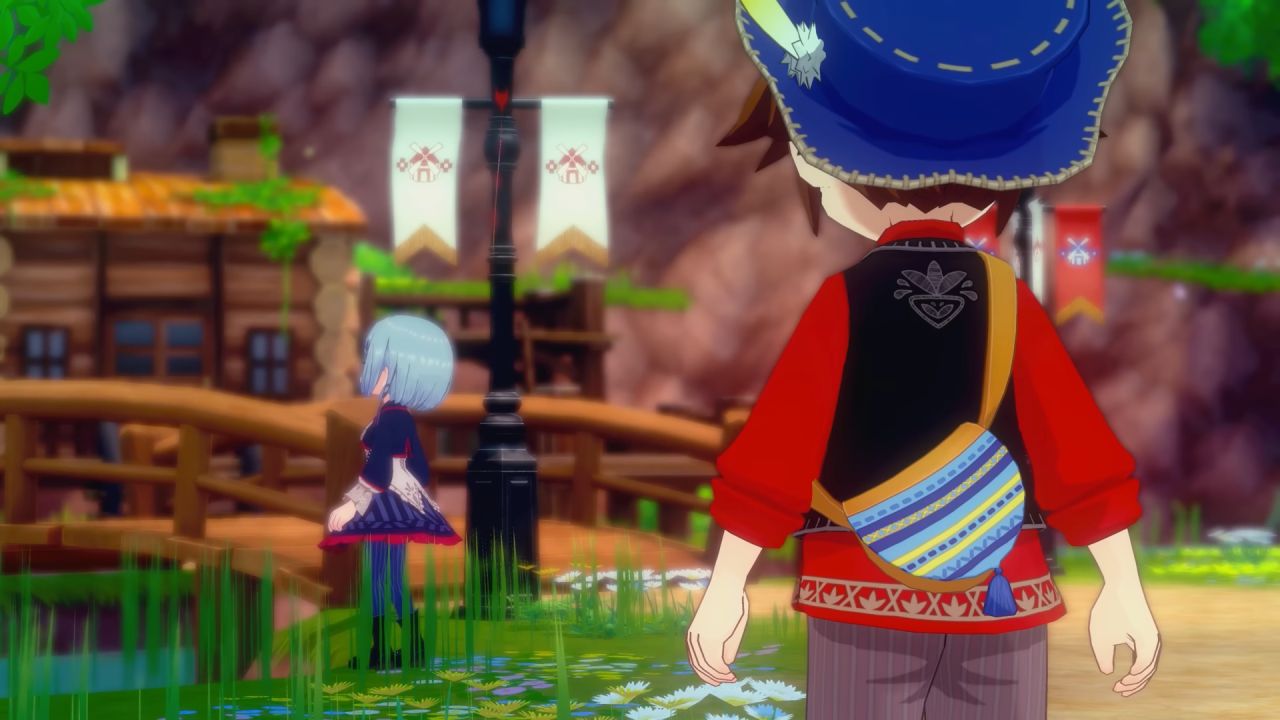
Story of Seasons: Grand Bazaar is a throwback to one of the earlier, more avant-garde and distinctive episodes in the series. Harvest Moon DS: Grand Bazaar, the game's 2010 Nintendo DS original, was notable for its bazaar mechanic, which added an entrepreneurial touch to farming.
While it doesn't completely reinvent the wheel, the Steam edition thoughtfully improves the formula with polish, charm, and mechanisms that elevate it above a straightforward remake. Like many of the series' entries, Story of Seasons: Grand Bazaar's overall plot is purposefully light.
When you go to Zephyr Town, the former farmer has left, and the town has lost its once-thriving marketplace. It is your responsibility to revitalize the neighborhood and return the Story of Seasons: Grand Bazaar to its former splendor.
The emphasis here is more on social interaction, personal development, and the joy of seeing the town thrive as a result of your contributions than in story-heavy role-playing games. The actual Zephyr Town is layered and compact, providing ample space for exploration and verticality.
Playful features include hidden passageways that reward exploration with uncommon materials and shortcuts, as well as spring-loaded barrels for scaling steep cliffs. Your journey seems natural and player-driven, as the story is told more through seasonal events and human relationships than through major plot points.
You could initially think that the people of the town are a little mediocre. Although they don't have the bizarre extremes found in other farming simulations, daily interactions eventually show depth. Notably, certain personalities become more prominent as you spend more time in Zephyr Town.
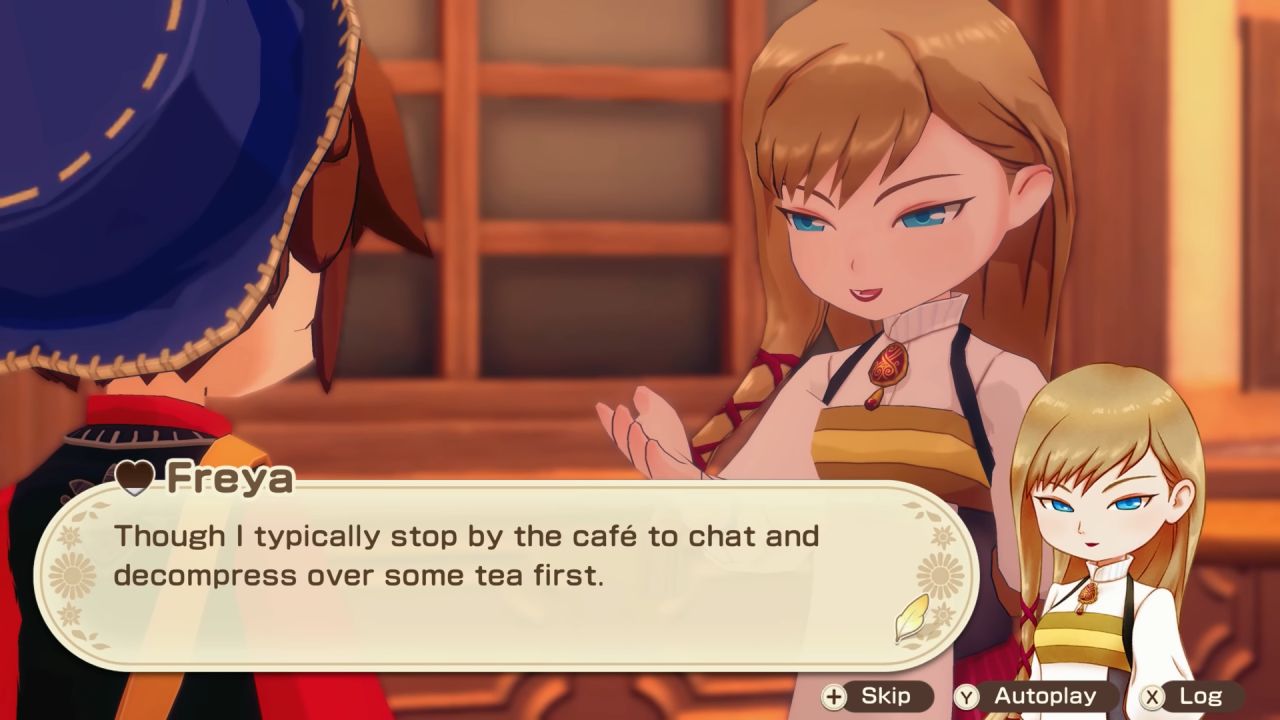
Lloyd, Gabriel, and Arata give strong masculine counterparts, while love interests like Freya, Diana, and June offer entertaining romance journeys. Deeper plotlines, such as Kagetsu's enigmatic past or Arata's tenacious work ethic, give the film an unexpectedly strong emotional impact.
Another pleasure is Mayor Felix, whose friendliness and excitement bring humor to many encounters. The characters may seem uninteresting at first, but as their dialogue and storylines unfold, a fulfilling sense of community emerges.
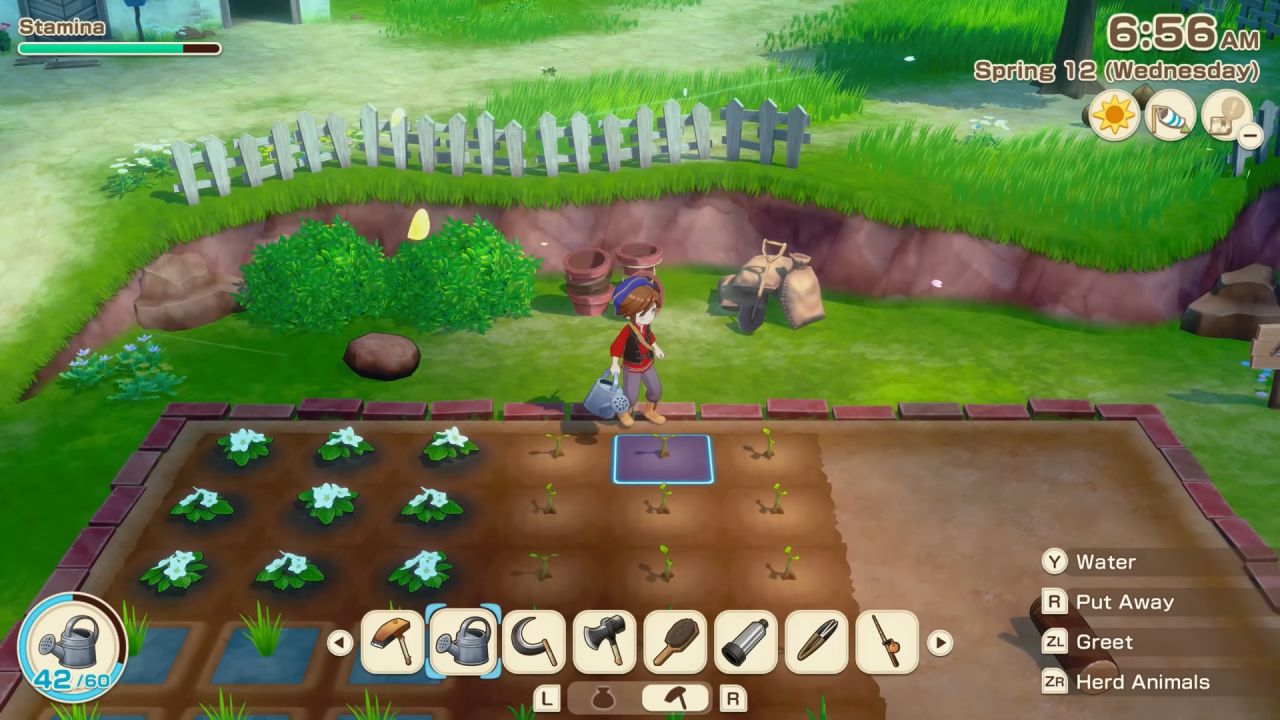
Fundamentally, Story of Seasons: Grand Bazaar carefully improves upon the farming formula. Without sacrificing their tactile appeal, everyday tasks such as planting, watering, and harvesting are made simpler. A dedicated tool inventory prevents your backpack from becoming cluttered, and tools have been consolidated for efficiency—the hatchet and pickaxe have been integrated into one.
You may perform "super actions" like plow, water, or harvest numerous tiles at once, thanks to a special leap mechanism. Your agricultural routine gains rhythm and strategy as a result, particularly when improvements increase the range. Planning is also necessary for stamina management, which requires foraging for flowers, insects, and other supplies to keep up with your tasks.
Windmills function as manufacturing facilities where raw resources can be transformed into superior-quality products. Because procedures require time to finish, this method promotes forward planning. From crops to foraged goods, all products are rated using a system of stars that goes from 0.5 to 5. Profits are directly impacted by higher ratings, which encourage you to maximize resource management, farming, and crafting.
The five happy characters known as the Nature Sprites, who contribute features that improve everyday living, are also introduced in the game. You can trade "Happy Energy," which is produced by completing tasks, for special goods like Sprite Boxes that provide access to storage from multiple locations. Providing them with access to resources also enhances the caliber of subsequent discoveries, creating a positive feedback loop.
Starting small can feel constricting because your first land area is much less than Stardew Valley's unrestricted flexibility. However, as you grow your farm, change up your crops, and improve your production cycle, this gradually turns into a fulfilling sense of advancement.
Platforming is yet another surprising pleasure. Exploring hidden ledges, flying across town on the wind, and bouncing across barrels offer traversal a lighthearted feel, even though it's not as sharp as a specialized platformer.
Depending on the direction of the wind, the glider, which you learn early on, enables you to move swiftly or find hidden places. Exploring Zephyr Town seems satisfying and lively because of it.
Festivals offer yet another level of diversity. Later festivals compensate for this with more engaging minigames and prizes, but early events like the Flower Day and Tea Party feel dull and uninspiring. For instance, The Pet Show adds entertaining features that disrupt the farming cycle and strengthen the bonds between neighbors.
Naturally, the Bazaar itself is the primary mechanism that distinguishes Story of Seasons: Grand Bazaar. You establish your shop every Saturday to sell your weekly produce, which includes crafts, foraged goods, and crops. You must manage client demand and sell out within the event's two four-hour periods.
Consumers express their wishes in thought bubbles, which enables you to quickly switch things around. Customizing a stand boosts popularity and prices, while ringing a bell draws in more customers. You can swiftly get rid of a lot of stuff by using Nature Sprites to cause "selling sprees," which are periods when time stops and sales soar.
The Bazaar's progress is determined by consumer feedback every Sunday. The Bazaar's rank is increased by fulfilling requirements, such as total sales or the number of stalls opened, which unlock additional store types, recipes, and inventory expansions. One of the most rewarding growth cycles the series has ever provided is seeing the marketplace transform from a small setup to a thriving commercial center.
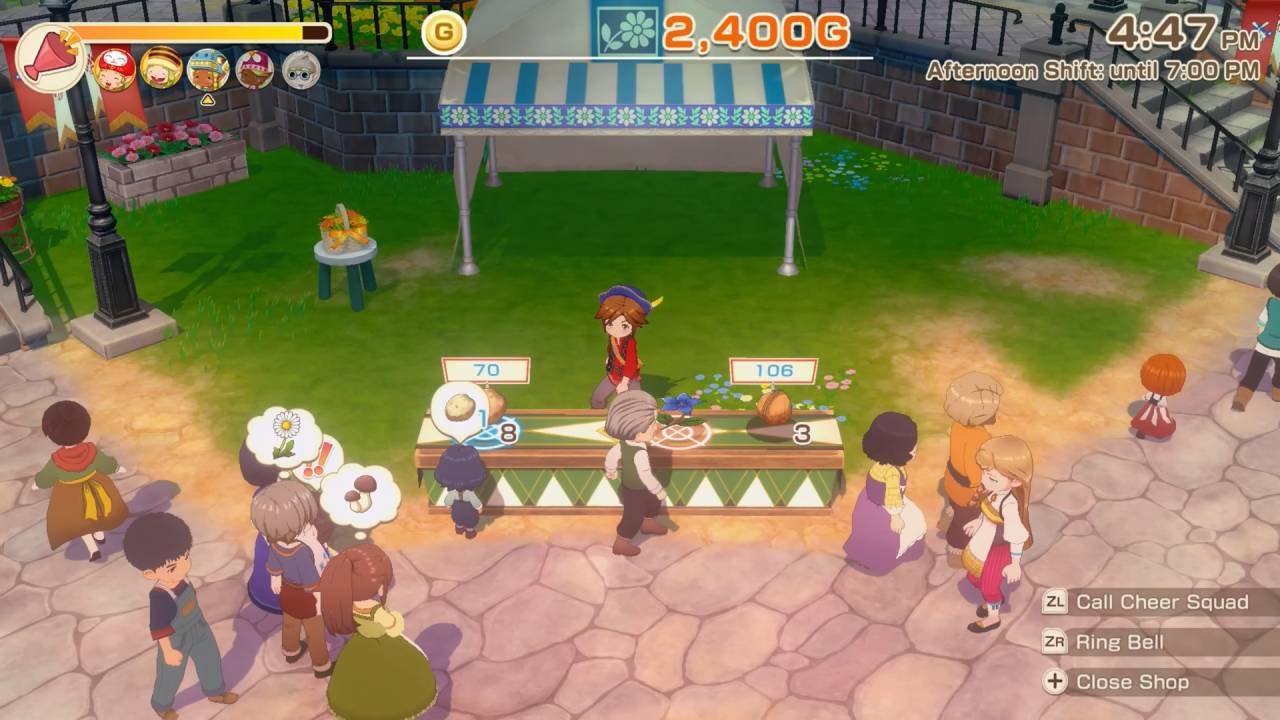
Story of Seasons: Grand Bazaar is transformed from "just another farming sim" into a farming and market simulation combination thanks to the bazaar mechanic. Stakes, strategy, and community involvement are introduced, giving your actions a sense of visibility and influence.
Story of Seasons: Grand Bazaar stays away from direct combat, in contrast to Marvelous' Rune Factory series. Rather, its "puzzle" component stems from effectively allocating time, energy, and resources. As you try to improve crop quality, control fertilizer use, and schedule windmill production, the star-rating system works like an optimization puzzle.
Although there isn't a combat grind, mastery of these mechanics is necessary for advancement. The ranking system in the Bazaar serves as the game's version of XP grinding.
By spending time on agricultural cycles and market days rather than monster battles, you progressively level up the Bazaar and open up increasingly difficult chances. This strategy maintains the non-violent tone of the series while making progress feel satisfying.
Story of Seasons: Grand Bazaar strives for a homey appeal in its design. The essence of rural life is encapsulated by pastoral scenery, tranquil sunsets, and busy market days. The execution isn't always reliable, though. Although useful, Zephyr Town's undulating hills and windswept walkways lack the rich texture found in more recent games like Rune Factory: Guardians of Azuma.
Opinions may differ due to the cartoonish and basic nature of character art. Some designs feel undercooked, while others, like Freya and the eccentric Nature Sprites, soon win you over. In addition to being basic, the character creator lacks customization options and appears outdated by today's standards.
Sound design excels when graphics falter. The game's easygoing tempo is wonderfully complemented by the tuneful, serene soundtrack. The music enhances the homey ambiance without ever overpowering it, whether you're selling at the Bazaar, gliding around town, or tilling soil.

Voice-overs are a welcome development, as they lend interactions personality and give conversations a more lively vibe. You are further drawn into Zephyr Town's world by ambient elements like the wind blowing through fields or the commotion of a market day.
Story of Seasons: Grand Bazaar is a novel take on the farming simulation paradigm as well as a nostalgic comeback. Even if it falls short of all contemporary standards for quality of life, its distinctive mechanics—particularly the Bazaar system—give it a unique place in the genre.
The gratifying advancement cycle, endearing characters, and captivating market days more than make up for the initial frustrations caused by early pacing issues, basic graphics, and limited customization. While the star-rating system and Nature Sprite interactions offer layers of strategy, the glider and platforming mechanics bring in lighthearted exploration.
Editor, NoobFeed
Verdict
Story of Seasons: Grand Bazaar may not be perfect, but it blossoms into a memorable experience that earns its place among the series' stronger entries.
81
Related News
No Data.