
Tennis Manager 26 Review
PC
A deep, flexible tennis management sim that finally lets you live both sides of the sport: strategist and star.
Reviewed by Maisie Scott on May 15, 2026
Tennis games have always struggled with identity. Unlike football or basketball, where the sport naturally fits both arcade and simulation formats, tennis tends to get split cleanly into two extremes. On one end, you get fast-paced arcade experiences built around timing, reflexes, and exaggerated court action.
On the other hand, you get management-heavy simulations that completely remove you from the physical side of the sport and instead place you in front of endless menus, stats, and long-term planning systems. Tennis Manager 26 sits firmly in that second category, but what makes it interesting is how far it pushes that identity compared to previous entries in the series.
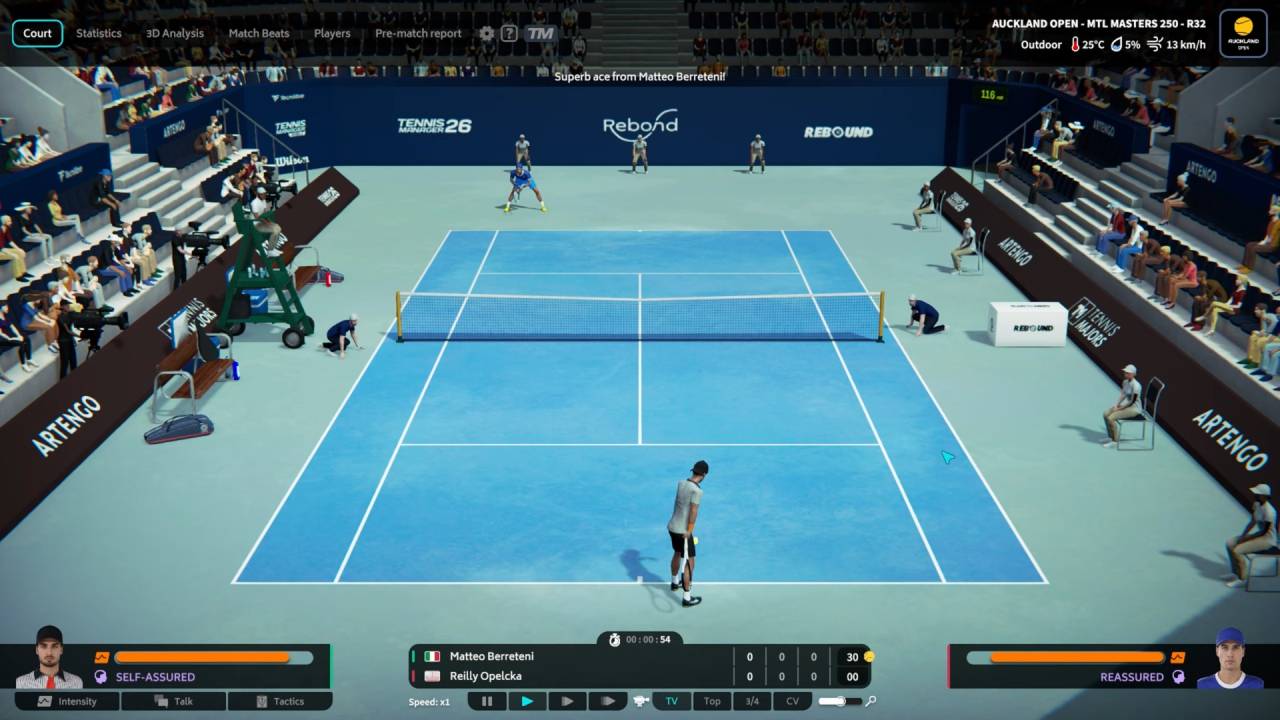
Tennis Manager 26 doesn’t try to simplify the genre or turn it into something casual.
Instead, it doubles down on depth while aiming to make it more accessible, structured, and meaningful. The series itself has always been known for its ambition. Earlier versions already gave players the ability to run academies, manage training schedules, scout young talent, handle finances, and guide players through competitive circuits.
However, those systems often felt disconnected or overwhelming, especially for newcomers who weren’t already familiar with tennis tactics or sports management games in general. What this new entry attempts to do is unify those systems into a more coherent structure while expanding what the player is actually allowed to do.
The most noticeable shift in this version is that the game no longer wants you to think of yourself purely as a manager sitting in an office. Instead, it emphasizes that you are part of a living tennis ecosystem. You are building careers, shaping athletes, reacting to matches in real time, and even stepping directly into the role of a player through entirely new gameplay layers. It’s not just about running a system anymore; it’s about experiencing it from multiple angles.
That change in philosophy is what defines the entire game, and it becomes clear very early on that this is not a small update but a structural evolution of how the series presents itself. At the center of the experience is the academy management system. This is still the backbone of the entire game and remains the primary way most players will interact with it.
You take control of a tennis academy and are responsible for everything that happens within it. This entails hiring staff, managing budgets, developing training programs, scouting young players, and gradually upgrading your infrastructure to produce better athletes.
The difference with this version is that you have a lot more control and customization from the start. One of the biggest additions is the ability to choose the exact location of your academy at the start of a career. Previously, the location was fixed or heavily constrained. Geography now plays a much more important role.
The country and city you choose will impact player recruitment, development potential, and even how your academy evolves.
Alongside these factors, the game introduces a more dynamic career ecosystem. You are no longer operating in isolation. The world around you feels more active, with multiple characters existing independently of your direct control. You can create additional managers or players who continue their development across saves or even import them between careers. This creates a sense of continuity in the game world that didn’t exist before.
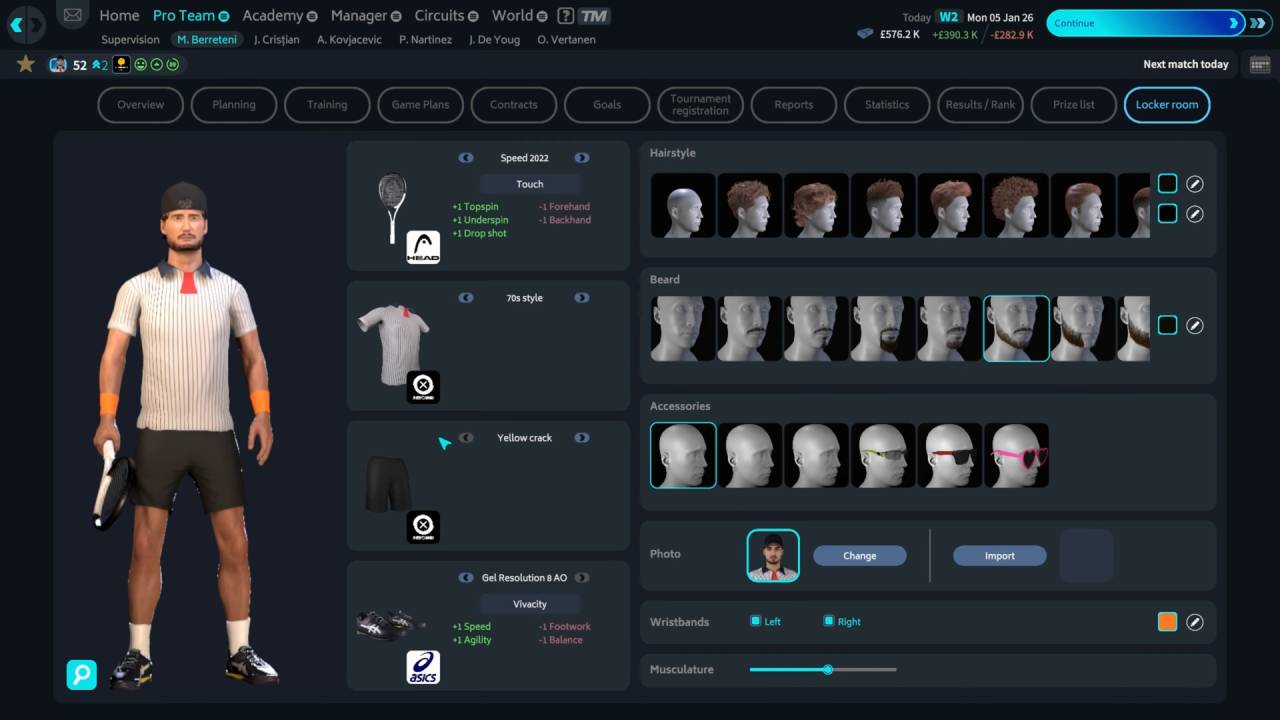
The game also introduces a clearer pathway toward national team management. You don’t just apply for a role; you earn it with your reputation and your performance. Your success at the academy level eventually translates into national recognition, and you can move into a totally different role with wider responsibilities. This creates a long-term career arc that extends far beyond club or academy success.
Perhaps the most ambitious addition, however, is My Player mode.
This completely shifts the perspective away from management and puts you directly into the shoes of a 16-year-old tennis player starting their professional journey. You no longer decide for someone else but guide your own athlete through training, tournaments, sponsorships, and personal development. This mode makes the game feel more like a career RPG, where every decision affects not only performance but also personality, reputation, and long-term potential.
Some setups even have a fantasy-like aspect, where you can create your perfect player from scratch, picking attributes, background, and playstyle. This flexibility means highly personalized careers, whether you want to focus on aggressive play, technical consistency, or a balanced approach across all areas.
These modes, together, form a layered structure that requires you to constantly switch between perspectives. You’re able to run a system, forge a career, or feel the game from the inside out—it's a matter of how you want to play the game.
Tennis Manager 26 is entirely system-driven, not player-driven, in its gameplay. You’re not playing tennis in the traditional real-time way. Instead, you are creating results with preparation, strategy, and adaptation.
A big part of the gameplay is about training systems.
You decide how the players develop over time, choosing areas to focus on like serve strength, physical conditioning, tactical awareness, and consistency under pressure. This is not a standalone decision. It directly impacts players' match performance, stamina, and reactions in clutch moments.
Training is closely related to scheduling, one of the most important parts of the game. It’s a balancing act between rest, travel, and preparation, and you need to plan weeks in advance. If you push a player too hard, they will tire and play poorly. If you don’t train hard enough, they will plateau. It creates a constant tension between short-term success and long-term development.
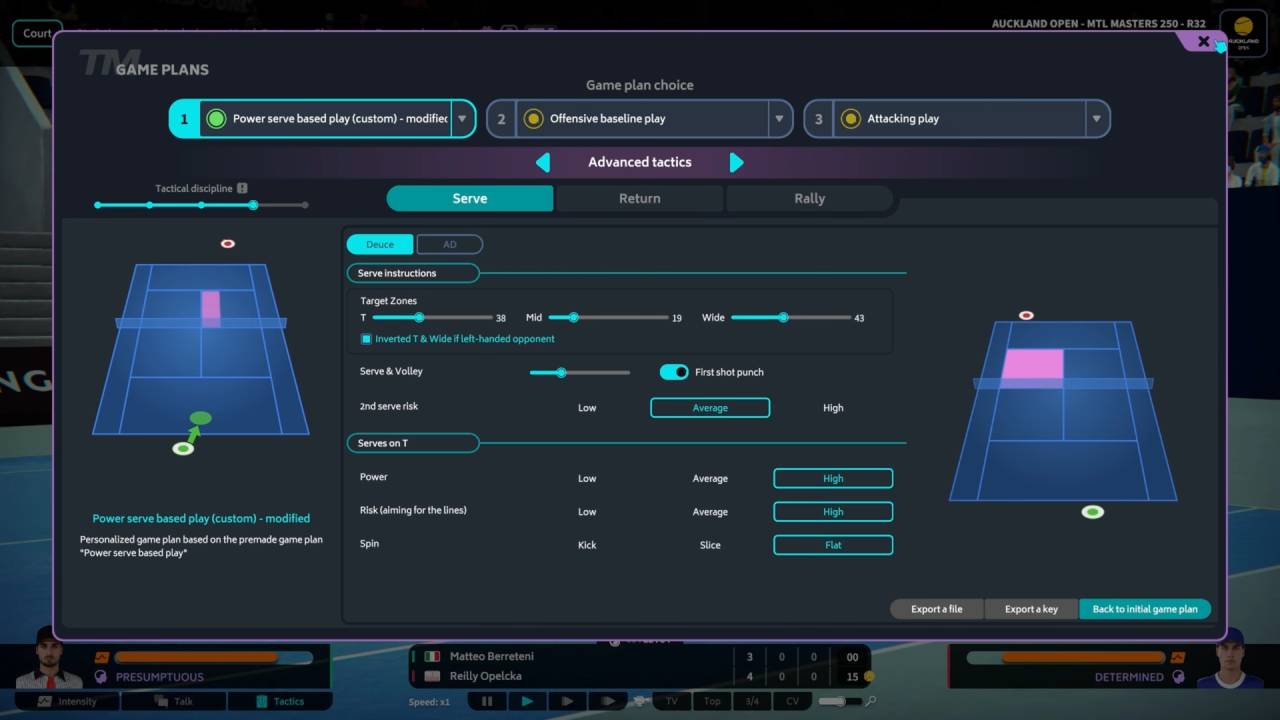
A 3D simulation engine noticeably improves the matches. You can watch the points unfold, adjust your strategy during the game, and switch between various camera angles and analytical overlays. You're not controlling the player directly, but you constantly influence how he plays through the tactical decisions you make.
In-game, the match provides detailed feedback on the player's condition, including fatigue, mental state, and changes in momentum. This is important information because it enables you to make real-time adjustments. You can tweak the aggression, change the risk tolerance, or focus on certain weaknesses in your opponent’s game.
In My Player mode, the game becomes more personal and slightly more complex in terms of resource management.
You have to manage physical effort, mental focus, and emotional stability. The game tracks things like your heart rate and psychological pressure, so your performance isn’t just about your skill but also how well you manage your condition in a match.
One of the wonderful things about the gameplay is that everything is interconnected. Training influences matches. Matches influence morale. Morale influences future training. Long-term decisions influence career trajectory. But it can also be overwhelming, especially for players new to the intricacies of tennis strategy and management systems.
The AI in the game is supposed to mimic realistic tennis movements rather than just random ones. Opponents play differently depending on their attributes, so a powerful server, a defensive baseliner, and an aggressive attacker each approach matches differently.
The AI also responds to momentum and fatigue, making games more dynamic and less predictable.
One of the strongest aspects of the experience is the player database. The game is alive and well with thousands of players, almost 3,000 tournaments, and a worldwide tennis ecosystem from junior to pro. This gives a sense of scale and progression through the world that reflects the actual tennis structure.
Tournaments incorporate career planning. You can’t just jump into events without considering travel time, recovery, and scheduling. These logistics decisions (travel class, accommodation options, etc.) can affect performance, adding an extra element of realism to the simulation.
The game is not fully licensed, though that varies, and it is made up for in the focus on structural authenticity over branding. The focus is more on the feel of a real tennis ecosystem than on official names or venues. This allows for a broad and flexible representation of world tennis without the constraints of licensing limitations.
Leveling up in the game is based on experience gain and long-term development. Everything is growth, training, playing in matches, and tactical success in competition. These activities add up to progression points over time that can be spent on upgrading certain attributes.
These attributes are split into different categories and skill trees, allowing players to specialize in certain aspects of the game. You can go for power serving, consistency in returns, physical stamina, or mental toughness. Every decision affects how the player plays on the court, so the progression doesn’t feel cosmetic; it feels important.
In My Player mode, progression feels more like a role-playing system.
Unlocking new abilities directly changes how matches are played. A better serve, for example, doesn’t just improve your stats; it changes how your opponents react and how a match plays out tactically. The Academy progression is on a grander scale.
You are not building a single character but rather a whole system of players. Staff improvements, training facilities, and scouting networks all help in the quality of talent you produce over time. This dual-layer progression system creates micro and macro goals, something for players to focus on in each session.
Visually, the game favors clarity over realism. The match engine won't compete with high-end sports titles, but it does provide a clean, readable representation of tennis matches. The animations are smooth enough to follow easily, and the 3D camera system lets you observe games from various angles. The visuals are functional, not overly detailed, but they support the game's tactical nature.
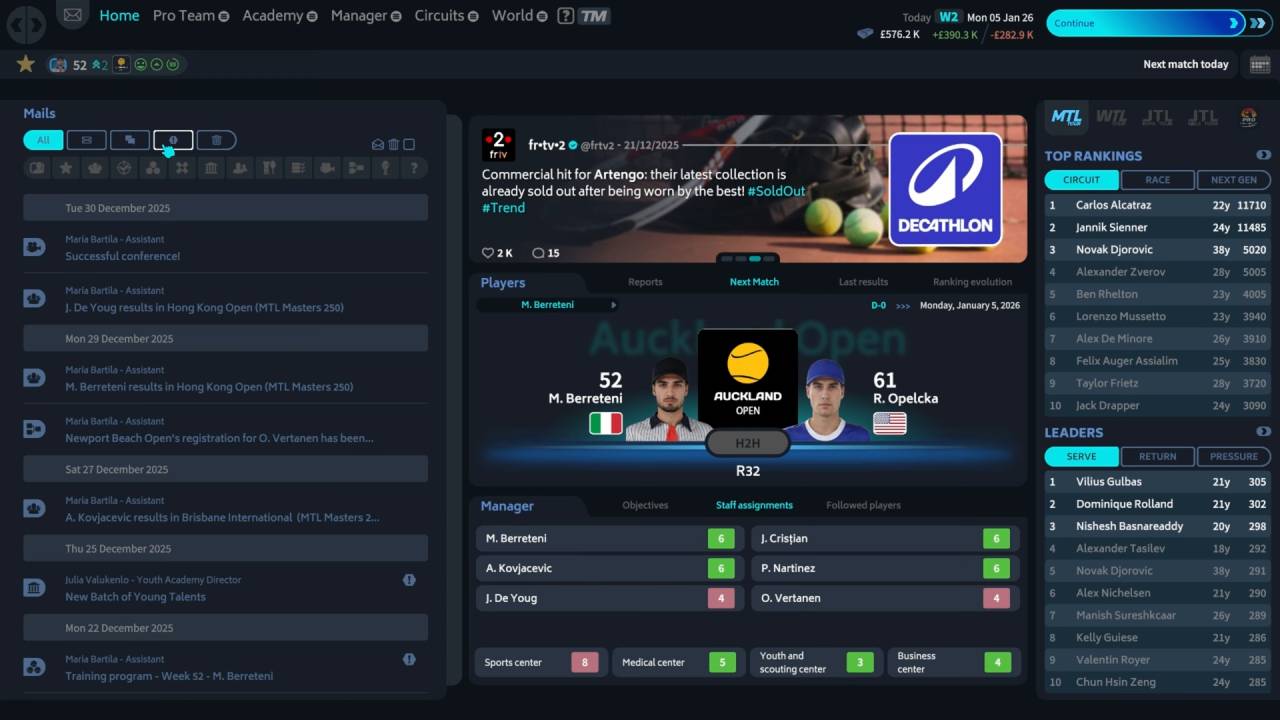
The menus and interfaces have improved significantly compared to previous entries. Navigation is more structured, and it is easier to find important information. However, some screens still feel a bit sparse or too open, which affects the consistency of presentation.
The visual design is generally not spectacular but usable, and the overall aesthetic is appropriate to the game’s identity as a management simulation.
The sound design is subtle and deliberately low-key. Music and dramatic audio cues don’t play a significant role in the game. It does not use background noise extensively, however, so the focus is on tactical decision-making.
Sounds like ball impacts, crowd reactions, and court ambiance are there but not intrusive. They support immersion but do not dominate it. The music is usually low volume and used sparingly, reflecting the game’s emphasis on strategy and management rather than presentation.
Tennis Manager 26 represents significant progress for the series. It doesn't reinvent the genre, but it adds new layers of control, particularly with My Player mode and improved management systems, in a way that expands it meaningfully.
It is deep, complex, and at times overwhelming, but also very rewarding for those players who enjoy long-term strategy and system-driven gameplay. It requires some patience but offers depth that few sports simulations in this niche can match.
Editor, NoobFeed
Verdict
Tennis Manager 26 is a deep and complex tennis sim with better systems and a superb My Player mode, but it's still a bit daunting for beginners.
67
Related News
No Data.