
The Caribou Trail Review
PC
A heartfelt historical narrative with memorable moments, held back by limited gameplay and uneven presentation.
Reviewed by Nusrat Choity on Jul 10, 2026
War games sell themselves with explosions, epic battles, and heroic victories. Caribou Trail follows the other approach. Its developer, Unreliable Narrators, also worked on Two Falls (Nishu Takuatshina), and the game again emphasizes history, personal storytelling, and atmosphere over action. Those who've played the developer's past games will recognize the same desire to depict historical stories via ordinary people rather than heroes.
This time, the Royal Newfoundland Regiment is featured in the 1915 Gallipoli Campaign. This is an interesting decision since most World War I games revisit historic battlefields or focus on large-scale conflict. Instead, The Caribou Trail illuminates a lesser-known part of history and the young men who entered the war expecting honor and adventure but found exhaustion, dread, disease, and tragedy.
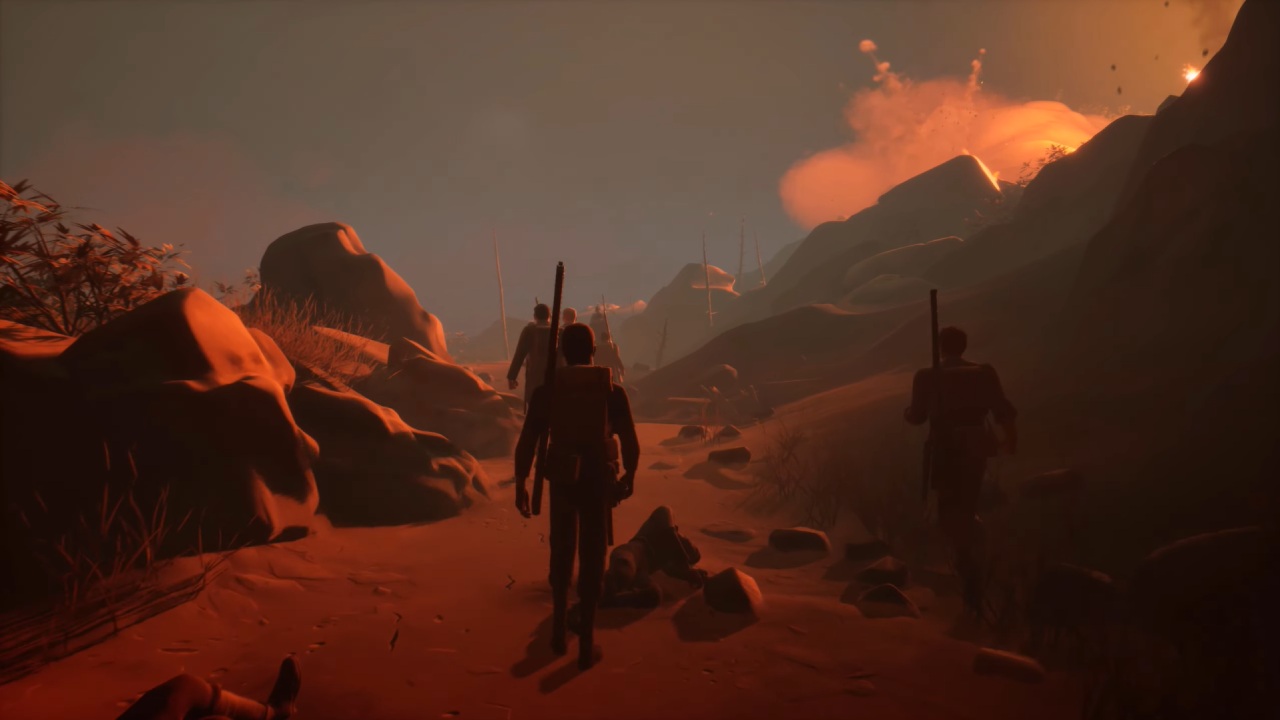
Its notion alone makes the game stand out. It strives to uphold its promise of an emotional look at survival rather than victory for most of its runtime. Having an intriguing history is only half the battle. It's harder to make history interactive, and The Caribou Trail has mixed outcomes.
Fisher, a teenage Newfoundlander, leaves home with his friends Lonnie and Gordon to fight for their nation. Like many warriors of that time, they see combat as a chance to show themselves. Instead, they find unending mud, hard days in confined trenches, uncertainty, and the understanding that surviving is the greatest triumph.
The game is about friendship, not military triumphs or legendary figures. You'll walk alongside other soldiers through the campaign, listen to their discussions, share meals around campfires, exchange letters from home, and watch their emotions change.
The best storytelling in the game is in these quieter moments. The conversations about missing home, wondering if loved ones are safe, trying to keep things normal—they build a human connection that big combat simulations usually miss. The script works best when it lets these everyday conversations breathe, rather than trying to have dramatic moments every few minutes.
The story is also steeped in folklore, ghost stories, and psychological uncertainties.
These are not supernatural elements but rather the effects of long-term terror and isolation on the psyche. They enhance the experience without detracting from the historical setting. There’s a solid foundation, but the emotional payoff isn’t always there. The Gallipoli battle was one of the worst theaters of World War I, with terrible living conditions, sickness, sniper fire, and massive deaths.
Despite that harshness, much stays repressed. Characters talk about difficulty, but you don't necessarily experience it. The game shows bodies littered across battlefields, risky ventures into no-man's-land, and moments when death seems imminent, but these scenes rarely build enough suspense to evoke any emotion. Many characters are unchanged by the conflict, unlike the soldiers who decay.
This absence of obvious change hurts the story more than planned. Wars leave emotional and physical scars, so you expect them in stories of survival and sacrifice. Dirty uniforms, tired faces, growing beards, visible injuries, or exhaustion could have suggested the passage of time. Despite the chaos, several soldiers remain calm and neat.
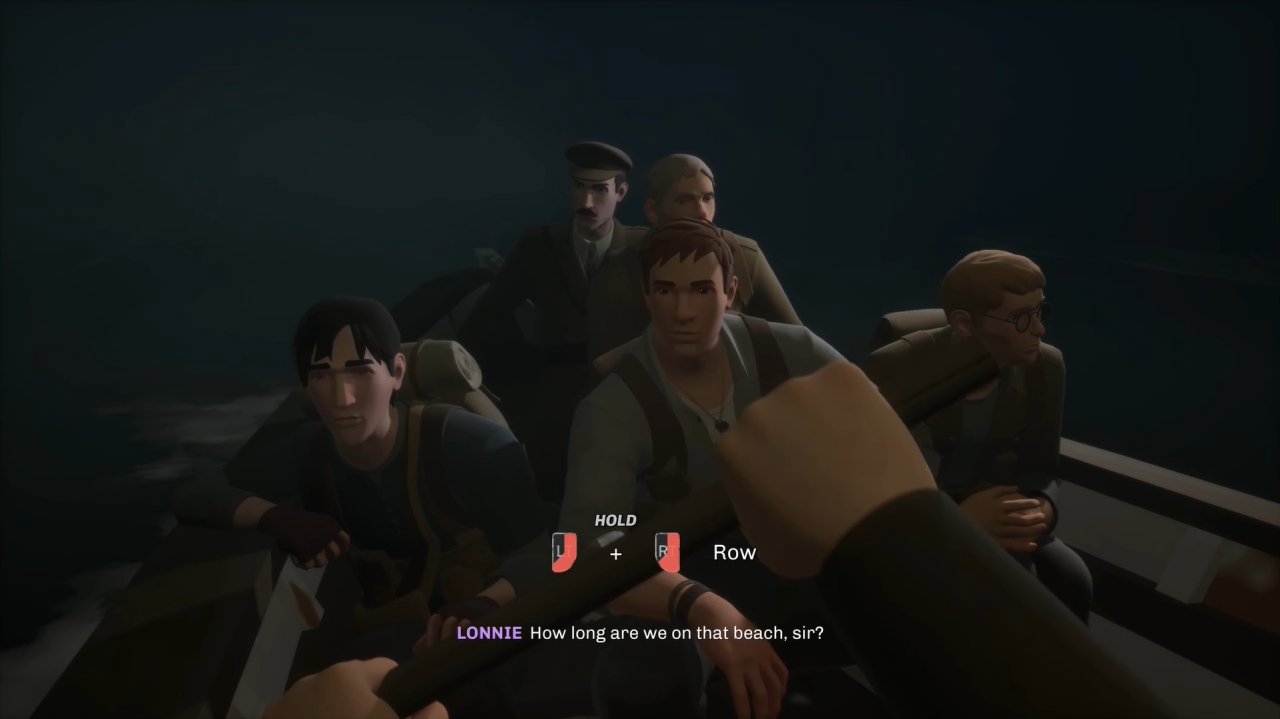
Therefore, certain emotional scenes feel weaker than they should. The script often grasps the tragedy it's depicting, but it doesn't always convey it.
Still, the historical viewpoint is commendable. The Caribou Trail stands apart from other World War I games by introducing you to the Gallipoli experiences of Newfoundland troops, which are rarely explored.
The Caribou Trail may surprise you—and not in the way you expect a war game. In this narrative-driven exploration game, mild interaction replaces combat. Walking through trenches, obeying military commands, talking to other soldiers, doing camp chores, and slowly going from one planned event to the next takes up much of your time.
You'll deliver messages, collect dog tags, cook, dig trenches, navigate military camps, use a compass and paper map, and occasionally perform minor action sequences. These mechanics are intentionally simple. Instead of thrills, the game wants you to feel soldier life.
The best moments of this philosophy work surprisingly effectively.
Sitting next to other soldiers while they talk can be more engaging than expected since it reinforces the idea that you're just another soldier fighting to live. The first-person perspective is also noteworthy. Fisher's firsthand view of the trenches is more personal than a third-person view. You experience history firsthand.
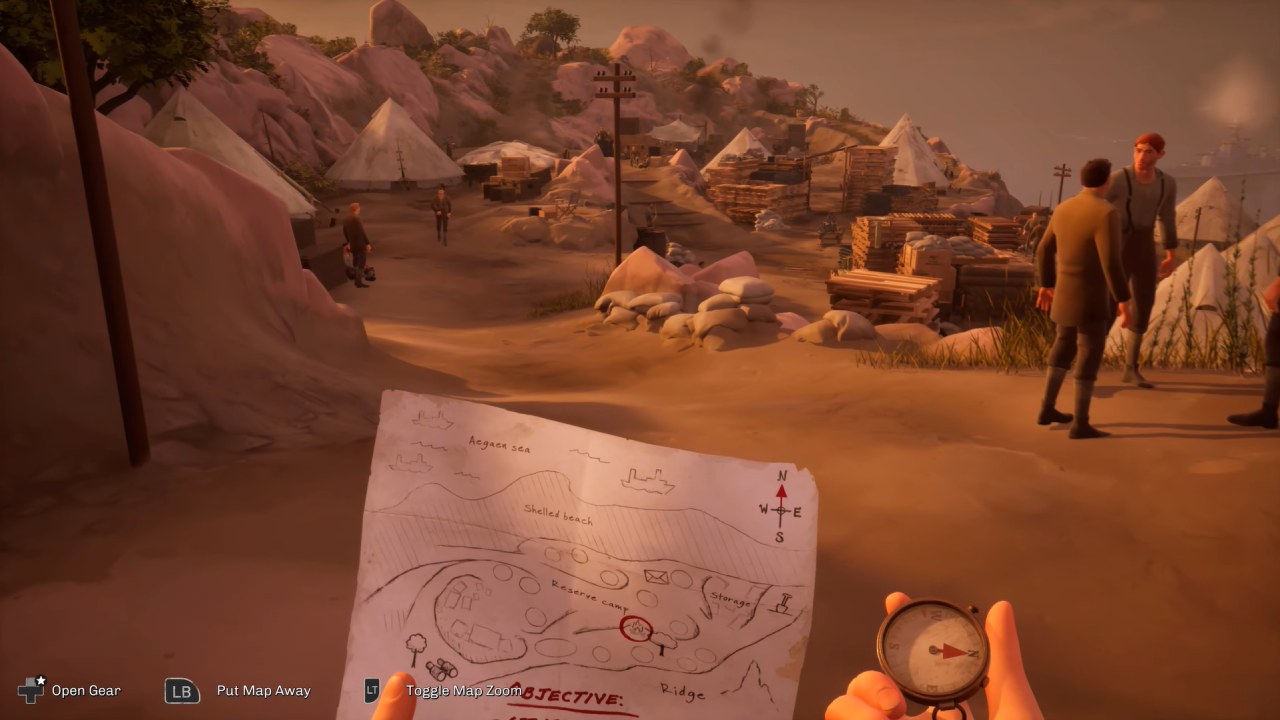
One of the more interesting aspects of the game is the navigation. Instead of the current objective marks, you get a paper map and a compass. Instead of following indicators on your screen, compare landmarks and observe your surroundings to find your destination.
The idea matches the historical context. Many current games fail to generate the same level of immersion as real navigation tools. Sadly, this system can be a pain.
Your position on the map is often ambiguous, so it is easy to get lost. This realism matches the time, though at times immersion turns to bewilderment. Instead of cautiously negotiating unknown territory, you may circle around trying to discover a goal. Much of the games follow this approach.
Most interactions involve walking, talking to another character, using a highlighted object, and repeating.
You rarely have to think creatively or solve problems beyond observation in the game. The story doesn’t even change with dialogue. Occasionally, you can choose responses, but they mainly just create the illusion of engagement and don’t really change events. You’ll be in conversations, but you won’t control their outcome.
Progress is almost linear because of this. There's only one important campaign path, no branching missions, no different solutions, and a limited chance to design your own adventure. It doesn't necessarily mean the game is bad—many great narrative games are linear—but it puts heavy emphasis on tempo and writing. When those parts slow down, the limiting gameplay becomes tougher to ignore.
Certain chores overstay their welcome. Digging, cooking, and repetitive tasks are part of military routine, but they can also be boring. Practical goals are a good thing, but they can also kill engagement.
The runtime of two and a half to four hours keeps these flaws from becoming overbearing, although the experience feels languid at times. Keeping the pace and variety of interactions constrained would have maintained immersion without sacrificing the grounded tone the developers wanted.
The Caribou Trail isn't an action game. No experience points to grind, skill trees to unlock, weapons to upgrade, and no combat system to fight waves of monsters. Every mechanic reinforces the idea that you're just another soldier attempting to survive.
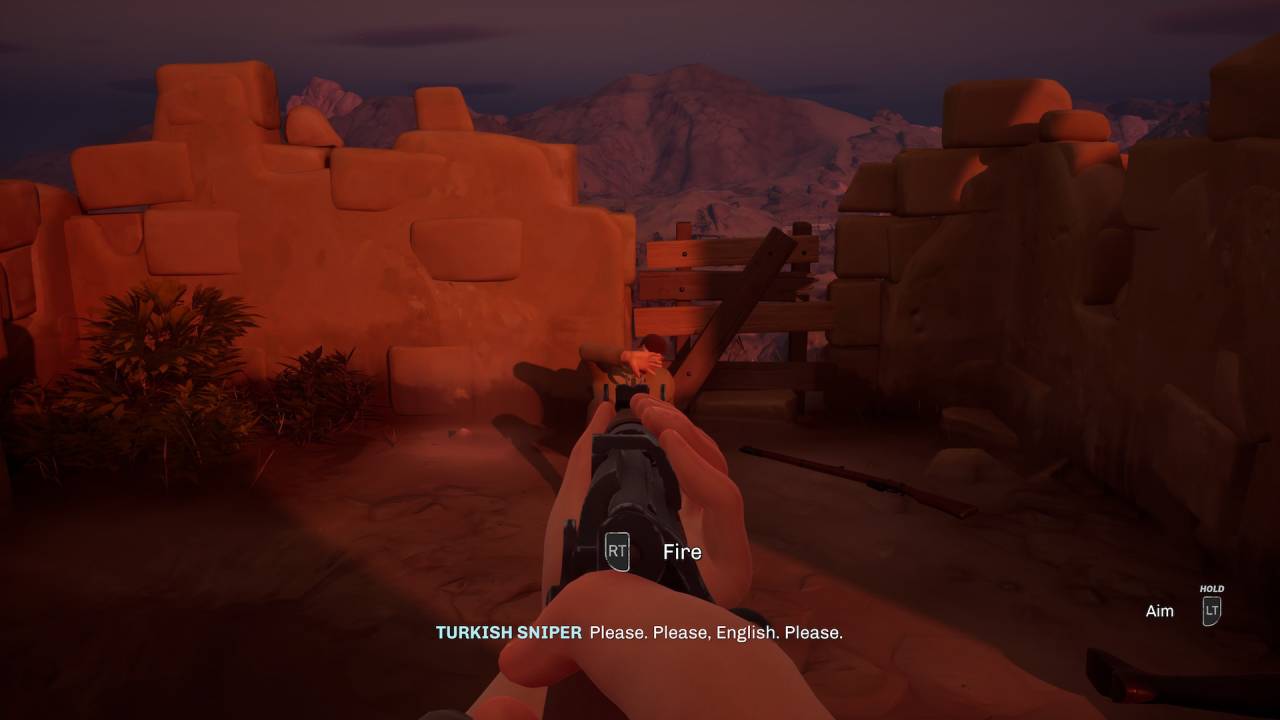
Only a little planned combat occurs, and it's more about survival than fighting back. The few times you cross dangerous no-man’s-land, dodge sniper fire, or escape explosions are intentional. The game wants you to fear the battlefield, not dominate.
When successful, these moments add urgency to the experience. Running through shellfire or timing your movement as a sniper observes short reminds you that danger is always present, even if much of your travel is spent doing mundane military responsibilities. These passages break up the plodding pace and illustrate that the game can create stress.
Unfortunately, they're inconsistent. One big example is the sniper threat. Early on, the sniper is a constant threat, forcing you to maneuver carefully across exposed terrain. A good idea that induces anxiety quickly. Once you learn that the sniper only threatens during predetermined periods, the illusion collapses.
Although the story treats the sniper as an immediate threat, you can often stand in extremely exposed positions without consequence, except in certain areas. This inconsistency breaks immersion because it makes you think that there are dangers that don't always follow their rules.
You start to realize where the invisible boundaries of the scripted events start and end, instead of feeling like you are at their mercy.
Similar patterns apply to interactive tasks. Dig trenches, stir meals over campfires, row boats, collect dog tags, deliver messages, and perform other daily tasks. Though basic, these activities support military life. Most entail recurring button prompts or simple interactions. Understandable goal. WWI soldiers did more waiting, digging, cooking and camp maintenance than fighting.
Kudos to developers for not overdramatizing constant action to keep interest. Realism doesn't necessarily make games fun. Some encounters are too long and repeat too quickly without any more depth. Some activities feel more like long quick-time events than actual game elements. The slower pace adds to the atmosphere but can be frustrating.
The majority of the growth is narrative-driven. There's no leveling, character progression, crafting, resource management, or long-term customization. You don't gain experience or talents as the story progresses. You only gain advancement through narrative advancement.
Not all design choices are bad. RPGs may have detracted from the historical theme. The story must carry nearly the entire experience. There are a few gameplay mechanics to keep you hooked until the next significant narrative moment when the tempo or dialogue slows down.
The Caribou Trail reads like a mix of environmental storytelling and poor characterization.
Gallipoli's loneliness is captured well by the settings. Trenches span damaged landscapes, muddy roads disappear beneath a dark sky, abandoned positions create an uneasy calm, and distant ships on the horizon underscore how isolated these men are. Lighting often sets the mood, especially on dreary mornings, peaceful evenings, and when rain or smoke obscures the view.
The game conveys isolation through ambient design in various moments. Empty trenches, scattered equipment, ruined fortifications, and desolate coasts accentuate the feeling that this conflict is slowly eating everyone. This visual tale benefits from a first-person perspective. Seeing these places through Fisher's eyes is more powerful than seeing from a distance.
Sorry, but character models get less attention.
Everyone's cleanliness may be the biggest complaint. Despite months of trench combat, rain, disease, hunger, and exhaustion, many of these soldiers seem polished. Faces are sleek, clothes are rarely worn, and physical deterioration is scarce. Visuals don't match the narrative's challenges, making it hard to believe.
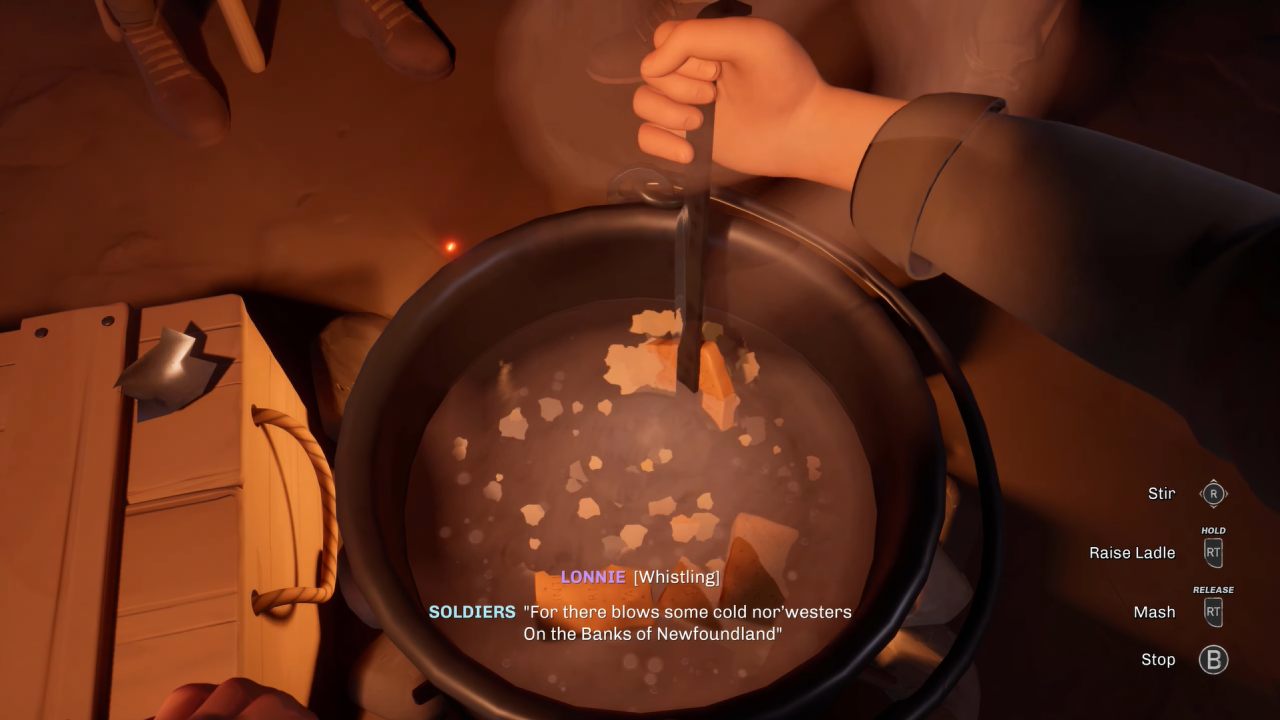
Visible dirt, ruined clothing, bruises, weariness, facial hair growth, or emotive facial motions might have greatly increased the emotional impact. The troops often look like reenactors more than survivors of one of the most devastating combat wars in history.
The dialogue-heavy experience leaves no room for avoiding stiff faces and limited body language. Many conversations also restrict facial movement. Characters often describe pain, fear, or loss without showing any emotion, which makes emotional scenes feel flat.
There are some technical hiccups, though. Clipping, lighting, and performance stutters are present, but not to the extent that they ruin the experience. Ironically, the game's best visuals come at the end, when it briefly experiments with unique presentation and artistic direction. With that same visual conviction throughout the campaign, those sequences suggest what the overall experience may have been like.
Audio is where The Caribou Trail excels. Voice acting is also a great way to express emotions that facial animations can’t. The Newfoundland accents and acting make the talk seem real and natural. Even banal campfire chats become more compelling when the dialogue sounds natural instead of over-the-top dramatic.
The sound design of the ambiance alone is worth appreciating.
The game often replaces constant music with silence. The howling wind across deserted trenches, distant artillery fire, muffled gunfire, footprints in wet mud, and long stretches of unnerving silence come together to create a tense atmosphere. In some of the best scenes, the environmental audio is dominant, not the dramatic music. Waiting for something dreadful to happen works better when the soundscape lets your imagination fill the silence.
The music is less consistent. Several tracks match the introspective tone, yet others are disappointingly muted when the narrative demands more emotion. More memorable music may have enhanced the game's major dramatic moments and visually restrained sections.
The presentation has some weak points, but the sound design is superb. Voices, distant battle sounds, and an intricately built atmosphere make you feel as if you are in an active combat zone.
Game The Caribou Trail is easier to respect than suggest. Few games explore their perspective, their greatest strength. Not a spectacle, but a human story about ordinary young men in extraordinary circumstances. The game’s focus on camaraderie, survival, homesickness, and solitary moments in the trenches makes it feel real and unlike World War I.
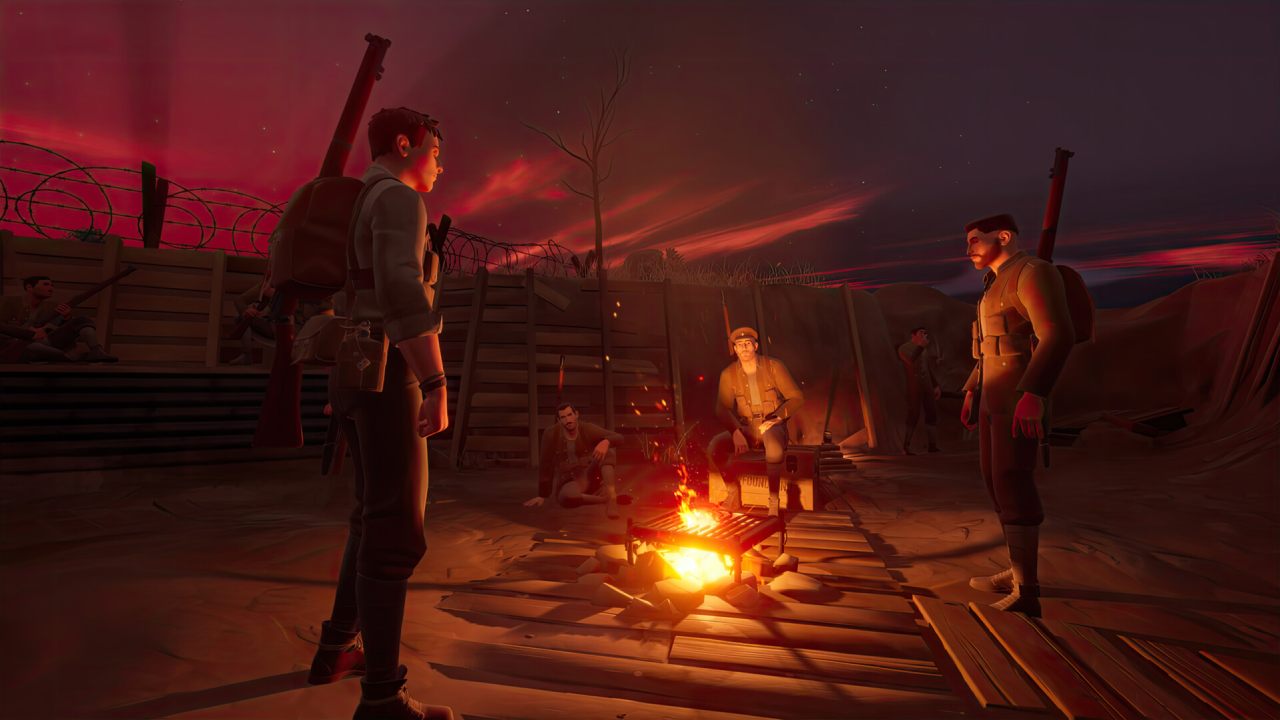
When the historical location, immersive first-person perspective, insightful dialogue, and haunting sound design come together, something unique emerges. Those moments demonstrate why slower story games are still vital.
The flaws in the game are hard to miss. The emotional narrative often falters because you don’t get involved, the activities are repetitive, the pace is unpredictable, the characters move stiffly, and the visuals are surprisingly clear. The Gallipoli campaign was awful, but the desperation is not always conveyed on the screen.
If you are looking for an action-packed war game, you will be disappointed with The Caribou Trail. If you are interested in historical narrative, atmospheric exploration, and softer stories that put people before guns, then you will find value here. It’s not perfect, but it’s clearly based on respect for history and the people whose stories inspired it.
Contributor, NoobFeed
Verdict
The earnest historical story focuses on mood and humanity over action, but The Caribou Trail's repetitive gameplay, slow pace, and lack of WWI realism weaken its interesting premise and excellent music.
68
Related News
No Data.