
AMD Zen 6 Rumor Breakdown: NPU In, Integrated Graphics Out
AMD's Zen 6 desktop lineup may drop the integrated GPU entirely in favor of a dedicated NPU.
Hardware by Naheyan Tahmin on Jul 15, 2026
AMD's desktop Ryzen lineup has included a basic integrated GPU since the Ryzen 7000 series arrived on the AM5 platform. A new leak points to a change in the formula for the next generation, and the trade-off at its center has sparked debate among builders and gamers alike. It plays a more significant part than may be apparent from its size. If one of the dedicated GPUs fails, the machine can still boot using the iGPU.
The next-generation AMD Ryzen desktop chips, dubbed Olympic Ridge and running Zen 6, could drop the integrated graphics card in favor of an integrated NPU. Both of these Ryzen 7000 and Ryzen 9000 desktop chips were also never intended to be paired with a dedicated graphics card. It is designed to display an image, run Windows, and provide troubleshooting support.
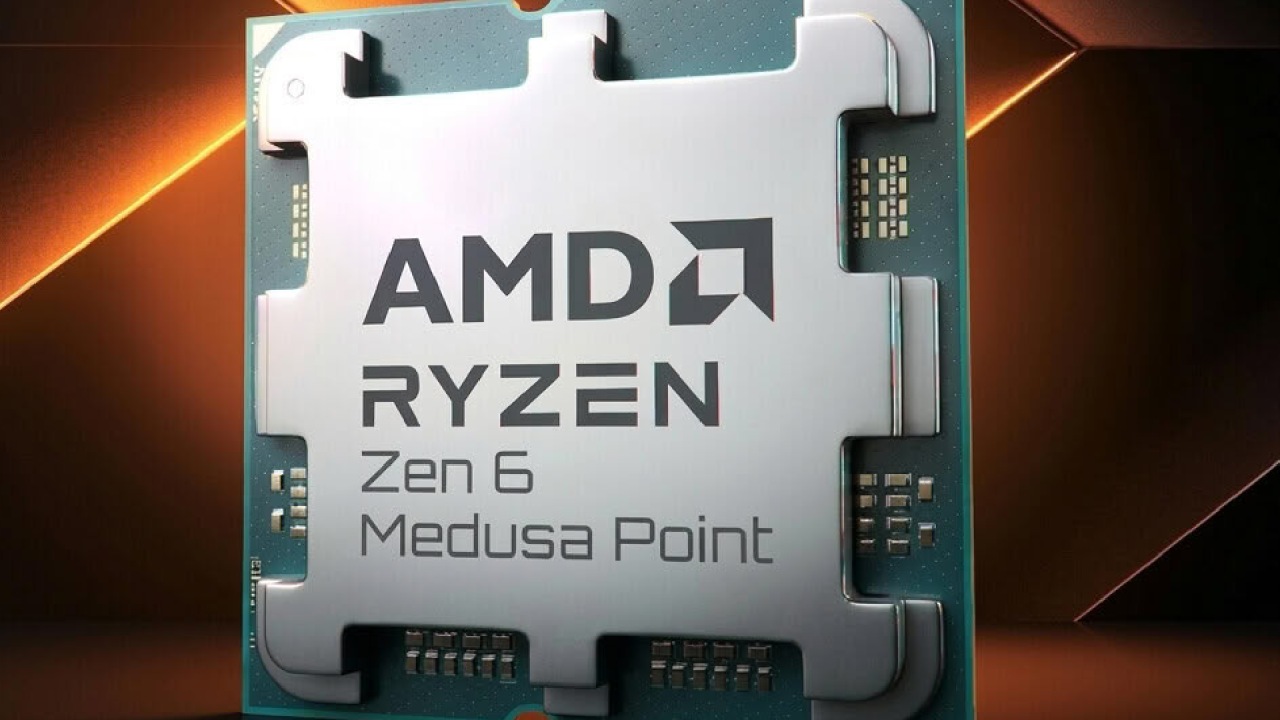
Why AMD Might Make The Trade
Even if the graphics card is not yet available, you can test the build. If you experience a black screen, loose wire, BIOS problem, dead GPU, or driver problem, you can determine what's wrong with your iGPU. Doesn't remove anything that's not in use; it just removes a method for builders to determine what the issue is when it occurs.
An NPU is a specialized engine for local AI processing. It works better than a CPU or GPU for tasks like live captioning, transcription, image processing, and offline assistance. It makes sense for AMD to push the Ryzen AI and XDNA architecture in this way. That line of thinking works better for laptops, where saving power is important, than for desktops, which already have a wall outlet, a powerful CPU, and often a dedicated GPU.
If that dedicated GPU comes from Nvidia, it already includes tensor cores, CUDA, DLSS, and frame generation, backed by a wide AI software ecosystem. For a gamer who already owns an RTX card, a small desktop NPU may not add much. AMD would add an AI feature that many desktop users may not need, while removing a display feature that nearly every builder has relied on at some point.
What The Ideal Setup Would Look Like
We believe AMD would be better off keeping both the iGPU and the NPU rather than choosing one over the other. This doesn't need a powerful display engine; it just needs to run simple games. To help you recover when the dedicated GPU fails, you only need to start the machine, boot Windows, and boot it. That way, AMD could support the direction of AI PCs without adding a downside that builders will notice as soon as something breaks.
It looks like Zen 6 is still a big step forward on its own. AMD has extended support for AM5 until 2029. This is important for people who are still using Ryzen 7000, Ryzen 8000G, or Ryzen 9000 hardware. Leaks also suggest that efficiency will improve, IPC will go up, and core counts could exceed the 16-core mainstream limit, but none of that has been proven.
The timing carries added weight because Intel and Nvidia are collaborating on future x86 RTX products. If that partnership produces compact systems built around Nvidia RTX graphics, AMD could face more pressure in a category where Radeon integrated graphics and APUs have traditionally held ground.
Desktop users are not resistant to AI, and gamers are not resistant to new hardware.
The friction shows up when a practical feature gets removed in favor of AI branding. If AMD adds the NPU while keeping basic graphics intact, the response is likely to be favorable. If AMD removes the iGPU to make room for the NPU, expect a more mixed reaction: a powerful chip paired with a trade-off that raises questions.
Zen 6 could become one of AMD's most important desktop launches in years, particularly with AM5 support extending to 2029, but the iGPU decision is one AMD may want to reconsider before launch. An NPU works best as an addition, not a replacement for basic display output, because even as AI takes on a larger role in PCs, the screen remains a requirement.
Editor, NoobFeed
Latest Articles
No Data.