
The Necromancer's Tale Review
PC
A dark, narrative-rich CRPG that mesmerizes with its prose but falters in execution.
Reviewed by Adiba Manha on Jul 18, 2025
A popular RPG character, the Necromancer has captivated players for decades with their pure power fantasy, whether they are raising the dead in Arcanum or leading skeletal hordes in Diablo 2. Having abilities that hover between life and death, leading armies of undead, and experimenting with secrets better kept hidden are all exciting.
Despite the Necromancer's widespread appeal, relatively few games stop to consider the motivations behind the sinister art. Why would someone choose necromancy? How much of an impact does it have on their soul? The Necromancer's Tale by Psychic Software dives right into this little-known narrative realm.
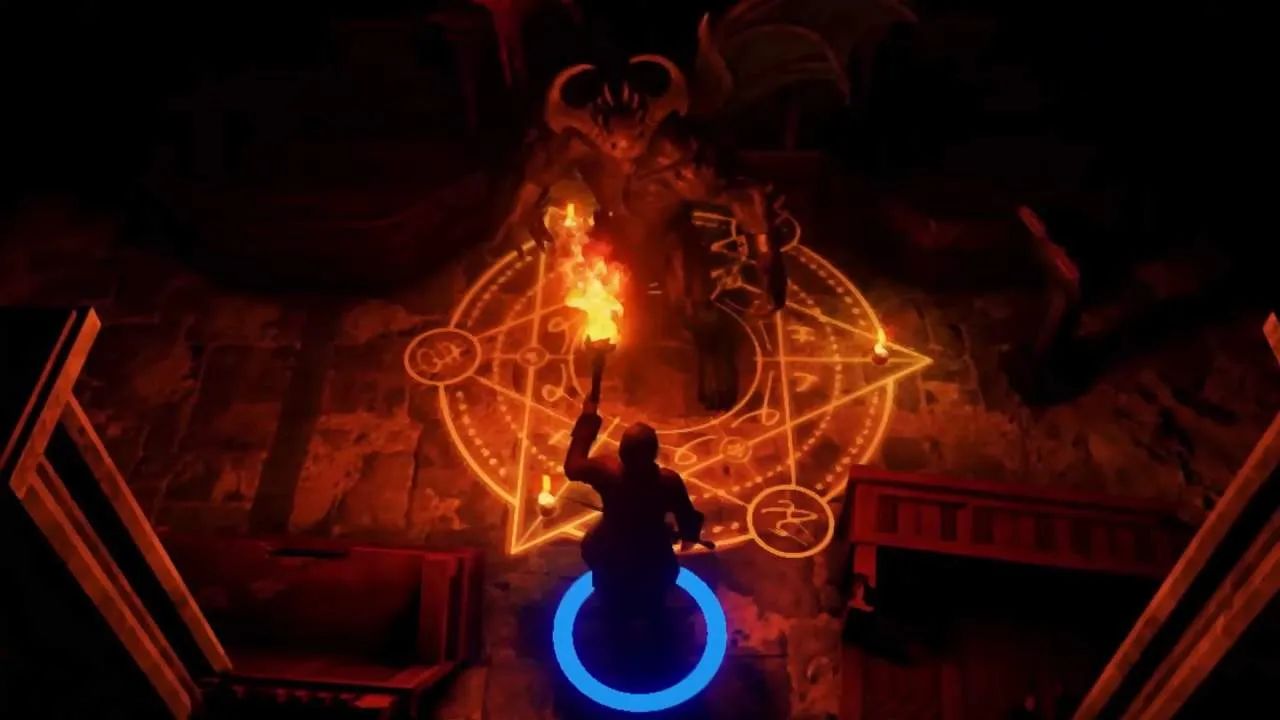
With obvious inspirations from Disco Elysium and The Life and Suffering of Sir Brante, this top-down, narrative-heavy CRPG encourages you to consider the price in addition to allowing you to raise the dead. Following a successful demo, this passion project by a small independent company was released on July 17, 2025.
The Necromancer's Tale transports you to a different version of 18th-century Europe where politics, alchemy, and necromancy collide in perilous ways and Enlightenment ideals conflict with ancient superstition. You assume the position of the last living member of the formerly esteemed Van Elstrik family. As was customary for noble families, you were banished from home as a young boy and returned many years later following your father's unexpected and unexplained death.
What starts out as a solemn homecoming eventually turns into something far more complicated and sinister. Van Elstrik's early characteristics, memories, and moral compass are established throughout the game's comprehensive interactive plotline.
This part establishes the character traits of your protagonist and goes beyond simple flavor text. Are you a distant academic? An inquisitive yet wary noble? Or has someone already been tempted by power? These options have a subtle impact on relationships, choices, and even the protagonist's voice throughout the game.
The Necromancer's Tale differs from many role-playing games in that it heavily relies on narrative. It sacrifices fast-paced action for a slow-burning, engrossing narrative that demands and rewards patience, and it has hundreds of thousands of words of conversation and narration.
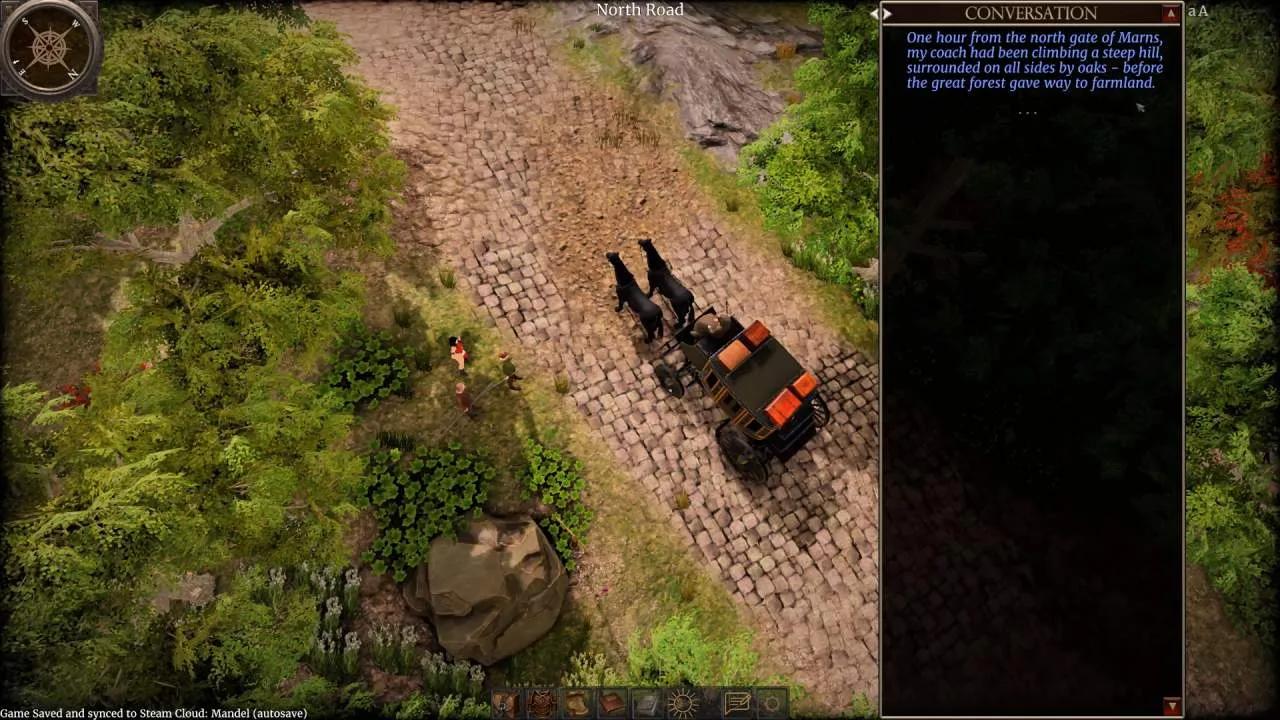
The Necromancer's Tale presents a complex, grim picture of power and sacrifice by delving into mysterious texts, conversing with mysterious characters, and experimenting with rituals that conflate morality. Although you can choose not to succumb to the allure of necromancy, doing so seems to take away from the game's main attraction.
The plot thickens as you start carrying out rites, excavating tombs, and coercing others around you to gain access to knowledge that is prohibited. Friends can pass away. It's possible for lovers to betray or be deceived. The actual world may begin to change, and not always in a positive way. The game makes you face the repercussions, in addition to allowing you to explore the necromancer's imagination.
The narrative's distinctive framing is one of its most notable features. The whole story is presented in the past tense, as if Van Elstrik were recounting their plunge into darkness from some far-off, remorseful point of view. The game has a contemplative, literary tone thanks to its memoir-style narrative, which is supported by incredibly unique dialogue that is filtered through the protagonist's subjective voice.
You don't only pick activities; you also pick the protagonist's recollection of events, which might be clumsy, funny, or frequently detached. Unlike other CRPGs, this narrative approach creates a unique atmosphere.
There is always the feeling that the character is attempting to reconcile or explain their history, whether they are robbing a grave in the moonlight or navigating difficult court moments. The Necromancer's Tale is fundamentally a narrative role-playing game that revolves around ritual progression, exploration, and inquiry. Deciphering an occult spell or ritual is usually the focus of each chapter.
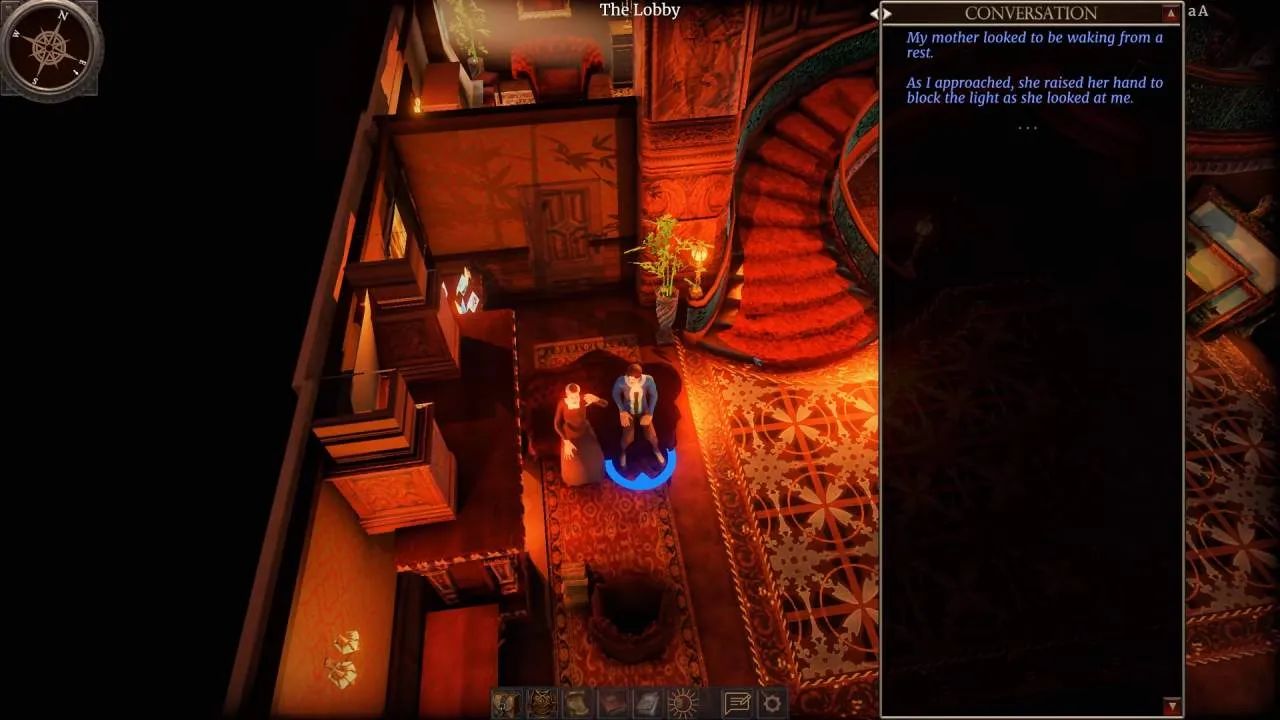
Talking to important NPCs, passing skill checks through speech, obtaining, occasionally obscure artifacts, and ultimately finishing the ritual without drawing too much attention are all necessary for success. Flashing arrows aren't used to provide you with objectives in this game.
To advance, you'll need to pay close attention to discussions, follow storylines, and make your own judgments in The Necromancer's Tale. You may be trapped and unclear of what to do if you miss one important clue or fail to use all of the dialogue options with a character that doesn't seem to be relevant. Even though this can occasionally be annoying, it also gives the game a rich, vintage RPG charm, particularly for those who enjoy detective-style storytelling and immersion.
Intricacy and peril are increased by the ceremonies themselves. Raising the dead is a complex feat that requires planning, discretion, and exact execution; it's not merely a showy trick. The stress is increased by casting warding spells, dodging onlookers, and negotiating Marns' vigilant culture. You are a covert conspirator seeking information that could result in your hanging if discovered, not a blustery hero on a public battlefield.
Some elements of the gameplay, nevertheless, don't perform as well. The inventory management system and user interface seem antiquated and cumbersome. Awkward, complex menus must be navigated in order to equip new things, and character-to-character gear transfers are not seamless.
Additionally, navigation can be tricky. There aren't any useful map markings or waypoints to help you find your goals. Using just a diary that gathers Van Elstrik's frequently cryptic thoughts, you are supposed to fast-travel between Marns' many districts. In addition to adding realism, this draws attention to a lack of contemporary polish that can turn off some players.
With its dynamic day-night cycle and ambient NPC behavior, Marns is a visually engaging metropolis. But in the end, it seems less like a bustling metropolis and more like a backdrop. Apart from quest-related excursions and necessary stores, there isn't much to do. Even while the area is full of environmental storytelling and legend, once you've seen the main attractions, there's not much need to explore further.
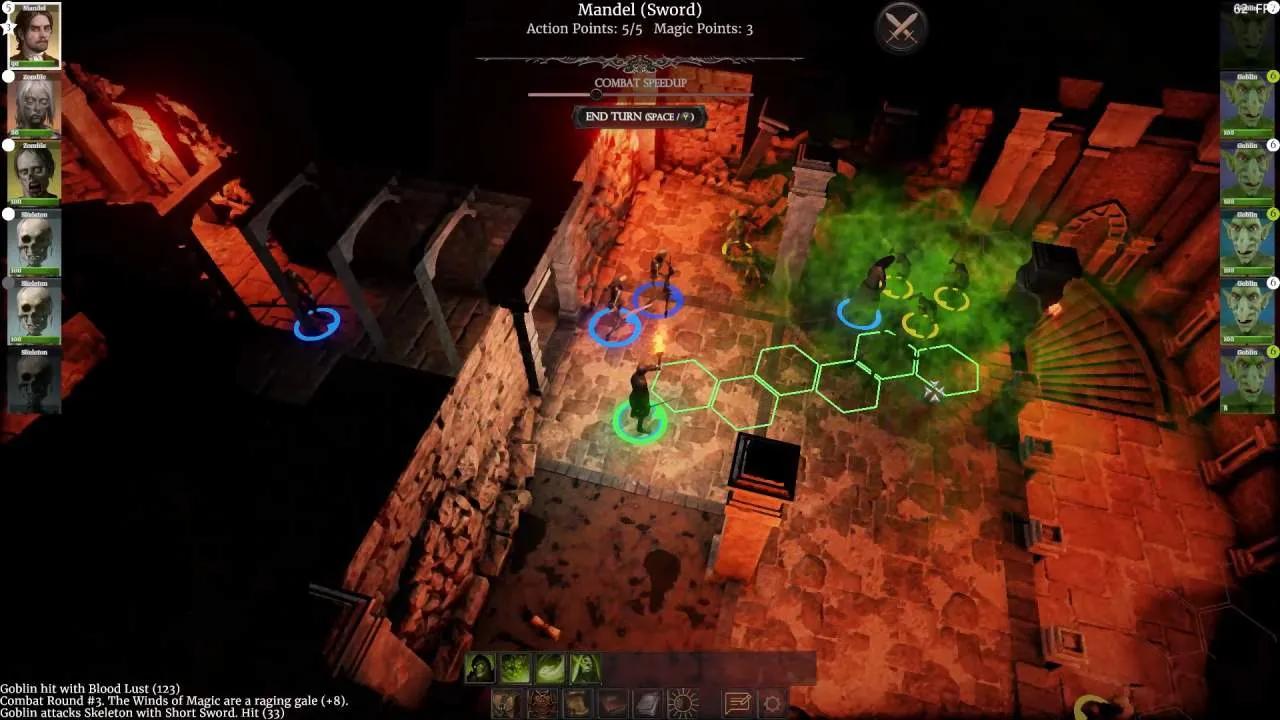
Despite its convenience, the fast-travel feature turns the city into a glorified menu screen rather than a fully engaging environment. The Necromancer's Tale falters most in combat. The battles are incredibly uninteresting for a game about using evil power. Your first actual contact is a long time coming, and when it does come, it feels more like a chore than an exciting experience.
Although you can call out zombie creatures and even take direct control of them, the adversary AI is simple, the animations are simple, and the techniques are limited. Encounters are shallow and infrequently become more complex. Fortunately, the game has a much-needed auto-resolve feature.
You can completely avoid fighting if your team is powerful enough. This is particularly helpful in Story Mode, which is designed for players who are only interested in the plot. Greater difficulty is introduced via the Balanced and Strategic Modes, which restrict your ability to take advantage of resources and make you pay closer attention to fighting mechanics. The system never fully lives up to expectations, though, even in those cases.
Character development is more dependent on decision-making than on grinding. You grow by carrying out rituals, selecting dialogue routes, and affecting relationships rather than by farming foes for experience points. Your choices shape your talents, which in turn influence the possibilities for future stories. Although it can be challenging to see precisely how your decisions are influencing the environment until far later, it's a clever mechanism that supports the narrative focus.
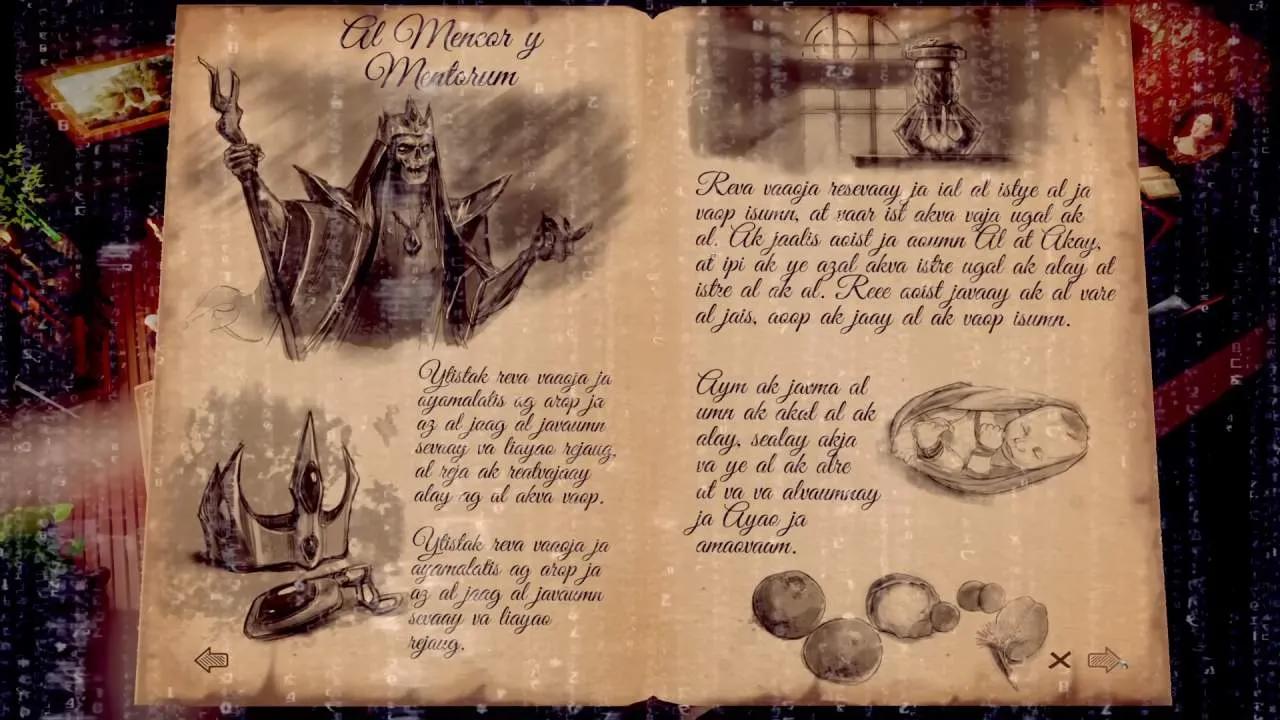
The Necromancer's Tale has a diverse visual style. The 2D artwork is stunning, particularly the necromantic grimoire's pages. One of the most notable aspects of the game is the aura that permeates every symbol, glyph, and page of the book. When you switch to the 3D environment, the contrast is startling.
The surroundings are covered in hazy post-processing effects meant to conceal texture constraints, while the character models are low-poly and detail-poor. It's frustrating yet nostalgic at the same time because it brings to mind older games like Beyond Divinity. The final build still has visual issues from the demo, including odd movements, lighting errors, and placeholder UI frames, all of which detract from immersion.
Audio performs better. The prologue of the game is masterfully spoken, with each NPC's voice conveyed with the appropriate amount of warmth, danger, or charm. Like an ancient Gothic story read aloud, it immerses you in the world.
But after this, a large portion of the game is reliant on monotonous ambient music and sparse sound effects. They rarely stand out, even though they certainly contribute to the gloomy, dismal ambiance. The game's tone could have been reinforced throughout its 20-hour duration with a wider range of soundtrack selections.
A daring and unique addition to the CRPG genre is The Necromancer's Tale. Almost all of its attention is on the story, and when it does, it does it brilliantly. Few games have the courage to examine necromancy as a burden, an act that distorts morals, undermines identity, and isolates the practitioner, in addition to being a mechanic.
The world is evocative, the choices are significant, and the plot is compelling. However, clumsy mechanics, lackluster combat, and technical problems undermine these advantages, making the game feel unpolished even at launch. Although its goal is enticing, the implementation frequently falls short of expectations.
Editor, NoobFeed
Verdict
The Necromancer's Tale is a deeply haunting experience unlike much else in the genre. It doesn't ask how many skeletons you can summon. It asks what price you're willing to pay to do it, and whether you'll still recognize yourself when it's all over.
83
Related News
No Data.