
Acer Predator BiFrost A770 Review: A Surprisingly Solid Intel Arc GPU
Acer Predator BiFrost A770 combines unique cooling solutions with modest performance gains across modern gaming titles.
Hardware by Masaru Hoshino on Aug 23, 2025
Acer Predator BiFrost A770 is one of the more unusual graphics cards to appear in recent years. Its cooling design immediately stands out with one blower-style fan, one axial fan, and Intel's Arc A770 GPU beneath it all.
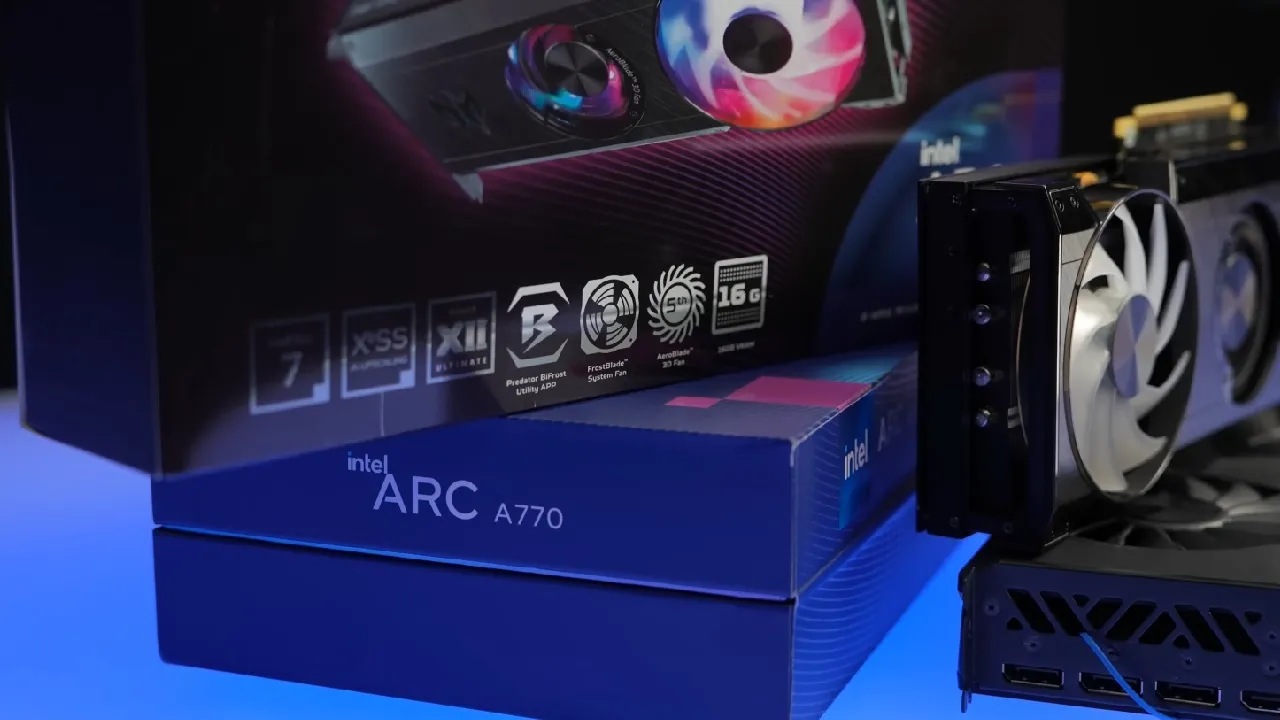
Acer's marketing for the card was just as strange, leaning into over-the-top claims and warnings that ranged from amusing to misleading. Still, this is an important release since it represents Acer's first custom Intel Arc card for the DIY market.
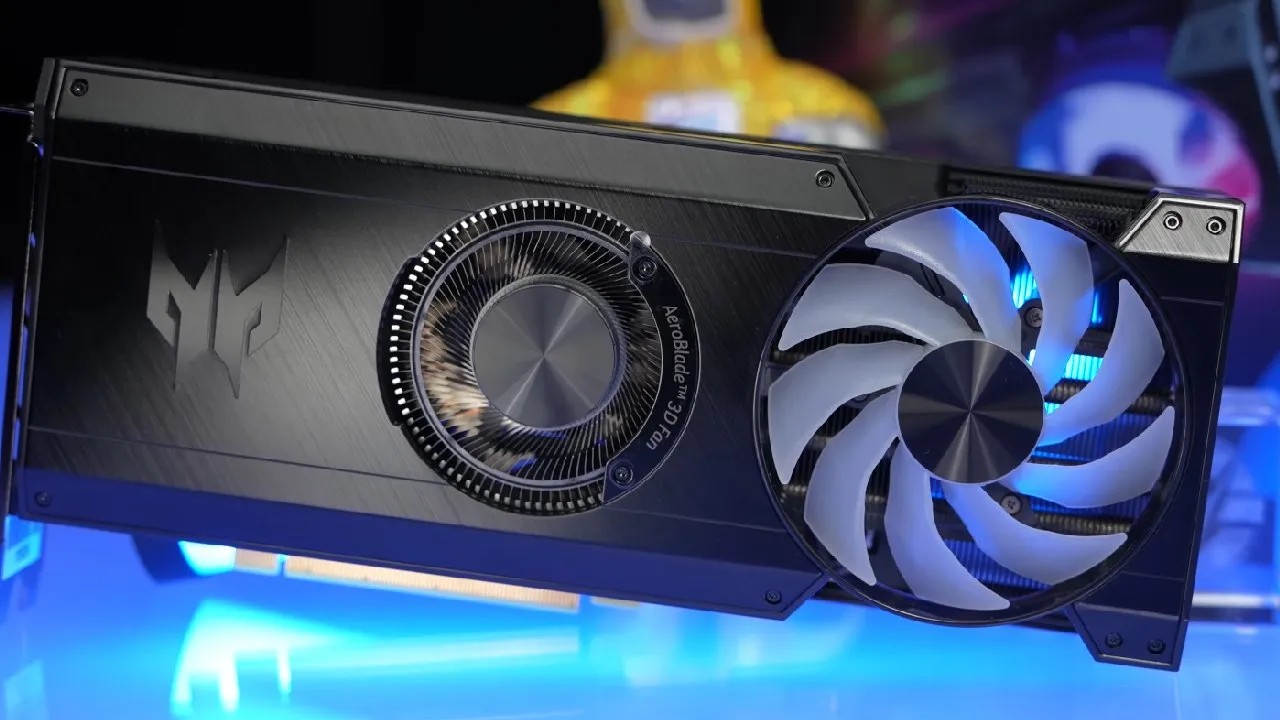
The question of whether it offers significant enhancements is raised by the fact that, at about $400 in the US, it costs roughly $50 more than Intel's own Limited Edition model.
Early Expectations and Marketing
It is important to discuss the strange advertising materials that surround this card before getting into the performance. Acer described the BiFrost as having a rare vapor chamber that allegedly exhausted hot air, a description that fundamentally misrepresented how vapor chambers work.
In reality, a vapor chamber is designed to spread heat evenly across a plate while fins and airflow handle the dissipation. The company also went out of its way to declare that the card was not designed for cryptocurrency mining, going as far as including warranty warnings to drive the point home.
While this kind of messaging was oddly specific, it at least made clear who the card was intended for: gamers.
Thermal Performance: Slight Gains in Some Areas
Thermal testing was carried out using sensors connected to VRMs, memory modules, and the GPU itself in a controlled setting of 21 degrees Celsius. While mixed, the outcomes were positive.
There was a little discrepancy that would not impact performance in real life: the BiFrost's core averaged seventy-six degrees, compared to seventy-three degrees for Intel's Limited Edition edition.
Where the Acer card pulled ahead was in VRM and memory cooling. Voltage regulation modules on the BiFrost were noticeably cooler, with one probe recording sixty-five degrees compared to seventy-four on Intel's version.
The GDDR6 memory also benefited from Acer's heatsink design, running several degrees cooler than the Limited Edition. Overall, the supporting components were better regulated, indicating a well-thought-out thermal solution, even though the GPU core itself was slightly warmer.
Noise Levels: The Greatest Vulnerability
Unfortunately, noise is the BiFrost's glaring shortcoming. In a space with a much lower background level, the fans continue to spin even when they are at rest, creating a noise level of 35 dB. By contrast, Intel's Limited Edition card was practically silent when idle.
Under load, the BiFrost reached thirty-seven decibels, which is competitive for a midrange GPU, but the constant idle noise made it far less pleasant in a quiet environment. The problem appears to lie in Acer's fan curve as set in firmware rather than in the hardware itself.
A simple VBIOS update could correct this behavior, but out of the box, the card remains unnecessarily loud.
Gaming Benchmarks: Small but Consistent Gains
In terms of raw performance, the BiFrost behaves much like Intel's Limited Edition card with the expected bump from a modest factory overclock. The gains are small but consistent.
In titles such as Shadow of the Tomb Raider, Total War: Warhammer III, Rainbow Six Siege, and Final Fantasy XIV, the BiFrost managed to edge out Intel's version by one to three percent.
That is not enough to redefine the experience, but it does place Acer's card slightly ahead across a range of tests. For buyers, the decision therefore comes down less to performance and more to design, thermals, and overall build quality.

Teardown and Build Quality: Surprisingly Competent
Disassembling the BiFrost revealed a design that was more competent than expected for Acer's first attempt at a custom graphics card. The backplate was actively used with thermal putty applied to capacitors and VRM components, effectively turning it into part of the cooling solution, something many manufacturers overlook.
The main heatsink combined a vapor chamber with four heat pipes and a dense fin stack, making solid contact with the GPU, memory, and voltage regulators. Although some inductors were not fully covered, the execution was good overall.
The fans themselves were of good quality, including a twin ball bearing axial fan from Power Logic and a Delta blower unit that could reach extremely high speeds. The impression of a meticulously designed card was strengthened by the methodical and even application of the thermal paste and pad.
Key Takeaways: A Weird but Well-Built Card
Acer Predator BiFrost A770 is a strange product wrapped in stranger marketing, but beneath the eccentric presentation lies a well-built and reliable graphics card. Its performance is only slightly better than Intel's Limited Edition model, but it offers cooler VRM and memory thermals along with a surprisingly thoughtful internal design.
Its most significant flaw is the unnecessarily loud idle fan curve, which undermines an otherwise solid first effort from Acer. Still, the BiFrost A770 is proof that Acer is serious about supporting Intel's Arc GPUs, and if this is their opening move, the future of Intel's custom graphics cards could be promising.
Check Our Other Intel Chips Articles:
- Intel Core Ultra 9 285K Review And Performance Breakdown (2025)
- Intel Core Ultra 9 285K vs AMD Ryzen 7 9800X3D: In-Depth Gaming Performance and Benchmark Comparison
- Intel Core i5-13400F Gaming Performance: Still Worth It in 2025?
- Intel Core i9‑14900K vs. AMD Ryzen 7 7800X3D: Power Profiles & Gaming Benchmarks
- Intel Core i9 14900K: Specs, Benchmarks, and Competitor Comparison
- Intel Core Ultra 5 245K Review: Gaming, Productivity & Power Efficiency Tested
- Intel Core Ultra 9 285 K's iGPU Gaming: In-Depth Benchmarks & Analysis
- Intel vs. AMD Gaming Laptop: Performance, Thermals & Battery Life Compared
- AMD Ryzen 7 9800X3D vs.7800X3D vs. Intel Core Ultra 7 265K: Gaming, Thermals & Price Analysis
Editor, NoobFeed
Gaming Hardware Updates
No Data.