
AMD Ryzen AI Max Plus 395 Brings Desktop-Class Performance to a Mini PC
Delivering unmatched processing power, multitasking speed, and AI acceleration within a small, thermally efficient desktop system.
Hardware by Tanisha Aria on Oct 17, 2025
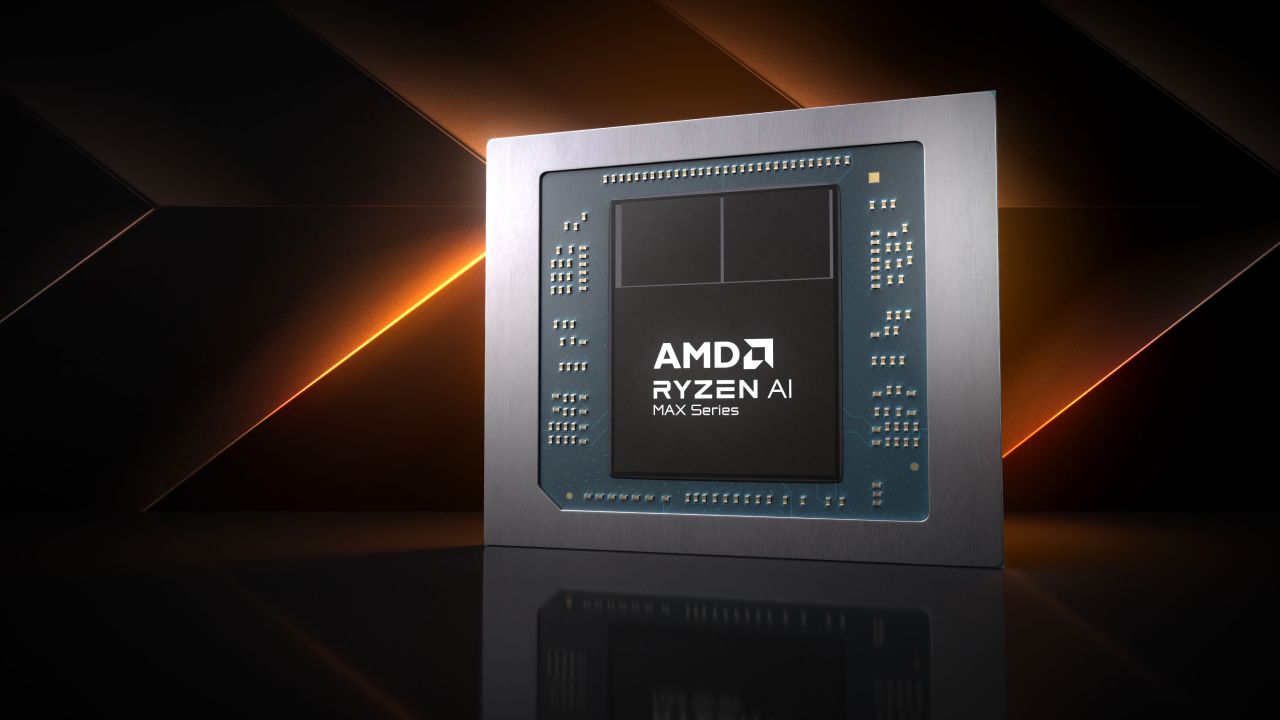
Even though the Bosgame M5 AI Mini desktop is small, it is a powerful machine designed to deliver serious desktop-grade performance in a small form factor. It features AMD's Ryzen AI Max Plus 395 processor and the Radeon 8060S integrated GPU, combining speed, efficiency, and next-gen AI capabilities inside a stylish metal case with RGB lighting.
Design and Build Quality
The M5 comes with a strong metal case that feels premium and durable, with a good ventilation system across its surfaces. The RGB glow on the front panel gives a clean yet stylish look. It's slightly larger than most mini PCs but still compact enough for desktop setups.
The case can be positioned horizontally using its rubber pads or vertically with the included stand. We prefer keeping it upright since it takes up less real desk space.
The cooling design features what the company calls “heat dissipation holes,” ensuring airflow across the internal components. While this open design helps cooling, it can let in dust, so it’s best to clean it every six months.
Hardware Specifications
Inside, the M5 packs the Ryzen AI Max Plus 395, a 16-core, 32-thread chip that boosts up to 5.1GHz. It’s paired with the Radeon 8060S integrated GPU running at 2900MHz, capable of delivering surprisingly strong performance that competes with lower-tier desktop GPUs. The system we tested includes 96GB DDR5-8000 memory, upgradeable up to 128GB, and a 2TB PCIe 4.0 M.2 SSD.
Connectivity is well-rounded. On the front, there's a headphone/mic combo jack, two USB 3.2 ports (10Gbps), a USB 4 port, and an SDXC card slot. The rear features two USB 2.0, HDMI 2.1 (8K60hz), a full-size DisplayPort 8K60hz, another USB 4, one more USB 3.2, 2.5GB Ethernet, and an additional audio jack.
The machine supports up to four displays, though one USB 4 port on the front will be needed for a quad-monitor setup.
Wireless connectivity includes Wi-Fi 7 and Bluetooth 5.2, ensuring fast and stable connections for modern peripherals and networking.
Features and Performance Modes
The M5 includes a performance button allowing users to switch between three modes—Mute, Balance, and Performance. Mute mode prioritizes silence by lowering power output. Balance mode offers a mix of quiet operation and strong performance, while Performance mode unlocks full power and fan speed.
Users can also change the RGB lighting by touching the sensor on the side panel to cycle through different lighting effects. While it doesn’t allow choosing a specific static color, you can toggle the lights on or off easily.
Storage and Speed
When PCIe 4.0 M.2 SSD was tested, it delivered consistent read/write speeds of 4000MB/s and 3592MB/s, respectively. It might not be the fastest Gen 4 drive, but it's more than adequate for quick boot times and game loading. The drive stayed cool at 63°C during long use, which shows good thermal control.
Gaming Performance
When it comes to gaming, the M5 performs much better than expected for such a mini PC. It delivers smooth frame rates and visuals that can take down a full-sized desktop. When tested with Witchfire on ultra settings, it averaged around 61fps, offering smooth performance with detailed, desktop-like visuals and consistent stability throughout gameplay.
Street Fighter runs smoothly at a steady speed of 60fps with no stutters, providing a fluid experience even during intense moments. In the open-world mode, frame rates ranged between 90 and 100fps, which is exceptional for a compact system of this size and power efficiency.
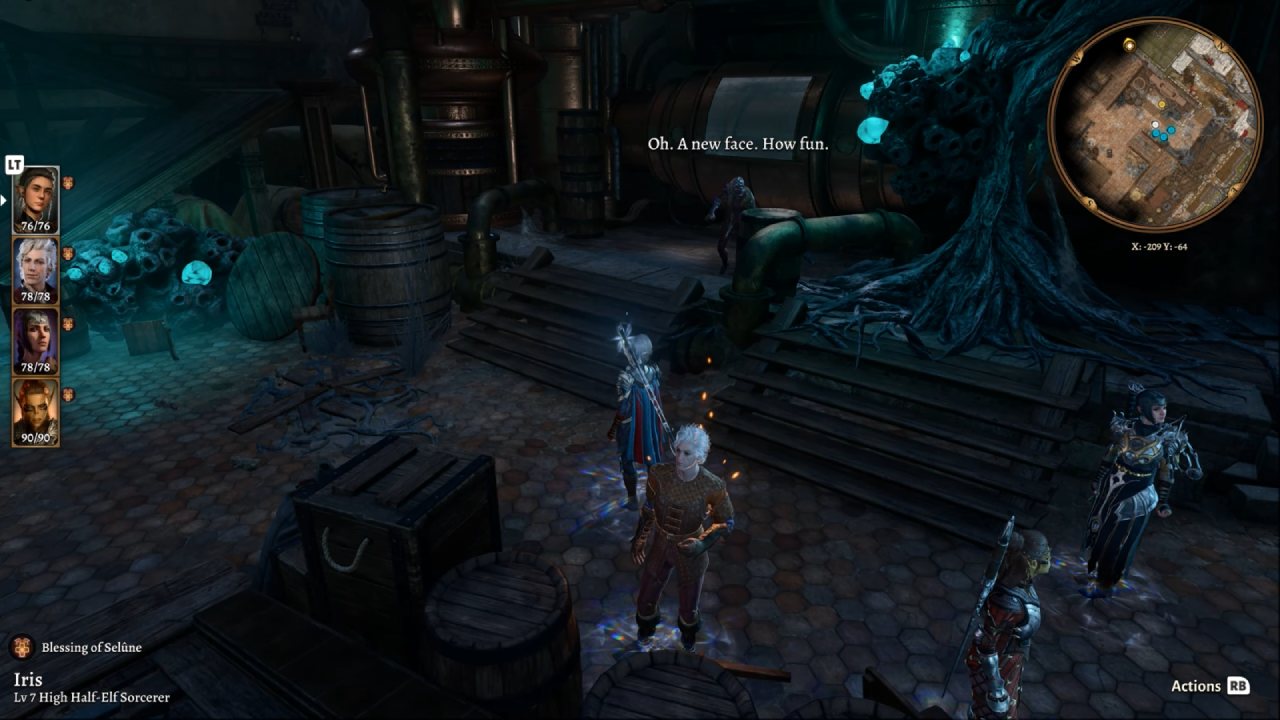
Moving to Baldur’s Gate 3, the M5 showed its true capability, averaging 80–100fps in outdoor environments and dropping to around 30–50fps in city areas. Despite the dips, this still outperforms many mid-tier desktop GPUs, delivering a playable and visually stunning experience on ultra settings.
Cyberpunk 2077 tested the system's limits with ray tracing enabled. On the ray tracing medium, it achieved an average of 56fps without dropping below 48fps, maintaining fluidity even in visually demanding scenes. Switching to ultra settings without ray tracing pushed performance higher, reaching an impressive 98fps average—proof of the Radeon 8060S's raw capability.
Benchmark results further highlight the M5’s strength. In Superposition Benchmark, it averaged 130fps on 1080p medium settings and 58fps on 4K optimized mode. Meanwhile, Unigine Valley Benchmark produced a score of 87.99 with an average of 210fps, marking one of the highest results ever seen from a mini PC.
The Radeon 8060S continues to surprise, bringing console-level performance into a handheld-sized desktop.
Synthetic Benchmarks
In Cinebench, the CPU scored 2041 single-core and 32488 multi-core scores, surpassing even some Threadripper models. On Geekbench, the score reached 2864 for single-core and 17387 for multi-core results, with an OpenCL score of 103,377—the highest observed on a mini PC so far.
Thermals and Noise Levels
Thermal management is impressive. Under full load, the CPU peaked at just 73.5°C. Noise levels in performance mode reached 50.4dB compared to a 43.4dB room baseline. While noticeable, it’s manageable for gaming or heavy workloads.
However, the fan control system could use refinement. The BIOS only offers static fan speed settings (20%, 40%, etc.) rather than a dynamic fan curve. At 20%, temperatures reached 96.5°C within minutes—too hot for sustained use. At 40%, it stays cool but becomes audibly loud. A proper fan curve would help balance the thermal and acoustic control more flexibly.
AI and Productivity Capabilities
The M5 features strong AI acceleration with 126 TOPS of compute power, reportedly outperforming even some RTX 4090s in specific AI inference tasks. Everyone might not use this, but it's a future-proof addition for workloads involving machine learning or local LLMs.

Final Thoughts
The Bosgame M5 AI Mini Desktop is the fastest mini PC we've tested so far. Its combination of a powerful Ryzen AI Max Plus processor, lightning-fast memory, and the surprisingly capable Radeon 8060S GPU redefines what's possible in a compact system. The only missing piece is a customizable fan curve to fine-tune performance and acoustics.
With its strong thermals, gaming power, and versatile design, the M5 stands as a serious contender for anyone looking to replace traditional desktops with a smaller, equally capable machine.
Also, check our other AMD articles:
- AMD Ryzen 9 9950X3D Review: Setting The Standard For 2025 Gaming CPU
- AMD Ryzen 7 9800X3D Review: 3D V-Cache Goes God Mode with Stunning Gaming Performance
- AMD RX 9070 Performance Review: Thermals, Clocks, and Real-World FPS
- AMD Ryzen 5 7600 Review: Best Budget Gaming CPU of 2025?
- AMD Radeon RX 7800 XT Review: RDNA 3 Power For Midrange Gaming
- Sapphire NITRO+ AMD Radeon RX 9070 XT Review: The Ultimate 4K Gaming GPU
- AMD Ryzen 7 7800X3D: Delivers Gaming Performance Far Beyond Expectations
- AMD Ryzen 9 7900X Review: Powering the AM5 Era with DDR5 & PCIe 5.0
- ASRock Radeon RX 7800 XT Challenger OC Review: Best Price-to-Performance GPU of 2025
- Intel Core i9‑14900K vs. AMD Ryzen 7 7800X3D: Power Profiles & Gaming Benchmarks
Contributor, NoobFeed
Gaming Hardware Updates
No Data.