
Core i5-12400F vs Ryzen 5 7500F Gaming Performance Comparison with DDR4 and DDR5
Modern CPUs paired with DDR5 achieve higher frame rates in demanding titles, while DDR4 configurations often bottleneck performance.
Hardware by Nahe Yan on Nov 20, 2025
Recent hardware comparisons continue to show how the memory performance needs of modern games are evolving. The Intel Core i5-12400F's performance with DDR4 and DDR5 memory was re-evaluated.
In earlier tests, the Core i5-12400F and the Ryzen 5 7500F were compared in several games. The results showed that the 7500F had better gaming performance and offered an obvious upgrade option. The 12400F's main advantage was its support for both DDR4 and DDR5 memory. This feature led to interest in how DDR4 would perform in newer, more demanding games.
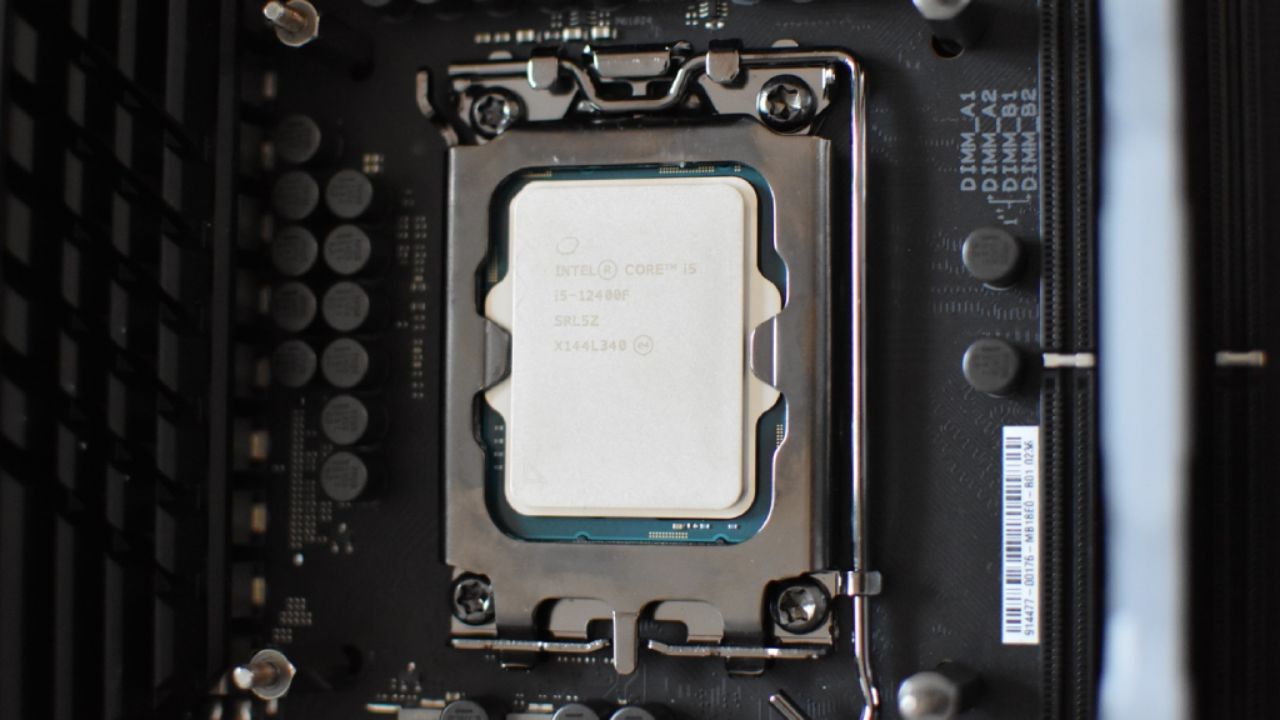
Tests comparing DDR4 and DDR5 showed that older Intel processors, particularly those from the 12th generation, saw a significant performance boost when using DDR5 memory. On average, these central processing units showed a performance increase of about 20%. The results were similar for the i5, i7, and i9 models.
Moreover, the data was also relevant for processors from the 13th and 14th generations. With the increasing memory bandwidth demands of modern games, refreshing this data is becoming a priority.
Memory Configurations and Testing Setup
We used a 6000CL30 kit for DDR5. We used a 3600CL14 DDR4 kit, and we tested it in both Gear 1 and Gear 2 configurations. Due to restrictions on locked Intel CPUs, Gear 1 must be set to 3200 MT/s to ensure stable operation. We also included performance data for the Ryzen 5 7500F and 8400F, just for comparison. Budget builders need to consider the financial context.
Gaming Performance
The DDR5 6000 RAM delivered a 33% performance increase at medium settings and a 24% improvement at ultra-plus. Cyberpunk 2077 ran noticeably better, seeing a 25% boost, when played with DDR5 memory, even at medium graphical settings.
With ray tracing cranked up, the performance boost became quite apparent, reaching a peak of 33. In Space Marine 2, DDR5 RAM consistently improved performance by 24% across both medium and high settings. This boost might be attributed to the game's heavy CPU usage.
The remastered version of The Last of Us Part 2 showed a 21% gain in performance at medium settings, and a 23% improvement at extremely high settings. As a result, the difference in CPU performance was even more pronounced when the 12400F was used with DDR4 RAM.
Spider-Man games truly tested the boundaries of bandwidth. At medium settings, the performance improvement was 28%. When extreme ray tracing was enabled, that figure climbed to 33%. Baldur's Gate 3 showed amazing scalability.
Why We Test at 1080p and Use Fast GPUs The choice of 1080p for our testing is deliberate. You don't need the very best GPU, such as the RTX 5090, to see comparable performance differences. The limitations of the CPU, as illustrated by these tests, are also observed in many types of GPUs.
In Cyberpunk 2077, the RTX 5060 Ti managed 141 fps. Suppose the 12400F paired with DDR4 memory achieves a frame rate of 107 fps. In that case, any graphics card that surpasses that limit will likely show similar CPU-limited performance, regardless of the individual GPU type.

Ray Tracing Tasks
With ray tracing set to maximum in Cyberpunk 2077, the graphics card really gets to flex its muscles. The RTX 5070's average frame rate of 63 fps suggests that CPU performance has a reduced impact under these settings. Therefore, ray tracing results aren't sufficient to judge CPU performance.
The 7500F, on the other hand, achieved 97 fps. If the graphics processing unit (GPU) stays the same, a faster central processing unit (CPU) could enable frame rates above 140 fps.
Exhibited considerable performance increases with DDR5 memory, regardless of the graphics card used. The RTX 5060 Ti, for example, hit 159 fps. This, however, underscored the 28% advantage DDR5 offered over the RTX 5090. These examples show that using a fast GPU highlights the CPU's performance, without imposing any limits on the GPU.
Final Thoughts
The results of this study illustrate the importance of the parameters that were investigated. The results imply that these factors have a significant effect on the observed outcomes. Therefore, the data support the conclusions drawn from this study. Further research is needed to validate and build on these findings.
The performance gap reached a staggering 60% at its peak. Next, we will explore potential cost savings from adopting DDR5 memory in single-module setups. The goal is to determine if a reduced initial investment is a realistic alternative.
Also, check our other AMD articles:
- AMD Ryzen 9 9950X3D Review: Setting The Standard For 2025 Gaming CPU
- AMD Ryzen 7 9800X3D Review: 3D V-Cache Goes God Mode with Stunning Gaming Performance
- AMD RX 9070 Performance Review: Thermals, Clocks, and Real-World FPS
- AMD Ryzen 5 7600 Review: Best Budget Gaming CPU of 2025?
- AMD Radeon RX 7800 XT Review: RDNA 3 Power For Midrange Gaming
- Sapphire NITRO+ AMD Radeon RX 9070 XT Review: The Ultimate 4K Gaming GPU
- AMD Ryzen 7 7800X3D: Delivers Gaming Performance Far Beyond Expectations
- AMD Ryzen 9 7900X Review: Powering the AM5 Era with DDR5 & PCIe 5.0
- ASRock Radeon RX 7800 XT Challenger OC Review: Best Price-to-Performance GPU of 2025
- Intel Core i9‑14900K vs. AMD Ryzen 7 7800X3D: Power Profiles & Gaming Benchmarks
Editor, NoobFeed
Gaming Hardware Updates
No Data.