
DirectX Ray Tracing 2.0 and Shader Model 6.9 Aim to Eliminate Shader Stutter in PC Gaming
Advanced shader delivery and DirectX innovations aim to eliminate shader stutter while enabling faster rendering pipelines for modern PC games.
Hardware by Tanvir Kabbo on Mar 16, 2026
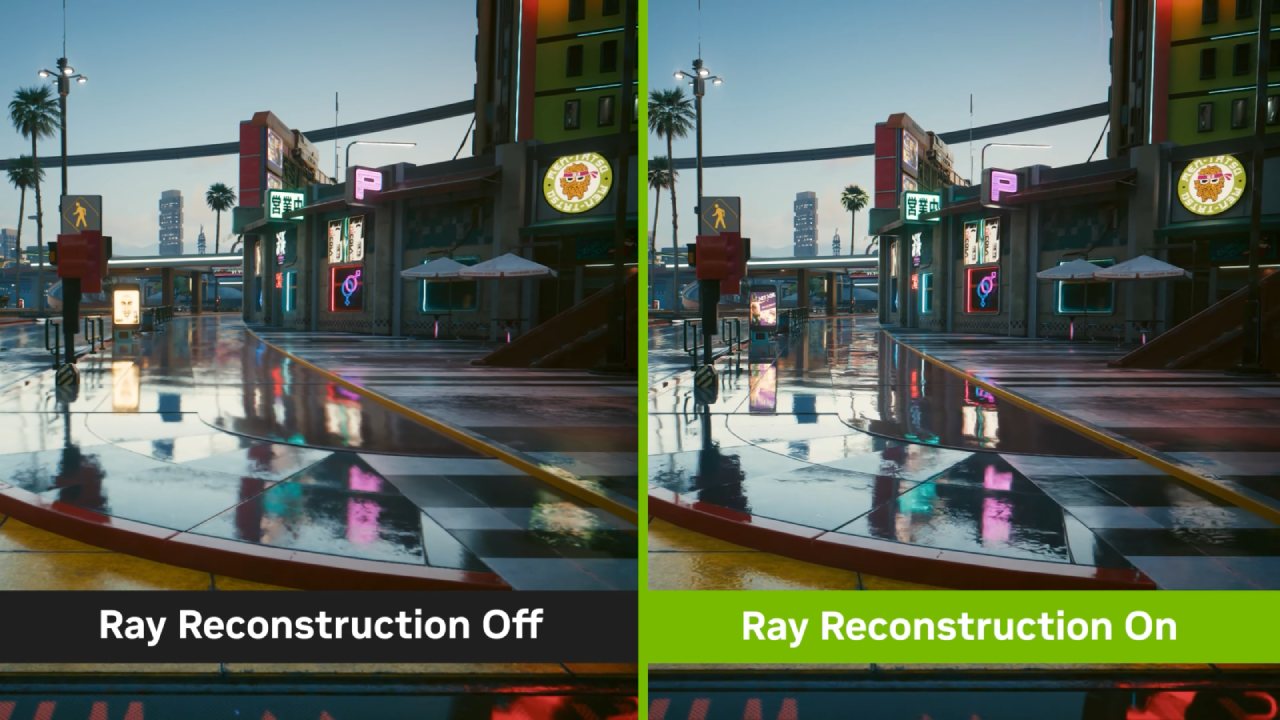
Ray tracing 2.0 is arriving with a huge number of vital improvements for PC gaming. It promises better visuals, stronger performance, and even the elimination of shader stuttering.
These improvements are powered by the next generation of DirectX Shader Model 6.9 and 6.10, along with several other technologies that are shaping the future of graphics. Alongside these developments, new insights into GFX13—also known as RDNA5—are revealing architectural changes that could significantly boost gaming and compute workloads.
RDNA5 and the Evolution of Dual Issue Architecture
Recent technical information regarding GFX13, or RDNA5, highlights improvements to dual issue capabilities. Dual issue VALU was originally implemented in RDNA3, and the new update appears to refine this feature to increase efficiency when executing FP32 instructions.
There are many technical details surrounding this architecture, but the core goal is clear. The improvements aim to make FP32 instructions far more likely to benefit from dual issue execution. In theory, this could lead to significant performance gains not only in gaming workloads but also in machine learning tasks.
To understand how this works, it helps to look at how compute units operate in RDNA architectures. In RDNA3, RDNA4, and RDNA5, a compute unit can operate in different modes: Wave32 or Wave64. Wave32 effectively enables dual issue execution, allowing more instructions to be processed in parallel. With GFX13, more integer operations appear to be compatible with dual issue execution, and improvements to VOPD3 further enhance performance.
The result is better utilization of fused multiply-add operations and improved use of SIMD resources. Although the exact performance gains will vary depending on the workload, games should see improvements across rasterization, ray tracing, and compute shaders.
Even if a GPU using RDNA5 had identical specifications to an RDNA3 or RDNA4 GPU, the architectural improvements could allow it to deliver noticeably higher performance. In other words, identical theoretical TOPS could still translate into better real-world results thanks to more efficient instruction execution.
Next-Generation Console Influence and FSR Developments
A large amount of RDNA5 information has surfaced due to the next generation of consoles currently in development. Both Microsoft and Sony have revealed details that point toward RDNA5-based hardware, which will likely introduce new graphics capabilities and software features.
One example is the rumored FSR Diamond technology from AMD. Early reports suggest that this new version of FidelityFX Super Resolution could be exclusive to RDNA5 hardware. That means RDNA4 users may not gain access to all the new features if these reports prove accurate.
However, official confirmation from AMD is still pending, so the final feature support across GPU generations remains uncertain.
DirectX Advancements and Shader Model 6.9
The next phase of DirectX development is bringing several important features aimed at improving performance and reducing long-standing PC gaming issues. One of the biggest highlights is advanced shader delivery, which aims to solve shader stutter and long loading times.
Machine learning integration is another major focus. With Shader Model 6.9, Microsoft introduced cooperative vectors, which enable improved interaction between shader operations and machine learning workloads.
DirectX Linear Algebra is also being introduced, allowing neural rendering workloads to run alongside traditional shader instructions. In practice, different types of instructions can be sent to the hardware best suited to process them. For example, certain tasks may run on CUDA cores while others execute on tensor cores.
This approach allows workloads to run more efficiently and in parallel, paving the way for neural rendering technologies that are expected to become more common in future games.
Nvidia’s Vision for the Future of Path Tracing
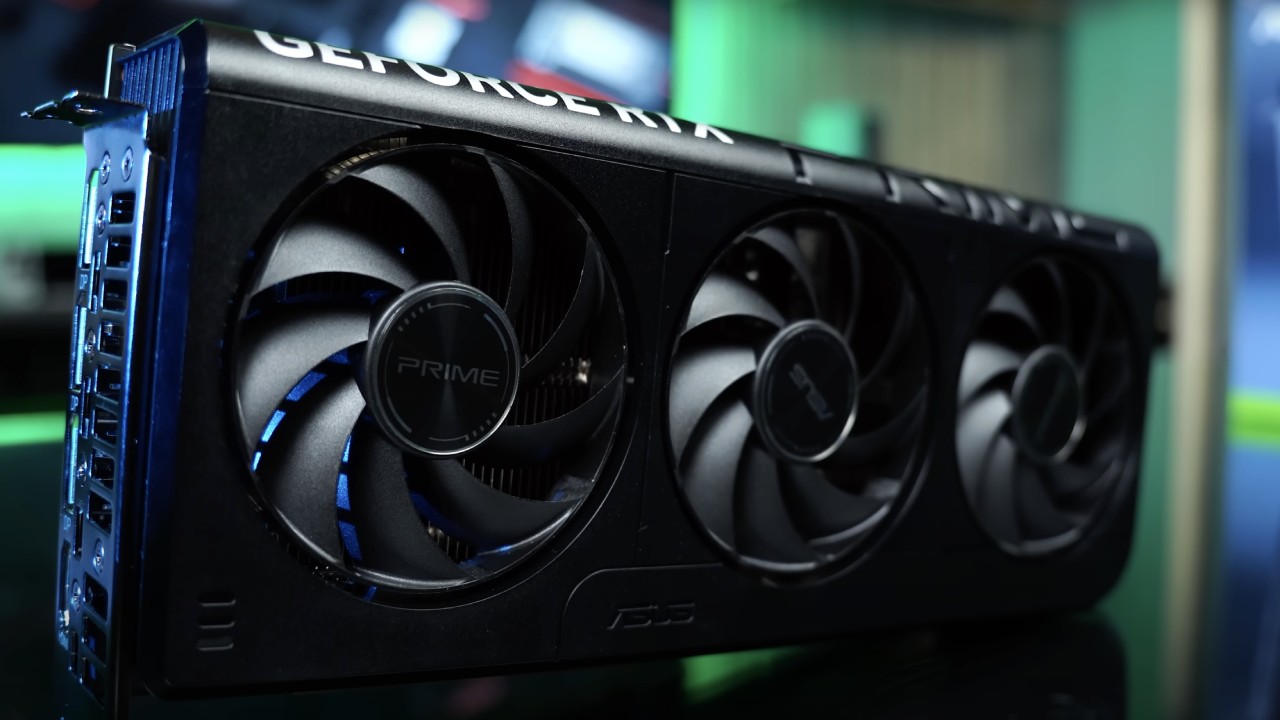
Nvidia has been particularly ambitious when discussing the future of GPU rendering. The company claims that path tracing performance could eventually see improvements of up to a million times compared to early implementations.
These gains would not come solely from stronger silicon but also from AI acceleration and new rendering techniques. Path tracing is already beginning to appear in modern games, and future titles are expected to rely on it even more heavily.
For a long time, people have talked about the shift from old rendering approaches to fully path-traced visuals. A lot of research publications from the middle of the 2010s looked into the idea, but most experts thought it would be decades before it could be put into use. The release of RTX hardware by Nvidia sped up this timetable by a lot.
Despite the progress, ray tracing and path tracing technologies are still in relatively early stages, leaving plenty of room for software and hardware optimization.
Advanced Shader Delivery and the End of Shader Stutter
Shader stuttering has been a persistent problem in PC gaming for years. It occurs when shaders must be compiled during gameplay, causing sudden drops in frame rate and noticeable stutters.
Different PC configurations make this problem difficult to solve. Even systems using GPUs from the same manufacturer can behave differently due to variations in hardware models and driver versions.
There are a number distinct ways that game developers now handle shader compilation. Some games generate shaders before the game starts, which makes players wait on a loading screen. Some games create shaders on the fly as players travel about the globe, which can make the game run much slower.
Advanced shader delivery tries to fix this problem by making sure that shaders are supplied and compiled in the same way on all systems. The method should greatly cut down on or even get rid of shader stuttering by making the process more efficient and enhancing communication between the hardware and software layers.
Major companies across the industry—including Intel, Nvidia, and Epic Games—are already collaborating on the technology. Early testing within the Unreal ecosystem has begun, and further details are expected as development progresses.
For PC gamers, this improvement could remove one of the most frustrating performance issues currently affecting modern titles.
DXR 2.0 and the Next Generation of Ray Tracing
Another important development is DXR 2.0, the next generation of DirectX Ray Tracing. This new specification is currently being developed and is expected to launch alongside Shader Model 6.10.
DXR 2.0 introduces several improvements designed to optimize ray tracing workloads. One of the most notable features is clustered geometry, which improves ray tracing performance in scenes with extremely dense geometric detail.
Cluster-level acceleration structures help the GPU process complex scenes more efficiently, reducing the computational cost of ray tracing calculations.
Another advancement is GPU-driven ray tracing acceleration structures. This method moves more work from the CPU to the GPU, which makes parallel processing and overall efficiency better.
The precise hardware requirements for DXR 2.0 haven't been completely revealed yet, however the technology will probably be tuned for new GPU architectures like RDNA5 and RTX hardware that comes out next.
Competition in the console ecosystem and Valve's growing power
In addition to visual improvements, talks in the gaming industry also show how the competitive landscape is changing. Some developers think that Sony might be more worried about Valve than Microsoft when it comes to future gaming platforms.
Valve has a lot of power in the PC ecosystem because players trust the firm and Steam is so popular. Many players prefer Steam because it is stable, easy to use, and has features that are good for customers, like its refund policy.
Valve's possible move into gaming in the living room might make it even more powerful. If the company can successfully combine PC gaming with console-like experiences, it might change the way gaming gear is competed.
At the same time, Microsoft is looking into methods to grow its ecosystem by letting people buy and play classic console games on their PCs through emulation or compatibility layers.
These changes make it seem like the future of gaming platforms might be less about competing with other consoles and more about using ecosystem techniques.
The Future of Graphics Technology
The graphics industry is going through a lot of changes very quickly. RDNA5 architecture advancements, DirectX machine learning integration, enhanced shader delivery, and DXR 2.0 all point to a future where graphics rendering is faster, smarter, and far more immersive.
Over the coming months, more technical details will emerge as developers continue revealing information at industry events. As new hardware generations approach, the vision for next-generation gaming platforms is becoming increasingly clear.
Ray tracing, neural rendering, and machine learning-driven graphics are no longer distant concepts. They are quickly becoming the foundation of the next era of PC gaming.
Also, check our other hardware articles:
- AMD Ryzen 9 9950X3D Review: Setting The Standard For 2025 Gaming CPU
- Amazon Luna 2025 Review: Is Prime Gaming's Cloud Service Your Go-To For Casual Fun?
- AMD RX 9070 XT Review: AMD's RDNA 4 Champion for 1440p Gaming
- GeForce Now Ultimate: Ditching Your Gaming PC For Cloud RTX 4080 Power?
- NVIDIA GeForce RTX 5080 Review (2025): Still A 4K Gaming Powerhouse?
- Intel Core Ultra 9 285K Review And Performance Breakdown (2025)
- AMD Ryzen 7 9800X3D Review: 3D V-Cache Goes God Mode with Stunning Gaming Performance
- Intel Core Ultra 9 285K vs AMD Ryzen 7 9800X3D: In-Depth Gaming Performance and Benchmark Comparison
- NVIDIA GeForce RTX 5080 Super Performance In Cyberpunk 2077: Path Tracing & DLSS 4.0 Tested
- AMD Radeon RX 9070 XT In Cyberpunk 2077: Ray Tracing & FSR 4.0 Tested
- Intel Arc B580 Review: The $250 GPU Revolutionizing 1440p Gaming
- Intel Arc B570 Vs. B580: Value, Specs, And Real-World Gaming Performance
- RTX 5090 Laptop Vs. M4 Max MacBook Pro: Ultimate Raw Performance Vs. Battery Endurance
- Intel Arc b580 Vs. RTX 4060: Game Performance And Value Analysis
- RTX5090 Hell Is Us Demo 4K Ultra Benchmark: DLSS Vs. Native Performance Guide
- NVIDIA RTX 5070 Review: Mid-Range Muscle or Marketing Hype?
- Nintendo Switch 2 Review: Handheld Performance, Features & Value Breakdown
- RTX 5070 Ti Review: Performance, Thermals & Power Efficiency Tested
- Samsung Odyssey OLED G81SF Review 2025: Ultimate 32-Inch QD-OLED Gaming Monitor
- AMD RX 9070 Performance Review: Thermals, Clocks, and Real-World FPS
- AMD Ryzen 5 7600 Review: Best Budget Gaming CPU of 2025?
- AMD Radeon RX 7800 XT Review: RDNA 3 Power For Midrange Gaming
- Asus ROG RTX 5090 Astral OC Vs. Founders Edition: The 4K Gaming Benchmark
Senior Editor, NoobFeed
Gaming Hardware Updates
No Data.