
GPU and CPU Progress Slows as Prices Rise: What It Means for PC Gamers
Rising component costs and limited architectural progress are reshaping expectations for PC gaming performance over the next several years.
Hardware by Tanvir Kabbo on Dec 16, 2025
As time goes on, people are becoming increasingly unsure about PC game hardware. Nvidia seems to care less about putting PC games first, Crucial is closing down, and Apple's RAM prices have suddenly become more fair. Because of these changes, many people have begun to wonder whether gaming is entering a kind of dark age.
With rising costs, slowing architectural progress, and supply pressures, the question naturally follows: Is there a light at the end of this tunnel, or are we facing several years of stagnation?
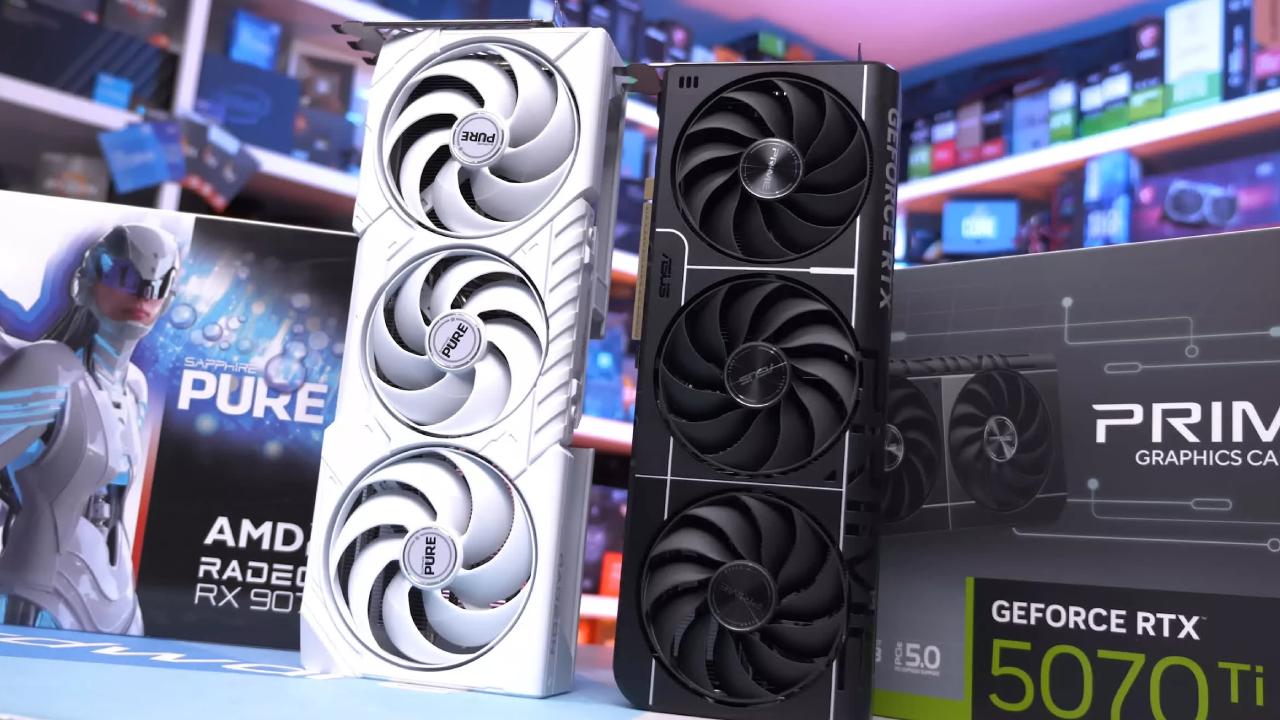
Signs of Stasis in CPUs and GPUs
There is a real concern that, for at least a couple of years, gaming hardware could be stuck in a holding pattern. Not necessarily a regression, but certainly a period of limited advancement. RAM shortages are particularly concerning, but the broader issue is the rising expense of new process nodes and the slowing pace of meaningful silicon innovation.
On the CPU side, there are rumors of a 9850X3D and possibly a 9950X3D2 with dual 3D cache, though sourcing on the latter is weaker. It looks like the 9850X3D is just a clock-speed boost, and leaks say it's already confirmed. These are small updates, not big jumps from one age to the next.
Things are expected to be even worse on the GPU side. A lot of people think that instead of making a whole new design, Nvidia will release updates with more VRAM at a much higher price. At the current pace, genuinely new GPU architectures may not arrive until 2027.
Rising Prices and the Cost Reality
Price increases appear inevitable. There are rumors that 16GB of RAM could cost about $40 more at the bill-of-materials level. While that might not sound dramatic, consumers do not pay bill-of-materials pricing. If manufacturers try to preserve margins, that $40 increase could easily become $60 or even $80 at retail.
The broader trend is clear: prices are not going down. Memory pricing in the retail market has already shown extreme volatility, and even if commodity prices stabilize, the long-term direction still appears upward. There are also indications that AMD may raise CPU trade costs, further pushing prices higher across the ecosystem.
Is Now the Best Time to Buy?
If you have a genuine need for new hardware, now is likely a sensible time to buy. We cannot predict the future perfectly, but we can reasonably expect that prices are unlikely to be lower in 6 months than they are today. If you are already planning to buy in 2026, buying sooner may help you avoid higher costs later.
That said, there is no reason to panic-buy. If your current hardware still meets your needs, there is no obligation to upgrade simply out of fear. But if you are waiting for a compelling, price-effective product in 2026, there is little on the horizon that clearly fits that description.
.jpg)
The Memory and AI Crunch
The memory and AI crunch are currently the subject of many questions. RAM demand is high because of AI tasks, machine learning models, data center needs, and gaming. In the end, availability will change. It will probably be possible to make more goods and open new plants, but that will take time.
In the meantime, high memory prices make things harder for both PCs and consoles. Instead of moving forward with launches even when cost conditions are poor, platform holders can delay them in response.
Next-Generation Consoles and Timing
Right now, there isn't much reason for Sony or Microsoft to rush to announce next-generation consoles, since neither has done so publicly. Development cycles are long, and extending the current generation makes sense. Many players still feel that the PlayStation 5 is underutilized, and there is no widespread sense that a PlayStation 6 is urgently needed.
Microsoft may feel more pressure than Sony, given its evolving strategy and the perception that Xbox Series hardware is no longer central to its future plans. Even so, rising component prices could complicate any attempt to move forward aggressively with new hardware.
How Much RAM Will Next-Gen Consoles Need?
There have been rumors of an Xbox Magnus chip featuring 40GB or even 48GB of RAM, though that seems unlikely in the current climate. Even so, next-generation consoles will almost certainly need significantly more memory. AI features, machine learning models, and more complex game systems all increase RAM requirements.
If a next-generation console launches without a meaningful increase in RAM, it becomes much harder to sell the idea of a true generational leap. Based on rumored configurations, an Xbox with a 192-bit bus could theoretically support 18GB, 24GB, or 36GB, with 36GB being the most commonly cited. On the PlayStation side, a 160-bit bus could allow 15GB, 20GB, or 30GB, with 30GB often mentioned in leaks.
Dropping from rumored higher capacities to lower ones would be deeply disappointing. Ideally, platform holders would bite the bullet and invest in a more expansive vision. Still, if RAM costs double or triple, that may simply not be viable for a mass-market console.
.jpg)
Longevity, Contracts, and Hard Choices
Console makers can mitigate some risk by securing long-term supply contracts at fixed prices, but generations are lasting longer than ever. These machines must remain viable for many years, which makes initial design choices around RAM, storage, and overall capability even more critical.
Waiting may ultimately be the safest option. The current generation has many fundamentals right. CPUs are far stronger than last generation, SSDs have replaced mechanical hard drives, and GPU scalability remains a major advantage. Storage is still underutilized, and developers can extract more value from existing hardware.
Looking Forward
Whenever new consoles do arrive, a prolonged cross-generation period seems inevitable. That will further complicate development and fuel concerns about games being "held back." Still, uncertainty does not necessarily mean decline. It may simply mean a longer pause before the next major leap.
Right now, the industry seems to be in a wait-and-see period as it grapples with rising costs, slower progress in silicon, and shifting goals. In the next few years, memory prices, manufacturing capability, and platform tactics will change. This will determine if we are in a dark age or just a calm before the next surge.
Also, check our other NVIDIA articles below:
- NVIDIA GeForce RTX 5080 Review (2025): Still A 4K Gaming Powerhouse?
- NVIDIA RTX 5070 Review: Mid-Range Muscle or Marketing Hype?
- RTX 5070 Ti Review: Performance, Thermals & Power Efficiency Tested
- ASUS GeForce RTX 5090 LC Liquid Cooled GPU Review: Unmatched Silence & Speed
- MSI GeForce RTX 5090 32GB SUPRIM SOC Review: Power Efficiency, Cooling, and Gaming Performance
- INNO3D RTX 5060 Ti 16 GB X2 Review: Gaming Benchmarks, Temps, and Power Efficiency
- HP Omen 45L Review: RTX 5090 Performance, Thermals, and Value Analysis
- ASUS TUF Gaming GeForce RTX 5060 Ti Review: DLSS 4, Power Efficiency, and Gaming
- ASUS Prime RTX 5060 Ti OC 16GB Review: DLSS 4, Ray Tracing, & Thermals Tested
- NVIDIA GeForce RTX 5060 Review: Specs, Gaming, and Cost per Frame
- MSI GeForce RTX 5090 GAMING TRIO OC Review: A Monster Power GPU
Senior Editor, NoobFeed
Gaming Hardware Updates
No Data.